How to Choose the Right Tower Crane Base Enclosure for Construction Projects
Choosing the right tower crane base enclosure starts with understanding what your project actually demands. A quality crane foundation barrier must meet local safety acceptance standards, resist daily wear across multiple job sites, and protect workers from unauthorized access and falling objects. At Hebei Xinjiuyi Construction Technology Co., Ltd., we manufacture modular steel enclosure systems built with thickened galvanized frames, perforated mesh panels, and yellow-black warning coatings. Whether you manage one site or fifty, the right foundation protection barrier saves time, reduces liability, and passes inspection on the first attempt.
Understanding Tower Crane Base Enclosures: What They Are and Why They Matter
Know exactly what this product does and why safety teams put it at the top of their list before you buy it.
What Is a Tower Crane Base Enclosure?
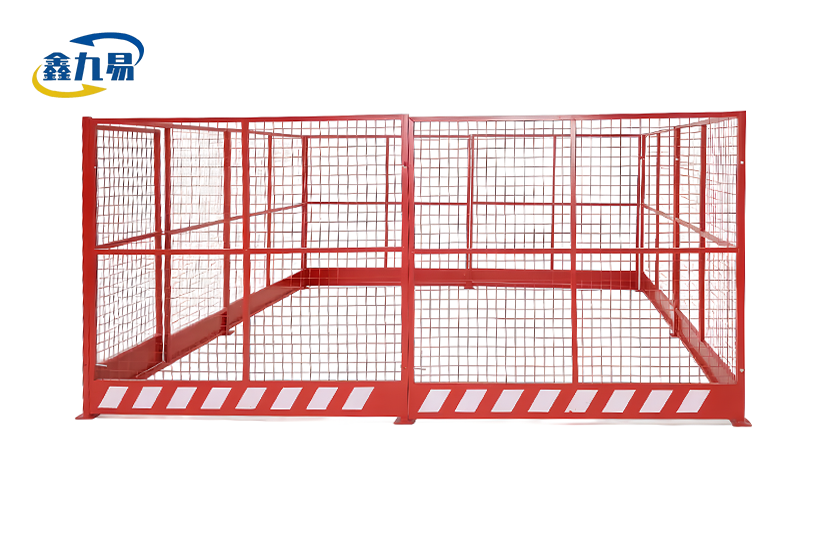
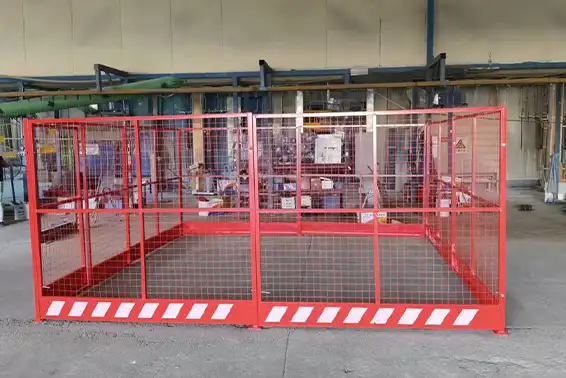
A tower crane base cage is a flexible barrier device that goes around the base of the crane and the lower mast. It literally separates the high-risk area from the rest of the work area, keeping people from getting into the high-risk area by mistake, stealing tools, or coming into touch with rotating parts at ground level.
Why the Foundation Zone Is High-Risk?
A lot of dangers are close to the base of a crane: copper wire, control panels, anchor bolts, and spinning slewing gear are all within a few meters of each other. OSHA 1926 Subpart CC says that site managers and crane operators must keep limited entry zones around crane bases open while the cranes are in use.
How Enclosures Improve Site Compliance?
There are warning signs, anti-climbing dividers, and toe boards that come with a properly placed crane foundation guard. These features directly meet the requirements of standard safety inspection lists. Sites that skip or adapt this security often get stop-work orders and have to pay a lot of money to fix the problem.

Core Criteria for Selecting the Right Tower Crane Base Enclosure
Every place needs a different kind of protection. Before you place an order, you should carefully look at these things.
Material and Surface Treatment
The material of the frame affects how long it will last. Rectangular steel tubes that have been galvanized naturally don't rust, and a hot-dip galvanizing layer protects them even more from rain, UV light, and salt air. Adding a yellow-black baked warning paint finish on top of galvanizing makes the surface resistant to both color change and impact. This is the performance feature of the tower crane base enclosure.
Size and Modular Compatibility
Wide panels of 2000 mm and 1500 mm, along with panels that are 1800 mm tall, can be used for most tower crane foundation layouts. Adjustable connection hardware helps sites with non-standard footprints because it lets crews change the layout of the perimeter without having to cut or weld.
Ease of Assembly and Reuse
Your work crew can put together and take apart the system using standard hand tools because it is made of bolt-together modules. This is most important for contractors who are working on more than one site at the same time. Replacing only the damaged parts instead of the whole system saves money in the long run and makes it easy to keep track of supplies.
Comparing Different Types of Tower Crane Base Enclosures
The market has a number of different arrangements. Knowing about each one helps you choose the right product for your site.
Modular Bolt-Together Systems
Modular systems are the best option for contractors who move equipment from one job to another. Standard hardware is used to connect the panels, and the configurations can be changed to fit any type of base. Damaged parts can be replaced one at a time. This is how Xinjiuyi's modular crane outer fence is made, so it can be put together many times without deforming.
Custom-Fabricated Fixed Enclosures
For long-term jobs where the crane will stay in one place for months at a time, custom shelters are best. They fit very well and often have a higher level of structural rigidity. On the other hand, they are more difficult to move and cost more for short-term projects.
Open vs. Enclosed Configurations
Although open-top designs offer basic perimeter security at a low cost, they leave the inside open to falling objects. Fully enclosed systems with perforated plate mesh walls keep wind-blown garbage out and keep people from getting through the holes. Most of the time, a fully sealed steel mesh barrier is safer for building sites.
Procurement Guide: How to Source and Purchase Tower Crane Base Enclosures?
To quickly find the right product, you need to pay attention to things like certification, wait times, and the quality of seller support.
Verify Certifications and Standards Compliance
Suppliers who are ISO 9001 qualified meet written standards for quality management. For projects that span international borders, the tower crane base enclosure should come with OSHA 1926 and EN standard compliance documents. Xinjiuyi is certified by ISO 9001, ISO 45001, and ISO 14001, and they can provide English warning signs for projects that are being done in other countries.
Before placing an order, you should make sure of the following key purchasing factors with any supplier:
- Certification documentation: Request ISO certificates and any product test reports covering salt spray resistance and impact load capacity.
- Customization capability: Confirm whether the supplier can adjust panel width, height, and surface color to match your site layout or local safety code.
- Spare parts availability: Ask whether individual components — panels, connectors, toe boards — are available as replacements without purchasing full sets.
- Delivery and shipping options: For international buyers, clarify whether the supplier supports consolidated container shipping and can provide packing lists for customs clearance.
If you check these four things before you place an order, there won't be any shocks during delivery or site review.
Evaluate Total Cost of Ownership, Not Unit Price
A cheaper barrier that bends after two uses costs more over three years than a galvanized system that can be used ten times or more. Instead of cost per unit, figure out cost per project cycle. This math always works out better for higher-quality modular systems for rental companies and workers who work on more than one spot.
Ensuring Long-Term Value: Maintenance, Troubleshooting, and Upgrades
Getting good gear is only one part of the issue. How many jobs it can handle depends on how well it is maintained.
Routine Inspection Schedule
After each time you take something apart and put it back together, check the connection bolts and panel joints. At cut edges and bolt holes, where bare steel is most visible, look for damage to the coating. Fix any scratches on the surface right away with touch-up paint to stop rust from spreading in wet or seaside areas.
Identifying and Addressing Common Damage
The most common problem after many shipping rounds is paint chipping at impact points. Before putting panels back up after being hit by a vehicle or piece of equipment, the frames should be checked for frame distortion. When a panel is warped and no longer lines up with adjacent sections, gaps appear that fail safety inspection. Instead of waiting for the whole system to break, replace individual panels as needed.
When to Upgrade Your Existing System
If the bolts on your current crane base barriers keep breaking, the surface starts to rust after less than a year, or they don't meet the new safety codes in your area, it's time to look for a new one. If you upgrade to a hot-dip galvanized system with a tested 500-hour salt spray resistance rating, you can do a lot less upkeep and pay less for work in the field.
Conclusion
Choosing the right crane foundation protection system comes down to three practical choices: picking materials that work with the site, making sure the design meets the safety inspection standards in your area, and choosing a modular format that lets your team move quickly between projects. A good tower crane base enclosure keeps workers safe, stops equipment theft, and makes sure checks happen on time. If you think of it as an asset that you will keep for a long time instead of something you will buy once, it will pay for itself many times over.
FAQ
Does the enclosure fit different crane brands?
Yes. The modular panel system has adjustable links that work with mast parts from well-known brands like Potain, Liebherr, and Zoomlion. Standard lengths of 2000 mm and 1500 mm are enough to cover most base footprints, and custom sizes can be made upon request.
Can the system handle high winds on an open site?
The perforated plate mesh design keeps a measured void ratio that lowers the wind load on the panels. This keeps the sail effect from happening, which is what makes solid shields tip or shift.
How long does installation take?
Using standard hand tools, a trained crew of two workers can set up the perimeter of a single crane base in about two to four hours. There's no need for welding or big tools.
Is the product suitable for international projects?
Yes, Xinjiuyi does sell English warning signs and can treat the surface with hot-dip galvanization that is rated for 500 hours or more of salt spray resistance. This helps with projects in coastal, tropical, and high-humidity areas.
What happens when individual panels get damaged?
You can buy replacement panels, connectors, toe boards, and other parts one at a time. You don't have to buy a whole new system to get back to full compliance after damage in one area.
Get Your Tower Crane Base Enclosure Quote from Xinjiuyi Today
Xinjiuyi makes modular crane foundation enclosure systems for contractors who need reliable safety at more than one site. Our team of tower crane base enclosure suppliers offers custom sizes, quality that is ISO-certified, and prices that come straight from the factory. To get a detailed estimate, email global@xjy8.com with the size of your site and the details of your project. When a buyer asks for something, we help them all the way through delivery, offering paperwork, different packing choices, and parts after the sale.
References
1. Occupational Safety and Health Administration. OSHA 1926 Subpart CC – Cranes and Derricks in Construction. U.S. Department of Labor, 2010.
2. International Organization for Standardization. ISO 13857: Safety of Machinery – Safety Distances to Prevent Hazard Zones Being Reached by Upper and Lower Limbs. ISO, 2019.
3. ASTM International. ASTM B117: Standard Practice for Operating Salt Spray (Fog) Apparatus. ASTM, 2019.
4. European Committee for Standardization. EN 13374: Temporary Edge Protection Systems – Product Specification and Test Methods. CEN, 2018.
5. Construction Industry Institute. Safety Performance Report: Perimeter and Equipment Guarding on High-Rise Job Sites. CII, 2020.
6. National Institute for Occupational Safety and Health. NIOSH Publication No. 2015-101: Preventing Worker Deaths from Uncontrolled Release of Electrical, Mechanical, and Other Types of Hazardous Energy. NIOSH, 2015.