1.8m Height and Toe Board Standards for Tower Crane Base Protective Fences
When we talk about tower crane base protective fencing, we're discussing a critical safety component that directly impacts project approval and worker protection. The Tower Crane Base Enclosure must meet specific dimensional standards—most importantly, the 1.8-meter height requirement paired with integrated toe boards—to comply with OSHA 1926 and international construction safety regulations. These standards aren't arbitrary numbers; they represent decades of accident analysis and engineering research aimed at preventing unauthorized access, equipment theft, and catastrophic incidents around crane foundations.
Understanding Tower Crane Base Protective Fences: Definitions and Standards
What Qualifies as a Compliant Base Protection System?
One of the most dangerous places on a building site is the area where the tower crane is anchored. A responsive Tower Crane Base Enclosure builds a wall that protects against three main risks: people getting in without permission, objects falling, and tools being stolen. The 1.8-meter height limit comes from OSHA rules and is equal to about 6 feet, which is the acceptable level of height that keeps unskilled people from casually climbing.
Regulatory Framework Across Major Markets
Different places have different safety rules about protecting crane bases, but they all follow the same basic ideas. In the US, OSHA Standard 1926.550 says that crane bases must be blocked off so that workers can't get to them. Similar requirements are set by European EN standards, which also include extra requirements for wind load strength and material lifetime. It's important to understand these frameworks because not following them can lead to stop-work orders, expensive project delays, and even responsibility.
The Critical Role of Toe Boards
Toe boards have a specific engineering purpose that many people forget about when they are buying them. These 100–150 mm-high horizontal barriers at ground level keep tools, bolts, and other trash from rolling under the Tower Crane Base Enclosure and into work areas that are already open. Toe boards, when properly connected to the vertical barrier system, make a full containment system that meets inspectors' needs and keeps workers in nearby areas safe.
Materials, Design Features, and Engineering Requirements of Tower Crane Base Protective Fences
Steel Versus Aluminum: Making the Right Material Choice
Choice of material has an effect on both the initial investment and the cost over the life of the product. Galvanized steel construction is better at resisting impacts and keeping the structure stable, especially in places with a lot of foot traffic where forklifts and other material handlers work close to the edges. Steel Tower Crane Base Enclosures can be put together over and over again without deforming, which makes it perfect for general contractors who are working on several projects at once.
Aluminum options are lighter, which makes fitting easier when doing it by hand. The lighter weight is important when workers have to move parts around a lot or use building hoists to move fencing to higher floors. On the other hand, metal usually costs more at first and may wear out faster in hard site conditions.
Our Tower Crane Base Enclosure systems at Xinjiuyi are made with thickened galvanized steel pipe frames that have been hot-dip galvanized and powder-coated. This two-layer corrosion protection makes the product last longer than 20 years, even in coastal areas with a lot of salt air.
Modular Design Features That Enhance Flexibility
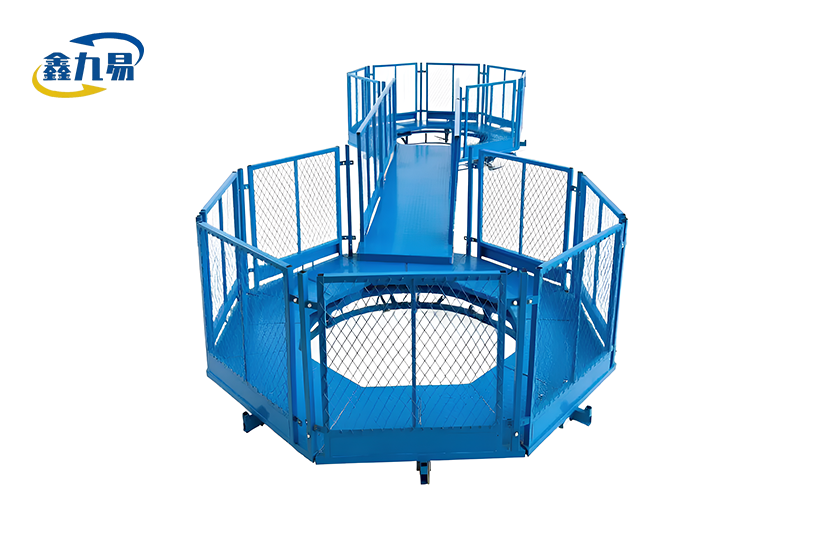
Modern Tower Crane Base Enclosures are made of bolted-together modules that can be put together in different ways to fit different foundations. Standard panel widths of 2000 mm and 1500 mm let crews make precise perimeters that match the measurements of the site without having to wait for custom fabrication. As a standard, connection hardware should be included. Mismatched fasteners make assembly difficult and weaken the structure.
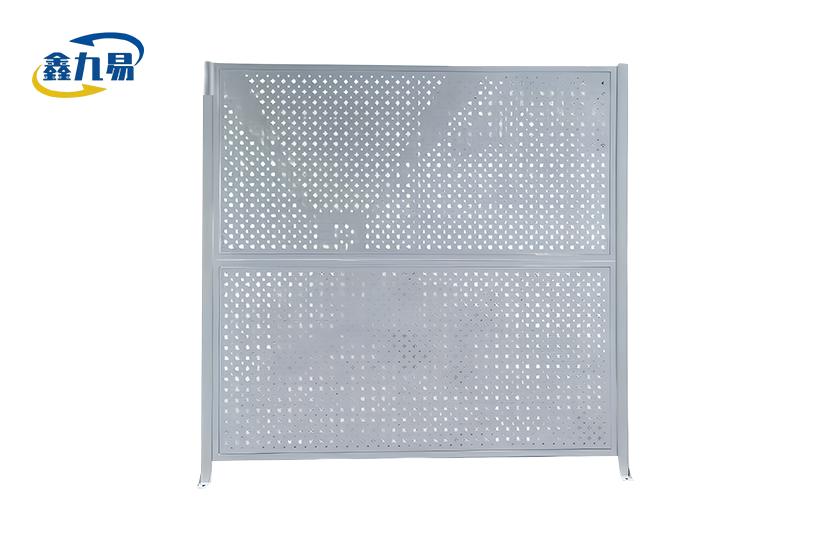
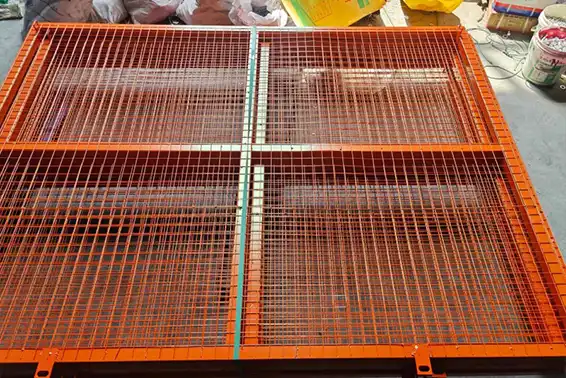
The best balance between security and visibility is found in perforated plate mesh. The holes let managers keep an eye on what's going on in the secured area without letting hands or tools through. Compared to solid panels, this design also lowers wind loads, which is important for keeping the structure stable during storms without adding more ground anchors.
Engineering Performance Standards
Specifications for load capacity make sure that the Tower Crane Base Enclosure can handle equipment and people bumping into it. Systems of good quality should be able to withstand lateral forces of at least 1000 joules without permanently changing shape. In open areas, wind resistance is very important. The mesh-to-void ratio should be designed to reduce the sail effect while keeping the shield function.
Anti-climbing features are also an important part of the design. Handholds and footholds that are easy to use should not be on horizontal rails or toe boards. Using baked paint to make yellow-and-black warning patterns creates high-contrast visual alerts that work even when there isn't much light.
Installation and Maintenance Best Practices for Tower Crane Base Protective Fences
Site Assessment and Planning Procedures
For an installation to go smoothly, the base must be measured correctly and the site plan must be recorded. Before putting up the first panel, the crew should find underground utilities, drainage systems, and existing anchor points. The inner perimeter is set by the crane's base, and the outer perimeter is found by figuring out the swing radius. Safety directors usually add an extra 1-2 meters on top of the minimum distance limit as a safety zone.
The way you anchor depends on the state of the ground. Attaching to a concrete floor directly with bolts is possible, but attaching to a dirt substrate might need ballast blocks or driven stakes. The main idea stays the same: the base must be able to withstand forces that would cause it to tip over without just using panel-to-panel links.
Installation Methodology for Compliance and Efficiency
The most efficient way to put together a Tower Crane Base Enclosure is for two people to work together and place pieces around the outside in a row. Connection bolts should be torqued to the manufacturer's specifications. Too much torque can damage threads and make future disassembly more difficult, while too little torque can make joints unstable. Regularly placed warning signs must be put up, especially at entry gates and high-visibility routes.
Some common assembly mistakes are not making sure the toe boards are continuous and leaving holes at corners that don't fit together right. Every straight section needs to have the right amount of toe board coverage—even small holes let trash through, which defeats the purpose of the system. Custom-length panels are often needed for corner solutions. Reliable makers offer these as standard choices instead of forcing field changes.
Maintenance Protocols for Long-Term Performance
During active construction phases, inspections should happen on a regular basis every week. Crews need to look for loose bolts, broken mesh pieces, and paint that is wearing off and making it harder to see. Bolt connections become loose over time due to vibration and changes in temperature. Retightening them is a simple way to keep them in good shape and avoid bigger repairs.
Corrosion protection goes beyond the quality of the coating itself. Scratches and damage from impacts let water into the main metal. Touch-up paint should be put on right away, especially in places where material carts and trucks often hit the surface. The compliance record that meets the needs of both internal quality systems and external auditors is made by writing down the results of inspections and the maintenance work that was done.
Comparing Tower Crane Base Protective Solutions: Enclosures vs Barriers and Material Choices
Full Enclosures Versus Open Barrier Systems
Sensitive electrical equipment kept in the crane base area is best protected from the elements by full Tower Crane Base Enclosures with perforated or mesh panels. These systems stop not only people from getting to control panels and wire entry points, but also wind-driven rain and garbage buildup. Copper wires and electrical parts are much less likely to be stolen because they are enclosed.
Open barrier systems with horizontal bars and vertical posts are a cheaper way to define the boundaries. When the main worry is keeping people out rather than protecting equipment, these simpler methods work well. Visibility benefits let you keep an eye on things better, but they don't protect you from the weather very well.
Evaluating Total Cost of Ownership
The purchase price is only one part of the economic equation. A big part of the total cost is the work needed for installation, the logistics of transport, and the space needed between jobs. Lightweight devices may need to be replaced more often, but they cost less to ship. Shipping costs are higher for heavier steel construction, but it lasts longer, so the money spent is spread out over more project cycles.
Rental models are good for contractors who only need to use a crane sometimes or who don't want to buy one. When project plans call for regular crane use across multiple sites, it makes economic sense to buy. After three to five project deployments, the breakeven analysis usually points toward ownership.
Scalability Considerations for Growing Operations
If a general builder wants to grow their business, they need safety systems that can handle more tools. You can start with small amounts of modular Tower Crane Base Enclosures and add more units as the number of projects grows. Standardized parts make sure that new purchases don't make incompatible subsets of existing stock, but instead work with it without any problems.
Different problems come up for crane rental companies when they try to grow. Including Tower Crane Base Enclosure protection in crane hire deals makes the service stand out and keeps the equipment safe during the rental time. By buying in bulk at volume price levels, this business model is able to stay in business and make sure that all installed units are protected to the same standards.
Procurement Considerations for Tower Crane Base Protective Fences
Supplier Qualification and Certification Requirements
When making choices about purchases, suppliers should be pushed to keep their quality control systems strong. ISO 9001 certification means that production processes are standardized and quality control procedures are written down. Getting ISO 45001 and ISO 14001 certifications shows that you care about worker safety and the environment, which are values that are in line with professional construction work.
Ask possible suppliers for material test results and measurements of the coating's thickness. Quality of galvanization changes a lot from one maker to the next. Hot-dip galvanizing should follow ASTM A123 guidelines and have a zinc covering that is at least 85 microns thick. For good rust protection, powder coating should have a dry film thickness of 60 to 80 microns.
Lead Time and Delivery Logistics
Standard configurations usually ship within one to three weeks from well-known manufacturers who keep stock. Custom sizes take longer to make—usually two to four weeks, depending on how complicated they are and how many orders are already in queue. When you buy something internationally, you have to wait longer for shipping and customs clearing. Contractors should make sure that the dates they buy things match the dates they need to finish projects. For example, they should order Tower Crane Base Enclosures at the same time they rent cranes.
International buyers' landed costs are affected by how well containers are optimized. Depending on the size of the panels and how well they are packed, standard 20-foot containers can hold about 150 to 200 linear meters of Tower Crane Base Enclosure. Working with providers who know about export operations will make sure that the containers are loaded correctly, which will make the most of their space and lower the cost of freight per unit.
After-Sales Support and Replacement Parts
You should keep in touch with your Tower Crane Base Enclosure provider after the arrival. Damage to components happens naturally as the site works. When manufacturers sell new panels, connection gear, and warning signs as different lines, they can be fixed more cheaply instead of having to replace the whole system.
Technical help is important, especially when the system is first set up. Suppliers should include detailed installation guides with torque specifications, assembly diagrams, and advice on how to fix problems. Having access to application engineers who can solve problems that are unique to the site adds a lot of value on top of the physical product.
Conclusion
The 1.8-meter height standard for Tower Crane Base Enclosure is based on basic safety engineering, not on a lot of unnecessary red tape. When you use the right measurements, durable materials, integrated toe boards, and do regular upkeep, you can create the controlled environment that is needed for safe crane operations. Choosing between steel and aluminum as a material, flexible or custom solutions, and suppliers all need to be carefully thought out in relation to your practical needs and the size of the project. Investing in good protection systems pays off with easier safety checks, lower incident risk, and the ability to be used on multiple projects, which cuts costs by a large amount for each one.
FAQ
Can the fence height be reduced if the crane capacity is small?
The 1.8-meter height limit is the same for all cranes, no matter what size they are. Rather than equipment capacity, regulatory requirements focus on how people act and how to stop them from climbing. Even though they are smaller, smaller cranes still have moving parts, electrical risks, and theft risks that require full-height perimeter protection. Inspectors make sure that all crane installations meet the same standards.
How do I determine the correct perimeter size for my specific crane model?
In their assembly instructions, crane makers list the dimensions of the foundation. The protected area should include both the base and the "out-of-service radius." This is the area where the crane could swing during repair or if it lost control. Adding a buffer zone of 1-2 meters beyond this estimated radius gives you extra safety that takes into account the factors at the spot.
What maintenance intervals keep the fencing compliant throughout multi-year projects?
During active construction phases, visual checks are done once a week to find loose connections and damage that can be seen. Once a month, thorough checks should be done to record the bolt strength, coating state, and readability of warning signs. Comprehensive exams are done once a year to check the structure's stability and see if any parts need to be replaced. To make sure everyone is safe and to make good use of resources, this tiered method strikes a good balance.
Do modular systems maintain structural stability comparable to welded permanent installations?
When quality modular systems are designed with the right link tools, they have the same level of structural performance as welded units. The key is to make sure you follow the manufacturer's torque recommendations and that all of the connection bolts are fully engaged. When installed correctly, modular Tower Crane Base Enclosures can handle the same wind loads and impact forces as permanent installations. It also has the important benefit of being able to be changed and used again and again.
Secure Your Site with Xinjiuyi Tower Crane Base Enclosure Systems
Picking the right Tower Crane Base Enclosure supplier has a direct effect on the safety record and inspection results of your project. Xinjiuyi makes enterprise-level safety systems that are built to meet OSHA and other foreign standards. They do this by using precise manufacturing and strict quality control. Our modular steel fencing has built-in toe boards, an anti-climbing design, and yellow-and-black warning finishes that meet inspector requirements as soon as they are installed. Because you can change the sizes and include all the tools you need, our solutions can be easily adjusted to fit your unique foundations. Talk to our team at global@xjy8.com about your upcoming projects and find out why top contractors choose Xinjiuyi as their top Tower Crane Base Enclosure manufacturer for reliable, low-cost perimeter protection.
References
1. Occupational Safety and Health Administration (2023). "OSHA Standard 1926.550: Cranes and Derricks in Construction." U.S. Department of Labor Safety and Health Regulations for Construction.
2. American National Standards Institute (2022). "ANSI A10.48: Steel Erection Safety Requirements for Crane Base Protection Systems." American National Standards Institute Construction Safety Publications.
3. European Committee for Standardization (2021). "EN 13374: Temporary Edge Protection Systems - Product Specifications and Test Methods." CEN Standards for Construction Site Safety Equipment.
4. National Institute for Occupational Safety and Health (2023). "Preventing Worker Injuries and Deaths from Mobile Crane Tip-Over, Boom Collapse, and Uncontrolled Hoisted Loads." NIOSH Alert Publication No. 2006-142.
5. Construction Industry Institute (2022). "Best Practices for Tower Crane Safety Management on Multi-Story Construction Projects." CII Research Report 315-1, University of Texas at Austin.
6. International Organization for Standardization (2021). "ISO 4306-3: Cranes - Vocabulary - Part 3: Tower Cranes." ISO Construction Equipment Standards Documentation.