Are Ladder Cages Still Required?
Construction site managers and procurement professionals often ask whether ladder safety cages remain mandatory under current regulations. The straightforward answer depends on your project timeline and ladder installation date. Under OSHA 1910.28, fixed ladders installed before November 19, 2018, still permit traditional Construction Ladder Cage systems as compliant fall protection. However, new installations exceeding 24 feet must now integrate personal fall arrest systems or ladder safety systems. Despite regulatory evolution, ladder cages continue to serve critical roles in modern construction, offering robust enclosure protection for vertical access routes across excavation sites, bridge piers, and industrial facilities.
Understanding Ladder Cages and Their Role in Construction Safety
What Defines a Ladder Safety Cage System?
A ladder safety cage is a protective enclosure that goes around fixed vertical ladders. It is usually made of steel hoops and vertical bars that make a narrow climbing path. The method keeps workers from falling backward while going up or down, putting something between the hiker and the open space below. Most designs have hoops that are spaced out regularly (usually every 48 inches) and connected by vertical rails that keep the structure rigid even when it gets hit by something or wind.
Common Types Used Across Job Sites
Steel cage systems are used a lot in building because they are strong for their weight and don't rust when they are treated properly. Versions made of galvanized steel can handle tough outdoor conditions, while versions made of powder-coated steel look better in fixed placements. Aluminum metal cages are used in some specific projects where weight reduction is important, but they need to be carefully engineered to keep up the same level of protection. Modular bolt-on designs make it easy to put things together quickly on-site without the need for welding tools, which is great for projects that need to be finished quickly.
Regulatory Requirements From OSHA and International Bodies
OSHA's walking-working surfaces rule outlined ladder safety gear. ANSI A14.3 cage systems, which specify minimum clearance diameters and structural load requirements, can be maintained with ladders installed before 2018. European projects follow EN ISO 14122-4. These regulations frequently require identical safety precautions, but different regions have varying recommendations for hoop spacing and cage size. Understanding these variances is crucial when your procurement plan encompasses multiple geographic markets.
How Cages Contribute to Worker Protection?
Along with physical safety, the enclosed form gives mental security. Climbing thru caged ladders makes workers less nervous about being high up, which makes them more bold and safer in their moves. The hoop structure limits how far a worker can fall backward if they lose their balance. This stops any slips from getting worse before they happen. In contrast to harness systems, which depend on proper connection and user compliance, this passive protection works all the time without the climber having to do anything.
Are Ladder Cages Still Required? Analysis of Current Regulations and Industry Practices
Historical Evolution of OSHA Standards
Before 2017, OSHA rules said that fixed ladders longer than 20 feet had to have cages. The cage had to start 7 to 8 feet above the ground level. For decades, this way of thinking ruled industrial safety and shaped how engineers planned vertical access in factories and on building sites. The final rule from 2016 made a lot of changes. For example, it gradually required ladder safety systems or personal fall stop systems on all new installs, but it didn't change anything about cages that were already compliant.
Current Compliance Requirements
The way regulations work now makes a dual system. Installing a ladder before 2018 that meets the old cage standards is still fine without any changes, as long as they are regularly inspected to make sure they stay structurally sound. Either a ladder safety system, which is basically an improved cage with a built-in fall arrest rail, or a personal fall arrest system with belts and vertical lifelines must be built into all new fixed ladders that are longer than 24 feet. Wells and other enclosed structures follow different rules. Cages, on the other hand, may still work no matter when they were installed.
Regional Code Variations Affecting Procurement
There are times when state and local governments set standards that are tougher than the federal OSHA minimum rules. For example, California's Cal/OSHA has rules for building and general industry that procurement managers must check before choosing tools. International projects add another level of complexity. For example, building in the Middle East often follows British Standards, and in Southeast Asia, OSHA ideas may be mixed with local government rules. Your supplier should give you proof that they are in compliance with all the laws that apply.
Comparing Cages With Modern Fall Protection Alternatives
Personal fall arrest systems let you set up ladders in more ways, but workers have to be very careful to follow the rules. Before going up, climbers must properly connect their gear to the vertical safety. This is a step that some workers skip when they are pressed for time. As a middle ground, ladder safety systems combine a cage-like enclosure with a built-in fall arrest rail that automatically engages a climber's carrier device. Each method has different costs. For example, classic cages usually require less money up front, but they don't have the advanced fall-arresting features of newer systems.
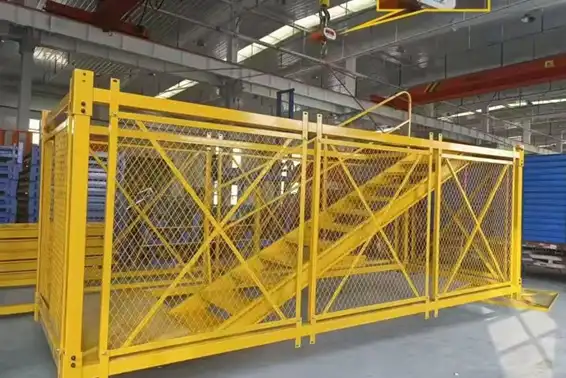
The Construction Ladder Cage systems in Xinjiuyi show how old-fashioned safety can be updated to meet current needs. Our modular assemblies are made of thickened galvanized rectangular tubes with columns that are 80 mm x 80 mm and walls that are 3.0 mm thick. This gives them structural performance that goes beyond what is required by standard cages. The fully sealed protective design has anti-slip treads on the inside and 75 mm welded wire mesh on the outside. This creates two layers of fall protection that can be used for both older setups and to add extra safety to newer systems.
Real-World Adoption Trends
Many factories still use caged ladders for repair access routes where permanent safety makes sense from a working point of view. This method is especially liked by refineries, power plants, and water treatment plants because it is fail-safe and doesn't require much ongoing compliance. More and more, construction projects that need temporary ladders use modular cage sections that can be moved or reconfigured as the work goes on. This makes the best use of equipment across all phases.
Technical Insights: Dimensions, Materials, and Installation of Construction Ladder Cages
Standard Size Ranges and Customization Options
Most cage systems use standard sizes that have been used in industry for many years. Standard cage widths are between 27 and 30 inches, which is just the right amount of space for a climber while still leaving a small area for placement. Vertical parts are usually 3000 mm (10 feet) long, which means that modular stacks can reach the right heights without having to be made from scratch. Width and depth measurements of 2000 mm are common, but measurements must often be changed to fit the needs of the site.
Xinjiuyi makes ladder cage pieces that can be put together in any way you want to fit the needs of your site. Our normal sections are 3000 mm long, 2000 mm wide, and 2000 mm high, but our engineering team often changes the sizes to fit specific needs, like small excavation pits or areas where equipment can't go.
Material Selection: Steel, Aluminum, and Surface Treatments
Due to its greater tensile strength and impact protection, steel is still the most common material used to make Construction Ladder Cages. High-strength structural steel can handle the repeated stress cycles that happen a lot in construction sites where tools and material handling equipment often hit each other by accident. Hot-dip galvanizing protects against rust well in normal outdoor conditions, and the coating's thickness of more than 85 microns means it will last for decades.
Aluminum alloy cages are good for specific uses where the weight savings make up for the higher cost of the material. Aluminum doesn't rust in salty environments, which makes it useful for offshore platforms and remote communication towers. It also makes supporting structures lighter. But aluminum needs bigger section sizes to have the same strength, which could make it harder to get things thru tight spaces.
Powder coating with high-temperature baking paint over galvanized base metal is what high-end projects ask for. This two-layer defense method makes things more resistant to chemicals in places that work with harsh chemicals, and it keeps looking good throughout its useful life. The surface stays smooth and is easy to clean, which is important for places that process food and make medicines, where cleanliness rules dictate which tools can be used.
Proper Installation Procedures and Safety Checkpoints
To place a cage correctly, you must first accurately measure the host ladder and the spaces around it. Anchor points must connect to structural members that can handle the load that was given, which is usually 200 pounds of concentrated force acting in any direction. Bolt connections need the right amount of force to keep them from coming loose when the system shakes. On the other hand, if you tighten them too much, you could damage the threads or bend the bearing plates.
Xinjiuyi ladder cages have a modular bolt-connection system that lets two workers put together a whole piece with standard hand tools in less than 30 minutes. No special welding tools are needed on-site, which makes installation easier and speeds up the process even in remote areas. Each connecting point has strengthened nodes that keep them from coming loose or deforming when they're under service loads.
Maintenance and Inspection Protocols
Construction Ladder Cage weld quality should be checked visually every three months to look for cracks or separation at joints. The state of the surface layer shows whether the corrosion protection is still working or if it needs to be touched up. Bolt joints need to be retightened to the right torque levels on a regular basis. This is especially important in the first year after installation, when things settle down. Any deformation of the hoop members or vertical rails needs to be looked into right away, and it may be necessary to replace sections.
As important as physical inspection is good documentation. Keeping signed records of each check creates an audit trail that shows safety regulators and insurance companies that you did your job. Photographs of any problems that were found and the fixes that were made are useful proof of a culture of proactive upkeep.
Procurement Guide: Selecting, Buying, and Maintaining Ladder Cages for Construction Projects
Key Criteria for Supplier Selection
Facility certifications and quality management systems are ways that reliable suppliers show they can make things. If a supplier has ISO 9001 certification, it means they have established quality control procedures. If they have ISO 45001 certification, it means they put worker health and safety first in all of their operations. Ask for proof that the product meets the appropriate standards, such as ANSI A14.3 for projects in the US and EN ISO 14122-4 for markets in Europe.
The ability to customize sets commodity sellers apart from real production partners. For your projects, you will always need non-standard sizes or unique ways to mount things. Suppliers with their own engineering teams can quickly come up with unique designs and detailed drawings before the fabrication process starts. This keeps expensive changes from having to be made in the field after delivery.
How well your deliveries go has a direct effect on your project plan. When suppliers are in charge of mature supply chains, they give realistic lead times and keep extra stock on hand for popular setups. When your projects span multiple countries, international shipping knowledge is important. Experienced providers arrange freight logistics and proper packaging to avoid damage during transport.
Evaluating Product Lines and Specifications
Instead of thinking that all cages meet the same performance standards, carefully compare the technical specs of each one. The load capacity and durability of structural tubes are greatly affected by the thickness of their walls. Xinjiuyi's column tubes have walls that are 3.0 mm thick and come in 80 mm x 80 mm rectangular pieces. This gives them great structural stability. Less strict requirements using 2.0 mm walls might look the same at first, but they won't last as long as the stability your projects need.
Sample units must be closely looked at in order to see the quality of the welding. Smooth ground weld joints get rid of sharp edges and places where things could get caught, which is good for worker safety and looks professional. Full-penetration welds at load-bearing links make sure that the structure works, which is what sets designed systems apart from simple designs that just meet basic regulatory language.
Cost Considerations and Procurement Strategies
When you're working on several jobs at once, bulk buying agreements usually give you better terms. Talk about framework deals that set unit prices for standard setups and allow for custom orders with set markup percentages. This method lets you plan ahead for costs while still having access to custom solutions for when specific needs come up.
Calculations of reusability should be used to guide decisions about what to buy. High-quality modular systems can be put together over and over again for multiple projects, which means that the initial investment is spread out over many years of use. Instead of just looking at the initial purchase price, figure out the total costs of ownership, which should include labor for installation, upkeep, and the expected service life.
Maintenance Strategies and Safety Checklists
Make Construction Ladder Cage inspection plans that are special to each place and take into account the environmental issues that your projects will face. Construction along the coast needs to be checked for rust more often than construction inside. Access roads with a lot of traffic need to pay more attention to wear and tear at connecting points. For regulatory authorities and project owners, written inspection schedules show that safety management is organized.
Teaching the people who work on your site the right way to do inspections will help you find problems sooner. Workers who know what a normal cage looks like can quickly spot problems like loose bolts, broken mesh panels, or paint that is wearing off. Giving them the power to mark as questionable technology that it should not be used until further investigation is done is safer than letting it be used with inadequate safety.
Future of Ladder Cage Usage and Safety in Construction
Emerging Material Technologies
New hybrid materials claim to be stronger without being heavier. Fiber-reinforced polymer cages don't need to be coated to resist corrosion; they are resistant to corrosion naturally. This could mean that they last longer in harsh chemical environments. The current high cost of materials makes it hard for many people to use them, but as production volumes rise, they may become more cost-effective for most building uses within the next ten years.
Integration With Digital Safety Management
When smart sensors are built into safety equipment, it turns it into an active monitoring system. Accelerometers built into the frames of cages can sense impacts, which can automatically set off safety alerts and maintenance checks. RFID tags allow automated tracking of equipment and scheduling of inspections, which makes sure that no ladder cage goes longer than the recommended service intervals without being checked.
Ergonomic Design Improvements
Cage shape optimization is based on research into the physics of climbing. Oval-shaped hoops may make it easier for workers to get thru when they are wearing heavy winter clothes or bringing tools. Rest platforms placed strategically at long intervals keep workers from getting tired on long climbs, which improves general safety by making them healthier at the goal height.
Regulatory Trajectory
In the future, guidelines might require regular load testing instead of just looking at it visually. It's possible that non-destructive testing will become normal for high-stakes sites' key entry routes. To stay ahead of these trends, procurement managers should choose suppliers with well-established testing capabilities and thorough documentation systems.
Hybrid Protection Strategies
Combining standard enclosure security with new fall arrest technology is probably the best way to go in the future. When you combine caged ladders with extra arrest rails, you get double the safety. The cage stops small slips, and the arrest system kicks in for bigger problems. This extra safety measure meets the requirements of new setups while keeping the psychological safety that climbers value in enclosed climbing.
Conclusion
Construction Ladder Cage safety cages are still necessary in modern building, even tho fall protection standards are changing. Understanding "grandfathered installations" and "new project requirements" helps you make purchase decisions that balance worker safety, compliance, and cost. Technical requirements, especially material, structure size, and surface protection, determine long-term performance and overall ownership costs. Instead than focusing on unit cost, procurement staff should evaluate suppliers based on their manufacturing, customisation, and delivery capabilities. Hybrid cage-arrest systems may become the most prevalent as safety technologies improve. These methods provide numerous levels of protection that fulfil legal and realistic worker needs in many building environments.
FAQ
Do ladder cages remain mandatory for all fixed ladder installations?
According to modern OSHA rules, ladder cages are not always required. Fixed stairs that were put in place before November 19, 2018, can keep cage systems that meet old standards in good shape. Ladder safety systems or personal fall stop systems must be built into all new installations over 24 feet, unless the ladder is in a well or another enclosed building that meets certain criteria.
What distinguishes ladder cages from personal fall arrest systems?
Ladder cages offer passive enclosure protection that works all the time without the user having to do anything. Personal fall stop systems use harnesses that are attached to vertical lifelines. Climbers must properly attach themselves to these lines before they can go up. Cages provide failsafe safety, but they don't have fall-arresting features that actively stop a worker from falling.
How frequently should ladder cages undergo safety inspections?
Visual inspections every three months are the best practice for busy building sites. Every year, full inspections should include a close look at the integrity of the welds, the condition of the coatings, and the bolt torque. Routes with a lot of traffic or hard weather exposure may need to be checked every month to see if there is any faster wear or degradation.
Can existing ladder cages be retrofitted to meet new standards?
Adding extra fall stop rails to many current cage systems turns them into ladder safety systems that meet safety standards. This method lets you keep the cage structure you've already invested in while also meeting the needs of new work. Talk to experienced engineers to make sure the structure is strong enough before adding parts.
Partner With Xinjiuyi for Reliable Vertical Access Protection
Hebei Xinjiuyi Construction Technology Co., Ltd. is ready to help you meet your ladder safety needs with high-quality Construction Ladder Cage systems that are made to last and meet all regulations. As a well-known company that makes Construction Ladder Cages, we offer quality management that is ISO 9001-certified along with the ability to make changes as needed. This lets us provide solutions that are perfectly suited to your excavation sites, bridge projects, and high-rise construction needs. Our modular designs are made from heavy-duty galvanized steel—80 mm × 80 mm frames with 3.0 mm walls—so they can stand up to strong winds and last for decades. In addition to standard configurations, our engineering team creates custom dimensions with detailed drawings before production starts. This way, changes that need to be made in the field don't have to be expensive. Email our technical experts at global@xjy8.com to talk about the specifics of your project, get full specs, or set up a sample evaluation. Visit xjy8.com to see our full line of vertical access protection products and learn why building professionals all over the world trust Xinjiuyi to provide safety systems that keep workers safe and make compliance easier.
References
1. Occupational Safety and Health Administration. "Walking-Working Surfaces and Personal Protective Equipment (Fall Protection Systems)." Federal Register, Vol. 81, No. 223, 2016.
2. American National Standards Institute. "ANSI A14.3-2008: American National Standard for Ladders - Fixed - Safety Requirements." American Ladder Institute, 2008.
3. European Committee for Standardization. "EN ISO 14122-4:2016 - Safety of Machinery - Permanent Means of Access to Machinery - Part 4: Fixed Ladders." International Organization for Standardization, 2016.
4. National Safety Council. "Ladder Safety: Best Practices for Construction and Industrial Applications." NSC Press, 2020.
5. American Society of Safety Professionals. "Fall Protection in Construction: Engineering and Administrative Controls." ASSP Technical Report Series, 2019.
6. Construction Industry Research and Policy Center. "Comparative Analysis of Vertical Access Safety Systems in Modern Construction." CIRPC Annual Report, 2021.