How to Choose a Suspended Work Platform According to Your Construction Site Requirements?
Selecting the right suspended work platform directly impacts safety, operational efficiency, and your project's bottom line. The ZLP800 Suspended Work Platform stands as a reliable solution engineered for demanding environments where an 800 kg load capacity meets diverse construction challenges. This platform's dual 1.8 kW motors and adjustable length up to 7.5 meters deliver the versatility needed for curtain wall installation, bridge maintenance, and high-rise facade work. Making an informed choice requires understanding your specific site conditions, load demands, material preferences, and safety compliance requirements—all of which we'll explore throughout this comprehensive guide.
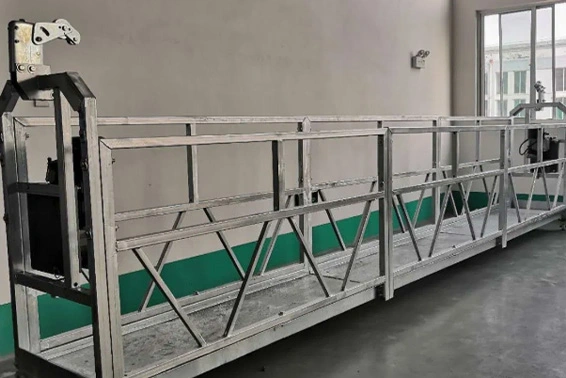
Understanding Suspended Work Platforms and Their Applications
Suspended work platforms change the way building crews get to high work areas. These systems hang from roof anchors or parapet hooks, making a stable work area that can move up and down the sides of buildings without taking up ground room or needing to be put together on scaffolds.
What Makes Suspended Platforms Essential for Modern Construction?
In today's high-rise construction, tools need to be able to change to different building shapes while still meeting strict safety standards. With suspended platforms, you don't have to spend hours setting up standard scaffolding, which can take days or even weeks for big jobs. Motorized hoisting systems allow exact positioning control and allow the tools to be set up quickly and at different working heights.
Typical Applications Across Construction Sectors
Suspended platforms are useful for many types of construction and maintenance work. Heavy-duty platforms are used by curtain wall companies to put up glass panels or stone cladding that weighs hundreds of kilograms per section. These platforms are put on pylons and deck edges by bridge repair teams so that they can be inspected and treated for rust. They are used in factories to paint chimneys, clean silos, and do maintenance on towers when normal ways of getting there aren't practical or safe.
Another important use is for cleaning the windows of commercial buildings. The platforms give workers a safe place to work at any height, so they can clean and check things thoroughly and quickly. Because they can be used in so many ways, this is why suspended platforms are standard tools in the building business.
Safety Standards and Compliance Requirements
Platforms meet local laws if they have the right equipment safety certifications. When something has a CE mark on it, it means it meets European safety standards. In North America, equipment has to meet ANSI standards. When placed on high-quality platforms, the LSA30 and LSA20 safety locks will automatically engage if descent speeds go over safe limits. This stops falls from getting out of hand when the power goes out or when the rope gets damaged.
Platforms that are made according to the ISO9001 quality management standards are tested in a planned way at every stage of production. As long as the load is less than 1.25 times the maximum capacity, the structure is still strong. This means that an 800 kg platform can safely hold 1,000 kg during testing procedures. Critical weld spots are checked with non-destructive testing to make sure that no secret flaws weaken the structure during field operations.
Core Selection Criteria for Suspended Work Platforms Based on Site Requirements
Successful projects are different from those that run into problems with equipment and safety because they don't match the platform's requirements to how you actually work. During the choosing process, you should carefully consider a number of factors that are all linked.
Load Capacity and Platform Dimensions
The rated load capacity of your platform must be able to hold the weight of all the people, tools, and objects that are on the work area at the same time. A platform that can hold up to 800 kg can usually hold three to four people and all the tools and materials they need for most repair and curtain wall jobs.
Platform length has a direct effect on how well work gets done. A 7.5-meter platform lets several workers work on bigger parts of the building without having to move their tools, which shortens the total project timeline. For projects with smaller work areas or that need to be moved around a lot, shorter platforms may be better because they are easier to move and set up.
How ZLP800 Suspended Work Platform capacity and dimensions relate to each other is very important. To stay stable, platforms that are longer need suspension systems and counterweights that are proportionally stronger. When engineers design these systems, they keep certain load distribution patterns in mind. To get the best performance, they balance the systems' capacity with their structural weight.
Environmental Factors and Site Conditions
Working height affects the choice of tools in more ways than just figuring out the length of the rope. At higher elevations, wind forces are stronger on taller buildings, so platforms need to have extra stability features and work in ways that are safe in high-wind conditions. Industry rules usually say that machines can't be used when the wind speed is over 10.8 m/s. This is to keep them from dangerously moving or hitting building surfaces.
Coastal areas and chemical plants have corrosion problems that make it hard to choose the right materials. In most situations, standard galvanized steel frames are enough to keep things safe, but sea environments with salt spray make corrosion much faster. When compared to steel platforms, aluminum platforms are lighter and less likely to rust in these conditions. They also make the whole system lighter by about 160 kg, which makes it easier to move and puts less stress on the suspension points.
Accessibility of the site has a big impact on the logistics of operation. In cities with limited ground access, equipment that can be taken apart into pieces that can be moved thru normal doors and lifts is useful. Standardized parts in modular designs make it easier to set up the first time and move between project stages or buildings later on.
Motor Power and Lifting Performance
The specifications of the motor determine how fast it can lift and how smoothly it can work with different loads. The two 1.8-kW motors work consistently when lifting or lowering platforms that are loaded to their rated capacity. They keep the speeds steady at 8–10 m/min, which is a good balance between safety and productivity.
At first, single-motor systems are cheaper, but they have trouble moving big things, like stone panels or glass units. Because of this, operations are slow, which extends project timelines and raises labor costs, often canceling out any equipment savings that were made in the beginning. Dual-motor configurations spread mechanical stress more evenly, which lowers wear on parts, increases service life, and ensures better performance reliability.
With stepless speed control, operators can precisely place platforms at any work site without going over their intended heights. This accuracy is useful for matching with certain building features or keeping the same distance between things when doing the same thing over and over, like installing windows on multiple floors.
Safety Mechanisms and Fail-Safe Features
The most important safety feature of any hanging platform device is its safety locks. When the speed of the descent goes over certain safe limits, these mechanical devices automatically clamp onto the suspension ropes. This stops the platform from moving more than a few centimeters, even when it's fully loaded. Individual testing and approval are done on high-quality safety locks, and there is paperwork that can be used to track down particular production batches.
Overload safety systems stop platforms from working when the weight exceeds their stated capacity. This stops a common reason why equipment breaks down and accidents happen. Electronic sensors constantly check the load and turn off the hoisting motors if safe limits are crossed. This means that teams have to lower the weight before the operation can continue.
Emergency drop devices let workers safely lower themselves when the power goes out, so they don't get stuck at a high level. Manual override mechanisms turn on backup mechanical systems, which lets the descent go safely even if the main electrical parts stop working. These redundant systems are the result of design principles that put worker safety above all other operational concerns.
Comparing ZLP800 Suspended Work Platform to Other Market Solutions
Instead of relying only on the initial cost of acquisition, procurement teams can make decisions based on facts when they know how different types of equipment work with project needs.
ZLP800 Performance Advantages
The 800 kg volume is in the middle of the ZLP line, which is where it really matters. Smaller ZLP630 platforms that can hold up to 630 kg are fine for lighter maintenance work, but they limit how much material crews can lift at once, which means more lifting rounds that take longer to finish the job. Larger ZLP1000 platforms can carry heavier loads, but they are heavier, more expensive to transport, and take down, so they are only economically viable when working with very heavy materials all the time.
The 800 kg capacity is very helpful for heavy curtain wall projects that use stone panels or big glass units. Teams can place multiple panels on the platform with the help of installation crews and special lifting tools. This way, installations can be finished in a single positioning operation instead of making several trips. This speed directly leads to shorter project timelines and lower labor costs, which quickly pay for the equipment that was bought.
The ZLP800 Suspended Work Platform's reinforced structure keeps it stable even when it's under a lot of weight, which would normally make other equipment bend or sway too much. Structural stability makes work safer and better because builders can be more precise when they work on stable surfaces instead of platforms that move when workers move or materials are moved around.
Cost-Benefit Analysis Against Traditional Scaffolding
Both putting together and taking apart scaffolding systems use a lot of resources. On a normal high-rise job, it takes weeks to put up all the scaffolding, which means that no work can be done on the facades that are covered. The total cost of scaffolding includes the cost of materials, the labor of scaffold crews, and the use of ground space. Project managers are often surprised by these costs when they expect to just be rental fees.
Suspended platforms can be set up in hours instead of weeks, which means that work can start almost right away. The equipment doesn't take up any ground space, which is a big plus in crowded urban areas where every square meter of ground space is valuable for storing materials or parking equipment. Single platforms can work at full building heights by just moving them around. Scaffolding, on the other hand, usually needs to be completely taken apart and put back together again when moving between building parts.
Maintenance efficiency is much better for suspended platforms. To change the shape of a scaffold to fit a building feature or fix an access problem, parts of it have to be taken apart and put back together again. This takes time and can be dangerous during changeover periods. When the needs of the job change, platform workers can quickly adapt by moving their tools to different support points.
Suspended Platforms Versus Rope Access Methods
Rope access methods have workers hanging from separate rope systems and using special climbing gear to move up and down the sides of buildings. This method works well for light upkeep and inspections where the tool doesn't have to be heavy and can be moved quickly up and down. This method doesn't work when heavy things need to be put at working heights or when several people need to get to the same work area at the same time.
Suspended platforms make stable work areas that can hold a lot of people and a lot of materials. Having this skill is very important for installation work that needs teamwork or tasks that involve heavy materials and tools. The platform gets rid of the heavy physical demands of rope access work, which lowers the risk of worker fatigue and mistakes that come with doing the same things over long periods of time.
The safety factors of each method are very different. Rope access puts workers in open spaces where they could fall if something goes wrong with the tools or if they make a mistake. Multiple separate safety features, like suspension lines, safety locks, guardrails, and personal fall stop systems, are built into platform systems. This creates a layer of protection that keeps people safe even if one part fails.
Procurement Guide: How to Purchase and Customize Your ZLP800 Suspended Work Platform?
Strategically navigating the buying process helps businesses get the right tools and build strong support networks that will help them run successfully for a long time.
Selecting Qualified Suppliers and Manufacturers
Supplier approval checks to see if the equipment bought meets requirements and gets enough long-term assistance. Manufacturers with ISO9001, ISO45001, and ISO14001 certifications show that they are serious about quality control, worker safety, and being good to the environment. These are all signs of professional operations that make sure the quality of their products stays high.
When procurement deadlines are short or when projects need more than one platform at the same time, production capacity is important. Companies with well-established factories and supply lines regularly deliver equipment within the time frames they promise. Smaller businesses, on the other hand, may find it hard to keep their delivery promises during times of high demand.
Before choosing a ZLP800 Suspended Work Platform provider, make sure you have proof of safety lock certifications, load testing results, and material specs. Manufacturers who are honest will gladly give you all the technical information you need, including test reports from third-party labs and certification bodies. Documentation that is missing or not full can be a sign of quality problems that could put people's safety at risk and make it harder to follow the rules.
Material Selection: Steel Versus Aluminum Platforms
When choosing materials, you have to think about a lot of things, like the climate, how the materials will be transported, and the total cost of ownership over the predicted life of the equipment.
When used in normal construction sites, steel platforms are the most cost-effective and impact-resistant option. The galvanized surface treatment protects against corrosion well in most urban and neighborhood areas where salt contact is low. The heavier weight of steel (about 600 kg compared to 440 kg for aluminum equivalents) makes transportation more difficult but doesn't matter once the equipment is on a job site.
When metal is exposed to salt spray, chemicals, or high humidity, it breaks down faster. Aluminum platforms work well in these kinds of environments. Coastal construction sites, chemical plants, and offshore structures can use aluminum because it doesn't rust and keeps its structural integrity over a long period of time. The 160 kg lighter weight compared to steel makes movement easier and lowers the stress on the suspension system, which is especially helpful when equipment needs to be moved between job sites often.
Budget concerns go beyond the beginning costs of acquisition. Steel frames usually cost less at first, but in places where metals rust, they may need to be maintained more often and replaced sooner. Even tho aluminum costs more at first, it usually ends up being cheaper over the life of the product when environmental factors favor its ability to resist corrosion and be lighter.
Customization Options and Technical Support
Professional makers can make changes to meet the needs of a particular project without affecting the safety or structural integrity. Platform length can be changed to fit different building shapes and work area layouts. Rental companies can build a brand identity thru OEM customization that makes their equipment groups stand out in competitive markets. Surface finish choices like powder coating in specific colors help with this.
Technical support starts with pre-sales consultations, where experienced engineers help procurement teams figure out what they need and choose the right equipment configurations. This advisory service stops costly gaps between what equipment can do and what the project actually needs, which would otherwise force companies to work with less-than-ideal equipment or buy more to make up the gaps.
Support after the sale is what determines whether equipment is worth buying for the whole time it's supposed to be used. Reliable spare parts availability keeps platforms running when parts need to be replaced because they've worn out or been damaged by accident. Manufacturers who keep large stocks of parts and use efficient transportation can get parts to customers quickly, which cuts down on equipment downtime. This is especially important when platforms are assets that bring in money or are project-critical resources.
Factory techs can help groups safely and efficiently set up their equipment during initial projects by giving them installation instructions. On-site training makes sure that operators know the right way to set up, run, and handle emergencies. This builds their skills and knowledge, which keeps accidents and equipment damage from happening throughout the life of the machine.
Conclusion
To pick the ZLP800 Suspended Work Platform for your building needs, you need to carefully consider the load capacity needs, the working conditions, the material you want, and the safety features that are best for your needs. What separates equipment that really meets your needs from others that don't is the balance between performance capabilities, sturdiness, and operating efficiency. Partnering with well-known makers that offer full expert support, real spare parts, and proof of compliance with international safety standards is good for businesses. In the end, the platform you choose affects worker safety, project timelines, and long-term operational costs. Because of this, a thorough evaluation is an investment that pays off over the life of the equipment.
FAQ
What load capacity do I actually need for curtain wall installation projects?
For curtain wall projects with glass or stone panels, platforms that can hold up to 800 kg of weight are needed so that multiple workers and heavy materials can be moved at the same time. This feature lets teams put several panels and installation tools on the platform at once, so they can finish the job in a single positioning operation instead of making several trips, which would take longer and cost more in labor.
How do I choose between steel and aluminum platform construction?
Steel platforms are the most cost-effective and impact-resistant option for normal building sites that are exposed to rust. Aluminum platforms are lighter and more resistant to rust, making them perfect for coastal sites, chemical plants, or projects that need to move equipment around a lot. Take a look at your specific transportation needs and environmental conditions to find out which material gives you the best overall value over the expected lifetime of the equipment.
What safety certifications should I verify before purchasing suspended platforms?
Check to see if the platforms have the right regional approvals, such as CE marking for markets in Europe or ANSI standards for projects in North America. Safety locks need to have their own certificates that show they meet standards like LSA30 requirements. Ask for all the paperwork, like load testing records, material certifications, and test results from a third-party lab that prove the equipment meets the safety performance standards and stated specs.
Partner With Xinjiuyi for Your Heavy-Duty Suspended Platform Needs
Hebei Xinjiuyi Construction Technology makes enterprise-grade suspended work platforms that meet international quality standards. These platforms keep your crews safe and make the project run more smoothly. Our engineering team will give you full technical advice and help you choose the best ZLP800 Suspended Work Platform configurations for your curtain wall projects, bridge maintenance work, or industrial facility needs. Contact global@xjy8.com to talk about your unique application with our experts. They know the problems curtain wall builders face and can help you come up with custom solutions that are backed by genuine spare parts and quick technical support. When you need a ZLP800 Suspended Work Platform, you can count on us to give you reliable equipment that works well in tough construction sites. You can look at all of our building safety options at xjy8.com.
References
1. American National Standards Institute. (2019). ANSI/ASSE A10.8-2019: Scaffolding Safety Requirements. Washington, DC: ANSI Publications.
2. Chen, L. & Morrison, R. (2021). Structural Load Analysis for Suspended Access Equipment in High-Rise Construction. Journal of Construction Engineering and Management, 147(8), 04021087.
3. European Committee for Standardization. (2018). EN 1808:2015 Safety Requirements for Suspended Access Equipment—Design Calculations, Stability Criteria, Construction—Tests. Brussels: CEN Publications.
4. International Organization for Standardization. (2020). ISO 9001:2015 Quality Management Systems—Requirements. Geneva: ISO Central Secretariat.
5. National Institute for Occupational Safety and Health. (2022). Preventing Falls from Heights in Construction: A Comprehensive Guide. Cincinnati, OH: NIOSH Publications.
6. Zhang, W., Thompson, P., & Liu, H. (2023). Comparative Efficiency Analysis of Suspended Work Platforms Versus Traditional Scaffolding in Urban High-Rise Projects. Construction Management and Economics, 41(3), 234-251.