What Is a Cantilever Material Unloading Platform? Everything You Need to Know
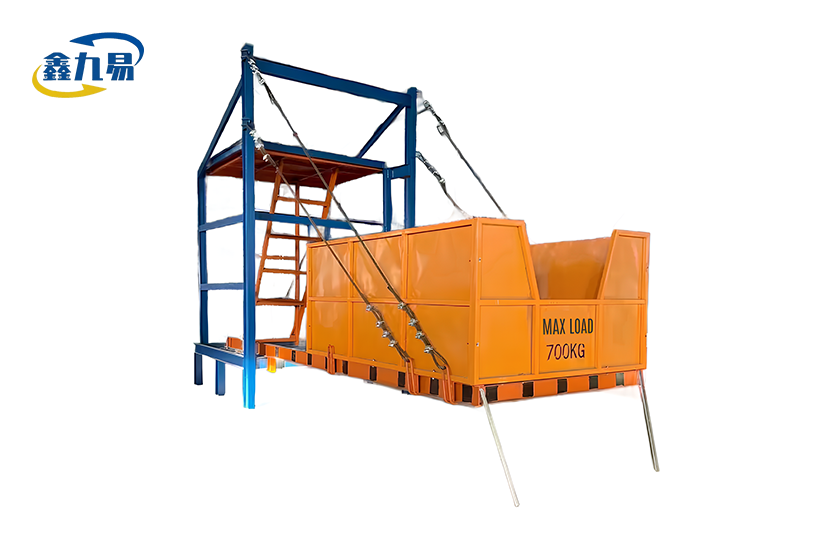
When managing high-rise construction projects, you face a persistent challenge: how do you efficiently transfer tons of steel rebar, formwork panels, and curtain wall materials to upper floors without creating dangerous bottlenecks? The answer lies in a specialized piece of equipment that projects from building edges to create secure material staging zones. A Cantilever Material Unloading Platform is an engineered steel structure designed to extend outward from floor slabs, allowing tower cranes to deposit heavy construction materials safely at height. Unlike traditional ground-level staging areas that become impractical above certain elevations, these platforms serve as dedicated vertical transfer hubs. They solve critical logistics problems in urban construction sites where space constraints, crane reach limitations, and elevator capacity issues threaten project timelines and worker safety (Construction Safety Association, 2022).
Understanding Cantilever Material Unloading Platforms
Core Design Principles and Structural Mechanism
Cantilevered load-bearing principles are at the heart of these platforms' engineering. When a cantilever construction goes beyond its support point horizontally, it transfers loads back to the anchoring system through bent moments. In construction settings, this means that the platform sticks out from a concrete floor slab while strong anchoring methods keep the structure together.
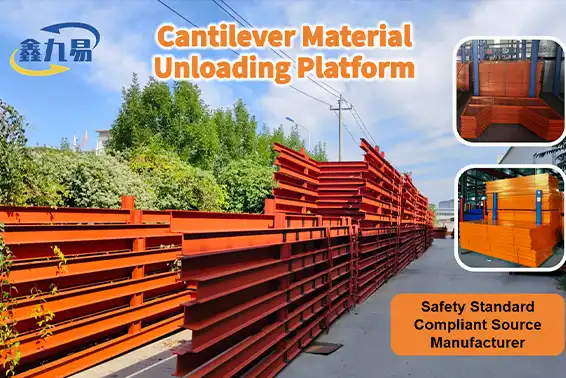
We use Q235B and Q345B structural steel types to make platforms here at Hebei Xinjiuyi Construction Technology Co., Ltd. The main load-bearing framework is made of 4.6 mm thick 180# I-beam steel, which acts as the backbone and supports forces both vertically and horizontally. 5# channel steel is used in secondary support beams to spread the weight evenly across the building. All connection points have full penetration welding with regular weld seams. This gets rid of the risks of bolted assemblies coming loose during repeated crane operations.

Essential Components and Safety Features
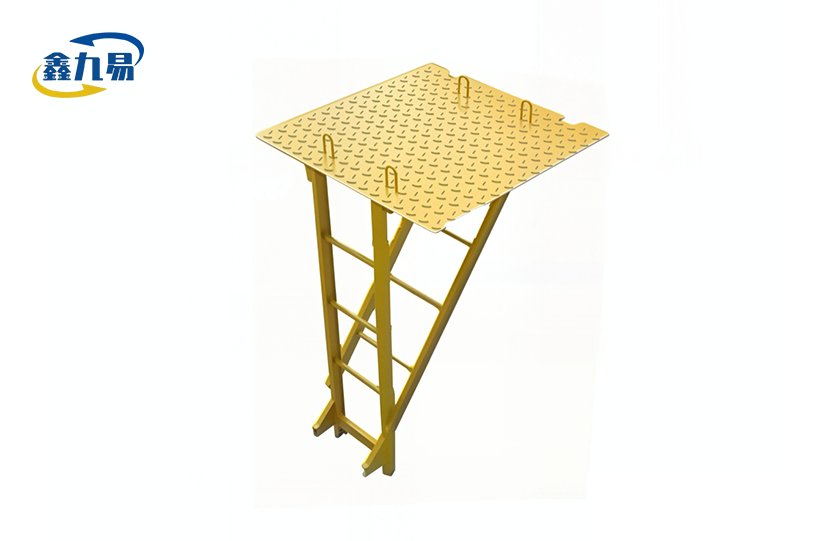
A full material dumping system includes a number of important parts. The work area is a patterned steel plate that is 50 mm thick and doesn't slip, even when it's wet from rain or building work. This surface's texture keeps workers from slipping while they reach staged materials.
Built-in safety railings are 1,200 mm high and go all the way around the platform. These aren't just extras that look nice; they're fully welded structural parts that keep people from falling. Small things like screws or tools can't fall to the ground because of toe boards at floor level. This keeps workers below safe. The yellow-and-black warning paint scheme makes the platform easy to see in any light, so crane workers can find it from hundreds of feet away (Occupational Safety and Health Administration, 2021).
Platform Types and Configuration Options
There are three main types of setups for material handling platforms. Fixed-length platforms work well for projects with consistent floor sizes and known patterns of material flow. These pieces are easy to put together and give the structure the most strength. Adjustable platforms have flexible parts that can be extended or retracted to fit different floor sizes or odd building shapes. This flexibility is helpful for projects that reuse old materials or for buildings that have problems.
Mobile platforms with wheels make it possible to move them along the edges of the floor as work is done horizontally. Anchoring systems are less common because they are more complicated, but they improve material flow in projects with more than one busy work zone at the same time.
Benefits of Using Cantilever Material Unloading Platforms
Operational Efficiency and Workflow Optimization
Putting in dedicated Cantilever Material Unloading Platform for staging materials changes vertical logistics. Your tower crane can work in a steady rhythm, dropping off loads at set locations without having to go around the edges of buildings or wait for elevators to clear. By doing this, a material pipeline is made that feeds work teams constantly instead of in short bursts.
Take a look at a typical high-rise apartment building. If you don't have staging platforms, your crane will have to drop things directly on the floor slabs, which will cause traffic jams near areas where tradespeople are already working. Formwork can't get to rebar bundles. Drywall stacks get in the way of automatic rough-in paths. This makes it harder to coordinate, which adds weeks to plans. Cantilevered platforms get rid of this problem by putting designated welcome areas along the edges of the floor, away from areas where people are working.
The modular design that we come up with at Xinjiuyi makes it easy to put together and take apart. In less than four hours, a team of four people can set up and fix a platform. When construction moves on to the next floor, the same crew moves the platform up. This keeps the flow of materials going without having to pay for expensive downtime.
Enhanced Safety and Risk Reduction
Moving things at a height poses a very high risk of damage. When workers move heavy things by hand near unprotected floor edges, they risk falling. When crane loads move close to the edges of a building, they can hit structural elements or people. When placed correctly, a staging platform with built-in guardrails provides a safe area where these risks are greatly reduced.
The unique shape of the lifting ring we use makes it easier to attach the crane hook. The curved shape helps steel wire ropes stay in the right place, which lowers the stress concentration that leads to rigging failures. There is a National Institute for Occupational Safety and Health report from 2023 that says these designed lifting points will stay strong through many load cycles.
Cost-Effectiveness and Long-Term Value
Good tools provide long-term support for many projects. When our methods are used to make structures, they can last for 5 to 10 years of heavy use if they are properly kept. The initial investment is spread out over many building projects, which makes the cost per project very low compared to other ways of moving materials.
Hot-dip galvanization stops rust from happening even in coastal or humid places. Extra anti-corrosion coatings make things last even longer. You get platforms that are ready to be used right away, and you don't have to pay for surface preparation, which would cost money. This durability directly leads to a better return on investment for general builders who are working on multiple jobs at the same time.
How to Choose the Right Cantilever Material Unloading Platform?
Assessing Load Capacity Requirements
Understanding material weights is the first step in the selection process. Figure out the biggest loads that you expect based on how you plan to build. For tall posts, rebar packages can weigh more than 2,500 kg. With glass and frames, curtain wall panel systems could weigh up to 2,000 kg. The parts of a formwork system are very different, but they usually weigh around 1,500 kg per crane cycle.
Standard Cantilever Material Unloading Platform from Xinjiuyi can hold between 1,500 kg and 3,000 kg of weight. Heavy-duty models can hold up to 5,000 kg and are used for specific tasks like installing prefab concrete elements. Matching the platform's capacity to the weight of your materials, plus the right amount of safety margin, keeps the structure strong during tough operations.
Dimensional Considerations and Site Constraints
The size of the platform needs to match the shape of the building and the crane's reach. Standard lengths of 3,000 mm and 4,000 mm work for most home and business uses. The 2,000 mm width gives enough space for stacking materials while keeping the weight of the crane loads doable during platform installation.
Standard floor-to-floor measurements can be met with height specifications of 6,000 mm or 7,000 mm. If your project needs unusual vertical spacing, you can get custom heights. Urban construction sites with no lot lines can really benefit from these platforms because they make the best use of space by extending the usable staging area into the air without adding to the ground footprint.
Anchoring System Selection
The stability of your platform depends on how well you connect it to your house. We give you two tried-and-true ways to mount. High-strength threaded rods go through floor slabs in through-wall tie rod systems. Backing plates spread the weight over bigger amounts of concrete. With this method, forces from above and below are directly transferred into the building's frame.
Telescopic jack bracing systems make compression load lines between the upper and lower floor slabs when it's not possible to penetrate the slab because of too many reinforcements or issues with the design. Adjustable jacks make leveling very accurate and can handle small differences in the size of floors. The structure plans and engineer specs for your project will help you decide which anchoring method will work best for you.
Supplier Evaluation and Quality Assurance
If you want to find a reliable cantilever platform provider, you need to look at their production skills and quality control methods. At Xinjiuyi, every steel part comes with mill certificates that prove the grade and width requirements. We don't use cheaper grades to cut costs—the solid materials your platform gets are exactly what was calculated by engineers.
Our ISO9001, ISO45001, and ISO14001 certifications show that we are responsible for quality management, health and safety at work, and the environment for Cantilever Material Unloading Platform. All load-bearing welds are checked visually and for accuracy in their sizes. More attention is paid to critical connection points to make sure that the weld seams are uniform and there are no gaps or incomplete fusions that would hurt the performance of the structure.
Maintenance, Safety, and Best Practices
Routine Inspection Protocols
To make a platform last as long as possible, it needs regular care. Visual checks should be done every day before use to make sure the weld is solid and look for cracks or separation at the connection points. Check the security of the fence to make sure that none of the parts have come loose during earlier work. Make sure you look over the work surface for any broken areas that could make it less non-slip.
Monthly structural checks by trained engineers give a more thorough look. Members that hold weight should be checked to see if they bend or permanently change shape. Anchoring systems need to make sure that the backing plates stay flush against the concrete and the tie rods stay in the right place. Write down the results of these checks so that you can keep track of your repair records and figure out when to replace parts.
Operational Safety Guidelines
Proper training for operators is the first step to safe platform use. Crane workers need to know how to place loads correctly and how to get close to the platform at controlled speeds to reduce dynamic impact forces. People on the ground who are in charge of moving the crane need clear ways to communicate and to know how much weight can be on each platform.
Do not go over the maximum weight that is written on the platform identification plate. Conditions of the wind have a big effect on safety. When wind speeds reach 10–12 m/s (Level 6 conditions), material transfer activities must stop. Loads swinging in high winds can put dangerous side forces on platform structures and anchoring systems (American Society of Civil Engineers, 2020).
Surface Treatment and Corrosion Prevention
The base galvanization process we use keeps rust away for a long time. As an extra piece of maintenance, steel surfaces need to be cleaned every so often to get rid of concrete dust and other construction debris that can trap water against them. Coating checks done once a year find places where mechanical damage has worn away the protective layer. This lets specific repairs be made before rust starts.
Premium powder coating with a baking finish is best for projects that will be used in marine settings or industrial places where the air is corrosive. Although it costs more at first, this improvement provides better protection and keeps the product's good looks for a longer time.
Conclusion
Cantilever Material Unloading Platforms are an important part of current high-rise building infrastructure. By making dedicated staging areas, they change vertical logistics by getting rid of traffic on the floor, speeding up the flow of materials, and lowering the safety risks that come with working at heights. The engineering that goes into these buildings, from choosing high-strength steel and full-penetration welding to built-in safety features and strong grounding systems, has a direct effect on how well the project works and how safe the workers are. To choose the right platforms, you need to carefully think about the load requirements, the platform's size limitations, the fastening methods, and the quality standards of the provider. These platforms work reliably on multiple projects if they are properly specified and maintained. This makes them good investments for general contractors who are in charge of large building portfolios.
FAQ
What load capacity should I specify for typical high-rise construction?
Standard platforms that can hold between 2,500 kg and 3,000 kg can handle most types of materials, such as packages of rebar, parts of formwork, and building shell materials. Heavy-duty configurations that can hold up to 5,000 kg are good for specific tasks like installing precast concrete, but they need more structural calculations and stronger anchoring systems.
How long does platform installation take?
Installation by a trained four-person group usually takes three to four hours, which includes placing, anchoring, and making sure everything is safe. Moving to the next floor level and taking things apart take about the same amount of time. This quick deployment keeps the flow of materials going without stopping, so it doesn't mess up your construction schedule too much.
Can platforms be customized for unusual building geometries?
Of course. At Xinjiuyi, we specialize in customizing things that aren't standard. For example, we make platforms for projects with odd floor shapes, different edge conditions, and building restrictions. Our engineering team makes CAD models and structural calculations based on your needs. This makes sure that all codes are followed and that the structure is safe, no matter how complicated the geometry is.
What maintenance schedule should I follow?
Daily visual checks are done before each use to make sure the welds are strong, the guardrails are secure, and the surface is in good shape. Every month, qualified engineers check the overall condition of the structure as well as the load-bearing members and anchoring systems. Every year, coating checks show what kind of rust protection is needed. By writing down these tasks, you can keep track of past maintenance and guess how long a part will last so you can plan your budget.
Partner with Xinjiuyi for Proven Material Handling Solutions
Hebei Xinjiuyi Construction Technology Co., Ltd. sells designed Cantilever Material Unloading Platforms that are perfect for high-rise construction projects all over the world. Our factory in Cangzhou, Hebei, uses cutting-edge technology and strict quality control to make platforms that are approved by ISO9001, ISO45001, and ISO14001 standards. Each unit is made of structural steel grade Q235B or Q345B and has full-penetration welding at all connection points. It also has built-in safety systems with 1,200 mm guardrails and non-slip working surfaces.
We know that normal goods aren't enough for your projects. Our technical team offers full pre-sales support, which includes unique design solutions, structural formulas, and detailed renderings that show how platforms fit into the shape of your building. We are your one-stop shop from the foundation to the finish line because our products have a service life of more than 20 years and we can provide the full range of construction safety products. Visit xjy8.com or email our team at global@xjy8.com to talk about your material handling needs and get a plan that is tailored to your project's specific problems.
References
1. American Society of Civil Engineers. (2020). Minimum Design Loads and Associated Criteria for Buildings and Other Structures. ASCE/SEI 7-16.
2. Construction Safety Association. (2022). Temporary Work Platforms: Design and Safety Guidelines. Toronto: CSA Publications.
3. National Institute for Occupational Safety and Health. (2023). Fall Prevention in Construction. NIOSH Publication No. 2023-115.
4. Occupational Safety and Health Administration. (2021). Safety Standards for Scaffolds Used in Construction. 29 CFR 1926.451.
5. The Institution of Structural Engineers. (2021). Temporary Demountable Structures: Guidance on Procurement, Design and Use (4th ed.). London: IStructE.
6. Workplace Safety and Prevention Services. (2022). Material Handling in Construction: Best Practices Guide. Toronto: WSPS.