How Cage Ladders Reduce Workplace Accidents?
A lot of injuries on construction sites around the world happen every year because of accidents involving ladders. The construction ladder cage has become a revolutionary safety solution. Its sealed protection design has greatly reduced the number of falls. These modular safety systems make a safe way to go up and down that gets rid of the risk of falling backwards that comes with regular open ladders. Construction ladder cages solve the main problems that lead to accidents on ladders—loss of balance, dangerous environments, and not enough fall protection—by combining structural enclosures with non-slip treads and reinforced framing. These systems are made in line with international safety rules and guidelines for building, such as OSHA, EN, and ISO. They solve one of the biggest safety problems in the business all at once.
Understanding Construction Ladder Cages and Their Safety Role
Safety cage systems are a big step forward in protecting people who work at heights in building sites. Unlike regular ladders, which leave workers open to danger, these structures surround the climbing path with a solid wall.
What Defines a Safety Cage System
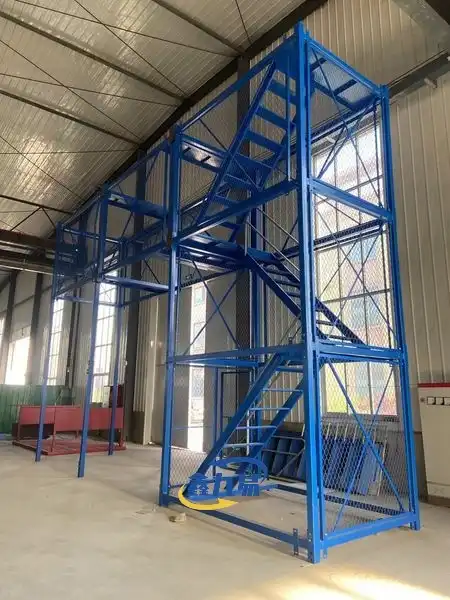
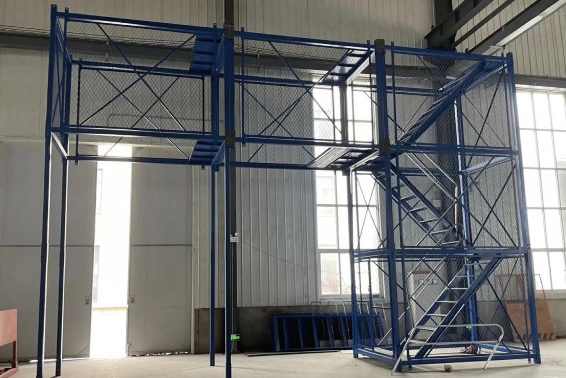
A construction ladder cage is made up of horizontal hoops and vertical bars that form a closed-off path for climbing around fixed ladders. The design is usually made of galvanized steel and has modular sections that can be changed to fit different height needs. In modern systems, thicker galvanized rectangular tubes with 80 mm × 80 mm poles and 3.0 mm wall thickness are used. This keeps the structure strong even when strong winds are blowing. The protective mesh connecting plates are 5 mm thick and have 75 mm welded wire mesh holes. They make a second safety barrier that stops falls while still letting you see. These requirements are in line with strict engineering standards that put worker safety and long-term durability in tough construction conditions at the top of the list.
How Protective Enclosures Function
The sealed design works on a simple but effective idea: it keeps you physically contained while you climb and descend. When workers climb inside the construction ladder cage, the framework around them makes it hard to move side to side, and anyone who loses their balance or grip is caught. Dual safety comes from anti-slip treads on the inside and protected mesh on the outside, adding extra layers of safety. At Xinjiuyi, our cage systems have 2.0 mm thick platforms made of chequered plate that give you a safe place to stand at transition points. The modular assembly design lets parts that are 3000mm long, 2000mm wide, and 2000mm high connect smoothly with strengthened bolt connections. This makes it possible for projects with a range of heights, from deep excavation pits to high-rise bridge piers. Because it is so flexible, the system can be used for a wide range of situations, from getting into a foundation pit to maintaining a tower crane.
Regulatory Compliance and Standards
For B2B procurement workers in charge of global building projects, meeting international safety standards is a must. In the past, OSHA rules said that ladders longer than 24 feet had to have cages. However, new rules stress that new installs should have integrated fall-stop systems. Specifications for hoop spacing, cage diameter, and structural load capacity are set by European EN ISO 14122-4 standards and national building safety laws in developing markets. ISO9001, ISO45001, and ISO14001 certifications are followed in Xinjiuyi's manufacturing processes. This makes sure that quality management is consistent and environmental rules are followed. Our hot-dip galvanizing treatment covers more than 85 microns of coating, which has been proven by salt spray testing to work in harsh maritime and industrial environments. With these certifications, procurement managers can show proof that their products have been through safety checks and regulatory inspections in more than one area.
Common Causes of Ladder-Related Workplace Accidents and How Ladder Cages Address Them
When you look at accident data, you can see clear trends in how and why ladder accidents happen on building sites. Figuring out how these things work helps explain why cage systems make a noticeable difference in safety.
Primary Accident Triggers
Most ladder accidents are caused by people losing their balance or slipping, which can happen in bad weather or when workers are carrying tools while climbing. If you make your own ladders or don't take care of them properly, they could fall apart at any time. Positioning mistakes and bad climbing methods make things more dangerous, especially in deep excavation engineering where limited space makes it hard to set up safely. Long steep climbs make workers tired, which weakens their grip and makes it harder for them to focus, which makes mistakes more likely. Environmental factors, such as wind exposure on a high-pier bridge project or oil contamination in an industrial setting, make things even less safe. Traditional makeshift ladders aren't standardized, so the risks aren't always clear and are different for each project and contractor.
Engineering Solutions That Mitigate Risk
Multiple engineering changes are made to construction ladder cage systems to fix these problems. The fully enclosed frame design stops backward falls even if you lose your balance or your grip. Nodes that are reinforced and connected by bolts keep the makeshift ladders from coming apart or deforming. Our systems use 2.0 mm thick stair half-treads with non-slip surfaces that keep your footing even when it's wet outside. The stable structure can withstand wind loads thanks to its welded rectangular tube framework. The gaps have been ground smooth to prevent sticking. The standard modular section design lets you put it together quickly without affecting the structure's strength. This means that you can replace unreliable workarounds with certified tools. Platform connecting tubes that are 90mm x 90mm and have a wall width of 4.0mm can hold a lot of weight at places where workers stop or change directions.
Reducing Fall Distance and Impact
When compared to open ladder designs, the cage structure greatly reduces the distance that someone could fall. Regular catch points are made by the horizontal hoops, which stop full-height drops. This containment principle gives workers a sense of psychological safety that makes them less anxious during climbs. This is especially helpful in tunnel shaft situations where claustrophobia and confusion are problems. The protective mesh frame is made from 30° angle iron that is 2.5 mm thick. It sets visual boundaries that help workers keep track of their surroundings. When there is an emergency, the stable handholds and safe footing of the cage make it possible to get out quickly without making mistakes out of fear. Vertical entry used to be a high-risk activity, but these features make it a controlled, regular process.
Evaluating Ladder Cage Solutions: Types, Benefits, and Comparisons
In order to choose the right safety systems, you need to know how the different technologies work and what their benefits are in different situations.
Material and Construction Variations
Metal bars are used a lot in industry because they are strong and don't catch fire easily. Welded high-strength national standard steel construction is the most durable way to install things permanently in building floors and on infrastructure projects. Hot-dip galvanizing protects against rust for decades, keeping the structure strong even when exposed to chemicals and high temperatures. Stainless steel versions are used in places like wastewater treatment plants where strong corrosives speed up the breakdown of materials. Which material to use relies on how long you want the project to last, how it will be used, and your budget. Xinjiuyi specializes in thickened galvanized construction that strikes a good mix between low cost and long service life (up to 20 years), which is exactly what big builders need so they can use the same tools for multiple projects.
Advantages Over Alternative Systems
When you compare construction ladder cages to other fall protection methods, you can see that they have clear operational benefits. Personal fall arrest systems need different gear for each worker, ongoing training on how to use the harness correctly, and regular checks on parts that have short useful lives. Guardrails and safety rails are different types of safety equipment that do different things. Temporary scaffolding for vertical movement is hard to set up, costs more in materials, and takes up space that equipment operators need. Construction ladder cage systems offer passive safety because the user doesn't have to do anything extra to use them. The modular bolt-on assembly makes it easy to set up and change the layout as the building process goes on. Visual checks and rare cleaning are all that's needed for maintenance, so long-term costs stay low while protection levels stay the same.
Return on Investment Through Accident Prevention
Beyond the moral requirement of worker safety, financial research shows strong economics. Injuries at work have direct costs, such as medical bills, workers' compensation claims, and possibly even lawsuits. Most of the time, indirect costs like project delays, lost productivity, regulatory probes, and damage to the company's image are higher than direct costs. Installing approved cage systems lowers insurance rates by showing underwriters that you are taking steps to control risk. Better safety records make it easier for contractors to compete for government and private infrastructure projects where safety records affect who gets the job. Because modular devices can be used on more than one job, the cost of buying them is spread out over many years of work, which is good for cost-per-use metrics. Just preventing one serious fall accident usually makes the investment more than worthwhile, so buying Construction Ladder Cages is a smart financial move.
Installation and Procurement Guide for Construction Ladder Cages
When safety systems are put in place correctly, they work as intended to protect people and avoid common deployment mistakes.
Installation Process and Best Practices
An accurate site assessment is the first step to a successful installation. This includes measuring the required vertical travel distance and finding anchor points that can hold structural loads. Preparing the foundation makes sure that the base can be mounted securely, which is very important in dig sites where the dirt isn't always stable. Connecting modular parts one after the other is done by tightening the bolt nodes to the manufacturer's specs. This keeps the joints from coming loose under dynamic loads. Verification of alignment at every link keeps the vertical plumb, which stops any binding or stress buildup that could weaken the structure. Platform sections need extra care to be level and make sure that the checkered plate surfaces are attached securely. The final check makes sure that all the protective mesh panels are in place and that the climbing treads are clean and free of any damage or debris. Some common mistakes are not anchoring properly in soft substrates, not accounting for thermal expansion in harsh climates, and mixing parts from systems that don't work together.
Procurement Considerations and Criteria
B2B procurement professionals have to look at more than just the initial price. Material approvals show that the steel type, galvanizing thickness, and welding quality meet national standards. What determines whether standard dimensions meet the needs of a specific project or if changes need to be made is the ability to customize. The ability of a supplier to make things affects how long it takes to send big orders that cover multiple construction sites. Warranty terms and expert help after the sale are what set reliable partners apart from transactional sellers. Safety checks and governmental approvals are easier to do when you have documentation packages with engineering drawings, load estimates, and compliance certificates. Xinjiuyi offers full technical services before a sale, such as on-demand design solutions and detailed renderings that show how systems will work with the site's current infrastructure. Our factories in Cangzhou, Hebei, keep stock and have flexible production plans so that we can meet tight project deadlines without lowering quality standards.
Working with Trusted Suppliers
Building relationships with trustworthy manufacturers creates long-term value that goes beyond single transactions. Suppliers with a history of success on a wide range of projects bring application knowledge that helps with choosing products and making changes. Location affects how well supplies work and how quickly they can meet urgent needs. As a modern building safety company that does research and development, production, and sales all in-house, Xinjiuyi can help customers from the initial design phase all the way through installation, including the integration of the Construction Ladder Cage where required. Our fully-equipped production sites and well-established supply chain system allow us to make a lot of things, which is needed for infrastructure development projects that span many countries. We are dedicated to quality management, occupational health, and environmental responsibility, as shown by our ISO9001, ISO45001, and ISO14001 certifications. Buying in bulk can save you money and make sure that all of the deliveries are the same in terms of quality, which makes it easier to keep track of your supplies and plan for upkeep.
Case Studies and Verification of Ladder Cage Effectiveness
There is evidence from real-world deployments that cage systems make construction sites safer in a variety of settings.
Documented Safety Improvements
Infrastructure projects in Southeast Asia have reported that ladder-related accidents have dropped by 70–85% since the cage system was put in place. High-rise builders in the Middle East said that serious fall injuries stopped happening completely after standard cages were used instead of temporary ladders for three years. When building bridges in areas with a lot of wind, the covered design was especially useful because it kept the workers from getting hurt when open ladder operations would have been stopped. Deep excavation projects were helped by cage systems because they allowed stable vertical access even as the site conditions changed as the work went on. These results show that properly designed systems provide consistent protection, even when workers behave in different ways.
Compliance Achievement and Audit Results
Regulatory authorities and third-party auditors always make sure that cage ladder installations meet the requirements set by the designers. When projects have certified systems, they pass compliance reviews with few problems. This speeds up the approval process from regulators, which could otherwise slow down construction schedules. The uniform look of modular cages makes a construction site look more professional, which is important for managing a contractor's reputation and public relations in urban projects. The yellow and black warning colors that are built into the look of our systems meet standards for clarity while also giving off an air of business. From manufacturing certifications to installation records, there are paper tracks that make proof that can be inspected and meets insurance requirements and legal due diligence standards.
Maintenance Programs and Longevity
Performance monitoring makes sure that systems keep their ability to protect throughout their useful lives. During routine checks, the state of the coating, the tightness of the bolts, and the structural stability of load-bearing parts are all looked at. Simple daily maintenance tasks at Xinjiuyi, like basic cleaning and eye checks, can be done by anyone working on the site without any special skills. Our hot-dip galvanized surfaces don't rust, so they keep their structural integrity even after years of use. This means you won't have to replace them as often as you would with lower-quality options. Maintenance records that list inspection times and any repairs are also proof of compliance. Standardized equipment makes training, keeping track of parts, and maintenance easier for clients who work on multiple projects. This creates operational efficiencies that build over time.
Conclusion
Construction ladder cage systems are a tried-and-true, well-thought-out way to solve one of construction's biggest safety problems. These protective enclosures turn vertical access from a dangerous activity into a controlled process by physically containing it, making sure the structure is redundant, and meeting international standards. The investment pays off in a measurable way by lowering the risk of accidents, making sure that rules are followed, and improving operational efficiency. When purchasing safety equipment, procurement professionals have a clear choice: they can keep using ad hoc solutions with unknown risks, or they can put in place standardized systems based on engineering principles and proven to work. There is proof from many different types of building sites around the world that properly designed and installed cage ladders greatly reduce accidents on the job and help the project's long-term finances.
FAQ
1. When Are Cage Systems Mandatory Under Safety Regulations?
Fixed ladders taller than 24 feet used to have to have cages according to OSHA rules. However, new rules require personal fall stop systems or ladder safety systems for all new installs. Cage requirements are still in place in many places for existing installations and certain uses. Each country has its own rules about building safety. Often, developing markets adopt rules that are similar to OSHA or EN guidelines. Based on contractor safety rules or client risk management standards, project specs often go above and beyond what is required by law.
2. Which Materials Perform Best in Harsh Environments?
Hot-dip galvanized steel is very good at resisting corrosion in most building environments, even those that are near salt water. Grades 304 or 316 stainless steel are used in specific situations where corrosion is very bad. When choosing materials for a project, you should think about how long it will last, how easy it will be to maintain, and environmental factors like temperature changes, chemical exposure, and humidity levels. Xinjiuyi's galvanized systems with coatings thicker than 85 microns last for decades and work well in a wide range of climates.
3. Can Existing Ladders Be Upgraded with Cage Systems?
When the existing ladder structures can handle the extra weight and anchor forces of cage parts, retrofitting is an option. Upgrades can be made with modular bolt-on kits instead of replacing the whole ladder, but an engineering review is still needed to make sure the structure is strong enough. It is possible to make established buildings safer with retrofits without having to change the whole system, which can be expensive and cause problems.
Partner with Xinjiuyi for Comprehensive Ladder Safety Solutions
For construction sites to be safe, they need partners they can trust who understand the complicated needs of global projects. Hebei Xinjiuyi Construction Technology Co., Ltd. offers advanced manufacturing skills and in-depth application knowledge to create safety systems that keep your workers safe and help the project succeed. Our construction ladder cage systems are made to meet the tough needs of deep drilling, high-rise construction, bridge projects, and tunnel uses. They do this by using flexible designs that can be changed to fit your needs. We offer the quality guarantee and technical paperwork that procurement workers need because we are a certified manufacturer under ISO9001, ISO45001, and ISO14001 standards. Email our team at global@xjy8.com to talk about the needs of your project and get detailed engineering help. Xinjiuyi offers reliable construction ladder cage options with 20-year service life warranties and full after-sales support, whether you need standard setups or custom sizes. Raise the safety standards of your construction site with a reliable supplier who cares about the success of your project.
References
1. National Safety Council. (2022). Injury Facts: Workplace Falls and Ladder Safety Statistics. National Safety Council Publications.
2. American Society of Safety Professionals. (2021). Best Practices for Vertical Access Safety in Construction Environments. ASSP Technical Report Series.
3. International Labour Organization. (2020). Safety and Health in Construction: Global Standards and Implementation Guidelines. ILO Sectoral Activities Department.
4. Construction Industry Institute. (2019). Fall Prevention Through Engineering Controls: Research on Protective Systems. CII Research Summary 341-2.
5. European Agency for Safety and Health at Work. (2021). Ladder Safety in the Construction Sector: Risk Assessment and Prevention Measures. EU-OSHA Practical Guidelines.
6. Occupational Safety and Health Administration. (2023). Walking-Working Surfaces and Fall Protection Standards: Compliance Guide for Construction Industry. OSHA Publication 3124.