What Is American Type Frame Scaffolding? A Complete Guide
If you go to any construction site in North America, you'll probably see a modular scaffolding system with vertical frames and ladder rungs built right in. This is American type frame scaffolding, a strong and effective way to provide safe working platforms, support for storing materials, and structural help in a wide range of building sites. This system meets important needs in the industry by being made mostly of Q235 or Q355 high-strength steel and treated with hot-dip galvanizing or powder painting. It can be put together quickly, meets OSHA safety standards, and can be changed to fit the needs of complex projects. The built-in ladder in the frame makes it unique because it removes the need for separate access tools. This makes setup and work more efficient.

Understanding American Type Frame Scaffolding
How American type frame scaffolding works
Core Design and Structural Components
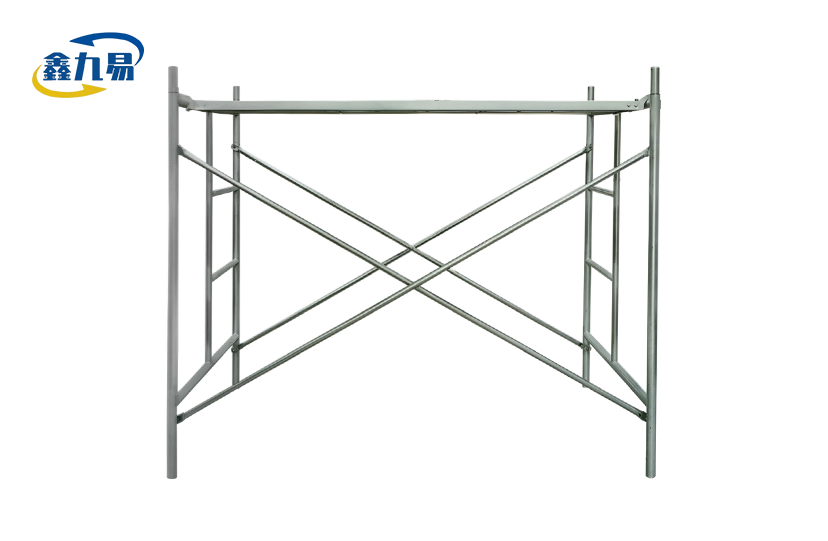
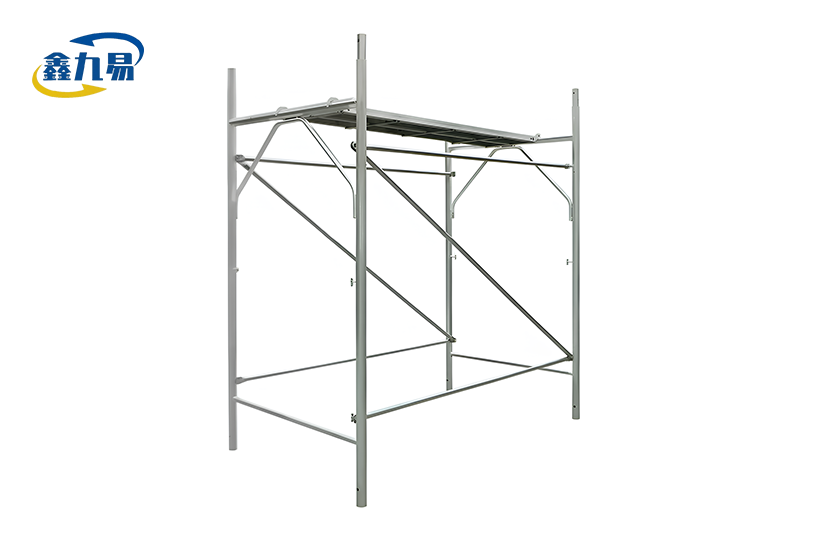
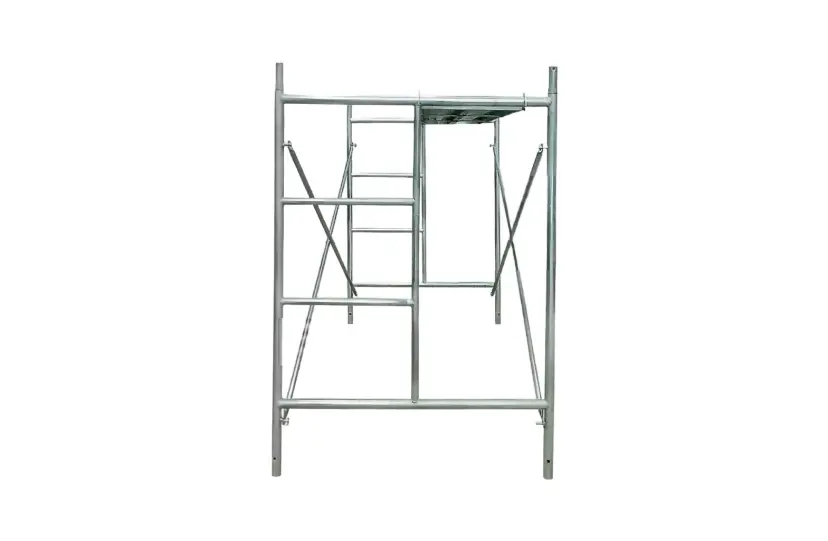
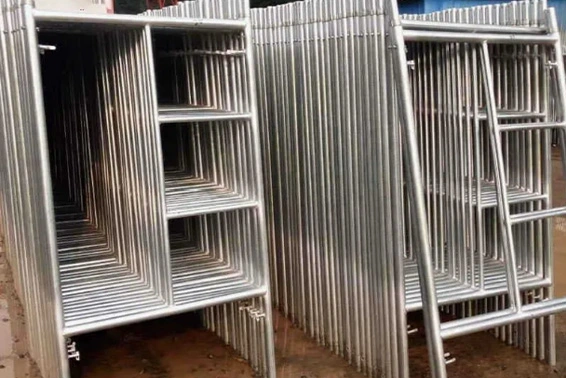
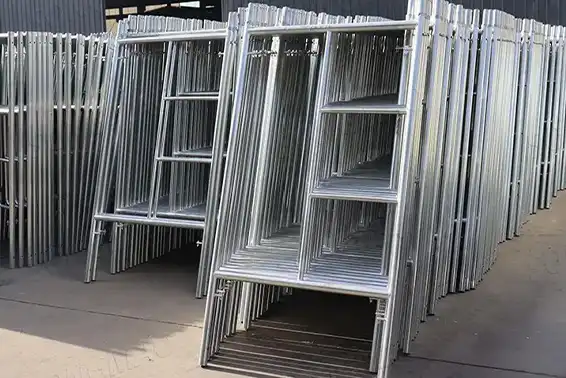
The steel frames of this scaffolding system are rectangular and usually come in heights between 1524 mm and 1930 mm and widths between 950 mm and 1250 mm. Each frame has horizontal rungs that are welded right into the vertical tubes, making a climbing path that is part of the frame itself. Cross braces connect frames that are at right angles to each other, making stable bays that can be stacked vertically or stretched out horizontally. No special tools are needed to make links with coupling pins, which can be flip-locks, drop-locks, or slide-locks.
Material Standards and Load Capacity
These frames are made by Hebei Xinjiuyi Construction Technology out of Q235 high-frequency welded steel pipes with walls that are 2.0 mm to 2.5 mm thick. This choice of material strikes a good balance between structural strength and reasonable weight, so it can be handled by hand and still hold up under active loads. The corrosion protection of Q355 low-alloy high-strength steel is better for projects that will be subject to salt spray or chemical conditions. Load capacity is designed to support basic brickwork and cladding work. Specific values are based on tests that follow ANSI/SSFI SC100-5/05 guidelines.
Frame Variants and Configuration Options
Two main types of frames are used for different things. Walk-Thru frames have an open opening at the base that lets people and things pass under the structure. To support heavy concrete loads, mason frames have joints that are stronger and rungs that are closer together. In addition to these standard sizes, custom configurations can be made to fit non-standard floor-to-floor gaps or specific attachment points for temporary passages and cantilevered platforms, all of which are available within the American type frame scaffolding system.
Because this system is modular, procurement teams can change the size of their inventories to fit the needs of their projects. Standardized measurements make sure that batches are compatible with each other, which makes it easier to coordinate operations that happen at multiple locations or rental stocks.
Advantages and Benefits for Construction Projects
Picking the correct support system has a direct effect on project timelines, safety records, and total profits. There are real benefits to ladder frame scaffolding that project managers, procurement officers, and safety directors all like.
Rapid Deployment and Labor Efficiency
The design of the integrated ladder saves time and money by getting rid of the need to move and set up separate access equipment. As workers move up and down within the frame structure, they keep working and getting things done. Assembling doesn't require any special skills; crews can quickly lock frames and braces together and change the arrangements as the project progresses. This speed is especially useful for fast-track urban projects where being late on the schedule costs a lot of money.
Compliance with Safety Regulations
All climbing systems must have a 4:1 safety factor, as required by OSHA 1926.451. Manufacturers of good products put their products through rigorous load tests and keep records that can be inspected by regulators. Ladder frame scaffolding that is put together correctly has guardrails, toe boards, and strong base supports that meet or go beyond these standards. Hebei Xinjiuyi's ISO9001 and ISO45001 certifications show that they have strict quality control methods in place, from checking the raw materials to doing a final review. This makes sure that every frame that leaves the factory makes the job site safer.
Durability and Lifecycle Economics
Surface treatments make things last a lot longer. For projects that will last a modest amount of time, electro-galvanization is a cost-effective way to protect against corrosion. For outdoor uses, hot-dip galvanizing is more stable for up to 20 years. Powder finishing adds an extra layer of protection and lets you use brand-specific colors on places that a lot of people will see them. Because the system lasts a long time, it costs less per project when spread out over many deployments. This makes it appealing to contractors who are in charge of ongoing infrastructure maintenance or building projects.
Versatility Across Application Scenarios
Ladder frame scaffolding can be used for a wide range of tasks, from building high-rise homes to maintaining bridges, turning around power plants and supporting tunnels. Its small size makes it good for remodeling inside spaces that are tight, and its ability to stack multiple levels makes it useful for building exteriors and restoring facades. Event planners use the system to set up portable grandstands and stage rigging, and they like how easy it is to take down and move from one place to another. Industrial repair teams set up rolling towers with casters and outriggers, moving platforms to get to machinery and pipes above without taking the whole thing apart. These benefits apply equally to American type frame scaffolding, which shares the same modular advantages. Knowing these benefits helps people make decisions about whether this type of scaffolding fits with their business goals and project portfolios.
Comparison with Other Scaffolding Types
Before finalizing seller deals, people who work in procurement often look at more than one scaffolding system. Each system has its own features that make it better for different types of projects and budgets.
Structural Design Differences
Ringlock scaffolding uses a rosette-based connection method with eight connection points per node. This lets you make cantilevers and complex geometric shapes. This freedom is good for projects that need to load heavy things or have odd patterns. Cuplock scaffolding has a cup-and-wedge mechanism that locks four connections at the same time. This makes it great for buildings with multiple stories. European scaffolding, which usually has tube-and-clamp connections, is very flexible but needs skilled workers to put together safely.
Ladder frame framing puts speed and ease of use first. Its set rectangular shape makes it hard to make complicated shapes, but it works great for simple, repeated tasks like installing siding on homes, building warehouses and fixing up bridge decks. The built-in ladder gets rid of the risk of cross-contamination that comes with having separate access equipment. This makes the site safer and easier to organize.
Safety Features and Compliance
Even though all systems have to meet OSHA guidelines, how they are put together varies. Ladder frame scaffolding is stable because it has a wide base and strong locking pins. Ringlock systems, on the other hand, depend on precisely machined rosettes and strong ledgers. The closed-frame design of the ladder system protects against falls during building. With tube-and-clamp scaffolding, on the other hand, workers have to build guardrails one step at a time as they climb.
Cost Considerations
The costs of buying vs. renting rely on how often the property is used. When contractors need scaffolding for multiple jobs at the same time, they can save money by owning the equipment and spreading the costs out over hundreds of placement days. Specialty contractors or companies that are entering new markets may like renting agreements because they don't have to pay for capital or upkeep. Ladder frame scaffolding is long-lasting and doesn't need much upkeep, which lowers the total cost of ownership. Its standard parts also make it easy to keep track of inventory and find new parts. These similarities help procurement teams match the needs for scaffolding with the goals of the project, the rules that apply, and the company's long-term strategy plans.
How to Assemble American Type Frame Scaffolding Safely
Correct assembly saves workers, keeps projects on schedule, and makes sure that rules are followed. Following a set of steps reduces danger and improves the performance of a structure.
Site Preparation and Foundation Assessment
Check the ground for levelness, stability, and drainage before putting up any scaffolding. Base plates and movable screw jacks are needed to level and spread loads evenly on soft or uneven ground. Clear away any clutter and set up no-go zones to keep people from getting in while the parts are being put together. Check that the planned heights can be accommodated by the ceiling openings and that there are lateral bracing points on buildings nearby.
Step-by-Step Erection Process
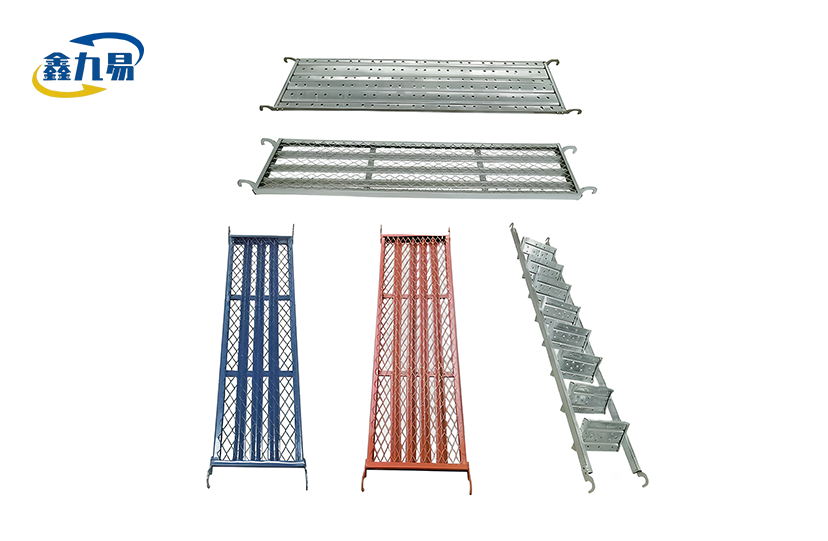
Place the base frames on the prepared footings and use a spirit level to make sure they are straight. Connect cross braces between frames that are at right angles by putting coupling pins in them. This makes a stable bay. This is the standard assembly procedure for American type frame scaffolding. Add more frame levels and make sure that each link locks firmly and that the rungs are aligned the same way in all of them. Place intermediate platforms at heights where you will be working and use hooks or clamps to hold them in place. Before letting workers in, add guardrails, mid-rails, and toe boards. For heights greater than three levels, use wall ties at intervals determined by engineering calculations to connect the scaffolding to the building structure.
Common Assembly Challenges
Uneven ground makes straight line harder. To fix this, use adjustable screw jacks that can adapt to changes in the grade without affecting the stability. Joint security rests on pins engaging properly. Check each link to make sure the pins are fully inserted and locked. The weather, especially wind and rain, can make it less safe to put things together. Stop work when there are strong winds that could knock down partly built structures, and make sure that wet surfaces on platforms or rungs don't make them dangerous to slip on.
Safety Best Practices
When putting things together, workers must wear the right safety gear, like hard hats, shoes that don't slip and fall protection belts when they are above six feet. Check for damage or movement in pins, braces and platforms at the start of each shift as part of routine safety checks. To keep things from getting too heavy, make load limits clear and follow the rules for storing things. Scaffolding should only be put up, changed, or taken down by people who have been trained to be competent persons according to OSHA standards. These routines turn legal requirements into actions that can be done on-site. They keep teams safe and the project moving forward.
Procurement and Supplier Insights for B2B Clients
To find your way around the scaffolding supply market, you need to know what makes trusted partners different from transactional vendors: the ability to manufacture, the ability to customize, and the commitment to service.
Sourcing Strategies for Construction Firms
When you buy directly from the factory, you have the most control over the specifications and delivery times. When you work with makers like Hebei Xinjiuyi, you can get access to engineering teams that look over site plans and suggest the best ways to set things up. Large contractors who are in charge of building projects that last more than one year will benefit from this method because it ensures consistent product quality and stable prices. Distributors and renting houses help workers with a range of needs by providing flexible terms and stock that is available in the area. Check the names of distributors by looking at their networks of suppliers, how quickly they sell their stock, and how well they can help with technology issues.
Key Procurement Evaluation Criteria
Project plans are directly affected by lead times. Companies that have their own galvanizing lines and integrated supply chains can shorten the time it takes to make things, while companies that rely on outside treatments may have to wait during busy building seasons. This is especially true for products like American type frame scaffolding, where consistent quality and timely delivery are critical. Terms of the warranty show how confident the maker is in the product; complete coverage means that quality control is strong, while limited warranties could mean that the product won't last as long as expected. Support after the sale, such as getting replacement parts and technical help, increases the value of a product after it has been delivered.
Customization and Bulk Order Benefits
While standard scaffolding can work for most jobs, it's better for those with specific needs to have it customized. Manufacturers can change frame heights to fit certain floor-to-floor measurements, ask for better surface treatments for harsh settings, or add special connection points for platforms that are hung. Bulk orders lead to economies of scale, and negotiating annual supply agreements locks in good prices and makes sure that production slots are available when demand goes up.
Evaluating Manufacturing Credentials
Getting ISO9001 approval shows that you have a method for managing quality, from buying materials to checking them for quality at the end. ISO45001 shows that a company cares about worker health and safety, and that the methods used to make goods are safe for workers and reliable. ISO14001 approval is about taking care of the earth, which is useful for clients who have to be sustainable. By asking for weld inspection records, load test data, and measures of coating thickness, you can get objective proof of how well the product was made. When buyers understand these aspects of procurement, they can build relationships with suppliers that deliver consistent value and support long-term operational success.
Conclusion
Ladder frame scaffolding has been used for a long time and has been shown to help construction companies meet safety, efficiency, and regulatory requirements. Its integrated design speeds up assembly, lowers the cost of labour, and makes it flexible for a wide range of uses, from high-rise construction to industrial maintenance. American type frame scaffolding is one such system that exemplifies these benefits. Lifecycle performance is based on the quality of the materials, the accuracy of the manufacturing process, and the surface treatments that are applied. Choosing a supplier is a strategic decision that affects how the project turns out over years of deployments. When purchasing managers look at structural requirements, review different system options, and work with makers that can make changes, they set up their companies to meet changing project needs while keeping workers safe and total costs low. This type of scaffolding is easy to keep track of because it comes in modules and standard sizes. This makes it possible to expand operations as project files grow.
FAQ
1. What distinguishes Walk-Thru frames from Mason frames?
Walk-Thru frames have an open path at the base that lets people and material carts go under the scaffolding without taking apart any parts. This feature is useful in cities where the sidewalks need to stay open while work is done on the facade. Mason frames have vertical tubes that are strengthened and rungs that are spaced closer together so they can hold big loads of masonry and give workers many places to climb when they are moving things up and down.
2. How do I verify load capacity compliance?
Load test certifications that meet ANSI/SSFI norms are given by reputable makers. These papers say how much weight can be evenly spread out and piled up per bay. Check these scores against how much space you need to store materials and how many people will be working on the job. If you're not sure, talk to a structural expert about how to set up the scaffolding based on the conditions at the spot.
3. Can frames from different manufacturers be mixed?
Many companies use the same size standards, so mixing parts could result in coupling pin spacing or tube diameters that don't work together. This breaks safety rules and threatens the structure's integrity. Use only parts from a single maker for each job to make sure connections are safe and performance is consistent.
4. What surface treatment offers the best value?
Hot-dip galvanizing has the longest service life and is best for equipment that will be kept for decades. Powder painting is a good way to protect things for shorter-term projects or indoor uses, and it lets you choose your own colours. For moderate-length outdoor use, electro-galvanizing strikes a good balance between price and performance. Choose a treatment based on how often it will be used and how much it will be exposed to the surroundings.
Partner with Xinjiuyi for Reliable Ladder Frame Scaffolding Solutions
To get scaffolding systems that meet strict safety standards and help projects get done quickly and well, you need to buy them from a company with a history of success and customer-focused service. This is exactly what Hebei Xinjiuyi Construction Technology offers. Our certified Q235 high-strength steel ladder frame scaffolding is made with precise welding and controlled galvanizing to give your projects the durability and compliance they need. As an American company that sells type frame scaffolding, we can fully customize the sizes, materials, and finishes of our products to fit your particular needs.
Our ISO-certified factory in Cangzhou makes sure that the quality of every production run is the same. Our engineering team also helps with technical questions from the beginning of the planning process to on-site help. We offer standard safety solutions that keep your workers safe and projects on schedule, whether you're in charge of building tall buildings, improving infrastructure, or industrial maintenance programs. Email our team at global@xjy8.com to talk about your needs, get full technical specifications, and look into bulk purchasing choices that fit your business's needs.
References
1. American National Standards Institute. (2021). Safety Requirements for Scaffolding – ANSI/SSFI SC100-5/05. Scaffold and Access Industry Association, Washington, DC.
2. Occupational Safety and Health Administration. (2020). Scaffolds in Construction: OSHA Standard 1926.451. U.S. Department of Labor, Washington, DC.
3. Palmer, M. & Richardson, J. (2019). Structural Design and Analysis of Temporary Access Systems. Construction Safety Press, Boston, MA.
4. Chen, W. (2022). Steel Frame Systems for Construction Applications: Materials, Manufacturing, and Performance. International Journal of Construction Engineering, Vol. 34, pp. 112-128.
5. National Association of Scaffolding Contractors. (2021). Guide to Scaffolding Selection and Procurement for Commercial Construction. NASC Publications, London, UK.
6. Thompson, R. & Lewis, K. (2020). Comparative Analysis of Modular Scaffolding Systems: Safety, Efficiency, and Economic Considerations. Journal of Construction Management and Economics, Vol. 28, No. 3, pp. 245-267.