Top Benefits of American Type Frame Scaffolding for Construction
American Type Frame Scaffolding stands out as a reliable and widely used solution in the construction industry, valued for its robustness and user-friendly design. This modular support system has become the backbone of countless building projects across North America and beyond, offering an ideal balance between structural integrity and operational efficiency. As a procurement manager, engineer, distributor, or OEM client, understanding what makes this ladder frame system exceptional can transform your approach to site safety and productivity. The integrated climbing rungs, tool-free assembly mechanisms, and strict adherence to OSHA and ANSI standards make it a preferred choice for diverse construction projects. Whether you're managing high-rise masonry work, bridge maintenance, or industrial facility upgrades, this scaffolding type delivers adaptability across multiple project scales while maintaining unwavering compliance with industry safety standards.

Understanding American Type Frame Scaffolding
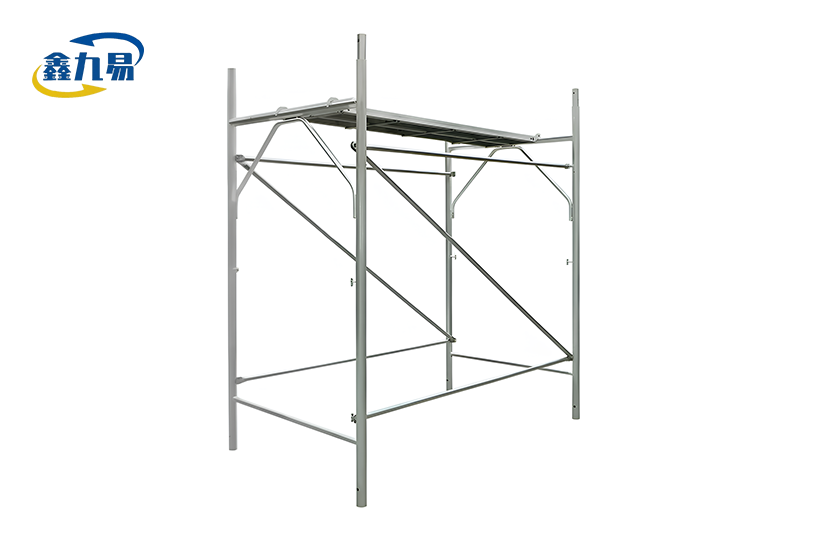
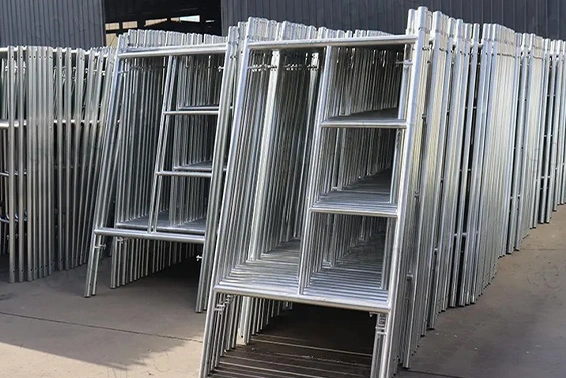
Standardised high-grade steel or aluminium frame parts make up American Type Frame Scaffolding. These parts meet rigorous safety and load standards. These frames are made of Q235 high-frequency welded steel with wall thicknesses between 2.0 and 2.5 mm by Hebei Xinjiuyi Construction Technology Co., Ltd. They have the best strength-to-weight ratios. Vertical frames in 1524, 1700, 1900, and 1930 mm heights and 950–1250 mm widths make up the main structural parts. These measurements meet industry standards and can be utilized in various building circumstances.
Ladder rungs built into the side frames distinguish this arrangement. This simplifies site operations by eliminating climbing gear. Cross-Braces are secured by flip-locks, drop-locks, or C-locks. These systems can be assembled without tools. It's safer and faster to launch with this strategy. CNC cutting and bending equipment maintains precise manufacturing tolerances, allowing frames to fit smoothly between batches.
Material details affect performance and durability. For light applications, we offer Q235 and Q355 low-alloy high-strength steel and 6061-T6 aircraft aluminum. Electro-galvanizing is cost-effective, hot-dip galvanizing is ideal for corrosion resistance, and powder coating is artistic or logo-enhancing. Each treatment undergoes thorough quality control, and calibrated gauges measure coating thickness to ensure even coverage and durability in harsh settings.
This frame system comes in various versions for different construction types. Open arch walk-thrus allow people to walk under scaffolding. In busy cities, ground-level access must be clear. Mason frames have stronger horizontal elements and closer rungs to accommodate bricklaying and masonry loads. Rolling towers with wheels and outriggers move readily over flat ground. This makes them ideal for industrial maintenance and power plant work where workers must move equipment to reach machinery or pipes above them.
Top 5 Benefits of American Type Frame Scaffolding in Construction Projects
Using this ladder frame system has benefits that go beyond its basic usefulness. It improves safety, speed, and return on investment in ways that can be measured. Knowing about these benefits helps people who work in buying make choices that are in line with project goals and budget limits.
Enhanced Safety Compliance
Keeping everyone safe is the most important thing for any construction project, and this type of scaffolding does a great job of that thanks to its built-in safety features. The built-in ladder rungs provide safe places to climb with uniform spacing that follows safe climbing practices. This makes it less likely that someone will slip or fall while moving vertically. Reinforced welding at each rung link keeps the structure from deforming over time, so the product will last for a long time.
Following OSHA 1926.451 rules is necessary, and our frames keep a 4:1 safety factor that has been proven by thorough load testing. The design allows for the right safety systems, and the construction must be overseen by a qualified person in line with government rules. Surface treatments keep steel from rusting, which could weaken the structure. This is especially important in coastal or chemically harsh areas, where steel would rust quickly if it wasn't treated.
Superior Load Capacity and Stability
Strong frame design provides superior load-bearing performance that surpasses many other kinds of support. The high-frequency welding process makes seams that are the same length of the tube, and the manual reinforcement welding makes key connection points stronger. When two types of welding are used together, the frame stays stable even when workers are climbing or doing heavy work at height.
Precision manufacturing keeps the vertical frames parallel, and the spacing between the cross-members is checked against technical drawings to make sure there are no compatibility problems. When properly braced and set up according to the instructions, these systems can support the heavy loads of masonry work, storing materials, and having multiple workers on the same platform at the same time. Standardized sizes also make it easier to stack on multiple levels while keeping the structure stable with the right support methods.
Ease of Assembly and Reduced Labor Costs
One of the nicest advantages is the simple connection pin system for ordinary cross braces. Without specific tools, workers can lock parts together, reducing training and labor hours significantly. Fast assembly is especially useful for projects with short deadlines, since every hour saved cuts costs and speeds up the project.
The built-in climbing capability eliminates the need for floor-specific steps. Fast ups and downs keep your team moving and reduce downtime between jobs. The compact size makes it easier to transport and store. This reduces handling expenses by maximising caravan capacity and reducing visits to carry goods between job sites.
Cost-Effectiveness and Improved ROI
The initial investment matters, but the entire cost of ownership is more economically beneficial. Compared to disposable or short-lived alternatives, American Type Frame Scaffolding with reusable design reduces project costs significantly. These frames can last 20 years with careful maintenance, spreading the cost across many projects and increasing ROI.
Long-lasting surface protection reduces maintenance costs. As the best corrosion protection, hot-dip galvanisation can be used outdoors for years with little maintenance. Standard building zinc coatings can be applied cheaply by electro-galvanizing. Powder coating is suitable for short-term projects or aesthetics. Because it's flexible, broken parts can be replaced individually instead of the whole system.
Versatility Across Multiple Applications
This help method is suitable for procurement managers who need flexible, high-value solutions because it can be adjusted. Its adjustable screw jacks for uneven terrain, wheels, and platform combinations allow it to be utilized for more than exterior building. It supports bridge repair, tunnels, building renovations, and temporary event infrastructure.
Standardized methods ensure equipment works with rented and owned items, helping organizations manage many projects. Customizing these frames for worker platforms, material storage, structure building, and safety measures is easy. Construction, industrial maintenance, power plants, petroleum facilities, cantilever structures, suspended activities, and temporary routes use this product. A wide range of uses makes it versatile and effective.
Understand that these five benefits work together before comparing this technique to others. Better safety compliance lowers insurance and lawsuit risk. Work at height is more efficient with better load capacity. Easy assembly saves labor. Cost-effectiveness increases business earnings. Versatility optimises resources. These features offer great value to B2B buyers seeking long-term performance and company excellence. American Type Frame Scaffolding benefits from specialised engineering.
Comparing American Type Frame Scaffolding with Other Scaffolding Solutions
For business-to-business buyers, it's helpful to know how American Type Frame Scaffolding compares to other types of scaffolding commonly used in the building industry. Each system has its own unique features that make it good for different uses. Making smart purchasing choices depends on matching the system's features with the needs of the project.
Structural Differences and Performance
Tubular scaffolding is made of tubes and couplers assembled on-site to form shapes. This gives you the greatest options for non-straight patterns, but it requires time and skill to assemble. However, ladder frame systems include pre-made vertical elements that lock together easily. This streamlines setup and deployment.
System scaffolding, also called modular or ring-lock scaffolding, has rosette connection nodes that hold multiple pieces at different angles. Complex building projects that require three-dimensional flexibility benefit from this European method. However, its higher costs and longer learning curve make it less useful for simple vertical access tasks than frame support, which is cheaper.
European frame scaffolding is thinner and locks differently than American scaffolding. The typical four-foot and five-foot width standards in North American frame systems create spacious work surfaces that can fit numerous people and materials. American frames use flip-lock and drop-lock mechanisms to assemble faster than European wedge or pin systems.
Safety Implications and Compliance
Different platforms must meet local safety standards, but there are different ways to do so. Pre-engineered frame scaffolding makes it easier to calculate loads and ensure safety because parts are tested as assemblies. Qualified people can determine tubular system weight capacities in each arrangement. Changes in site conditions or during construction could cause errors.
American frames with built-in ladder rungs eliminate the risks of portable ladders and awkward climbing. Safe, consistent climbing points allow workers to reach higher levels without creating their own. This built-in feature reduces the risk of falling compared to systems with separate access equipment that could be moved or placed incorrectly.
Logistical Considerations
Scaffolding is moved and stored differently. Due to their many pieces, tubular components take a long time to load and unload, despite packing well. Frame systems nest inside each other when stacked. It maximizes trailer space and reduces the number of items and their handling.
Standardized frame measurements simplify inventory tracking. For multiple projects, procurement teams can stock certain heights and widths, but for unique tubular designs, they may need to buy narrow-use parts. When you pay attention to locking pin spacing and tube diameter, manufacturer compatibility gives you more sourcing options and reduces supplier dependence.
Frame systems are modular, making them easy for rental businesses. Equipment giveaway companies stock basic parts to satisfy a variety of consumers. Procurement teams can get equipment cheaply due to strong renting marketplaces. This freedom helps short-duration projects and groups that want to try tools before buying.
Procurement Guide: How to Source Quality American Type Frame Scaffolding?
OEM clients and procurement managers need clear instructions on how to find real, high-quality American Type Frame Scaffolding systems that meet safety standards and project requirements. There are many things to think about during the buying process, such as choosing a seller, checking the quality of the product, figuring out the best price, and planning for logistics.
Identifying Reputable Suppliers and Manufacturers
Successful procurement starts with dependable producers. Hebei Xinjiuyi Construction Technology Co., Ltd. makes high-tech products with ISO9001, ISO45001, and ISO14001-approved quality control systems. Our Cangzhou, Hebei sites have full production tools and well-developed supply chain systems to ensure product quality and delivery on time.
Look into how suppliers create items and ensure quality. Reliable manufacturers buy materials from certified mills, evaluate their chemical and mechanical properties before creating them, and utilise high-frequency welding to ensure seam integrity. Non-destructive testing can reveal structural weaknesses, whereas visual inspections can identify weld holes or undercuts.
Factory licenses prove a company's competence and quality. Check that the frame support meets important standards like ANSI/SSFI SC100-5/05. Make sure the supplier can satisfy your project deadlines and volume needs by asking about production capacity, lead times, and minimum order quantities.
OEM Customization and Technical Support
Customisation is needed when buying conventional items because they can't solve all building problems. Sizes, material grades, and surface treatments vary by project. Frame lengths should be adjusted to accommodate non-standard floor-to-floor gaps without compromising safety or structural integrity.
Coastal or chemical-laden projects benefit from superior surface treatments than electro-galvanizing. In harsh conditions, hot-dip galvanization resists corrosion and lasts longer. Powder painting comes in different hues for personal or business use. This durable material resists weathering and mechanical damage.
Pre- and post-purchase technical support is valuable. Our engineers optimize equipment and processes based on site layouts and load needs. Our collaborative approach finds compatibility issues during design, not installation. It cuts delay and change expenses.
Pricing Structures and Economic Evaluation
Understanding price trends helps procurement professionals make economic decisions. Material costs, difficulty to make, surface treatment, and quantity ordered affect frame scaffolding prices. Bulk purchases often offer volume discounts that improve unit economics. Businesses creating rental inventory or managing several projects benefit from this.
How the asset will be used and capital availability determine whether to buy or lease. It makes financial sense to buy items that will be used frequently and on multiple projects. This is because the initial investment will be recouped over time. Short-term projects or those with unique equipment needs benefit from leasing or renting. Fixed capital costs become variable operational costs.
Logistics, Delivery, and After-Sales Support
Logistics efficiency ensures equipment arrives on time, keeping projects on schedule and saving human costs. Manufacturing lead times, shipping arrangements, and urgent orders when deadlines are tight can indicate the supplier's on-time delivery. For regional projects, domestic vendors may deliver faster, but being near large ports or transit hubs makes buying from other countries easier.
Good packaging makes transported goods safer and easier to handle. Frames should nest or stack to increase container space and reduce freight. Organised marking and packing accelerate inventory processing and job site delivery, reducing receiving team administrative burden.
Superior suppliers have after-sales support. Repairing damaged parts without disrupting project schedules is possible with replacement parts. Technical help fixes installation issues and adjusts setups for project needs. Warranties cover manufacturing defects and specify coverage and claim procedures.
Partnering with reliable suppliers benefits both parties. Consistent ordering patterns help suppliers maintain inventory levels for fast fulfillment and prioritize buyers during peak demand. Suppliers can anticipate needs and assign manufacturing capacity by communicating about forthcoming projects, boosting supply chain resilience and decreasing procurement risk.
Maintenance and Safety Best Practices for Long-Term Performance
Proper maintenance and strict adherence to safety guidelines maximize scaffolding lifespan while ensuring site safety. Developing systematic approaches to inspection, cleaning, and repair protects both physical assets and the personnel who depend on them daily. American Type Frame Scaffolding performance depends on these practices.
Routine Maintenance Tasks
Effective maintenance begins with cleaning. Clean up mud, concrete splatter, and debris after each project to prevent corrosion and component connection difficulties. Pressure washing cleans well but protects surface coatings. Softer washing prevents coating damage and base metal corrosion on painted surfaces.
Regular checks reveal wear before failure. Check welds for cracks or stress, especially at ladder rung connections where rising creates cyclic loading. Check frame straightness and vertical leg parallelism; deformation indicates overloading or impact damage requiring quick treatment. To guarantee smooth operation, replace damaged or non-engaging locking mechanisms.
Service life is affected by surface treatment. Large zinc-free patches should not be present in galvanised coatings. Touch-up coating or hot-dip re-galvanization may be needed for critical zinc depletion. To avoid corrosion beneath intact coatings, monitor chipping, peeling, and rust breakthrough and repaint when needed.
Storage between projects preserves equipment quality. Use level, supported surfaces to stack frames to avoid self-bending. Store inventory indoors or cover equipment from weather. For future projects, arrange components by size and kind to save time and avoid injury from fumbling through disorganised piles.
Safety Protocols and Compliance
Safety protocols from OSHA and ANSI protect workers and ensure legal compliance. Erection, adjustment, and dismantling of scaffolds requires a qualified person who can identify and address hazards. This requirement enables qualified oversight during critical phases where faulty operations could be hazardous.
Understanding load capacity prevents structural failure. Frame load ratings must be met to avoid catastrophic failure. To avoid load concentration, distribute materials and personnel evenly across platforms. Stage only what workers need now and lower excess to ground level.
Worksite fall protection must be elevated. Top, mid, and toe rails protect platform apertures. Guardrails must be adequately high and lateral force-resistant. In areas without guardrails, worker fall arrest systems must incorporate harnesses, lanyards and safe anchor points.
Check scaffolding for structural integrity before each shift and after impacts, extreme weather, or alterations. Document and fix defects before use. Tag damaged scaffolding to avoid accidental use until repairs and reinspection are complete.
Troubleshooting Common Issues
Before they escalate, practical problem-solving skills catch and fix operational concerns. Misalignment or dimensional incompatibility between manufacturer components causes connection difficulties. Make sure all assembled parts match locking pin spacing and tube diameter. Small dimension changes may require connection sequence adjustments or suitable components.
Stability issues result from inadequate bracing or foundation. Triangulated cross bracing must resist lateral loads per manufacturer specifications. On soft or uneven ground, the scaffold needs adjustable screw jacks to level and distribute loads. Ties to permanent structures stabilize tall scaffolds, with spacing and strength based on wind loads.
Corrosion indicates improper handling or exposure despite protective coatings. Wire brushes and appropriate touch-up treatments remove localized rust. When section loss concerns structural integrity, excessive corrosion may need professional re-coating or component replacement.
Parts wear out over time, but methodical replacement prevents safety issues. Locking pins and connection points should be retired before they wear out. Bulk replacement during regular maintenance intervals is cheaper than reactive component replacement during active projects.
Conclusion
American Type Frame Scaffolding delivers compelling advantages for construction projects requiring reliable temporary work platforms. The integrated ladder rungs, rapid assembly mechanisms, superior load capacity, and versatility across diverse applications make it an economically sound choice for procurement managers focused on safety, efficiency, and long-term value. Material quality utilizing Q235 or Q355 steel with appropriate surface treatments ensures durability in challenging environments, while compliance with OSHA and ANSI standards provides regulatory confidence. Selecting reputable manufacturers like Hebei Xinjiuyi Construction Technology Co., Ltd.—backed by ISO certifications and comprehensive customization capabilities—establishes the foundation for successful procurement outcomes. Proper maintenance and adherence to safety protocols maximize equipment lifespan and protect workers, ultimately supporting project success through dependable infrastructure that meets the demanding requirements of modern construction.
FAQ
What distinguishes Walk-Thru frames from Mason frames?
Walk-Through frames incorporate an open arch at the base, permitting pedestrians and equipment to pass beneath the scaffolding. This design suits urban environments where ground-level access must remain clear. Mason frames feature reinforced horizontal members and integrated ladder rungs optimized for the heavy loads typical of bricklaying and masonry work, providing enhanced load capacity for material storage. American-type frame scaffolding configurations are versatile to meet these needs.
Can frames from different manufacturers be mixed safely?
While many manufacturers follow common dimensional standards, verifying compatibility before mixing components is critical. Check that locking pin spacing and tube diameter match precisely across all pieces. Even minor variations can prevent proper connection or create unsafe conditions. When possible, source complete systems from single manufacturers to ensure compatibility and maintain clear liability chains.
Which surface treatment provides optimal durability?
Hot-dip galvanizing represents the gold standard for corrosion resistance, delivering service life up to 20 years in most environments. The zinc coating provides both barrier protection and sacrificial corrosion protection where coating damage exposes base metal. Projects with shorter durations or indoor applications may achieve adequate protection from electro-galvanizing at lower cost, while powder coating serves aesthetic requirements or branding needs alongside corrosion protection.
Partner with Xinjiuyi for Premium American Type Frame Scaffolding Solutions
Hebei Xinjiuyi Construction Technology Co., Ltd. stands ready to support your construction safety requirements with professional-grade ladder frame systems engineered for reliability and performance. As a leading American Type Frame Scaffolding manufacturer, we combine advanced manufacturing technology with rigorous quality control certified under ISO9001, ISO45001, and ISO14001 standards. Our engineering team provides comprehensive technical support from initial design consultation through on-site implementation guidance, ensuring your scaffolding configurations meet project-specific requirements while maintaining full safety compliance.
We offer complete customization across dimensions, materials, and surface treatments, with production capacity supporting both large-scale procurement and specialized OEM requirements. Contact us at global@xjy8.com to discuss your project needs, request detailed quotations, or arrange factory visits to observe our manufacturing capabilities firsthand. Whether you're sourcing equipment for high-rise construction, bridge maintenance, industrial facilities, or infrastructure development, Xinjiuyi delivers the quality, service, and value that B2B clients demand. Our commitment extends beyond product supply to building long-term partnerships supported by reliable delivery, competitive pricing, and responsive after-sales service. Connect with us today to secure the scaffolding solutions that protect your workers and support your project success.
References
1. American National Standards Institute. (2020). ANSI/SSFI SC100-5/05: Specifications for Manufactured Frame Scaffolding. Washington, DC: Scaffold and Access Industry Association.
2. Occupational Safety and Health Administration. (2019). OSHA Standard 1926. 451: General Requirements for Scaffolding in Construction. United States Department of Labor.
3. Peurifoy, R. L., Schexnayder, C. J., & Shapira, A. (2018). Construction Planning, Equipment, and Methods. Ninth Edition. New York: McGraw-Hill Education.
4. Smith, J. R., & Anderson, M. K. (2021). Temporary Structures in Construction: Design, Engineering, and Safety Practices. London: ICE Publishing.
5. Zhang, H., & Martinez, L. (2022). Advanced Materials and Surface Treatments for Construction Equipment Durability. Journal of Construction Engineering and Management, 148(6), 210-225.
6. Williams, P. D. (2023). Scaffolding Systems: Comparative Analysis of Global Standards and Best Practices. Toronto: Construction Safety Research Institute.