How to Choose the Right Hoist Cage for Construction Projects
Choosing the right hoist cage for a construction project starts with understanding what your site actually demands. A hoist cage is a steel-framed vertical transport enclosure attached to a construction hoist system, designed to carry workers and materials safely at height. The right unit must match your hoist model, meet load requirements, pass inspection with valid safety certifications, and hold up under daily site conditions. Getting this decision wrong leads to on-site rejections, failed inspections, and costly delays. This guide walks you through every factor that matters.
Understanding Hoist Cages and Their Applications in Construction
What a Hoist Cage Actually Does?
It is the job hoist cage's job to hold the weight in a rack-and-pinion or wire rope lift device. Instead of moving things and people by hand, which is slow and risky, it moves them up and down a mast structure. General units, such as those that work with SC200/200 setups, can move up to 2 metric tons per cycle. OSHA records show that falls are the cause of more than 36% of building industry deaths every year. In other words, safe vertical transport equipment is an important part of the job site and not an extra.
Key Application Scenarios
Businesses that are more than 100 meters tall use twin-cage designs to keep people and things moving. When building a city bridge, they are used inside small pillar areas where regular cranes can't go. There needs to be vertical transportation that can work with very tight structural tolerances for large venue maintenance, stadium renovations, and metro station building. The size, strength, and care of the outside of the cage need to be different for each place.
Dimensional Standards and Compliance
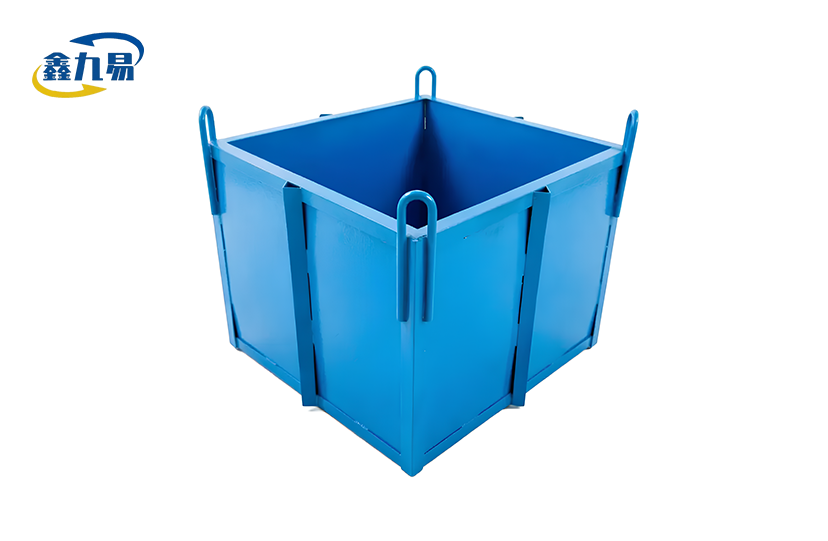
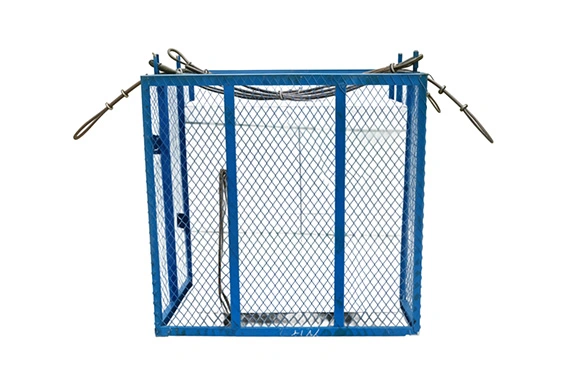
This is what most building hoist cages look like: 1,400 mm long, 1,400 mm wide, and 1,400 mm high. International rules, such as EN 12159 for building hoists in Europe and ANSI A10.4 for people hoists in the US, set the minimum requirements for safety and structure. Buyers of SC/SS series hoists should make sure that the cage dimensions and connection hardware match the hoist manufacturer's technical drawings before the machinery starts being made. Because of this, even a small misalignment at the mast contact causes rejection at the spot.

Core Safety and Design Features to Consider When Selecting a Hoist Cage
Safety Devices That Inspection Teams Check First
It is required by law to have three types of safety systems: overspeed safety brakes, automatic door interlocks, and overload alarms. No one can fall while being moved because the hoist won't work until the cage door is fully closed by the automatic door release. Overload alarms cut off the power when the load goes over the maximum capacity. The SAJ-series overspeed governor cuts off the safety brake if the rate of fall goes too fast. The standard in the business is to drop test the governor every three months to make sure it works right.
Material Selection and Its Impact on Durability
What the frame is made of is very important for how long it lasts. Most building hoist cages are made from these three types of materials:
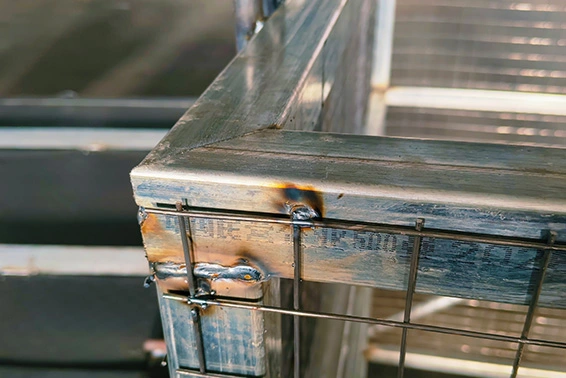
- High-tensile structural steel (Q235/Q345B): The most widely used option for heavy-duty applications. Thickened I-beams and channel steel provide the load-bearing backbone, while galvanized rectangular tubes (30 mm × 50 mm, 1.5 mm wall thickness) handle secondary framing. Fully welded joints with Non-Destructive Testing (NDT) — either ultrasonic or magnetic particle inspection — confirm internal weld quality before shipment.
- Hot-dip galvanized steel: Preferred for coastal or high-humidity environments. A minimum galvanization layer of 85 microns resists corrosion that would otherwise degrade bare steel within two to three seasons of outdoor exposure.
- Aluminum alloy frames: Lighter and suitable for smaller, lower-capacity hoists where portability matters more than maximum load. Not appropriate for the 2-ton duty cycles common on large commercial sites.
The type of material used affects how much it will cost to maintain in the long run. If you treat the outside of steel frames the right way (with high-temperature baking paint or galvanizing), they should last longer than 15 years in most situations.
Maintenance Practices That Extend Service Life
Every week, the rollers are checked, and once a month, they are oiled to keep the cage going smoothly along the mast without too much shaking. It is important to check the load-bearing weld nodes and lifting point links after a very big haul. Bases with checkered plates that don't slip should be replaced when the surface grip gets worse over time. A strict maintenance schedule helps keep inspection records clean and cuts down on unplanned downtime. These are both important things to keep in mind when running a rental fleet.
Comparing Hoist Cage Types and Technologies for Construction Use
Single Cage vs. Twin Cage Configurations
For smaller sites or projects that don't need a lot of vertical traffic, a setup with just one cage works well. There are two different cages on a single mast in a twin-cage form. That's twice as much cargo that can be moved without making the building bigger on the ground. People and things need to be moved at the same time on high-rise projects above 80 meters. The SC200/200 twin-cage format is the standard choice for professionals.
Electric vs. Manual Drive Systems
Most of the time, electric rack-and-pinion drives are used in business construction. Adding a Variable Frequency Drive (VFD) lets you speed up and slow down smoothly, which protects the machine and makes the customer more comfortable. High-speed VFD models can lift up to 96 m/min, while standard models can only lift up to 36 m/min. There are configurations that can be run by hand, but they are only useful for very low-height and low-frequency tasks. They can't be used for buildings with more than three or four stories.
Load Capacity Benchmarks to Know
For the most part, each cage can hold between 1,000 kg and 3,200 kg. A rated capacity of at least 2 tons is the bare minimum for moving big building materials like drywall, glass panels, or steel support. A 125% load test should always be done during the acceptance inspection to make sure that there is no permanent deformation at peak capacity. If they are in charge of buying things, they should also make sure that the cage can hold the weight of all the materials, tools, and workers, not just the materials.
Procurement Considerations: How to Choose and Source the Right Hoist Cage?
Defining Your Site Requirements Before You Contact a Supplier
First, write down three things: the type of hoist and series you are using (for example, SC200/200), the biggest load you plan to lift at once, and the type of setting (marine, inland, high-dust, or chemically active). These three pieces of information tell us about the material, how to treat the outside of it, and whether we can use standard inventory units or need to make something new. When you buy something for the first time, sample cage testing and type-inspection alignment are often part of the decision. This process usually takes 8 to 14 weeks.
Evaluating Suppliers: What Certification Documents to Request
Your hoist cage supplier should be able to give you the following paperwork right away if you trust them:
- NDT weld inspection reports covering all load-bearing joints
- Automatic door interlock and overload alarm acceptance records
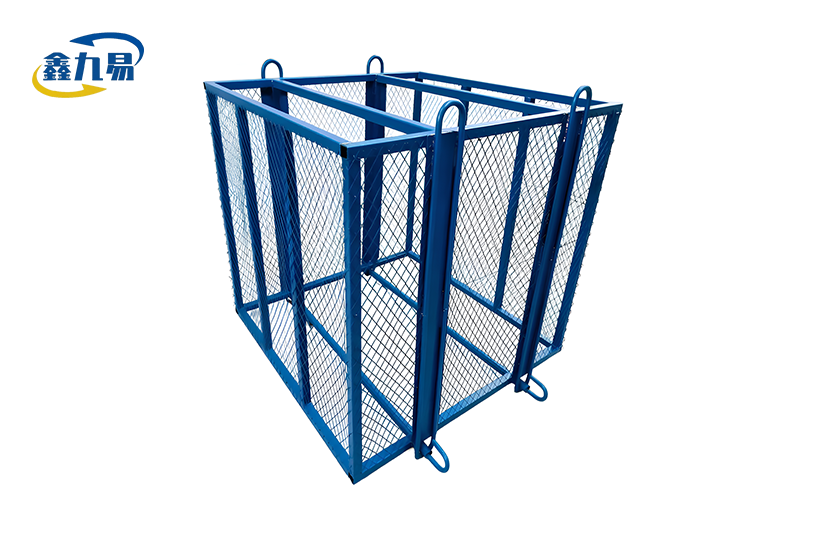
- Side mesh opening size compliance documentation against GB/T 10054 or EN 12158
- ISO 9001 quality management certification
- Top canopy impact resistance test records
Bulk Purchasing and Lead Time Planning
If buyers ask suppliers for these papers and the suppliers can't give them, the buyer might not be able to follow the rules during the site check. Xinjiuyi has ISO 9001, ISO 45001, and ISO 14001 certifications, and all orders come with full technical documentation.
Case Studies and Real-World Applications: Choosing the Right Hoist Cage for Your Project
High-Rise Commercial Tower: Custom Steel Cages in Action
It took twin-cage units that work with SC200/200 hoists to keep the flow of materials going while the curtain wall was being put up on a building that was more than 150 meters tall. We asked for fully welded Q345B steel frames with NDT-verified weld joints and top anti-crush canopies that can keep things from hitting them when they fall. During the supervisor inspection, there were no on-site rejections because of this, and the vertical logistics worked well during the cladding phase.
Bridge Pylon Construction: Adapting to Confined Spaces
When working on bridge pylons, it can be hard to get to some places and put things at odd angles that regular cages can't handle. A customized cage with different entry sizes and stronger lifting points made it safe for workers to enter a concrete pylon hole that was 2.2 meters wide. The 18 months of construction, with its high humidity and concrete dust, did not seem to hurt the galvanized tube framework in any obvious way.
Industrial Venue Maintenance: Corrosion-Resistant Configuration
A big stadium maintenance job in a coastal city needed cages that could handle being in the salty air for years while they were being inspected and fixed. The plan called for marine-grade baking paint to be used on hot-dip steel frames to keep them from rusting. The non-slip base plate kept workers steady when it rained in the morning. Because the right surface treatment was chosen at the start of the project, there were no equipment swaps in the middle of the work that would have slowed things down.
Conclusion
Five things should help you pick the best building hoist cage: how well it works with other models, how much weight it can hold, how safe it is, how well it's documented, and how reliable the provider is. If the project skips any of these steps, it could not be finished on time, fail checks, or have safety problems that it can't afford. Whether you are in charge of a single tower project or a rental fleet that is spread out across several sites, you need to make a plan before you make your choice. You can be sure that you are evaluating sources correctly if you follow the advice in this guide.
FAQ
How often should the hoist cage safety device be tested?
Most of the time, the overspeed governor needs to be set up correctly and oiled through a drop test every three months. Load tests at 125% of the maximum capacity should be done during the first acceptance check.
Can a construction hoist cage be customized for non-standard dimensions?
Yes. They can change the length, width, and height to fit certain types of hoists or the needs of the job site. Before making a unique build, the drive motor torque, mast tie-in intervals, and link parts must all be checked to make sure they work together.
What is the difference between a single and twin cage setup?
There are two different cages on a single mast in a twin setup. This makes it possible to move things up and down twice as much without expanding the ground area. For tall projects that need to move both people and things at the same time, this set-up works well.
What maintenance do the cage rollers require?
Every week, check the rollers for wear and oil them once a month to keep their good grip on the mast guide rail. If you don't do this, the frame link points will shake, wear unevenly, and become structurally stressed more quickly.
What documents should I request before purchasing?
Ask for NDT weld reports, records of the automatic door interlock's approval, proof that the side mesh meets safety standards, and ISO 9001 certification. When the government or inspectors come to your business, these papers will keep you safe.
Get Your Hoist Cage Quote from Xinjiuyi Today
They make heavy-duty hoist cages that can pass inspection, fit your hoist model, and last on tough job sites. We can change the frame size, the finish, and everything else about your hoist cage. We are a recognized company that has ISO 9001, ISO 45001, and ISO 14001 tags on our name. Go to xjy8.com or send the model number of your hoist and information about your project to global@xjy8.com to get technical help and a price quote.
References
1. American National Standards Institute (ANSI). ANSI A10.4: Safety Requirements for Personnel Hoists and Employee Elevators on Construction and Demolition Sites. 2020.
2. European Committee for Standardization (CEN). EN 12159: Building Hoists for Persons and Materials with Guided Carriers. 2012.
3. Occupational Safety and Health Administration (OSHA). Construction Industry Fatal Four: Falls, Struck-By, Caught-In/Between, and Electrocution. U.S. Department of Labor. 2022.
4. British Standards Institution (BSI). BS 7212: Code of Practice for the Safe Use of Construction Hoists. 2016.
5. National Institute for Occupational Safety and Health (NIOSH). Preventing Falls in Construction: Safe Use of Extension Ladders and Hoisting Equipment. Centers for Disease Control and Prevention. 2019.
6. Standards Australia. AS 1418.7: Cranes, Hoists and Winches — Building Maintenance Units. 2022.