How to Choose a Central Double Column Processing Shed Manufacturer
Before you can choose the right central double column processing shed manufacturer, you need to know what makes a supplier structurally sound and one that cuts corners. A good manufacturer should be able to give you structural calculations that have been checked, steel materials that have been approved, big clear-span configurations (15 m without any middle columns), and anti-impact roof ratings that work with your production line. Before you buy a shed, make sure it meets the safety standards for the job site, your equipment plan, and the height of the gantry crane. This is very important if you run a plant that makes pre-made parts, a center that processes rebar, or a yard that works with bridge girders.

Understanding Central Double Column Processing Sheds
You need to know how to spot a risky company before you can choose the right main double column processing shed builder. A good manufacturer should be able to give you checked structural figures, steel materials that have been approved, large clear-span configurations (>15 m without any middle columns), and anti-impact roof grades that can work with your production line. Before you buy a shed, make sure it has enough space for your gantry crane, your tools, and the safety rules for the job site. This is very important if you run a center that works with rebar, a yard that works with bridge girders or a plant that makes parts that have already been made.--- Talk to a seller before you call. Know what you want to buy and why it's important how the building is made.
What Makes the Double-Column Design Different?
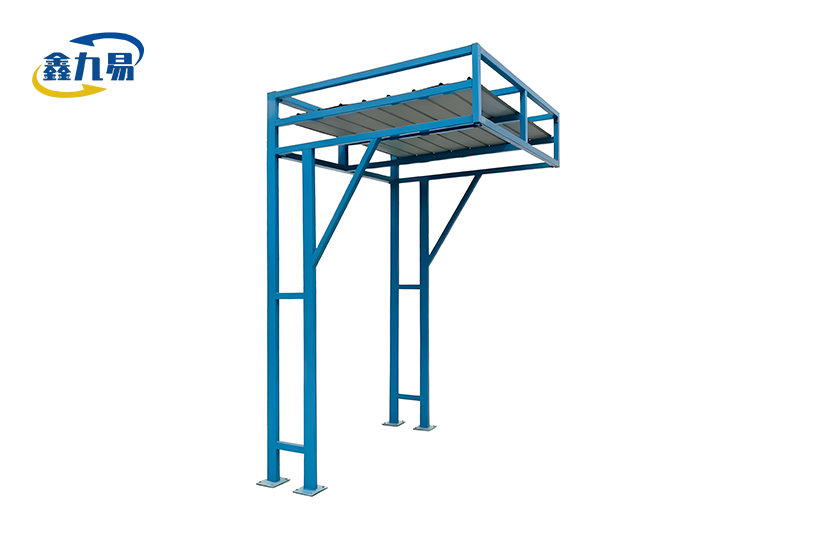
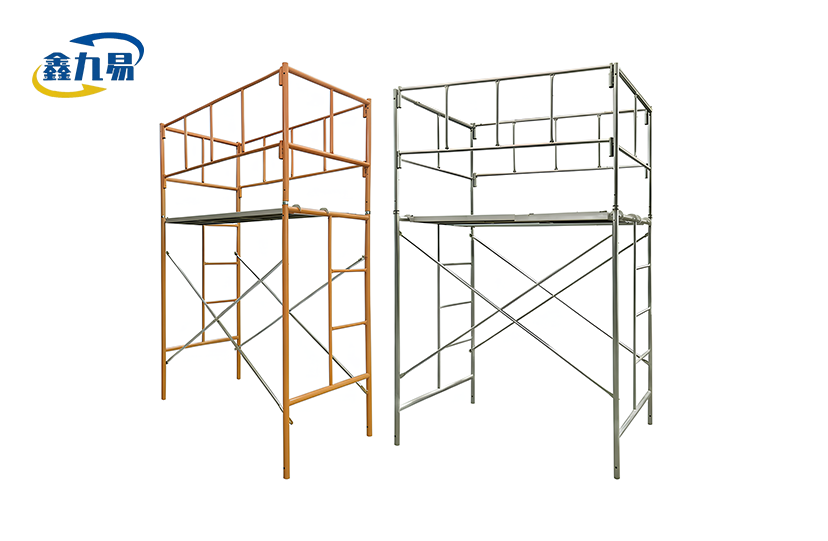
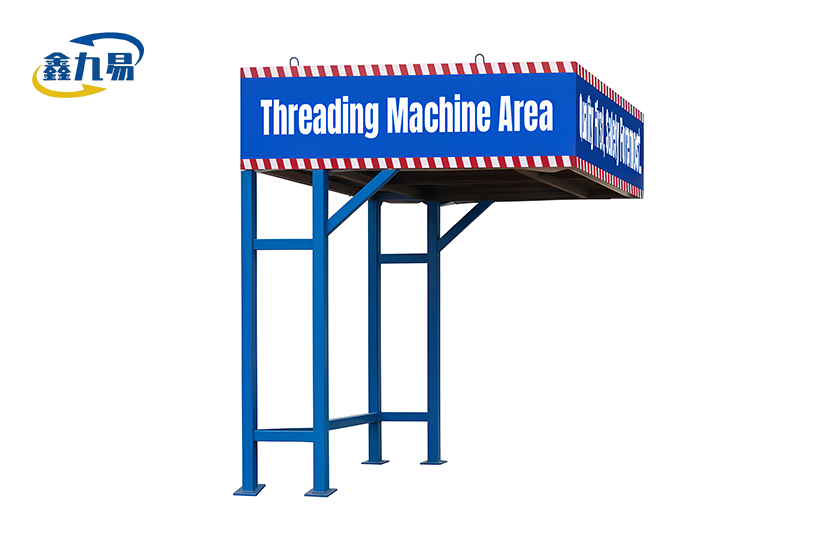
One processing shed is in the middle and has two main columns that are spread out evenly across the span. These posts hold up the main part of the house. This means that the middle of the span doesn't need any supports. Big beams, rebar sections, and sheetrock panels that have already been made can move under the roof without getting stuck because the floor plan is open. Most businesses have clear-span lengths of 4,000 mm to 6,000 mm or even longer. It's 3,700 mm high on the inside, which is good for most construction sites that need to move a lot of stuff.
Structural Materials That Matter
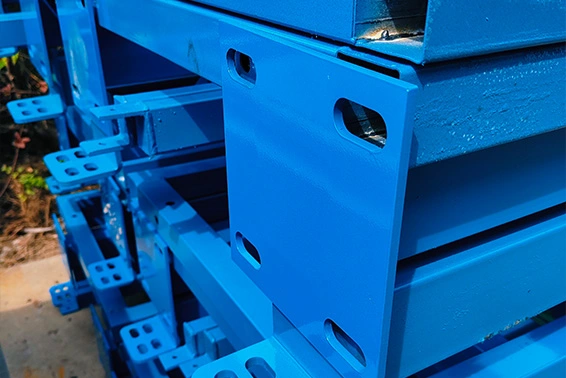
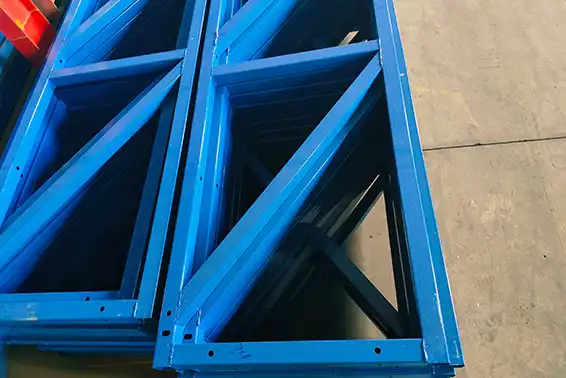
Hebei Xinjiuyi Construction Technology Co., Ltd. builds processing shed frames out of I-beams and rectangular steel tubes that are welded together to meet national standards. The walls are 100 mm wide and 2 mm thick. The main beams all have 50 mm thick walls, which makes them 50 mm square. There is less space between each side beam until they hit 1.5 mm. Between 450°C and 600°C, each part is hot-dip galvanised. After that, an electrostatic powder coat or risk baking paint is used to finish it. If you leave this two-step process outside for years, it will protect against rust for years.
Key Applications Across Industries
The central double column processing shed can be used for a lot of heavy-duty tasks. Anything that falls off the double-layer anti-smash roof stays away from the steel bars that are cut and bent. You can change the sizes, so it's great for places where people work with wood. The roof keeps the rain out, too. The shed is easy to move as the project goes on because the pieces are bolted together. This is done for city projects that improve the infrastructure and build roads and bridges.
Core Criteria for Selecting a Manufacturer
It's not always safe to trust a company that sells "double-column" sheds to build strong ones. What brands are safe and what brands aren't? These are the main things that make them unique.
- Structural documentation: Before you sign any contract, make sure you get a full structural calculation report. A reliable manufacturer gives you information about load analysis, wind resistance ratings, and foundation anchor specs. A lot of the time, buyers whose sheds are turned down by managers or design institutes find out that the supplier used a single-column cantilever truss that was misrepresented as a double-column frame.
- Tracking the materials: Ask for mill records for the steel that was used. Material that meets national standards, like Q235B or Q355B, always has the same yield strength. Stay away from suppliers who can't write down the steel grades they offer.
- Certifications: ISO 9001, ISO 45001, and ISO 14001 certifications that have been confirmed show that a manufacturer has a system for managing quality, safety at work, and the environment. Xinjiuyi has all three of these credentials.
- Customisation: The size of your shed is determined by the equipment standard and crane clearance. A good supplier will change the column heights, beam spans, and roof panel ratings to perfectly fit your layout, rather than forcing standard sizes onto sites that aren't standard.
- After-sales support: Ask about how to install the product, the availability of spare parts, and instruction packages. With every order, Xinjiuyi includes construction drawings, foundation requirements, and care instructions.
Structures: Before you sign any papers, make sure you have a full report on the calculations for the structure. If you can trust the maker, they will tell you about the load test, wind resistance scores, and base anchor specifications. Most of the time, buyers whose sheds are turned down by managers or design institutes find out that the seller used a single-column cantilever truss that was lied about as a double-column frame.
Comparing Manufacturers — Key Metrics and Market Solutions
Once you have a shortlist, structured comparison makes the final decision clearer.
Structural Integrity and Safety Ratings
The roof panel impact resistance rating of a central double column processing shed is one area where manufacturers diverge sharply. A roof with a rating of at least 5 kJ/m² protects against dropped tools and other debris at high-rise construction sites and factories that make prefabricated parts. Make sure that the supplier tests the panels on its own, not just depending on what the manufacturer says.
Pricing Transparency and Total Cost of Ownership
Instead of looking for the cheapest unit price, you should figure out the total cost of the project over several cycles. Xinjiuyi's modular bolt-together method makes it possible to take everything apart and use the parts on other sites. The hot-dip galvanised finish keeps the shed's structure strong through multiple assembly processes without the need to be painted again. This lowers the shed's lifecycle costs by a large amount compared to sheds that only use spray paint on bare steel.
Sustainability and Environmental Compliance
When you hot-dip galvanise steel, a zinc-iron alloy layer is formed that is bonded to the steel itself. This method gets rid of the need for regular paint maintenance and increases the useful life to 20 years under normal site conditions. Suppliers who are ISO 14001 qualified treat surfaces with documented environmental controls. This is important for procurement teams working with project owners who are connected to the government or who care about ESG issues.
Practical Steps to Finalize Your Manufacturer Choice
If you follow the right steps in the right order, you won't make mistakes that will cost you a lot in the long run.
Match Specifications to Your Production Line
First, think about where you'll put your tools. You should write down how high your rebar bending machine can go, how far your steel bar bundles can turn, and how much space your moving tools need. Then, match those numbers up with the shed's inside sizes before putting out an official bid request.
Conduct a Factory Audit or Request Verified Documentation
If you can't make it to the site, you can ask for video of the galvanize tanks, powder coating ovens, and welding lines for the central double column processing shed. Don't be afraid to ask for proof that the steel mill certificates are real and a copy of the report with the structural numbers. If a manufacturer is following the law, they will gladly do what you ask.
Clarify Contract Terms and Lead Times
From Xinjiuyi, most sets are made in lengths of 6,000 mm or 9,000 mm. Changing the width and height of something makes it take longer to make. In the contract, you should write down the shipping date, the bolt grade (grade 8.8 is normal), and the paperwork that needs to be sent with the goods.
Case Studies and Success Stories
Procurement teams like to see how something works in real life before they buy it.
A nearby factory that makes rebar has processing sheds. This factory makes concrete parts that are already put together. For the plant's robotic stirrup bending line, the inside had to be 5,000 mm wide. He changed the length of the beam and built a shed that was the right height. Signs and pictures of core anchors were already on the shed when it was arrived. With only hand tools and a small mobile crane, the job was done in less than two days. The shed was approved by the engineer in charge the first time he looked at it.
A city infrastructure builder bought it so that it could be moved from one busy job site to another as different parts were finished. At the same time, the worker widened three roads. After six hours, the frame that was held together with bolts was put back together in the next place. It was taken apart in one shift. They said the copper surface wouldn't rust, and it still hasn't after three full project rounds. It does keep rust away, as this showed.
Conclusion
It's not enough to just look at prices when choosing a processing shed builder. You won't have to change your mind about the choice you made if you have structural paperwork, approved materials, proven impact resistance ratings, and a supplier who is willing to change the sizes to fit your equipment. Hebei Xinjiuyi Construction Technology Co., Ltd. can meet these needs because they use steel that meets national standards, treat the surface in two layers, and say their products will last up to twenty years. It has all the technical details and paperwork that teams need to find a good central double column processing shed in Xinjiuyi. In this way, they can stick to their production schedules and get by the review by their bosses.
FAQ
What standard dimensions does the shed come in?
Standard lengths are 6,000 mm and 9,000 mm. Standard widths run from 4,000 mm to 6,000 mm. Standard height is 3,700 mm. All three dimensions accept customization when your site or equipment layout requires different measurements.
How many workers does installation require?
A typical installation needs four to six workers with basic hand tools. The process follows anchor point layout, base plate positioning, column erection, and beam assembly. No field welding is required because all joints use grade 8.8 bolts.
What documentation comes with the shed?
Every order includes assembly instructions, foundation anchor drawings, maintenance guidelines, and steel mill certificates. Structural calculation reports are available on request and are especially important for projects subject to design institute or supervising engineer review.
How long does the surface treatment last?
Under normal construction site conditions, hot-dip galvanizing combined with powder coating or baking paint provides corrosion protection for up to 20 years. The zinc alloy layer continues to protect the steel substrate even when minor surface scratches occur.
Can the shed be reused across multiple projects?
Yes. The bolt-together modular design allows full disassembly and reassembly without damaging the structural components. The galvanized and painted surfaces hold up through several project cycles, reducing your per-project expenditure.
Get a Custom Quote from Xinjiuyi — Trusted Processing Shed Supplier
Based on the ISO 9001, ISO 45001, and ISO 14001 quality systems, Xinjiuyi builds processing sheds that are approved and built to order. This is true whether you need a single shed for a rebar processing center or a lot of sheds at once for a multi-phase prefabricated component plant. Our engineering team can help you with making plans, filling out forms for the structure, and installing everything. You can email us at global@xjy8.com or go to xjy8.com right now to find out more and start your question.
References
1. American Institute of Steel Construction (AISC). Steel Construction Manual, 16th Edition. AISC, 2023.
2. International Organization for Standardization. ISO 9001:2015 Quality Management Systems — Requirements. ISO, 2015.
3. International Organization for Standardization. ISO 45001:2018 Occupational Health and Safety Management Systems. ISO, 2018.
4. Building Research Establishment (BRE). Structural Steel in Construction: Corrosion Protection and Surface Treatments. BRE Press, 2021.
5. Construction Industry Institute (CII). Modular and Industrialized Construction: Performance and Benchmarking Report. CII, 2022.
6. American Society of Civil Engineers (ASCE). ASCE 7-22: Minimum Design Loads and Associated Criteria for Buildings and Other Structures. ASCE, 2022.