What Is an Excavation Guardrail System and Why Is It Essential?
An excavation guardrail system is a special kind of movable safety barrier that is made to keep workers from falling into open holes, ditches, and foundation pits. Unlike temporary fences or regular construction barriers, these systems are made to meet strict safety standards like OSHA 1926.502 and EN 13374. They provide reliable edge protection that keeps people and equipment from entering dangerous areas by mistake. At its core, this system solves important problems in the industry, such as following the rules, lowering liability, and stopping accidents that happen when tools or materials fall into excavation areas and cause more damage.
Understanding Excavation Guardrail Systems
What Defines a Professional Excavation Safety Barrier
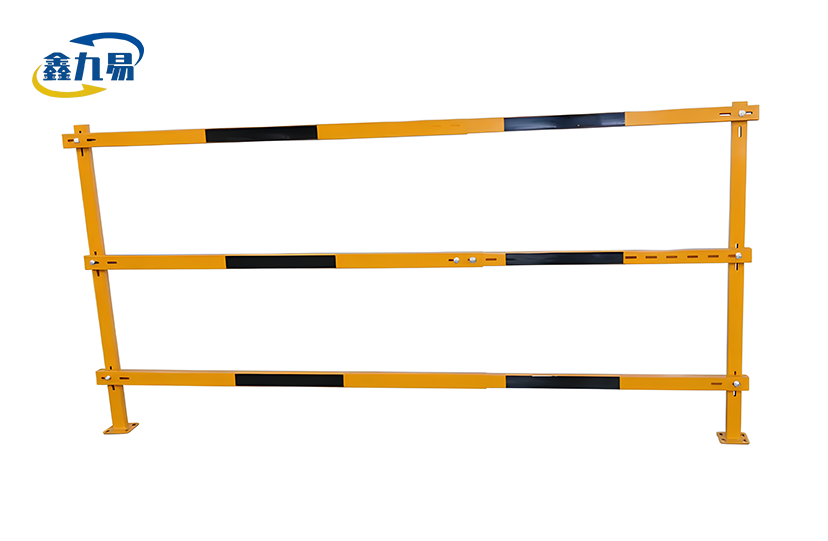
Traditional wooden barriers or rope perimeters have come a long way since professional pit-edge security systems. These modern solutions offer construction sites a standardized way to keep their perimeters safe. They combine engineering precision with useful functionality. The basic design has vertical posts, horizontal rails, and toe boards that are built in. All of these parts work together to make a complete barrier for safety.
Modern systems are made from national standard square and rectangular tubes that are bonded together to make structures that can withstand impact forces and last for a long time. The standard design has a width of 2000 mm and a height of 1200 mm, but these can be changed to fit the needs of a particular project. Because the system is flexible, builders can change it to fit different job sites without lowering safety standards.
Material Excellence and Manufacturing Process
The quality of how safety barriers are built has a direct effect on how well they protect lives. Our manufacturing process starts with high-quality steel tubes that are laser-cut to get precise edges that are flat and free of burrs so there is no chance of injury during installation. Advanced techniques are used to weld each joint, and then the edges are ground smooth to get rid of any sharp points that could be dangerous.
A fully automatic high-temperature baking paint process is used for surface cleaning, which has many benefits. The layer is very resistant to weather, especially rain, rust, and damage from the environment, even after being outside for a long time. The barriers are always easy to see because they are bright colors—usually safety yellow or orange—that stand out in any light. They protect people physically and serve as a visual warning. The Excavation Guardrail System, in particular, leverages these same durable coatings and high-visibility finishes to ensure that trench and excavation perimeters remain clearly marked and structurally secure, further enhancing onsite safety through both physical protection and conspicuous alertness.
The distance between the grilles is carefully measured to make sure that the spacing is safe and allows for clear visibility for site control while also providing full fall protection. This design consideration makes sure that supervisors can keep an eye on the digging work without affecting the effectiveness of the isolation, which keeps people from entering dangerous areas by accident.
Types and Configurations for Different Applications
There are different types of safety barrier systems to fit different types of construction situations. Temporary installations work well for short-term projects that need to be flexible and set up quickly. These systems have quick-connect features that make it easy for crews to put up and take down barriers as the digging work goes on.
Permanent systems, on the other hand, are designed for long-term edge safety or projects that last a long time. These arrangements put a lot of emphasis on making sure the structure is strong and resistant to weather. They often include strengthened support systems that can handle harsh conditions outside. The ear-plate-free design we came up with gets rid of frequent failure points that come with removable mounting plates. This makes the structure much more stable and increases safety on-site.
The Essential Benefits of Excavation Guardrail Systems
Enhanced Worker Safety and Regulatory Compliance
Professional edge protection is most useful because it has been shown to stop falls, which are one of the main reasons people die on the job. These systems protect workers reliably by building a wall that is at least 42 inches high, which is the minimum height required by OSHA. This keeps them safe even in areas with a lot of foot traffic.
Regulatory compliance is more than just not getting tickets. Meeting foreign standards like OSHA, EN, and ISO rules shows that a company cares about worker safety, which has a growing effect on insurance rates and contract wins. Before accepting project bids, government procurement offices and large contractors now always need written proof that the safety systems meet the requirements.
Besides keeping people from falling, integrated toe boards (usually 3.5 inches or higher) hold loose materials, tools, and other things that could fall into holes and hurt workers below. This extra layer of safety covers a risk that is often forgotten but still causes injuries at work.
Cost Efficiency Through Risk Reduction
Some safety gear costs money up front, but the money lost in accidents is much greater than this. Accidents at work lead to direct costs like medical care, workers' compensation claims, and possible legal obligations. There are often indirect costs that are several times as much as the direct costs. These include project delays, research time, training for new workers, and damage to the company's image.
High-quality barrier systems, including the Excavation Guardrail System, are very long-lasting. If you keep them in good shape, they can work reliably for up to 20 years. Because they last longer, they have better cost-per-use rates than throwaway or short-lifespan options. The strong construction can handle the rough conditions of active construction sites, withstanding hits, weather, and repeated assembly cycles without breaking down.
Less maintenance is needed, which saves even more money. Instead of rotting, warping, or splintering like wooden walls do, steel systems stay strong with little work. Regular checks and touch-up painting are the main upkeep tasks that need to be done. This takes a lot less time and money than replacing inferior products all the time.
Operational Productivity and Site Management
Standardized safety systems make managing a construction site easier by getting rid of the guesswork about how well the site is protected. Instead of constantly checking to see if homemade barriers meet safety standards, project managers can focus on the progress of the work. Modular systems make safety inspections easier because they are always the same. Inspectors can quickly check for compliance without having to look at custom solutions.
The speed of installation has a direct effect on project plans. Our systems have easy-to-use assembly methods that don't need any special tools or a lot of training. Because crews can quickly set up surrounding protection, mining work can begin without having to wait for long periods of time for safety to be set up. As soon as a project phase is over, the next step is removal, which frees up tools that can be used somewhere else.
Professional barrier systems make the site look more professional because they are all the same. This has real benefits. Organizational and standard safety equipment on construction sites shows competence and attention to detail, which reassures clients, impresses potential customers, and calms community members who are worried about construction activities nearby.
Excavation Guardrail Systems vs Alternative Safety Methods
Comparing Fall Protection Approaches
Procurement professionals can make better decisions when they know the differences between the different excavation safety methods. Trench shoring systems do something very different: they hold structures so that dirt doesn't fall apart, not keep people from going into dangerous places. These systems protect workers inside of holes, while perimeter barriers protect workers near the edges of holes.
Trench boxes make safe shelters that move with the digging, keeping workers from falling into the hole. Even though they are necessary for working in deep trenches, they don't protect people working near the edges of excavations from falling. For complete excavation safety, workers inside the excavation often need trench protection, and workers nearby need perimeter barriers.
One more option is safety netting, which is more of a secondary fall protection than a primary one. Nets catch workers who have already fallen, but hurdles keep workers from falling in the first place. Prevention is always more important than mitigation in regulatory systems, so physical barriers are the best way to keep people safe, with nets as a backup in some scenarios.
Temporary vs Permanent System Considerations
Depending on the needs of the project, temporary or permanent barrier placements may be better. When excavation sites change often, temporary methods work best in settings that are always changing. Because they are portable, crews can change how they protect themselves as the work goes on, so they can adapt to changing conditions on the job site without having to build permanent structures.
For long-term projects with stable excavation edges, permanent installations are the most cost-effective option. The higher initial cost of these systems is justified by the fact that they last longer and require less maintenance over long deployment periods. Permanent barrier designs are often helpful for big infrastructure projects, deep base work for high-rise buildings, and big utility installations.
Hybrid approaches, which use both types together, are used to handle complicated projects with different needs. Permanent systems might be used in core excavation areas, while temporary walls that can be moved as needed are used in outer zones. This strategic mix makes both protection work better and costs less efficiently at different stages of a project.
Compliance and Installation: Ensuring Safety and Reliability
Meeting International Safety Standards
Professional excavation barriers have to follow a number of different rules, which depend on the location of the project and the needs of the client. In the United States, OSHA guidelines set minimum requirements for shape, height, and power. European EN 13374 standards set performance classes based on the types of loads that are expected and the ways that they will be installed. ISO standards show that production processes are governed by thorough quality management systems.
Our business keeps its ISO9001, ISO45001, and ISO14001 certifications up to date. This makes sure that our systems for quality management, health and safety at work, and protecting the environment meet international standards. These certifications give purchasing managers confidence that products always meet specifications and that strict quality controls are built into the manufacturing process.
Load testing is an important way to make sure that compliance is met. Systems have to be able to withstand certain horizontal forces, which are usually 0.3 kN point loads, without breaking or deflecting too much. Ultrasound or close-eye analysis is used to make sure that the weld is solid and that there are no flaws. Protective finishes won't peel in rough site conditions, according to coating adhesion tests that follow ISO 2409 guidelines.
Installation Best Practices and Common Challenges
How well a well-designed system works as safety depends on how well it is installed. The first step is to carefully check the site, looking at the ground conditions, how close the edges of the excavation are, and any obstacles that might make it hard to place the barrier. Uneven ground is especially hard to work with because you need base plates that can be adjusted or special mounting systems that can keep the vertical position even when the grade changes.
Different substrates require different ways of securing the excavation guardrail system. Drill-in anchors, which have a very high holding strength, are usually used on concrete surfaces. For placement in the ground, ground spikes are pushed deep enough to be stable. For situations where drilling isn't possible, like on top of existing structures or where underground utilities make it impossible to drill, use weighted ballast bases that rely on mass instead of anchoring for the excavation guardrail system.
Installation teams should make sure that all of the connections are fully made and that the locking mechanisms are in the right place. Even small mistakes in the building process can cause the system to fail when it's under load. Installation teams get regular training to make sure they know the right way to do things and can spot problems before they become dangerous.
Maintenance for Long-Term Performance
Regular maintenance keeps the protective features that made the initial investment worthwhile. Structures should be checked for damage, such as broken parts, weak connections, and damaged areas that need to be fixed, on a regular basis. These checks should be done at set times, like once a week for sites with a lot of activity and once a month for stable installations. They should also be done right after any impact or unusual stress event.
The condition of the surface coating needs to be checked often, especially in places that are corrosive or have a lot of traffic. Small scratches in the paint can be fixed with touch-ups before they turn into rust. If the covering wears away more, it might need to be refinished by a professional to get full rust protection back.
Keeping records of maintenance and inspections is a good way to show that safety management is being done right. These records are especially useful during investigations into accidents or regulatory audits because they show that the company took good care of its equipment and fixed problems quickly when they were found.
How to Choose the Right Excavation Guardrail System for Your Project
Evaluating Site-Specific Requirements
A full risk estimate is the first step in choosing the right edge safety. Deep excavations are more likely to cause falls than shallow trenches, so better barrier arrangements may be needed. In places with a lot of traffic and a lot of car movement, systems need to be stronger so they can handle impact forces that would damage smaller options.
Environmental factors have a big effect on the choice of materials and the design of systems. Hot-dip galvanization or high-quality powder coating is required for places near the coast where salt air is present to ensure superior corrosion resistance. Chemically-rich industrial places need special coats that don't react with certain corrosive agents. Extreme temperature ranges change the qualities of materials. For example, some plastics become weak when it's cold, but metal systems stay strong over a bigger temperature range.
The length of the project affects the choice of whether to buy or rent. Rental agreements may be more cost-effective for short-term projects because they avoid buying expensive tools that will only be used once. Long-term projects and companies that manage more than one site at the same time often benefit from buying systems that can be used over and over again for different projects, which ends up being cheaper per use than ongoing rental fees.
Comparing Quality Indicators and Supplier Capabilities
Material specifications are objective ways to measure quality. The strength of load-bearing parts is directly related to their wall thickness. For professional-grade systems, the width must be at least 2 mm in high-tensile steel. Premium products can be told apart from cheaper ones by the quality of their welds. Full-penetration welds and smooth finishing are signs of superior craftsmanship.
The manufacturing capacity of a supplier tells you if they can meet the deadlines for large orders. Companies that are working on several projects at once need partners who can safely deliver large amounts, including specialized products like the Excavation Guardrail System. Production facilities with a wide range of tools, such as laser cutting, automatic welding, and controlled finishing processes, can make a lot of things with the same level of quality, ensuring that even complex items such as the Excavation Guardrail System are produced reliably and on schedule.
Service and Support Considerations
Customization lets you meet the specific needs of a project that standard configurations can't. Customized solutions from suppliers are helpful for sites with odd measurements, mounting problems, or aesthetic needs. Our full customization services include changing the size, changing the color, and adding warning signs that make the site look more professional while still meeting all safety requirements.
Technical assistance throughout the lifespan of a product adds a lot of value on top of the hardware itself. Pre-sales consultation helps procurement teams choose the right systems for their needs, so they don't make mistakes that cost a lot of money because the specifications are too low or too high. Clear visual previews are given by detailed drawings and renderings, which make sure that ordered systems will work well with the conditions on the site.
Project plans are directly affected by how reliable deliveries are. If a supplier has a well-established logistics network and inventory management system, you can be sure that the equipment you need will arrive when it's supposed to. This keeps expensive delays from happening while excavation contractors wait for safety gear. Our good management of the supply chain means that we always meet delivery deadlines, even for big foreign orders.
After the sale, help such as installation, training on upkeep, and quick answers to technical questions increases the value. Warranty coverage shows that the company that made the product is confident in its quality and protects customers from bad materials or work. We stand behind our products for as long as they are in use because we want our customers to be happy. If they have any questions or concerns, we are here to help.
Conclusion
Professional edge protection systems are an important part of responsible excavation work because they keep workers safe, make sure that regulations are followed, and improve operational efficiency. Putting up quality barriers is an investment that pays off by preventing accidents, lowering the risk of damage, and making the job look more professional. Procurement professionals can make decisions that are good for both workers and the company if they know the technical requirements, compliance requirements, and selection criteria. As safety standards for building change over time, working with experienced makers who care about quality and service will give you access to solutions that meet current needs and can be changed to fit new rules in the future, and the Excavation Guardrail System is a prime example of such a solution, offering specialized fall protection and perimeter control that directly addresses the unique hazards of excavated sites.
FAQ
1. What height requirements must excavation barriers meet?
In order to meet standard safety standards, the top rails must be 42 inches above the work area, with a 3-inch variance allowed. This height keeps most adults from accidentally falling over the barrier and lets site supervisors see what's going on. Our normal 1200 mm (about 47 inches) configuration goes above and beyond what is required, providing better security with a large safety margin.
2. Can these systems be installed on sloped or uneven ground?
Mounting systems that can be adjusted can work on uneven ground and moderate slopes. Base plates that can be placed in different ways let workers keep the vertical line even if the grade changes. Specialized swivel couplers give you more adjustment range for difficult setups on very uneven ground. This keeps the structure stable in a wide range of site conditions without reducing its defensive effectiveness.
3. How do I determine whether to purchase or rent safety barriers?
This choice is based on the project's length and how often it will be used. For projects that will only last a few weeks or months, renting is a good option because you don't have to spend a lot of money up front. Companies that are in charge of ongoing building projects on various sites usually save more money by buying systems instead of renting them, especially since good systems last 20 years or more. Find the most cost-effective way to handle your situation by adding up the total rental costs over the time you plan to use the space and comparing them to the cost of buying something.
4. What maintenance do these systems require?
The main type of maintenance is regular visual checks, which look for damage to the structure, loose connections, or coating wear. Weekly checks are good for sites with a lot of action, while monthly inspections are enough for installations that are stable. Touch-up painting fixes small flaws in the coating before they turn into rust. Clean the toe boards of any dirt or debris and make sure that all of the locking systems work properly. Detailed documentation of maintenance shows that you did your job right and supports long-term performance.
Partner with Xinjiuyi for Superior Excavation Protection Solutions
Work with Xinjiuyi for the best solutions for protecting excavations. As a reliable manufacturer of Excavation Guardrail Systems, Hebei Xinjiuyi Construction Technology Co., Ltd. is ready to help you with your excavation safety needs. Our Cangzhou factories are ISO-certified and make modular safety barriers that are reliable, last a long time, and meet international standards. Our systems give your places the safety they need with sizes that can be changed, designs that don't use ear plates, and a proven 20-year service life. Whether you're in charge of deep foundation projects, installing utilities, or building new infrastructure, our technical team can help you with everything from the planning stages to the final installation. They can provide advice, make custom design renderings, and answer all of your questions. Get in touch with us at global@xjy8.com to talk about your project needs and find out how Xinjiuyi's dedication to safety can improve your site security plan.
References
1. American Society of Safety Professionals. (2022). Construction Safety Standards and Fall Protection Requirements. ASSP Press.
2. Occupational Safety and Health Administration. (2021). Safety and Health Regulations for Construction: Subpart M - Fall Protection. U.S. Department of Labor.
3. British Standards Institution. (2020). BS EN 13374:2013 - Temporary Edge Protection Systems: Product Specification and Test Methods. BSI Standards Publication.
4. National Institute for Occupational Safety and Health. (2019). Preventing Falls in Construction: A Comprehensive Approach. NIOSH Publication Series.
5. International Organization for Standardization. (2018). ISO 9001:2015 Quality Management Systems: Requirements and Implementation Guidelines. ISO Standards Catalogue.
6. Construction Industry Institute. (2021). Best Practices for Excavation Safety Management on Large-Scale Infrastructure Projects. CII Research Report.