Double Ladder Walk-Through Scaffolding: Complete Buyer’s Guide for Construction
When safety officers and procurement managers look for quick and easy ways to get to places, they often find that double ladder walk-through scaffolding solves a number of problems at once. Workers can move horizontally under the structure without taking parts apart or jumping over braces because this modular system has vertical access on both frame sides and a clear base space. These frames are made from hot-dip-galvanized Q235 high-strength steel and support personnel platforms. They also have OSHA-compliant load capacities and two emergency exits, which are very important for job sites with a lot of moving parts.
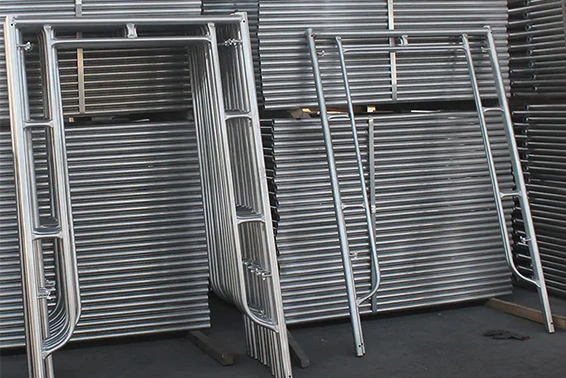
Understanding Double Ladder Walk-Through Scaffolding
What Makes This System Different From Traditional Frames
Crews have to work around cross-braces at ground level when using standard brick platforms, which slows down the movement of materials and shift changes. With the walk-through setup, this problem is completely gone. Both vertical parts have built-in ladder rungs that give your team two ways to get in and out without having to wait for clearance. This design works especially well for maintaining bridges and the outsides of tall buildings, where continuous work directly affects sticking to the schedule.
The structural benefit is more than just ease of use. Even when workers climb at the same time on different sides of the ladder, it stays stable because the weight is evenly distributed across both uprights. The frames at Xinjiuyi are made from 42 mm- or 48-mm-diameter tubes with wall thicknesses ranging from 2 mm to 3.5 mm. They are designed to handle the lateral forces that happen in windy places like petrochemical plants and tower crane platforms.
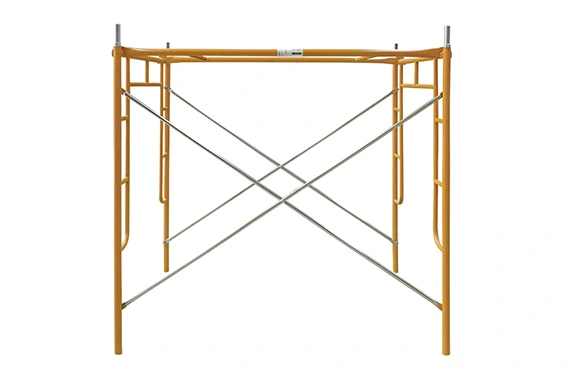
Core Applications Across Construction Sectors
Industrial repair shops need scaffolding that can stand up to chemicals and high humidity without having to be replaced often. Our hot-dip-galvanized finish is more corrosion-resistant than the 500-hour salt spray test standards needed for power plant and mill turnarounds. The open base clearance lets technicians put tools under work areas so that operations can keep going while they work on overhead valve systems or turbine assemblies.
The same features can help commercial building projects in different ways. When airport terminals and show halls are being renovated, access systems like double-ladder walk-through scaffolding are needed to keep people moving below high work platforms. The flexible design can be used in high-ceilinged rooms inside buildings where disturbing activities on the ground level would cost the owners of the building a lot of money. While your team makes changes to the HVAC or lights, ticket counters or shopping areas below the building keep running normally.
Regulatory Compliance and Safety Standards
OSHA requires that mobile towers have certain height-to-base ratios, which are usually 4:1 without any extra support. Even tighter 3:1 ratios are required by European EN rules unless outriggers or wall ties are used. When procurement teams know these parameters, they can choose the right frame heights and other equipment during the planning phase. Before shipping, our engineering team checks your load calculations and gives you advice on the structure to make sure your design meets the rules in your area.
The two ladders work together to make things safer than the minimum requirements set by law. OSHA's protected entry rules are met by having multiple vertical paths that make emergency evacuations less crowded. Anti-slip checkered steel planks with reinforced edges keep workers from falling, and precision-cast connectors stop the wobbling that makes workers less confident when they have to work at heights for long periods of time.
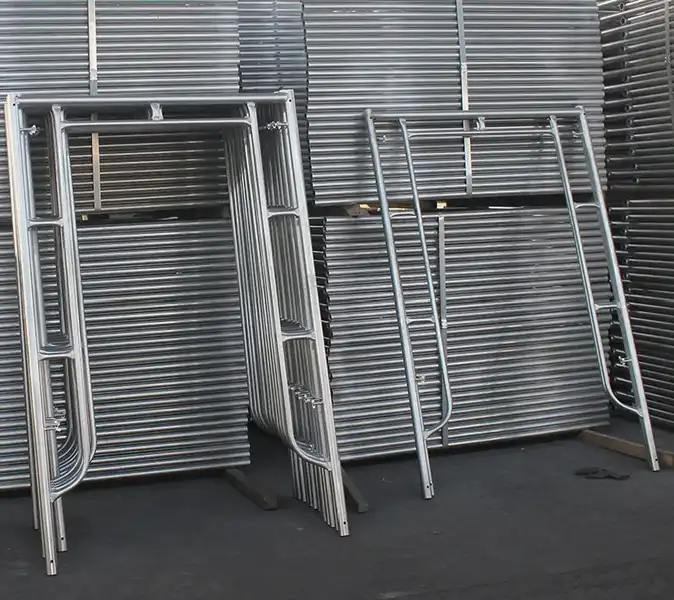
How to Assemble and Maintain Walk-Through Access Systems
Step-by-Step Assembly Protocols
Our quick-disassembly pin connection method means that most setups can be done without the need for special tools. Place the base plates on level ground first, and use spirit levels to make sure they are stable before adding the vertical frames. Standardized pin spacing of 4 or 2 feet works with universal cross-braces and screw jacks, so it's easy to use with stock from other makers.
Next, diagonal bracing is attached to keep each bay from racking when loads are applied from the sides. First, your team should hand-tighten the connections. After the whole run is put together, they should do one last torque check. Hook-and-platform systems hold the decking boards in place, making the work area. When compared to traditional fixed systems, the whole process cuts on-site building time by about 40%. This directly lowers labour costs on projects with tight deadlines.
Always check the ground conditions before setting up. To keep the required height-to-base ratio, mud sills or extra base support are needed for areas with soft soil or uneven surfaces. When the height of a tower goes over the limits for an independent structure, wall ties are required to spread the loads back into the building structure at regular intervals set by engineering estimates.
Maintenance Routines That Extend Service Life
Routine checks on double-ladder walk-through scaffolding focus on five key areas that show how well the structure will hold up over long periods of time. Check the weld places for cracks or distortion that can be seen, especially at high-stress areas where the uprights and horizontal pieces meet. Pay attention to the verticality of the frame—misalignment beyond a tolerance of ±1.5 mm could mean damage from impacts or overloading that makes the frame less compatible with other modules.
In corrosive settings, the state of the surface layer has a direct effect on how long it lasts. Check galvanised finishes for rust blooms in certain areas, especially where the metal touches the ground and water builds up. A zinc-rich cold galvanizing spray works well on small scratches to restore protective barriers before oxidation spreads. If there is a lot of covering loss, it means that the product needs to be re-galvanized by a professional in order to keep its 20-year service life.
Locking pins and joints wear out over time when they are put together over and over again. Check these parts for deformation that stops them from engaging securely. Replace any worn parts right away to keep the safety factors of the structure. Keep thorough maintenance logs that list inspection dates, repairs that were done, and the results of load tests. This information is very helpful during safety checks and shows liability insurers that you took the necessary steps.
Comparing Walk-Through Scaffolding With Alternative Access Solutions
Performance Metrics Against Single-Ladder Frames
Single-ladder designs are cheaper at first, but they make work less efficient over the course of a job. Crews have to wait in a queue during shift changes when there is only one high entry point per bay. This wastes valuable work time. The walk-through option gets rid of this traffic jam, and its extra cost is justified by better use of labour on long-term projects like installing tube linings or pouring bridge decks.
Comparisons of stability also show that the two-ladder setup is better. When dynamic loads are spread across two strengthened uprights instead of one uneven ladder-equipped part, deflection is lessened. This is especially important when workers are moving heavy parts onto raised platforms as part of material handling. The increased rigidity reduces the bounce and sway that can be dangerous.
Evaluating Modular Versus Tube-and-Clamp Systems
Tube-and-clamp framing is the most flexible way to work with odd shapes, but it takes a long time and skilled labor to put together. Our modular method, which includes systems like double ladder walk-through scaffolding, gives up some geometric freedom in exchange for being much faster to set up and making sure that all of the parts work together perfectly. Standardised modular frames save a lot of time on projects with layouts that are the same, like perimeter guardrails for foundation excavations or uniform facade access on apartment towers.
Reuse cycles must be taken into account in cost-effectiveness analysis. Tube-and-clamp connections wear out over time and lose their shape, but modular parts can be put together and taken apart more times. Over the lifetime of an asset, which lasts five years and includes dozens of projects, the modular method gives a better return on investment, even though it costs more up front.
Whether to rent or buy depends on how much space is needed and how much money is available. Companies that manage ongoing building portfolios explain ownership by spreading the costs of tools over many projects and keeping supplies readily available. Contractors with unpredictable demand can save money by renting equipment instead of buying it, but they give up the benefits of long-term cost savings and familiarity with the equipment.
Procuring Walk-Through Scaffolding: What B2B Buyers Should Verify
Vetting Manufacturers and Suppliers
Manufacturers with a good reputation keep both ISO9001 and ISO45001 certifications for quality management and health and safety at work. These credentials show that the company is committed to consistency and ongoing growth, going beyond just meeting product standards. Ask for mill test reports that prove the chemistry of the material and its yield strength for each production batch. This will help you make sure that the tubing you're buying meets the requirements for Q235 or Q355, rather than cheaper alternatives.
When your project needs a lot of things quickly, manufacturing ability is important. You can visit production facilities in person or virtually and look at the level of automation in the welding process and the infrastructure for surface treatment. The Cangzhou factory of Xinjiuyi uses CO₂-protected arc welding and non-destructive testing methods to make sure that the joints are completely solid and meet the safety standards set by destructive load testing, which require 4:1 safety factors.
Customer reviews give you an idea of how good the customer service is after the sale. Ask buyers who oversaw projects of a similar size and level of difficulty to yours for references. Ask them specifically about how quickly they responded to technical questions and how reliable their deliveries were. When standard sizes don't work for your site, suppliers who can make things to your specifications can be very helpful. Check with them about their fine manufacturing tolerances and lead times for non-standard designs.
Navigating Purchasing Formats and Volume Negotiations
Complete kits are good for smaller builders who are just starting to build their scaffolding inventory because they come with the right number of frames, braces, planks, and extras. Established businesses like wholesale buying because it helps them get rid of old stock or add more tools to support growth. Customization requests can be made in either format, but for non-standard specifications like 6061-T6 aerospace aluminium construction or speciality powder coating finishes, there may be a minimum order quantity.
The more orders you place, the more power you have in negotiations, but buyers shouldn't give up on compliance paperwork or guarantee terms just to get a small price cut. Make sure that purchase deals clearly state delivery times and include penalties for late shipments that put your project plan at risk. Talk about logistics plans right away. How containers are loaded, which ports are preferred, and the paperwork needed for customs all affect the total landed costs, which are different from the unit prices that were given.
OEM partnerships are good for distributors and big builders who want to put their own name on lines of safety equipment such as double ladder walk-through scaffolding. These deals usually include promises for more than one year and guarantees on sales, but they can help a business stand out from its competitors and make more money in regional markets.
Making the Right Decision: Buyer's Criteria and Recommendations
Matching Scaffolding Specifications to Project Requirements
Small-scale improvements of home interiors or store fit-outs rarely need walk-through systems unless they have multiple entry points that speed up the work. When moving around on the ground isn't limited, standard frame scaffolding is enough. On the other hand, infrastructure projects like building a highway flyover or maintaining a dam need the extra space that open base clearance gives them so that materials can be delivered without stopping while teams work above.
In industrial building sites with strict safety rules, having multiple entry points and a strong load capacity are very helpful. Figure out the best frame spacing and platform widths by looking at the average size of your team and the tasks that are being done at the same time. Xinjiuyi has standard widths ranging from 950 mm to 1250 mm, which can be used for everything from inspections by one person to material staging by several workers.
Key Evaluation Metrics for Procurement Managers
Testing for durability starts with looking at the material and how well it was treated on the outside. Electro-galvanization doesn't resist rust as long as hot-dip galvanisation with a zinc thickness of at least 60 μm, but electro-galvanization may be enough for climate-controlled indoor uses. Think about where you'll be putting the materials—coastal projects near saltwater need the best rust protection, while dry inland places can handle lighter finishes.
Ease of assembly has a direct effect on labor costs. Ask for example films that show how to connect and how an erection usually works. Tool-free designs lower the level of skill needed from field crews. This lets you hire more people and spend less on training. Making sure that your new equipment works with the old ones will save you a lot of money on replacements. Check that the pin spacing and brace connection standards match what you already have in stock.
Support after the sale is what sets top sellers apart from commodity vendors. Technical advice services help with figuring out loads and making the best use of configurations, which lowers engineering costs while bids are being prepared. Installation instructions and crew training will make sure that your team gets the most out of the equipment while still following safety rules. Quality systems, like those made by Hebei Xinjiuyi Construction Technology Co., Ltd., are made to last 20 years, and they keep their value because they come with maintenance tips and extra parts that are easy to find.
Conclusion
To choose the right support system, you have to weigh the needs of the current project against the goals for long-term asset management. On projects where ground-level movement and dual entry points cut down on traffic and improve safety, walk-through configurations like double-ladder walk-through scaffolding make things run more smoothly. The quality of the materials, the accuracy with which they are manufactured, and the level of support provided by the supplier will ultimately decide how well your investment performs over many years of tough building uses. Buyers who put compliance documentation, durability specifications, and the ability to make changes high on their list of priorities set their companies up to meet changing safety standards while keeping lifecycle costs low.
FAQ
1. What height restrictions apply to freestanding towers?
In the United States, OSHA allows 4:1 height-to-base ratios without any extra support. In Europe, however, EN requirements usually demand 3:1 ratios unless outriggers or wall ties are used. Always check the rules in your area, because some cities and towns have tougher rules. Before mobilisation, Xinjiuyi offers technical advice to make sure your setup meets all the rules.
2. Can these frames integrate with existing scaffold inventory?
Standard pin spacing of 4 feet and 2 feet makes sure that universal cross-braces, screw jacks, and platform accessories from most manufacturers will work. Check to see if the styles of the connectors you already have are compatible. Our precision-cast parts are compatible with industry-standard fittings, which allows for seamless integration during phased equipment upgrades.
3. How often should inspection and maintenance occur?
Before each project is put into action, you should do eye inspections to check the state of the coating, the welds, and the alignment of the frames. Do thorough checks every three months while it's being used continuously and write down what you find in repair logs. To keep things from breaking down faster in corrosive settings, replace old locking pins right away and fix damaged coatings right away.
4. Are rental options available for short-term projects?
Many wholesalers have rental programs for workers who only need scaffolding sometimes, but the programs aren't always available in all areas. When used for more than 60 days a year across various projects, purchasing becomes cost-effective. Talk to Xinjiuyi or one of their authorised distributors about both buying and renting options that work for your business.
Partner With Xinjiuyi for Reliable Walk-Through Scaffolding Solutions
Hebei Xinjiuyi Construction Technology Co., Ltd. makes walk-through scaffolding systems that are designed to work in tough construction sites around the world. Our ISO9001-certified factory in Cangzhou consistently produces high-quality goods and offers full expert help from the beginning of a project to its end. Whether you're in charge of tunnel digs, petrochemical maintenance, or high-rise facade installations, we are experts at making custom setups that solve problems that are unique to each site. As an experienced supplier of double-ladder walk-through scaffolding, we keep a large inventory on hand so that we can meet your needs quickly. We can also make custom products to your exact specifications. You can email our procurement team at global@xjy8.com to talk about the needs of your project, ask for technical advice, or get cheap quotes. We don't just deliver products; we also help with installation, train crews, and provide upkeep support so that your safety equipment investment pays off over many years of reliable use.
References
1. American National Standards Institute. (2018). ANSI A10.8: Scaffolding Safety Requirements for Construction and Demolition Operations. New York: ANSI Publications.
2. European Committee for Standardization. (2019). EN 12811-1: Temporary Works Equipment—Part 1: Scaffolds—Performance Requirements and General Design. Brussels: CEN Central Secretariat.
3. Occupational Safety and Health Administration. (2020). OSHA 1926 Subpart L: Scaffolds in Construction Standards. Washington, DC: U.S. Department of Labor.
4. Construction Industry Research and Information Association. (2017). Guide to Scaffolding Selection and Safe Use in Construction Projects. London: CIRIA Publishing.
5. National Institute for Occupational Safety and Health. (2021). Preventing Falls from Scaffolds in Construction Workplaces. Cincinnati: NIOSH Publications.
6. International Organization for Standardization. (2015). ISO 9001:2015 Quality Management Systems - Requirements for Manufacturing Excellence. Geneva: ISO Standards Catalogue.