Steel Coil Storage Rack: Key Features Buyers Should Check Before Ordering
When sourcing a steel coil storage rack, the wrong choice can cost far more than the purchase price — through damaged inventory, failed inspections, or warehouse accidents. A proper coil storage rack is an engineered system built to hold cylindrical steel loads weighing 5 to 15 tonnes per unit, prevent rolling and tipping, and integrate with forklift or overhead crane operations. This guide walks procurement managers through every checkpoint that separates a reliable rack from one that fails within months.
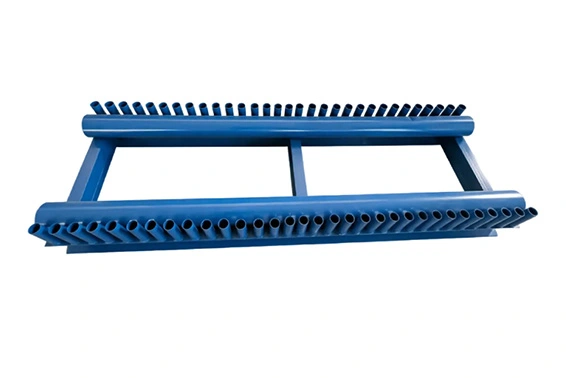
Understanding Steel Coil Storage Racks – Types and Benefits
It's helpful to know the difference between industrial shelving and coil-specific shelving before you start looking at different suppliers.
What Defines a Coil Storage Rack?
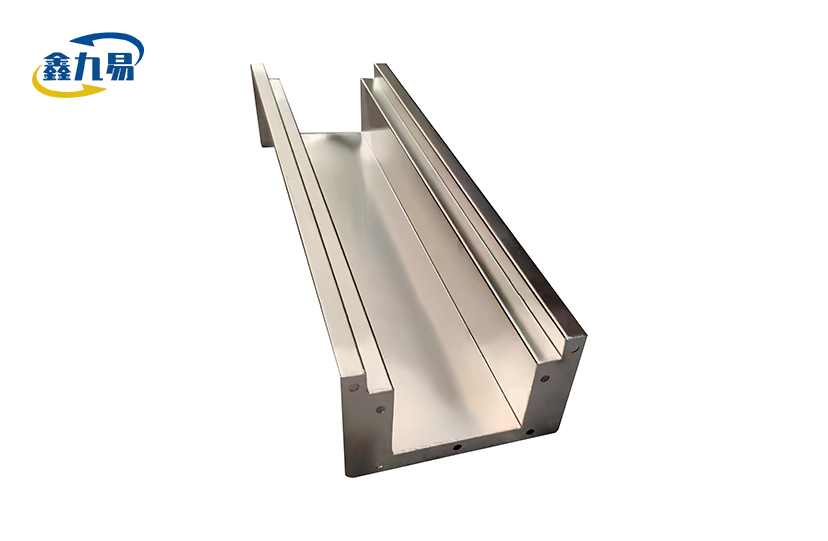
Flat pallet racks are not the same as steel coil storage racks. A steel coil storage rack has a saddle- or V-shaped bearing surface that fits the curved body of the coil. The weight is spread out evenly, so there is no point-load deformation (also called "egg-shaping"). The coil also stays in place while the forklift is work. Some of Xinjiuyi's racks are made from channel steel and H-beams that have been thickened and then welded together. There are raised anti-roll ends on each side that are 0.8 m above the ground.
Fixed vs. Adjustable Rack Configurations
When it comes to warehouses that store coils with a diameter range of 1.0 to 2.0 m, fixed racks offer the most structural strength. Shiftable saddle-beam racks can be changed to fit tube sizes from 600 mm to 2,000 mm. They are a good choice for metal service shops that deal with a wide range of stock because of this. Most of the time, fixed designs can handle higher static loads than flexible systems, which trade some stiffness for more operating freedom.
Storage Density and Space Benefits
When you stack things horizontally at ground level, you waste vertical space and make it easy for things to fall over. Industry studies on storage building say that using vertical high-bay coil racking can increase the amount of space used for storage by up to 300%. The 1,000 mm ground-clearance configuration and other raised rack designs at Xinjiuyi keep coils safe from water and floor dirt, which directly cuts down on material write-offs.
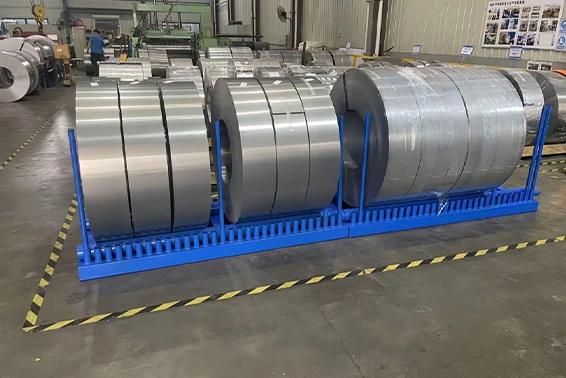
Key Design Features to Evaluate Before Ordering
This is where most procurement errors occur. Buyers focused on price often overlook the structural details that determine whether a rack lasts two years or twenty.
Saddle Radius and Structural Steel Grade
The saddle curvature of a steel coil storage rack must match your coil's outer diameter range. A mismatch concentrates load on a narrow contact point, accelerating saddle deformation. Reputable manufacturers specify saddle angles between 120° and 150° and build main frames from Q235B or Q355 structural steel. Xinjiuyi's main load-bearing frame uses 100 × 100 × 3.0 mm square tube, with auxiliary framing at 50 × 50 × 3.0 mm — published specs you should request from any supplier before ordering.
Static Load Rating and Safety Factor
Confirm that the supplier provides graded static load documentation: 5-tonne, 10-tonne, and 15-tonne ratings are the industry benchmarks. A safety factor of 1.5 to 2.0 is standard practice under RMI (Rack Manufacturers Institute) guidelines. Racks without published load reports create serious liability exposure — insurers routinely reject claims when documentation is absent.
Surface Treatment and Corrosion Resistance
Hot-dip galvanizing is the preferred treatment for outdoor yards and humid warehouses, as it bonds zinc to the steel surface at the molecular level rather than sitting as a topcoat. Coating thickness should be verified in microns; industry standards typically require 45–85 µm for structural steel. Xinjiuyi applies hot-dip galvanizing or rust removal combined with anti-rust painting across all components, making the racks suitable for acidic and alkaline storage yard conditions.
Forklift Access and Anti-Roll Mechanisms
A rack without forklift pockets or lifting interfaces slows every loading cycle and increases manual handling risk. Equally important are the anti-roll end stops — Xinjiuyi's raised-end design (0.8 m) physically blocks lateral movement. Check whether the supplier includes safety pins or mechanical locking features as standard rather than optional add-ons.
Comparing Storage Rack Solutions for Different Needs
Every building has different needs. You can use this well-organized list to help you decide.
Coil Saddle Racks vs. Cantilever Racks
Cantilever racks work well with long pieces of pipe and bar stock, but they're not designed to hold round coil profiles. Without a saddle surface, coils need to be chocked more, which adds work and risk. Coil saddle racks get rid of that step, can hold more weight per unit, and can be used right away with regular heavy-bay shelving systems.
Adjustable vs. Fixed Racks for Inventory Variability
If you only need to handle one steady coil design, fixed racks are the best choice because they keep the load more stable and cost less per unit. Moving beam designs save time when setting up when coil widths and sizes change a lot, like when making furniture or distributing metal. The standard sizes for Xinjiuyi are 2,000 mm long, 800 mm wide, and 1,000 mm high, but these can be changed. In other words, both options can come from the same manufacturer.
Forklift-Accessible Racks vs. Crane-Only Systems
Heavy loads can be moved by overhead cranes in steel mills that already have bridge cranes. Forklift-friendly racks, on the other hand, work in lower-bay warehouses and construction yards that don't have cranes. The basic rack from Xinjiuyi has lines for both forklifts and overhead lifting, so workers can pick what they need without having to buy a second SKU.
Procurement Considerations: What Buyers Should Know
Some things you need to know about buying will help you get the right rack at the right time and for the right price.
Standard vs. Custom Configurations
Standard steel coil storage racks are the best choice when you buy in bulk at steel logistics centers because they ship faster and cost less per unit. They can handle coil lengths that aren't standard, saddle curves that aren't standard, or making sure that they work with a high-rise pallet rack system that you already have. For the first order, custom wait times are generally between 6 and 12 weeks. Once records of tools and checks are made, the time frame usually drops to 4 to 8 weeks for repeat orders.
Supplier Qualification Checklist
Before you place an order, these are the most important things you should look for in a coil rack provider:
- Published static load reports at each rated capacity (5 / 10 / 15 tonnes), with test methodology stated
- Material certifications confirming steel grade (Q235B or Q355 minimum)
- Surface treatment records with coating thickness measurements
- Dimensional tolerance documentation, particularly for saddle radius and anti-roll stop height
- Compatibility confirmation with your existing heavy-bay rack system or forklift model
If you use these criteria, quality problems that show up after the fact won't change your mind about what to buy. Many buyers need proof that Xinjiuyi meets quality management standards. They can check that the company has ISO 9001, ISO 45001, and ISO 14001 certifications.
Bulk Purchasing and Value-Added Services
It's easier to plan logistics when you order in bulk because the cost per unit is lower. You should look at more than just the price. See if the seller gives installation help, expert support on-site, and testing services after the sale. Before the sale, Xinjiuyi's team gives design advice, production models help with project planning, and delivery support, which makes it easier for your purchasing team to work together.
Maintenance and Longevity of Steel Coil Storage Racks
Even if the rack is well-made, it needs to be taken care of so it lasts as long as the maker says it will.
Routine Inspection Protocols
Check both the outside and the inside at least once every six months. Some of the most important things to check are the load on the bolts at the anchor points, the state of the coating at the contact zones, and the alignment of the anti-roll stop. Ultrasonic weld testing is recommended for places where things are loaded and unloaded a lot, like shipping centers where racks are loaded and unloaded all the time.
Corrosion Management by Environment
When warehouses are kept cool and dry inside, they don't need as strict of cleaning plans as rebar yards that are outside. If you live near the coast or chemicals, check galvanized surfaces once a year for white rust and fix any places where the zinc layer has worn away too much. When it comes to how much contact they get, anti-rust paint systems need to be re-coated every 3 to 5 years.
When to Replace Rather Than Repair
If the saddle permanently changes shape, the welds crack at load-bearing joints, or there is a vertical lean that is more than 1/500 of the rack height, it's time to get a new rack. People and the coil stock are in too much danger if you keep loading a rack that isn't built right.
Conclusion
Warehouses order steel coil storage racks without checking the anti-roll design, static load documentation, saddle radius, or surface treatment standards. As a result, the racks get bent, insurance claims are turned down, and accidents happen at work. Each of the features we've talked about here has an immediate impact on the overall safety and cost of ownership. Heavy-duty H-beam and channel steel are used by Xinjiuyi to make coil storage racks. The racks can be painted or hot-dip galvanized, and they come in a number of different modular styles that can be used in steel mills, supply centers, factories, and building yards. The rack will stay in your building for years to come once you get the right specs.
FAQ
How do I calculate the correct load rating for my coils?
Identify the heaviest coil you will ever store on a single rack, then select a rack rated at least 25% above that figure to maintain the required safety factor. Standard industry tiers are 5, 10, and 15 tonnes per rack.
What is the minimum saddle angle for a coil storage rack?
Most engineers specify a saddle angle between 120° and 150°. Angles below 120° concentrate load on a narrow contact band and accelerate deformation.
Does hot-dip galvanizing cost significantly more than painted finishes?
Hot-dip galvanizing carries a higher upfront cost but typically outlasts painted systems by 10–15 years in outdoor or high-humidity environments, making it the lower-cost option over a full service life.
What certifications should a coil rack supplier hold?
ISO 9001 (quality management) is the baseline requirement. For facilities subject to OSHA inspection or European export, confirm whether the supplier can support EN 15512 or RMI structural compliance documentation.
Can these racks integrate with existing high-rise pallet racking?
Yes — provided the base plate dimensions and beam height profiles are matched during ordering. Confirm compatibility specifications with your supplier before finalizing the configuration.
Partner With Xinjiuyi for Your Next Coil Storage Project
The enterprise-grade steel coil storage racks that Xinjiuyi makes are made to meet the needs of steel mills, transportation hubs, and factories. We are a reputable company that has been certified by ISO 9001, ISO 45001, and ISO 14001 to provide steel coil storage racks. Each rack comes with load ratings, a surface treatment that stops corrosion, and full customization support. Email our team at global@xjy8.com or go to xjy8.com right now to get project details and a consultation.
References
1. Rack Manufacturers Institute (RMI). Specification for the Design, Testing and Utilization of Industrial Steel Storage Racks. Material Handling Industry, 2021.
2. European Committee for Standardization. EN 15512: Steel Static Storage Systems – Adjustable Pallet Racking Systems – Principles for Structural Design. CEN, 2020.
3. European Committee for Standardization. EN 15635: Steel Static Storage Systems – Application and Maintenance of Storage Equipment. CEN, 2008.
4. Occupational Safety and Health Administration (OSHA). Materials Handling and Storage: Safety and Health Regulations for Construction. U.S. Department of Labor, 2022.
5. FEM (Fédération Européenne de la Manutention). FEM 10.2.07: Recommendations for the Design of Steel Static Storage Pallet Racking. FEM Sectional Group, 2019.
6. International Organization for Standardization. ISO 9001:2015 Quality Management Systems – Requirements. ISO, 2015.