Rebar Coil Storage Cradle Rack: A Practical Guide for Construction Sites
If you manage material storage on a busy construction site, you already know how quickly rebar coils can become a liability when stored incorrectly. A rebar coil storage cradle rack is a purpose-built steel frame designed to hold coiled reinforcing bar securely off the ground, prevent rolling accidents, and support safe forklift or crane handling. This guide walks through what these racks are, how to choose the right one, how to use them properly, and what trends are shaping the market — so you can make a confident, informed procurement decision.


What Is a Rebar Coil Storage Cradle Rack and Why It Matters?
Defining the Equipment
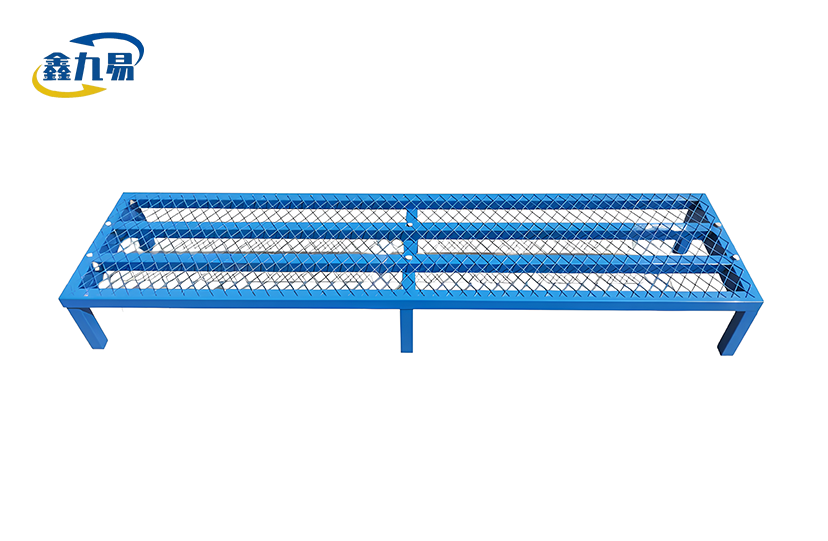
One type of heavy-duty frame is called a rebar coil storage cradle rack. It holds steel coils stable and upright in an arc- or V-shaped saddle. Unlike flat pallet racks, the sloped touch surface spreads the weight of the coil evenly. This keeps the coils from "egg-shaping" when they are loaded and left to rest on flat ground for a long time.
The Real Cost of Improper Storage
When rebar bars are stored directly on the ground, they are exposed to ground moisture, mud contamination, and surface corrosion. All of these things lower the quality of the material before it is put in place. Even worse, coils that are lying flat and not supported can roll in odd ways. A study by OSHA on construction accidents shows that being hit by something is the cause of about 8% of construction deaths every year. Rollers that aren't secured have been linked to these accidents.
Core Benefits at a Glance
When a place has a good coil base system in place, it definitely helps in three ways. Staff don't have to move other things to get to the right size because they can quickly find and reach certain coil diameters. It's easy for forklift drivers to load and move things because they use a standard method. That way, site managers can show that they have their stuff in order during reviews, which helps make sure that safety management plans are followed.

Types of Rebar Coil Storage Cradle Racks and Material Choices
Fixed vs. Modular Designs
When you weld two rigid pieces together, you get a fixed rebar coil storage cradle rack. They work best in set processing rooms where the plan doesn't change often. The modular designs made by Hebei Xinjiuyi Construction Technology Co., Ltd. are easy to move, take apart, and use again and again at different stages of a project because they are connected with bolts or slots. This helps contractors a lot because they often have to move tools from one job site to another.
Steel vs. Alternative Materials
Steel is still the most popular choice for heavy-duty coil storage because it costs less and is stronger. Steel with a web thickness of about 3.2 mm is used to make Xinjiuyi's racks' main frame. 50 mm × 50 mm square and rectangular tubes make it stronger. In this way, the frame doesn't bow and the unit can hold up to 5 tons of steel coils. Even though there are aluminum alternatives that can be used for lighter tasks, they aren't usually strong enough to hold large amounts of rebar coils.
When Custom Configurations Make Sense
Most coils with a width of 8 mm to 32 mm can fit in standard sizes, such as the 1500 mm x 1500 mm x 650 mm shape with a 1.5 m ID. On the other hand, big rebar processing plants often need special plans that let them store coils, stock bars, and stage finished products all at the same time. A custom three-zone setup can cut down on the number of steps needed to handle and process those jobs by a big amount.
How to Use and Maintain Rebar Coil Storage Cradle Racks Safely and Efficiently?
Correct Loading and Positioning
Put the cradle rack on a flat, hard surface every time before you load it. Bring the coils down onto the chair with a forklift or crane. Do not put the coils on the rack by hand from the ground. Xinjiuyi's racks have forklift entry channels that make the approach position more stable. This lowers the risk of frame impact during loading.
Routine Inspection and Maintenance
Welds, frame joints, and the arc-shaped saddle surface should be checked every time the machine is used or after each big load cycle. Rust on the surface of metal gaps can mean that the paint is coming off. Do a quick touch-up that stops rust on any steel that is showing. In the factory, the edges of Xinjiuyi units are smoothed out and free of burrs. However, strikes in the field can leave sharp spots. Check the sides that touch a lot and cut down any metal that sticks up.
Preventing Common Failures
Most of the time, maintenance issues happen because the base legs get hit by a forklift and cause the frame to become out of alignment. Straightening bent legs right away will keep the load even for the next use. Do not load the rack with more weight than it can handle. If you overload a rack, it might not always break right away, but the weld joints will wear out faster and the unit will last less long.
Making the Right Purchase: What to Consider When Buying a Rebar Coil Storage Cradle Rack?
It's not enough to just look at prices when choosing a rebar coil storage cradle rack. The following tests are always used to see if a rack will work reliably in the real world.
This is what procurement teams should look at before they place an order:
- Verified load capacity documentation: Request a static load test report confirming the rated capacity. A common industry problem is thin-wall frames sold as 3-ton units that deform under actual load. Xinjiuyi provides structural documentation for its units to support procurement verification.
- Material thickness and welding method: Full-seam welding on all structural joints is the standard for heavy-duty coil racks. Spot welding or partial welds create stress concentration points that can fracture under dynamic handling loads.
- Forklift interface compatibility: Confirm that the fork entry channel dimensions match your site's forklift tine width. Mismatched interfaces force operators to improvise, which increases tip-over risk during transport.
- Surface treatment specification: For outdoor or high-humidity storage areas, a rust-prevention coating with documented application thickness is necessary to achieve a meaningful service life.
Aside from making the site safer, these things also change how much it costs to own the rack over its lifetime. Getting a unit that costs less at first but rusts or fails a load test is not a good deal.
As you look at sources, give more weight to makers who can show you certificates from the material mill, records of the welding process, and clear promises about wait times. When distributors build a standard SKU inventory, they look for things like short lead times and packaging that is ready to be put on a pallet so that it doesn't get damaged during transport.
Industry Insights and Emerging Trends for Rebar Coil Storage Solutions
Automation and Smart Inventory Integration
On cradle rack systems, construction logistics teams are beginning to use RFID and barcode tags. This lets inventory management software see where coils are at all times, how much they weigh, and if they have been sent out. That way, people who count by hand are less likely to make mistakes, and CNC machines that work with rebar can give only what it needs at the right time.
Sustainability in Material Handling Equipment
Because people want sustainable sites, companies that make equipment are improving the way they treat the surfaces of their products to make them last longer and making modular systems that reuse materials to lower the amount of waste. Cheap racks that need to be replaced every two or three years make a lot more trash than ones that are guarantyd to last 10 to 20 years.
Market Demand Drivers
Standardized coil storage equipment is becoming more popular as rebar processing plants and prefabricated buildings spread out around the world. As more contractors send processing centers to cut and bend rebar away from the job site, each center has to store more coiled stock. This means that having well-organized, large storage is no longer an extra update but a standard requirement for how things work.
Conclusion
When you store steel bars the right way, it affects the quality of the products, the speed of the job site, and the safety of the workers. As long as the rebar coil storage cradle rack is built correctly, it keeps the rebar dry and prevents rolling accidents. It also gives forklift and crane workers a safe, predictable way to move the load. No matter if you're in charge of a processing room, a temporary material yard, or a staging area for a tower crane, it's easy to find the right rack design for your business. It will pay off in the long run. When you are considering choices, you should look at how much weight they can hold, how well they are welded, and how well they protect against corrosion.
FAQ
What is the standard load capacity for a rebar coil storage cradle rack?
The normal types that are made can hold between 3 and 5 tons per cradle. This unit in Xinjiuyi can hold up to 5 tons and is held up by a fully welded 100# channel steel frame. If extra support for the structure is needed, custom-built layouts for industrial processing lines can go above and beyond these strengths.
How do I choose the right rack size for my coil inventory?
The inside width of the saddle should be the same as the largest coils you use. An inner diameter of 1.5 m can fit standard coils with an outside diameter of 1200 mm to 1500 mm. Make sure the rack height is right for your forklift and the footprint fits between your floor grids.
Can these racks be used outdoors?
Yes, as long as the surface treatment is safe to use outside. Units with a coating that stops rust work well outside in places that are closed off or partially covered. For places that get direct, long-term rain or salt air along the coast, you should choose a hot-dip galvanized finish or a better coating system when you place your order.
Are the racks foldable or disassemblable for transport?
Because Xinjiuyi is made up of separate modules, it can be taken apart and moved without any special tools. This cuts down on the freight needed per unit and lets it be used in more than one place.
Do floor anchors need to be installed?
Most processing sheds have single-level floor cradles that don't need to be anchored to the floor. It is strongly recommended to place anchors in multi-tier setups or places that are prone to earthquakes.
Partner with Xinjiuyi for Your Rebar Coil Storage Cradle Rack Needs
The rebar coil storage cradle racks that Hebei Xinjiuyi Construction Technology Co., Ltd. sells are made from approved materials. These racks have been fully welded and tested for load capacity. They are now ready to be sent to OEM partners, processing facilities, and distributors all over the world. If you need rebar coil storage cradle racks from a company you can trust, we can ship pallet-ready units quickly to help your inventory move through the system. If you want a quote right away, email global@xjy8.com with your needs or the number of items you need, or visit xjy8.com.
References
1. Occupational Safety and Health Administration (OSHA). Construction Industry Regulations: Material Handling and Storage — 29 CFR 1926.250. U.S. Department of Labor, 2022.
2. Rack Manufacturers Institute (RMI). Specification for the Design, Testing and Utilization of Industrial Steel Storage Racks. Material Handling Industry of America, 2021.
3. Steel Construction Institute. Design of Steel Structures for Construction Sites: Guidance on Temporary Works and Storage. SCI Publication P365, 2019.
4. American Institute of Steel Construction (AISC). Steel Construction Manual, 16th Edition. AISC, 2023.
5. European Committee for Standardization. EN 15635: Steel Static Storage Systems — Application and Maintenance of Storage Equipment. CEN, 2020.
6. National Safety Council. Injury Facts: Construction Industry Incident Analysis and Prevention Data. NSC, 2023.