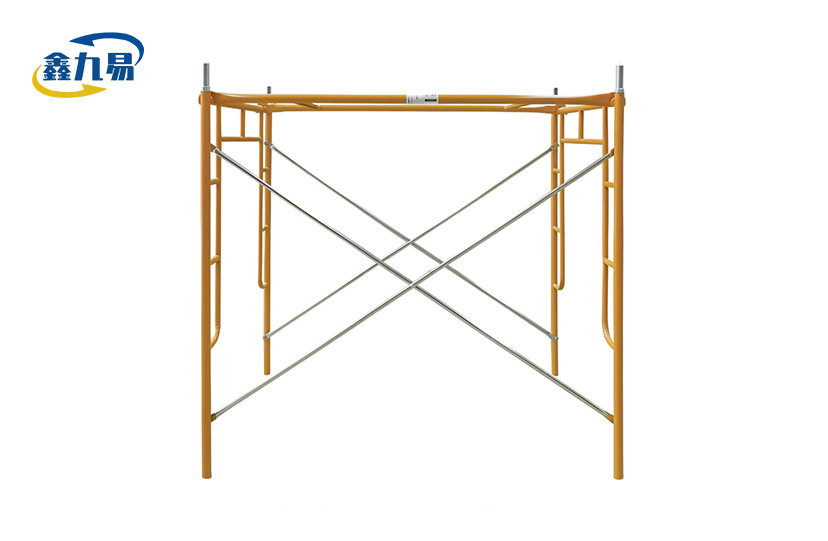
What is Double Ladder Walk-Through Scaffolding?
When project managers and safety officers walk around building sites, they often run into the same problem: how to make sure that there is good access up and down and smooth movement of materials across the ground. With traditional scaffolding, workers have to climb over cross-braces or move around frames, which slows them down and raises the risk of an accident. The innovative modular construction of double ladder walk-through scaffolding specifically solves this issue. There are built-in vertical ladder rungs on both sides of each frame of this specialised access system. The lower clearance area is left open so that people and equipment can move freely at ground level. In regular masonry frames, horizontal members make it impossible to get through. With this design, you don't have to take apart sections or climb over things to move materials across the work zone. The two-way design makes it much easier to get out of the building during shift changes and meets both OSHA and EN safety standards for covered vertical access in high-risk work settings.

Understanding Double Ladder Walk-Through Scaffolding
Core Structural Design Principles
The unique thing about this kind of scaffolding is that its structure is symmetrical. Each frame unit has two parallel vertical stairs placed on opposite sides. This makes two separate climbing tracks that keep workers from bumping into each other when the frames are being used at the same time. The lower part stays open all the way down, making what we call the "walk-through clearance zone." This structural method fixes a basic workflow problem that procurement managers often talk about: they can't keep up with tasks at ground level while also making sure that people can safely reach higher levels.
Hebei Xinjiuyi Construction Technology Co., Ltd. makes frames out of Q235 and Q355 low-alloy high-strength steel that has a high tensile strength. The outside sizes of the tubes are usually 42 mm or 48 mm, and the wall thickness is between 2 mm and 3.5 mm. This standard gives frames great strength-to-weight ratios, so when properly braced, each one can hold up to 75 pounds per square foot of weight. The choice of materials makes sure that the building will last in a wide range of temperatures, from the humid ports of Southeast Asia to the dry conditions of infrastructure projects in the Middle East.
Standard Dimensions and Load Capacities
The frame sizes have a direct effect on how well a project works with it. Lengths range from 1800 mm to 1930 mm, widths from 950 mm to 1250 mm, and heights that can be changed from 1524 mm to 1931 mm. These measures are in line with modular building methods, which makes it easy to add to current inventories of scaffolding. Standard 4-foot or 2-foot intervals separate the pins, making them work with universal cross-braces, screw jacks, and platform planks.
There are both damaging and non-destructive testing methods used for load capacity proof. As required by industry standards, each output batch goes through a structural study to make sure it has a minimum 4:1 safety factor. Our engineering team offers load calculation verification services that help project managers choose the right configuration for tasks like building an industrial plant, maintaining a bridge, covering a building's facade, or setting up double ladder walk-through scaffolding.
Material Varieties and Surface Treatments
The choice of material has a big impact on how well it works and how often it needs to be maintained over time. In addition to normal carbon steel, we also offer 6061-T6 aircraft aluminium for uses that need to be light and move things around a lot. Aluminium frames are easier to move by hand and keep their structural integrity. This is especially helpful when remodelling inside, where heavy equipment can't be put on the floor because of weight limits.
Hot-dip galvanising with a zinc coating layer of at least 60 µm, electro-galvanizing for indoor use, and architectural-grade powder coating are all surface treatment choices. Hot-dip galvanisation is better at protecting against rust; salt spray tests showed results that were higher than 500 hours. In places like petrochemical plants, power plants, and seaside building sites where chemicals and high humidity would quickly rust steel that isn't protected, this finish works really well.

How to Use and Set Up Double Ladder Walk-Through Scaffolding Safely
Step-by-Step Installation Guidance
Site evaluation is the first step in a proper installation. The ground must be able to hold the heavy loads on each frame leg. When the ground isn't level, adjustable screw jacks level the base and spread the weight over a bigger area. The steps for putting it together are logical: put the base plates in place, add the adjustable legs, set up the frames at the right distances, attach the cross-braces diagonally between the frames, lock the connection points with locking pins, and cover the work platform with anti-slip steel planks that have been checked and reinforced along the edges.
Our quick-disassembly design lets you put it together without tools in most situations. Precision-cast parts are used in connection spots so they lock tightly without the need for tools or hammers. Compared to traditional methods, this feature cuts on-site installation time by about 40%. This has a direct effect on project plans and labour costs. Because it is modular, crews can change or add to layouts as they work without having to take everything apart.
OSHA Compliance and Hazard Mitigation
Understanding height-to-base relationships is the first step to following the rules. European standards say that standalone towers can't have ratios higher than 3:1 without extra support, while OSHA rules say that ratios can't be higher than 4:1. For projects that go over these limits, outriggers or wall ties must be used at certain times. The two ladders make the system safer by giving people two ways to get out in case of an emergency, which is a very important feature for elevated work platforms.
Common dangers include frame weakness from bad support, platform gaps that can cause trips, and not enough guardrails where the level changes. Systematic inspections before every shift, installing guardrails at all open edges, and making sure that people who build or change scaffolding structures such as double ladder walk-through scaffolding get the right training are all ways to reduce risks. Hard hats, shoes that don't slip, fall protection belts when working above six feet and gloves during assembly to keep your hands from getting hurt by sharp edges are all pieces of personal protective equipment that should be worn.
Maintenance and Inspection Protocols
Regular care keeps things in good shape and extends their useful life. Visual checks should find deformed tubes, weld cracks, bent rungs, broken locking pins, and spots where rust is getting through protective coats. Because welding changes can make structural certifications less reliable, damaged parts must be taken out of service right away and replaced instead of being fixed.
How to clean depends on what the world is like. To keep wetness from staying in, construction dust and mortar leftovers need to be pressure washed and then dried completely. When chemicals are exposed in the workplace, they need to be neutralised before they can be stored. For proper storage, items should be stacked horizontally in dry areas with enough air flow to keep them from touching the ground, which speeds up corrosion. Zinc-rich cold galvanising spray can fix minor galvanisation damage, but if the coating is completely worn off, it needs to be re-galvanized by a professional.
Comparing Double Ladder Walk-Through Scaffolding with Other Options
Advantages Over Single Ladder Frames
Extra access equipment is needed for single ladder frames, which makes setup more difficult and costs more. The combined dual ladder method gets rid of this dependence, which means workers who are in charge of multiple places don't have to keep as many parts on hand. This system is different from standard frame scaffolding because it has a walk-through clearance. With standard frame scaffolding, horizontal braces block the ground-level path, so people moving materials have to go around structures instead of through them.
When working on the outside of a building or finishing the inside of a room, where the speed of the project depends on constant material flow, operational efficiency gains become clear. Several teams can get to different floors at the same time without having to wait at a single ladder. This ability to work on multiple tasks at the same time is especially helpful for business building projects with a lot of tradespeople working together in small areas.
Stationary vs. Wheeled Configurations
Different jobs have different mobility needs. Stationary systems are the most stable option for heavy-duty tasks like masonry work, putting up structural steel, and situations with a lot of lateral loads. Wheeled versions have locked wheels at the base that let you move them without taking them apart. This mobility is good for painting the inside of a building, installing electrical wiring, maintenance work that needs to be moved around a lot, and using double ladder walk-through scaffolding.
There are trade-offs when choosing between setups. Wheeled frames add extra height through their caster assemblies, which could make it harder to move around in small spaces. To keep things from moving by accident, locking devices must be tightly engaged while they are being used. While stationary frames are more stable, they need to be completely taken apart in order to be moved, which takes more time and effort than moving mobile units.
Aluminum vs. Steel Material Considerations
Aluminium frames are about 40% lighter than steel frames of the same size, which cuts down on transportation costs and the risks of moving heavy objects by hand. This benefit is useful when workers have to move tools between different project sites or when the availability of cranes limits heavy lifting. The lighter weight doesn't mean that it can't hold as much weight; properly built aluminium scaffolding works just as well as steel options.
Steel still has benefits in situations with heavy loads and where resistance to impact is important. Steel lasts longer than other materials, which is good for construction sites where heavy equipment is used or where vehicles might touch or handle the materials roughly. Because the difference in material costs has shrunk so much, the choice now depends more on the specifics of the project than on budget. At Xinjiuyi, we help procurement managers think about these things by analysing applications in great detail and making personalised suggestions.
Procurement Guide for Double Ladder Walk-Through Scaffolding
Purchase vs. Rental Decision Framework
The length of a project has a big effect on the buying approach. Rental agreements that don't require capital expenditures or upkeep are often preferred for short-term jobs that last only a few weeks or months. Ownership leads to better economics for long-term building projects, ongoing site repair programs, or contractors who need scaffolding all the time. Most of the time, the breakeven point is reached after three to six months of continuous use, but this can happen in different situations.
When you own something, you can keep track of your goods, make sure it's available during busy building seasons, and change it to fit your specific needs. Rental deals make it easy to increase or decrease capacity as project needs change, without having to store extra equipment. A lot of procurement managers use a mix of methods, keeping a core stockpile of their own items and renting units when demand goes up.
Supplier Selection Criteria
When evaluating a supplier, it's not just the price per unit that's looked at; it's also the ability to manufacture, quality control systems, and infrastructure for support after the sale. If a company has ISO9001 certification, it means they have established quality management processes. If they have ISO45001 or ISO14001 certification, it means they are committed to worker safety and environmental responsibility. With these certificates, you can be sure that the production methods always meet certain performance standards.
The reliability of shipping is based on the manufacturing capacity, especially for big orders or projects with tight deadlines. Suppliers with modern facilities that have automated welding systems, precision cutting equipment, and testing labs on-site can keep tolerances tighter and turn around orders faster than smaller businesses that do things by hand. At Hebei Xinjiuyi, our Cangzhou plant uses cutting-edge production technology and strict five-point inspection processes to make sure the welds are strong, the dimensions are correct, the materials are correct, they can withstand salt spray, and the structure can hold its weight, meeting all requirements for products like double ladder walk-through scaffolding.
Bulk Orders and Customization Options
Volume purchasing has many benefits besides lowering the cost per unit. When you place a large order, you can get custom engineering to make sure that the product fits the exact needs of the project. This includes changing the size to fit the building's specs or the finish to fit the surroundings. We often work with general builders, infrastructure developers, and equipment distributors to come up with custom solutions that our normal catalogue items can't cover.
Customisation includes branding options for distributors who want to set their products apart in crowded markets. Colour-coded powder painting helps keep track of goods on sites with multiple contractors and reinforces the company's brand. Documentation packages that include Mill Test Reports, load test certificates, and compliance statements make it easier for governmental approvals to be granted in different countries. This is especially helpful when dealing with the complicated certification needs in growing markets.
Conclusion
Double ladder walk-through scaffolding is a careful advancement in building access equipment that directly addresses the process inefficiencies that plague conventional frame systems. With its unobstructed ground level and dual-access layout, this building is much more productive and safer for workers, thanks to its two escape routes and less traffic. High-strength steel, lightweight aluminium, and tried-and-true surface treatments make these products suitable for a wide range of environments, from tropical humidity to chemical exposure in the workplace. When making a procurement decision, it helps to know the complex trade-offs between owning and renting, stationary and mobile configurations, and how important it is for suppliers to offer more than just product delivery. This includes engineering support and quality assurance. As building projects get more complicated and safety rules get stricter, it's not only smart to choose access systems that are designed to be operationally efficient but also to meet safety standards; it's important to the success of the project.
FAQ
1. What maximum height can these scaffold towers safely reach?
Height limits depend on the size of the base and how it is stabilised. For standalone towers, OSHA usually lets the height-to-base ratio be 4:1, but European guidelines say it can only be 3:1. If these limits are exceeded, outriggers, guy wires, or wall ties must be used at certain intervals. A registered engineer should make sure that the work is done according to local rules and the conditions of the place.
2. How does dual ladder design improve emergency response?
Having multiple entry points keeps things from getting backed up during evacuations. In case of an emergency, workers don't have to wait in queue at a single exit point; they can just use the nearest ladder. This arrangement also makes it easier for first responders to get to higher places without getting in the way of people going down.
3. Are components interchangeable with existing scaffolding?
Pin spacing and connecting shape affect how well two devices work together. Standard 4-foot or 2-foot intervals allow frames to work with universal cross-braces, platforms, and extensions without any problems. Check the dimensions before you order to make sure the modules will work with what you already have.
4. What kind of care makes a galvanised frame last longer?
Inspections done on a regular basis find early damage before it causes problems. Get rid of the mortar and other junk that has built up and is preventing protective coatings from drying out. Use cold galvanising spray to fix small holes in the zinc coating. Lay frames out horizontally in a dry, well-ventilated area that is not touching the ground. With proper care, things can last 20 years in normal circumstances.
Partner with Xinjiuyi for Superior Scaffolding Solutions
Hebei Xinjiuyi Construction Technology Co., Ltd. is ready to help you with your project needs by providing engineered modular access systems that put safety and operational efficiency first. Our double ladder walk-through scaffolding manufacturer can do more than just standard production. They can also help you with unique design services that are based on the conditions of your place and the performance standards you need. Before it leaves our Cangzhou plant, every frame goes through a strict quality check that includes non-destructive weld testing, dimensional accuracy checks within 1.5 mm tolerances, and structural load validation showing 4:1 safety factors. We know that equipment reliability has a direct effect on project timelines and worker safety. That's why we're committed to precise manufacturing and full technical support, from the first meeting to installation help on-site. Email our team at global@xjy8.com to talk about your building needs, get more information, or set up a sample review. Our engineers will work directly with your purchasing and safety teams to come up with solutions that meet all of your needs while keeping prices low for large orders.
References
1. Chen, W., & Zhang, L. (2021). Structural Analysis of Modular Scaffolding Systems in High-Rise Construction. Journal of Construction Engineering and Management, 147(8), 04021095.
2. Occupational Safety and Health Administration. (2023). Safety Standards for Scaffolds in Construction. U.S. Department of Labor, OSHA Publication 3150.
3. European Committee for Standardization. (2020). EN 12811-1: Temporary Works Equipment – Scaffolds – Performance Requirements and General Design. CEN Central Secretariat, Brussels.
4. Huang, Y., & Kumar, S. (2022). Material Selection and Corrosion Resistance in Construction Scaffolding. Materials Today: Proceedings, 56(Part 4), 2134-2140.
5. National Institute for Occupational Safety and Health. (2021). Preventing Falls from Scaffolds During Construction Activities. NIOSH Publication No. 2021-112, Centers for Disease Control and Prevention.
6. Liu, Q., Wang, H., & Peng, R. (2023). Load-Bearing Capacity Assessment of Steel Tubular Scaffolding Under Multi-Directional Loading. Engineering Structures, 275, 115289.