Different Models of Elevator Shaft Work Platforms: Which One Is Right for Your Project?
Selecting the right hoistway access solution depends on your project's specific requirements, including shaft dimensions, load capacity needs, and operational frequency. An Elevator Shaft Work Platform from Hebei Xinjiuyi Construction Technology Co., Ltd. offers modular, standardized safety systems designed to replace traditional scaffolding with rapid deployment capabilities. Our platforms provide stable working surfaces, comprehensive fall protection, and load capacities up to 1,500 kg—addressing the unique challenges of high-rise installations, modernization projects, and industrial maintenance scenarios efficiently.

Introduction
The access equipment your team uses to install guide rails fifty storeys up or replace an elevator system in an occupied building are crucial for safety and efficiency. Hoistway platforms have evolved from scaffolding alternatives to vertical building site-specific systems. This guidance simplifies shaft entry selection for procurement managers, project engineers, and safety officers. We'll examine how budget, load requirements, and shaft diameters affect platform layouts for different projects. Knowing these differences ensures that the equipment you select will safeguard workers, speed up projects, and meet government criteria.
Understanding Elevator Shaft Work Platforms: Types and Core Features
Hoistway access systems are special pieces of equipment that were made for the tight areas up high where elevator repair and installation take place. These platforms give workers a safe place to work in places where regular scaffolding wouldn't work or would be too risky.
Fixed vs. Portable Configurations
For long-term projects that last several months, fixed systems offer the most security. These systems attach directly to the walls of the shaft, making a permanent surface for work until the project is finished. This method is often preferred by contractors building new high-rise buildings because it cuts down on daily setup time.
Portable units give you options for projects that need to be moved around a lot or that need to use more than one shaft. The modular design lets your crew take the platform apart, move it thru normal doorways, and put it back together at different heights or places. This mobility is very helpful when updating buildings that are already filled, because it means less interruption.
Electric vs. Manual Operation Systems
Electric platforms use automatic moving systems that make it easy to move up and down without much physical effort. These systems work great when the height needs to be changed a lot during the workday. The automatic process keeps workers from getting tired and boosts output when they have to do the same thing over and over, like installing brackets.
For height change, manual methods use motorized winches or ratcheting devices. Even tho these platforms require more physical work, they don't need electricity, which is a big plus for early-stage construction or places that are far away. The simpler mechanical design also makes maintenance easier and lowers the cost of running the equipment over its lifetime.
Shaft Dimension Adaptability
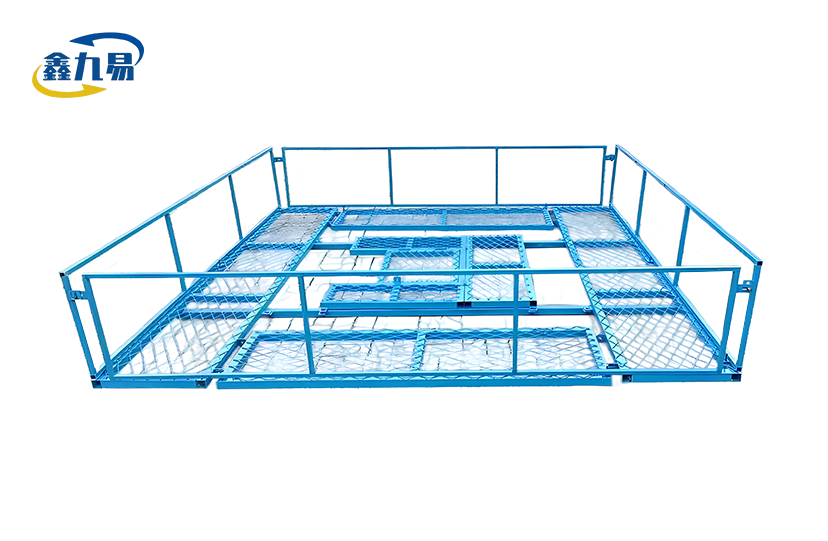
Modern hoistway platforms have flexible support beams that can be moved to fit different shaft lengths. At Xinjiuyi, our standard platforms can be made to fit sizes from 1.5 meters to over 4 meters without having to be made to order. Engineered moving parts make this possible. They lock firmly at any extension point, so the structure stays strong in all of these different positions.
I-beams, thicker rectangular tubes, and channel steel are used to build a load-bearing frame that stays stable even when it is extended. Our engineering team reinforces all important connection points with full-penetration welds and then grinds the joints smooth to get rid of the risk of snags while they're in use.
Safety and Compliance Standards
Platforms sold in the U.S. must comply with OSHA 1926 Subpart L for Elevator Shaft Work Platform scaffolding and raised work locations. The standards require guardrail height, toe board size, and load ratings. International work may require EN 1808 suspended access tool standards or ANSI A10.8 scaffolding safety standards.
Weight constraints affect the jobs your staff can safely undertake. Entry-level platforms can hold 250 kg for light checking with few tools. Two workers with typical installation gear can fit in mid-range 500–800 kg units. Multiple technicians can use large guide rail sections and power tools on our flagship platform, which can hold 1,500 kg.
Material choice balances strength and portability. Hi-tensile Q345B steel supports weight while keeping parts light enough for human handling. The 1.5mm checkered plate decking prevents slips in damp or dusty work situations.
Comparing Elevator Shaft Work Platforms: Which Model Best Fits Your Project?
To match platform specs to project needs, you have to look at a lot of interconnected factors that impact safety, efficiency, and cost-effectiveness.
Evaluating Shaft Size and Load Requirements
Shaft dimensions determine platform choice. Small, low-overhang plans are needed for holes under 2m wide. Most platforms fit 2–3-meter industrial shafts. Shafts beyond 4 meters may require custom layouts or linked platform parts.
Workload depends on tasks. Installation of lightweight electrical components reduces load. Guide rails, counterweights, and motors need substantial platforms. For safety, pick a base that can hold at least 125% of the working load of personnel, tools, and materials.
Traditional Scaffolding vs. Modern Platform Systems
Most high-rise jobs require 40–60 hours of pipe-and-clamp scaffolding to cover the shaft. It required specific skills and allowed for mistakes that could destabilise the framework. Chopping shafts to get unique shapes caused a lot of waste.
Modern adaptable platforms cut region setup to 4–8 hours. Standardised parts eliminate on-site cutting and connecting. Your ordinary work team may install the plug-and-lock system without scaffolding certification because it requires little training. This time savings cuts labour costs and speeds project completion.
Safety is better on engineered platforms. Traditional support was holey, needed fall protection, and couldn't distribute weight. To evenly distribute weight, integrated platforms have guardrails, toe boards, and load pathways. Pipe scaffolding fails less due to fewer connecting points.
Electric vs. Manual: Cost and Usability Analysis
Electric platforms are better for moving projects but cost more. The automatic lifting device changes height in minutes, compared to 30–45 minutes with a manual system. Installation at different heights in the same shift is easy with this efficiency.
Items demand different maintenance. Electric motors, connections, and controls need regular examination. This raises annual servicing expenses 15–20%. Manual platforms cost less since winches and locking devices require just basic mechanical maintenance.
Operational costs include power. Electric platforms need 2–4 kW of electricity during active lifting, increasing energy expenses for prolonged activities. Manual procedures are laborious and expensive, yet they use no energy.
Portable vs. Fixed: Installation and Rental Considerations
Contractors with many projects or moving between locations benefit from portable platforms. Moving tools increases their utility and justifies their cost. Renters like mobility because they can serve different clientele without stocking shaft sizes.
Fixed installations are good for large jobs with standard shaft sizes and long lead times. The sturdy installation eliminates everyday setup and disassembly and maximises stability for demanding applications. The loss of freedom is offset by the savings on labour across hundreds of workdays when building an 18-month high-rise.
For bulk purchases, these are balanced. Your team has more options with portable units, but they need extra storage and tracking. Buying fixed platforms saves money but limits reuse. At Xinjiuyi, we examine project pipelines to establish the best platform combination for our clients.
Procurement Considerations: How to Buy or Rent the Right Elevator Shaft Work Platform?
To get solid hoistway access tools, you need to carefully evaluate the suppliers and know the total cost of ownership, which is more than just the purchase price.
Evaluating Manufacturers and Certification
Reliable manufacturers have third-party quality control certifications. ISO 9001 certification ensures well-documented planning, production, and testing. ISO 45001 accreditation demonstrates your commitment to workplace safety. Hebei Xinjiuyi Construction Technology Co., Ltd. is ISO 9001, ISO 45001, and ISO 14001 certified, meaning we follow quality, safety, and environmental standards for Elevator Shaft Work Platform.
Manufacturing affects product uniformity and availability. Welds made by suppliers in contemporary buildings with controlled welding settings are more reliable than hand-welded ones. We employ robotic welding for critical structural joints in Cangzhou. This eliminates manual welding variances and ensures that every platform satisfies strength specifications.
Supply chain stability is crucial for international projects. Logistics alliances help suppliers meet lead times and bespoke installations. After years of exporting to Southeast Asia, the Middle East, and Africa, we can now give exact delivery dates for even the most intricate orders.
Pricing Structures and Bulk Advantages
Platform price includes more than raw materials. Cost depends on engineering design, quality checks, surface treatment, and documentation. Knowing these things lets you analyse quotes instead than merely comparing bottom-line numbers.
In manufacturing, economies of scale occur when you buy in bulk. Buy in volume to save on setup expenses per unit, get better material bargains, and justify spending money on bespoke tools to improve production. Customers save 15 to 25% when buying 20 or more platforms than when buying one.
Financing options help with cash flow for capital-intensive projects. Many vendors provide project milestone-based payment terms, reducing upfront costs. Renting equipment is another possibility. Capital costs become operating costs while credit lines remain open for other project needs.
Lead Times and Delivery Logistics
Most standard configurations ship within two to four weeks of confirmation. Custom platforms that need technical upgrades take 6–8 weeks longer due to design validation and unique production. Planning ahead avoids rush order expenses.
International shipping is more complicated and requires documentation experts. Correct harmonised tariff number classification affects import duties. Your certificate of origin documentation influences your preferential trade agreement eligibility. Our Xinjiuyi export staff handles these procedures and ensures all shipments have the appropriate papers to avoid customs delays.
Freight method selection balances speed and cost. Shipping large things by ocean freight is affordable, but it takes 4–6 weeks from our Cangzhou factory to major U.S. ports. Air freight speeds travel to 7–10 days but costs more, therefore it's only useful for urgent small orders or new parts.
Rental vs. Purchase Analysis
Renting saves money for projects under six months. Renting is cheaper than buying and requires no care or storage between activities. As your project portfolio evolves, renting lets you adjust your equipment inventory.
Purchase is cheaper for established contractors with consistent job pipelines. You don't have to pay rent every month and can be confident your equipment will be available during busy building seasons when rental stock is short when you own it. The investment pays off after 12–18 months of consistent use.
Custom manufacture meets project needs that regular items can't. Uneven shaft geometries, large loads, and unique safety measures may necessitate engineering adjustments. Our experts work with customers to provide structure-preserving solutions for their individual application needs. This customisation allows you to never give up on a project due to equipment restrictions.
Installation, Maintenance, and Compliance: Ensuring Safety and Longevity
Proper distribution and continued care have a direct effect on both the safety of workers and the return on investment of tools.
Step-by-Step Installation Process
To check the shaft and find any issues, the site is evaluated before deployment. Measure shaft dimensions at different heights to account for construction tolerances. Check the hook-wall condition. Note any installation issues.
Before entering the confined shaft region, components are staged. Group guardrail sections, platform wood, support beams, and bolts for easy identification. This preparation eliminates time-consuming shaft inspections for hidden parts.
The foundation assembly establishes system stability. Use bubble levels to level the load-bearing frame on the shaft floor. Telescopic legs adjust to tiny irregularities on floors. Secure the base using the right anchors. These could be weight loading, wall ties, or mechanical clamps depending on shaft condition.
Every step of vertical growth is inspected for safety. Attach guardrail pieces before lifting the platform to prevent falls. Check that all locking pins are engaged and the safety locks work. Apply lateral force to assess the platform's stability before workers step on it.
Routine Maintenance and Inspection Checklists
Daily pre-use checks reveal hazards. Examine the guardrail for loose or broken connections. Keep platform wood in place and prevent splitting and wear. Check all locking mechanisms for functionality. Write down inspection results to track compliance.
Monthly comprehensive inspections of Elevator shaft operation platform examine each part. Check welded joints for cracks visually and with dye penetrant testing in key regions. Check the surface covering for corrosion-causing damage. Lubricate all moving parts, including locks and flexible adjusters. The base should be level and the load spread within limits.
Annual exams by trained technicians are needed for proper maintenance. Test structure welds without harming them with ultrasonic or magnetic particle screening. Use 125% of its specified capacity static load to test the structure's stability. Replacement worn parts before they cause problems is best. Maintain maintenance records and provide recertification documentation.
Wear indicators indicate when to repair a part. Replace long-holed guardrail connectors to strengthen the structure. Replace platform wood that has shrunk more than 15%. Telescopic devices that lock or operate abnormally must be repaired before breaking.
Regulatory Compliance and Documentation
U.S. projects must preserve OSHA records while equipment is in use. OSHA requires a certified person to record the first setup. Keep inspection documents showing regular safety checks at regular periods. If you alter the equipment configuration, retain modification logs.
International markets have different certification criteria. European projects must be CE-marked and EN 1808-compliant. Middle Eastern markets may need extra GCC permits. Our platforms include full paperwork for certification in major foreign markets. It simplifies paperwork for project teams.
Documenting worker training protects businesses and employes. Record training classes on platform use, weight capacity, and emergency procedures. Track workers' attendance and evaluate their equipment skills. This paperwork proves safe working conditions were established.
Project safety checks include equipment approval audits. Inspectors check platforms for safety and load rating labels. They check maintenance logs for frequent checks. Safety features including fence strength and operation are checked. Detailing documents ahead of time speeds up these checks and prevents compliance questions from delaying work.
Case Studies and Expert Insights: Real-World Applications of Different Models
Using the right tools for the job in real life projects shows how choosing the right tools can change the results of different building situations.
Commercial High-Rise Construction Success
Texas' 45-story mixed-use tower needed four shaft groups of elevators completed simultaneously. The general contractor considered utilising ordinary scaffolding, but it would take 280 hours and delay the crucial passage. Modular hoistway platforms reduced setup time to 32 hours and improved fall safety. Teams could set up many guide rail pieces at once because the platforms could support up to 1,500 kg, reducing material movement. Due to improved pit access, the project was mostly finished two weeks early. No mishaps occurred around lift shafts, however three minor injuries occurred on a scaffolding job.
Residential Modernization Project Experience
An occupied 12-story apartment building needs elevator upgrades without displacing residents. The existing lifts had to work for most of the project because there wasn't enough space for typical access equipment. Portable platforms might be carried trough building service corridors and assembled inside shafts without shutting down lifts. The manual process's low noise kept people calm during evening work hours. It took three hours to adapt the platforms' layout to match varied shaft sizes, helping the builder finish all eight lift modifications on time. The property management business gave the worker more modernisation works because the worker worked well with the building work, which residents didn't understand.
Industrial Infrastructure Maintenance Application
Power plants use shaft-mounted industrial lifts in humid, chemical-exposed cooling tower drift areas. Rust accelerated after 18 months, breaking standard bases. Platforms with a quality powder coating and baking finish last over five years with little maintenance. Heavy-duty 1,500 kg capacity held large hydraulic tools for cylinder changes and cable tightening. After investing in non-rusting platforms, rental expenses and equipment malfunctions that disrupted maintenance schedules decreased.
Expert Recommendations for Specific Scenarios
New installations benefit from fixed-configuration platforms with the highest long-term security. Because it rarely needs to be moved, the fixed installation is worth it. Choose the maximum load capacity first so it can hold the heaviest parts your crew will move.
Maintenance and reconstruction require mobile platforms that cause minimal structure damage. Moving parts trough regular doors is crucial in populated buildings. If you move things often, consider electric models. Week-long jobs save time and money.
Narrow or misaligned shafts require platforms with a broad adjustment range. Avoid thinking common configurations will work by checking shaft measurements before buying equipment. Custom platform services prevent equipment dimensions from not matching on the job site.
Work savings should be added to tool costs to calculate ROI. Platforms that save two hours a day in assembly save a lot over several weeks. Safety reduces accident costs and improves insurance ratings.
Conclusion
To choose the right Elevator Shaft Work Platform hoistway access tools, you have to weigh the needs of the current job with those of the long-term operations. Compared to traditional scaffolds, modern movable platforms are safer, more efficient, and more flexible. Investing in properly engineered equipment saves your most valuable asset—your employees—while speeding up the job and making sure you're following all the rules. If you want to be successful with your projects, whether they are new high-rise construction, modernizing an occupied building, or industry maintenance, you need to make sure that the platform standards fit the needs of the applications. The thorough evaluation framework shown here gives procurement managers and project engineers the power to make smart choices that improve both safety and project costs.
FAQ
What load capacity do I need for guide rail installation work?
When installing guide rails, platforms that can hold at least 800 to 1000 kg of weight must be used so that two workers, rail sections, mounting clamps, and power tools can all work safely at the same time. Platforms that can hold 1,500 kg may be needed for heavy-duty tasks that involve installing counterweights. To find your exact load, add up the weight of the workers, the tools, and the heaviest items that can be placed on the platform at once. Then, choose equipment that can handle 125% of this amount.
Can platforms adapt to shafts with irregular dimensions or obstructions?
Modern platforms have flexible movement features that can handle the different widths that are common in building. Standard units can be adjusted over a range of 1.5 meters, which is long enough to fit most commercial shaft sizes. Custom designs can work around odd shapes or fixed obstacles like electrical lines. During the quote process, give manufacturers accurate shaft measurements and photos to make sure the right fit.
How do electric platforms perform during power outages?
Good electric platforms have manual fall devices that let you lower the platform safely when the power goes out. Secondary mechanical locks stop uncontrolled movement, so workers can get off at the closest level. In case of an emergency, battery backup systems on higher-end models keep the control functions working. Before starting work at a height, you should always check the emergency operation procedures.
Partner with Xinjiuyi for Reliable Hoistway Access Solutions
The Hebei Xinjiuyi Construction Technology Co., Ltd. makes specialized Elevator Shaft Work Platforms that are made for tough industrial and business uses. For big projects, buying managers need systems that can hold a lot of weight, have safety features, and last a long time. We offer full customization services that let us make platforms fit your exact shaft dimensions and operational needs. We keep up with the quality standards that foreign companies want by having ISO 9001, ISO 45001, and ISO 14001 certifications. It has been proven that our platforms can handle projects in Southeast Asia, the Middle East, Africa, and South America. Email our technical team at global@xjy8.com to talk about your specific needs. We offer reasonable prices for both single units and fleet orders because we are the maker and seller. You can look at all of our products and get full specs by going to xjy8.com.
References
1. American Society of Civil Engineers. (2021). Safety Standards for Temporary Elevated Work Platforms in Construction. ASCE Technical Manual Series, Volume 47.
2. Construction Safety Association. (2022). Hoistway Access Systems: Design, Installation, and Maintenance Guidelines. CSA Professional Development Publication.
3. International Building Safety Council. (2020). Comparative Analysis of Elevator Shaft Access Methods in High-Rise Construction. IBSC Research Report 2020-14.
4. National Institute for Occupational Safety and Health. (2023). Preventing Falls from Elevated Work Surfaces: Engineering Controls and Best Practices. NIOSH Publication No. 2023-156.
5. Society of Professional Engineers in Construction Safety. (2021). Load Capacity Requirements for Vertical Access Equipment in Commercial Building Projects. SPECS Technical Bulletin 2021-08.
6. Worldwide Construction Equipment Federation. (2022). Global Standards Comparison for Temporary Work Platforms: North America, Europe, and Asia-Pacific Markets. WCEF Industry Analysis Report.