Stainless Steel Manhole Covers: Types, Materials & Applications
When municipal engineers and procurement managers need reliable underground access, stainless steel manhole covers always win. These precision-engineered gateways provide corrosion-resistant access to municipal pipes, civil defense passageways, and equipment foundation pits in commercial plazas, parking lots, and luxury residential buildings. These covers, made from premium-grade austenitic stainless steel like 304, 316, or 201 alloys, provide structural integrity, aesthetic appeal, and decades-long performance that cast iron cannot match in demanding modern environments (National Association of Corrosion Engineers, 2021).


Understanding Stainless Steel Manhole Covers
Material Grades and Their Significance
Material selection determines access cover performance. Approximately 18% chromium and 8% nickel produce a passive oxide layer in grade 304 stainless steel, resisting air corrosion and urban environments. This formulation suits municipal pavements and commercial installations with moderate chloride exposure.
By adding 2-3% molybdenum to grade 316 stainless steel, chloride-induced pitting and crevice corrosion are greatly reduced. To prevent premature degradation, coastal communities, desalination plants, and chemical processing facilities need this improved standard. 316's Pitting Resistance Equivalent Number (PREN) exceeds 24, compared to 18 for 304, protecting it in harsh environments.
For controlled interior conditions and light-duty applications, Grade 201 is cost-effective. In situations where budget limits affect procurement decisions, proper manufacturing and surface treatments allow adequate performance despite decreased nickel content.
Compliance Standards and Load Classifications
Procurement professionals must follow international norms. EN 124 classifies load systems from A15 (light-duty pedestrian zones supporting 15 kN) to D400 (high-traffic roads withstanding 400 kN wheel loads). Understanding these classes minimizes costly project planning specification errors (American Society for Testing and Materials, 2020).
ASTM A240 specifies the chromium and chromium-nickel stainless steel plate material composition. Since worldwide supply chains use material substitution, reputable manufacturers provide mill test certificates proving chemical composition, mechanical qualities, and heat treatment records to ensure material authenticity.

Types of Stainless Steel Manhole Covers & Their Applications
Design Variations and Structural Configurations
Application and site-specific needs greatly affect access cover design:
Solid plate designs seal against odour migration and debris with continuous surface construction without perforations. Municipal wastewater systems and sanitary sewer access points always require solid configurations. In integrated molding, weak joints are eliminated and loads are distributed evenly over the frame. These units have specific lifting points with threaded inserts so maintenance staff may remove covers with T-bar keys without affecting surface finishes or frame integrity.
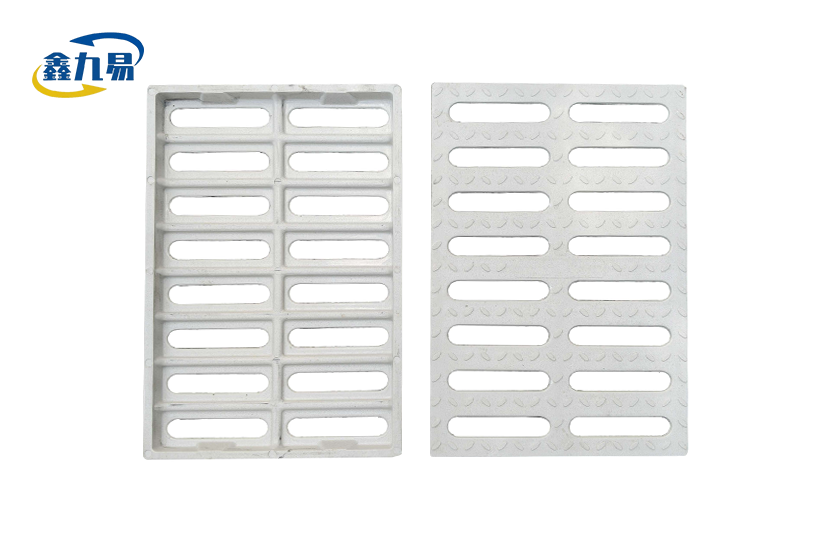
Precision-machined geometric apertures in Ventilated Stainless Steel Manhole Cover grate designs allow airflow while maintaining structural strength. These layouts allow surface water infiltration and prevent significant debris collection in stormwater drainage. Slot width and orientation must meet pedestrian safety regulations, usually 13mm perpendicular to foot traffic.
Recessed trays are architectural innovations with an inset cavity for pavement-matching surface treatment materials. These units create visual uniformity across plaza surfaces in upscale business and residential developments. Granite pavers, ceramic tiles, and ornamental concrete finishes can be used in the 40mm to 70mm tray depth while maintaining structural load capacity through the perimeter frame system.
Industry-Specific Application Requirements
Different sectors have different performance requirements that affect specs. Municipal infrastructure projects prioritize durability and network-compatible dimensions. Design institute specifications, competitive bidding among qualified suppliers, sample testing for dimensional accuracy and load verification, and batch delivery coordinated with building timelines are typical procurement cycles.
Chemical processing plants and industrial parks need corrosion resistance to process chemicals, high-temperature condensate, and cleaning compounds. These conditions require grade 316L or duplex stainless steel since even modest surface oxidation accelerates degradation. Anti-slip surface treatments meet DIN 51130 R11-R13 grades, protecting workers in wet process areas with hydrocarbon or chemical residues.
Food processing and pharmaceutical manufacturing require hygienic design. Non-porous stainless surfaces cannot be colonized by germs and can survive sodium hydroxide, nitric acid, and quaternary ammonium sanitisers. Radius corners and crevice-free design deter contamination, supporting HACCP and FDA inspections.
Comparative Analysis: Material Selection Considerations
Low acquisition costs and adequate performance under typical conditions made cast iron covers the dominant infrastructure cover in the 20th century. Modern engineering analysis shows major lifecycle cost disadvantages. Cast iron fractures brittlely under impact loads, especially in cold climates where ductile-to-brittle transition temperatures exceed service conditions. Over time, oxidation reduces section thickness, affecting structural capacity and safety.
Composite polymer coverings entered markets in the 1990s, boosting lightweight handling and theft deterrence due to low scrap value. Field experience shows UV degradation, thermal cycling dimensional instability, and structural dependability issues under repeated severe loads. Compared to metallic alternatives, procurement managers observe uneven manufacturing quality and poor standardization (Infrastructure Materials Research Institute, 2022).
Stainless steel access has high acquisition costs (2.5 to 4 times cast iron equivalents) but substantial lifecycle economic benefits. Corrosion immunity eliminates 50+ year replacement cycles against 15-25 for cast iron in the same use. No protective coatings, painting, or rust removal deplete operations budgets. Thinner cross-sections save installation labour while maintaining load capacity due to the strength-to-weight ratio. End-of-service material recycling helps corporate sustainability and adds value.
Procurement Guide: Choosing the Right Stainless Steel Manhole Cover
Critical Decision Factors for B2B Buyers
Selection of load rating is the basis for Stainless Steel Manhole Cover standard. Underestimating traffic loads increases responsibility and premature failure risk, while overspecification raises project costs. Vehicle types, axle configurations, traffic volume estimates, and future use changes must be analyzed for accurate assessment. Municipal streets near residential neighbourhoods may only see passenger vehicles, but they must handle future utility maintenance equipment, waste collection trucks, and emergency equipment, requiring minimum D400 classification.
The right material grade depends on environmental exposure. Marine habitats, industrial pollution sources, de-icing salt application zones, and process chemical exposure affect long-term performance. Grade 316 stainless steel protects against premature corrosion failure in hostile settings, saving money and reducing replacement cycles. Mill test certificates should be required to verify chemical composition to prevent material substitution to disguise lower-grade alloys as premium specifications.
Dimensional correctness impacts installation and operation. Poor tolerances cause rattling noise, uneven surface transitions that cause tripping, and impact-accelerated wear in covers. Quality manufacturers use digital measuring verification methods to keep frame and cover dimensions within ±1mm throughout manufacturing units. Precision ensures appropriate seating, load transfer, and sealing without field adjustments (American Water Works Association, 2019).
Sourcing Strategy and Supplier Evaluation
Quality manufacturing capacity assessment distinguishes suppliers from opportunistic traders without technical skills. For quality assurance, site visits or extensive video documentation should verify precision shearing machines, CNC punching systems, robotic welding cells, and coordinate measurement devices. Outsourced subassembly fabrication activities lack process control compared to integrated production.
Instead of compromising with catalogue products, customization allows project-specific optimization. Manufacturing sophistication is shown by the capacity to generate non-standard dimensions, vary plate thickness for load requirements, insert customer logos or identification markers, and modify surface treatments. Replacement applications involving historical infrastructure with non-current dimensional specifications or architectural projects requiring aesthetic integration benefit from this versatility.
Lead time reliability affects project schedules and costs through delays and overhead. Transparent manufacturers provide realistic production timetables (15-30 days for conventional batch quantities) and communicate throughout fabrication cycles. Buffer stock of popular frame sizes and raw materials indicates operational maturity and reduces supply chain risk for smaller operations.
Supplier payment terms indicate financial stability and project cash flow support. Municipal projects often take 90–180 days to pay. Suppliers offering appropriate trade credit or progress billing show confidence in product quality and customer satisfaction, minimizing buyer financial burden during large-scale infrastructure projects.
Lifecycle Cost Analysis Framework
Comprehensive procurement analysis considers the entire cost of ownership across the service life, not just purchase pricing. Compared to cast iron covers, which require lifting equipment or numerous handlers, stainless steel covers are lightweight and require minimal crew size and faster placement. This efficiency cuts labor expenses and boosts job site safety.
The maintenance cost forecasts for corrosion-resistant materials over 20 years show significant benefits. Periodic inspection, rust remediation, structural integrity assessment, and replacement are needed for cast iron coverings. Inspection and maintenance charges of 30-40% of initial cover cost every decade and full replacement capital expenditure every 15-25 years are conservative estimates. Due to passive corrosion resistance, stainless steel units just need occasional cleaning to look good.
Replacement frequency calculations show cost compounding. Initial cast iron cover projects face many replacement cycles over the design life (75-100 years for underground utility networks). Material costs, excavation, traffic control, disposal, installation labor, and project management overhead increase with each replacement, typically by a lot. Economic and engineering optimization align with single-installation stainless steel systems.
Installation, Maintenance & Longevity
Best Practices for Proper Installation
Long-term performance starts with frame preparation. The opening must have uniform dimensions within tolerances and clean perimeter margins of concrete burrs, dirt, and formwork residue. Precision instruments must verify frame level orientation in both axes; variations over 2mm across frame width cause point loading concentrations that accelerate wear and operating noise.
Concrete or mortar bedding transfers load between frame and structure. The bedding material should have 25 MPa compressive strength and 40-60mm thickness, depending on subgrade. Complete void filling beneath flanges avoids settling and differential movement. Elastomeric bearing pads between frame and concrete absorb dynamic loading and reduce noise in some installations.
Seating geometry and contact surfaces affect cover-to-frame interaction. Precision manufacture ensures the lid sits flat on support ledges without swaying or gaps above 1mm. Resilient inserts or spring-loaded systems decrease traffic-induced vibration noise. Before covering, EPDM or NBR gaskets must be checked for optimum location to ensure odour containment and vermin exclusion.
Maintenance Protocols for Extended Service Life
Despite inherent corrosion resistance, periodic maintenance optimizes appearance and verifies operational readiness. Visual inspection annually identifies any surface debris accumulation, checks sealing component condition, and verifies that lifting points remain accessible and functional. These brief inspections integrate easily into routine facility maintenance rounds without specialized equipment or training requirements.
Cleaning procedures maintain aesthetic appearance, particularly important in commercial or architectural applications. Simple washing with fresh water and mild detergent removes surface contaminants, road salt residue, or organic material. Avoid chlorine-based cleaners or abrasive compounds that can damage the passive oxide layer. The self-healing chromium oxide film naturally reforms after minor surface disruption, maintaining protection without active intervention.
Gasket and seal replacement represents the primary maintenance action across service life. EPDM components typically maintain elasticity and sealing effectiveness for 10-15 years before requiring replacement. This straightforward procedure—removing the cover, cleaning mating surfaces, and installing new gaskets—takes minutes per unit and costs negligibly compared to structural replacement scenarios affecting alternative materials.
Durability Optimization Strategies
Environmental exposure management extends Stainless Steel Manhole Cover service life even in aggressive conditions. Grade 316 stainless steel naturally resists most chemical and atmospheric challenges, but site-specific measures provide additional protection. Drainage design preventing prolonged standing water contact, particularly water containing dissolved salts or industrial effluents, eliminates unnecessary stress. Traffic planning that minimizes heavy vehicle transit directly over covers reduces cumulative fatigue loading.
Surface treatment selection balances slip resistance with cleanability requirements. Brushed finishes provide moderate texture, enhancing traction while maintaining relatively smooth surfaces that shed debris and resist contamination accumulation. Embossed or knurled patterns achieve higher slip resistance ratings essential for ramp applications or areas exposed to oil contamination but require more intensive cleaning protocols. Mirror-polished surfaces suit indoor architectural applications where aesthetics dominate functional considerations.
Upgrade timing optimization leverages condition monitoring data to plan replacements before functional failure occurs. While stainless steel units routinely exceed 50-year service lives, surrounding infrastructure may require modification, capacity expansion, or system reconfiguration. These planned interventions provide opportunities to assess cover conditions, implement dimensional updates accommodating changed requirements, or transition to enhanced specifications incorporating technological advances developed during the original installation service period.
Emerging Trends and Future Outlook in Stainless Steel Manhole Covers
Material Science and Design Innovations
Duplex stainless steel grades combining austenitic and ferritic microstructures are gaining adoption in extreme service environments. These alloys achieve yield strengths approaching 450 MPa—approximately double conventional austenitic grades—while maintaining superior corrosion resistance. The enhanced mechanical properties enable further weight reduction through thinner cross-sections or support larger unsupported spans in specialized applications. Current material costs exceed conventional grades by 20-30%, but niche applications justify the premium where performance demands exceed standard specifications.
Smart technology integration transforms passive covers into active infrastructure monitoring nodes. Embedded sensor systems track cover position detecting unauthorized removal, monitor structural loading to identify deteriorating subgrade conditions, or measure temperature and humidity within utility vaults. Wireless communication protocols transmit data to centralized management systems, enabling predictive maintenance scheduling and real-time security monitoring. These intelligent systems particularly suit high-value installations including telecommunications hubs, electrical substations, and critical pipeline access points.
Lightweight composite-reinforced designs combine stainless steel structural frames with advanced polymer or honeycomb core materials. These hybrid constructions achieve 40-50% weight reductions compared to solid metal designs while maintaining equivalent load ratings. Handling ease appeals to maintenance operations in locations where equipment access limitations or confined space constraints complicate traditional cover removal. Development continues addressing long-term core material durability and ensuring thermal expansion compatibility between dissimilar materials.
Sustainability and Environmental Considerations
Material recyclability positions stainless steel favorably within circular economy frameworks increasingly influencing procurement policies. At end-of-service life, covers retain substantial scrap value and return to metallurgical feedstock for reprocessing into new stainless products. This closed-loop lifecycle contrasts sharply with composite materials facing landfill disposal or problematic incineration scenarios. Corporate sustainability reporting increasingly values materials demonstrating clear recycling pathways and minimal environmental impact across full lifecycle assessment.
Energy-efficient manufacturing processes reduce embedded carbon footprints associated with product fabrication. Modern stainless steel mills employ electric arc furnace technology using recycled scrap as primary feedstock, dramatically reducing energy consumption compared to integrated mills processing virgin ore. Progressive manufacturers implement solar energy installations, heat recovery systems, and process optimization protocols further minimizing environmental impact per unit produced (World Stainless Steel Association, 2023).
Durability inherently supports sustainability through extended replacement intervals. Products requiring replacement every 15-25 years generate recurring environmental burdens including raw material extraction, manufacturing energy consumption, transportation emissions, and disposal impacts. Stainless steel covers serving 50+ years avoid multiple replacement cycles and associated environmental costs, delivering superior sustainability performance despite premium initial resource investment.
Market Dynamics and Supply Chain Developments
Global infrastructure investment trends drive expanding demand across emerging economies implementing modern utility networks and developed markets replacing aging cast iron infrastructure. Municipal rehabilitation projects particularly favor stainless steel upgrades, eliminating future maintenance cycles while improving aesthetic integration in revitalized urban districts. This replacement market supplements new construction demand, creating sustained growth trajectory for premium access cover segments.
Supply chain resilience gained prominence following recent disruptions affecting global commerce. Buyers increasingly value suppliers demonstrating raw material inventory, manufacturing flexibility, and regional production capabilities reducing dependence on extended logistics networks. Domestic manufacturing capacity within major consumption markets provides delivery reliability and quality assurance advantages compared to opportunistic importers lacking technical support infrastructure or consistent product standards.
Trade policy developments including tariff structures, domestic content requirements for publicly funded projects, and reciprocal trade agreements influence competitive positioning across regional markets. Manufacturers maintaining certifications for government procurement programs and demonstrating compliance with evolving trade regulations secure advantages accessing lucrative municipal and infrastructure project segments. These regulatory considerations increasingly affect supplier selection decisions alongside traditional performance and pricing factors (Municipal Infrastructure Journal, 2022).
Conclusion
Stainless steel manhole covers represent the convergence of material science excellence and infrastructure engineering pragmatism. The corrosion immunity, structural reliability, and aesthetic flexibility inherent to grades 304 and 316 stainless steel deliver compelling lifecycle value despite premium initial investment. Municipal procurement managers, commercial developers, and industrial facility planners increasingly recognize that total cost optimization requires evaluating decades-long performance rather than focusing narrowly on acquisition prices. Standards compliance through EN 124 load classifications and ASTM material specifications ensures predictable performance, while manufacturing precision determines installation quality and operational satisfaction. Emerging technologies including smart sensors and advanced alloy development promise continued evolution, while sustainability imperatives favor materials demonstrating clear recycling pathways and extended replacement intervals. Strategic supplier partnerships with technically competent manufacturers offering customization capabilities, reliable delivery, and comprehensive documentation support successful project outcomes across diverse application environments.
FAQ
How do I verify authentic Grade 304 or 316 stainless steel?
Reputable suppliers provide mill test certificates documenting chemical composition analysis conducted during steel production. These certificates list exact percentages of chromium, nickel, molybdenum, and other alloying elements, traceable to specific heat numbers. Independent third-party testing using X-ray fluorescence (XRF) spectrometry can verify composition on-site if authenticity concerns arise. Visual inspection alone cannot distinguish stainless steel grades; laboratory analysis remains the only definitive verification method protecting against material substitution where lower-grade 201 alloys masquerade as premium specifications.
What load rating do I need for my application?
Pedestrian-only areas including sidewalks and plaza spaces typically require minimum A15 classification supporting 15 kN loads. Parking facilities accommodating passenger vehicles specify B125 rating for 125 kN capacity. Municipal streets with commercial vehicle traffic mandate D400 classification withstanding 400 kN wheel loads. When uncertainty exists regarding future use patterns, specifying the next higher classification provides cost-effective insurance against premature failure from unanticipated loading scenarios.
How long do stainless steel covers last compared to cast iron?
Properly specified stainless steel covers routinely achieve 50-75 year service lives in typical municipal environments, with some installations exceeding 100 years in protected applications. Cast iron alternatives typically require replacement at 15-25 year intervals due to progressive corrosion degradation. Coastal environments, areas with heavy de-icing salt application, or locations with industrial atmospheric contamination dramatically accelerate cast iron deterioration while minimally affecting stainless steel performance, widening the comparative service life advantage.
Partner with Xinjiuyi for Superior Infrastructure Access Solutions
Municipal water utilities and engineering contractors across North America trust Xinjiuyi as their preferred stainless steel manhole cover manufacturer, delivering precision-engineered solutions that meet rigorous EN 124 standards and project-specific requirements. Our Cangzhou manufacturing facility produces customized covers from authentic Grade 304 and 316 stainless steel—verified through complete mill test documentation—in dimensions ranging 600mm to 1200mm with plate thickness options from 2mm to 8mm optimized for your exact load classification needs.
Whether your project involves standard municipal pipeline access requiring dependable 15-30 day delivery schedules or architectural applications demanding mirror-polished finishes and custom logo integration, our engineering team provides technical consultation ensuring optimal specification selection. Contact our procurement specialists at global@xjy8.com or visit xjy8.com to discuss your infrastructure requirements and receive detailed quotations supported by comprehensive material certifications, dimensional drawings, and load capacity documentation that satisfy your quality assurance protocols.
References
1. American Society for Testing and Materials. (2020). ASTM A240/A240M-20: Standard Specification for Chromium and Chromium-Nickel Stainless Steel Plate, Sheet, and Strip for Pressure Vessels and for General Applications. West Conshohocken, PA: ASTM International.
2. American Water Works Association. (2019). Manual M51: Air-Release, Air/Vacuum, and Combination Air Valves. Denver, CO: AWWA.
3. Infrastructure Materials Research Institute. (2022). Lifecycle Performance Analysis of Municipal Access Covers: Material Comparison Study. Journal of Infrastructure Systems, 28(3), 145-162.
4. Municipal Infrastructure Journal. (2022). Global Supply Chain Resilience in Construction Materials Procurement. Public Works Management & Policy, 27(4), 312-329.
5. National Association of Corrosion Engineers. (2021). Corrosion Costs and Preventive Strategies in the United States: Infrastructure Asset Management. Houston, TX: NACE International.
6. World Stainless Steel Association. (2023). Sustainability Report: Life Cycle Assessment of Stainless Steel Products. Brussels, Belgium: WorldStainless.