Working in the Rain: Why Construction Canopies Matter for Carpenters
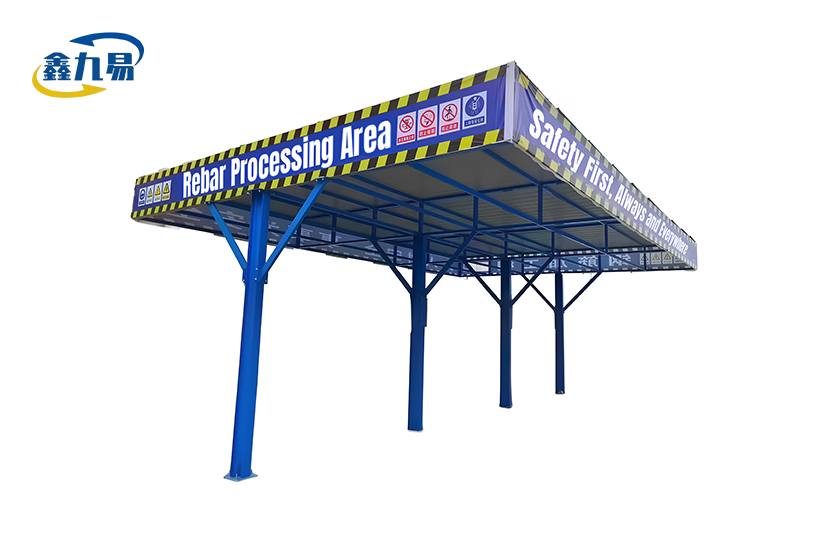
Rain does not stop construction schedules, but it does create serious risks for carpenters working outdoors. A dedicated carpenter working canopy solves this problem by providing a permanent, weather-resistant workspace over timber cutting stations, formwork zones, and lumber staging areas. Unlike temporary tents, purpose-built woodworking shelter structures use high-strength steel frames and fire-retardant panels to meet construction safety codes. This article explains why rain protection matters, what to look for when buying, and how Xinjiuyi's solutions serve safety directors, regional distributors, and OEM buyers worldwide.

Understanding the Challenges of Working in Rain for Carpenters
Wet Conditions Compromise Work Quality
When it rains, moisture goes straight into kiln-dried wood, which changes its shape and size within hours. When cutting wood that is still wet, precise cuts rarely hold up. The National Institute for Occupational Safety and Health (NIOSH) says that wet tool surfaces and floor decking cause most hand and slip injuries on building sites. This means that being outside in the weather is a measured quality and safety liability.
Timeline and Cost Disruptions
When it rains and builders have to stop working, other projects have to be sped up. The Associated General Contractors of America said in a report from 2022 that delays caused by bad weather are responsible for about 20% of unplanned project overruns in both residential and commercial construction. Each pause raises the costs of labor, machine downtime, and re-inspection. These all eat away at the project margins that safety directors and project managers are supposed to protect.
Why Temporary Shelters Fall Short?
Simple pop-up tents and plastic tarps lack long-term on-site stability. They are prone to wind damage, lack fire-retardant certification, and cannot be securely anchored to site infrastructure. Procurement teams opting for these temporary solutions often face frequent replacement costs, failed safety inspections and on-site worker complaints. All these issues can be fundamentally resolved with a structurally engineered carpenter working canopy (woodworking protection station).

The Value of Carpenter Working Canopies in Construction
Controlled Environment for Precision Work
If you build a good carpenter cover, it can be used as a workshop on an open site. Covering the roof and sides keeps rain and dust out and collects wood chip splashes. These are three things that directly affect the finish quality of formwork production and trim carpentry. No matter what the weather is like outside, workers are more consistent when their environment is stable.
Equipment Protection and ROI
Each crew has to spend thousands of dollars on capital equipment like power saws, cutters, and pneumatic nailers. Motor housings and electrical parts corrode faster when they are exposed to moisture. A construction site canopy with a steel frame pays for itself after just one major tool replacement cycle. Companies that keep track of maintenance costs consistently find that sites with permanent overhead shelter have lower tool repair costs than sites with temporary covers.
Compliance and Site Image
For safety directors seeking city- or provincial-level standardized-site certification, a compliant woodworking canopy is an essential inspection item and not an add-on. Safety tests give more points to sites that have planned, covered working zones. The plan of a site makes an instant impression on investors, bosses, and regulatory reviewers. A properly placed, color-coordinated canopy directly adds to that image.
Key Considerations When Choosing a Carpenter Working Canopy
It takes more than reviewing price sheets to pick the right shape. Before committing to an order, procurement teams need to look at the structural specifications, compliance documentation, and customization support.
Here are the most important things that every buyer should check:
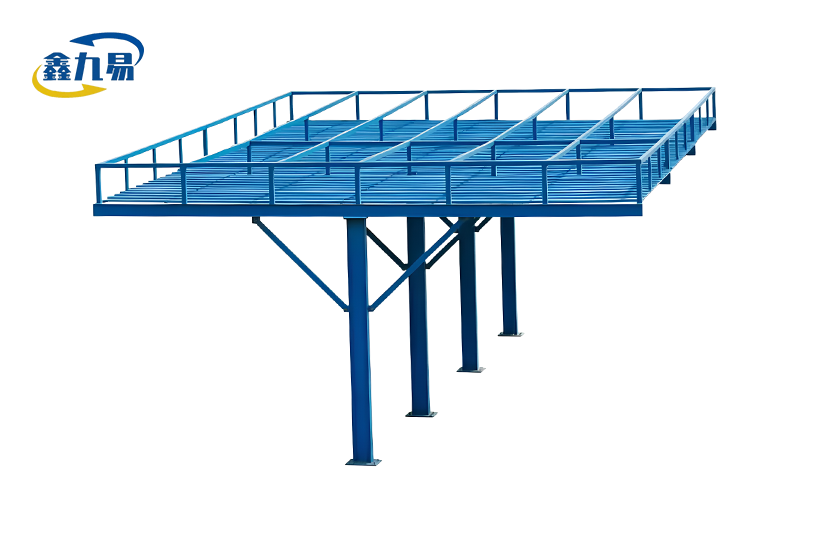
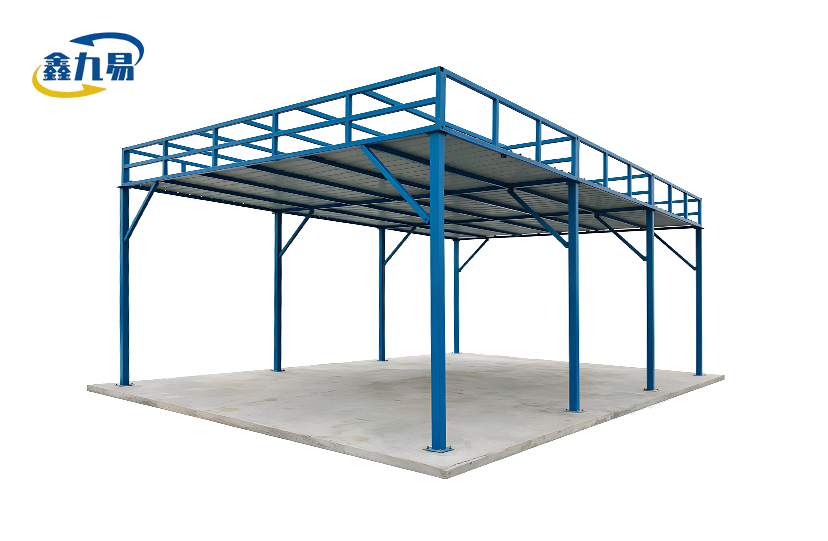
- Structural steel specifications: Columns should be at least 100 mm × 100 mm with 2.0 mm wall thickness. Main beams at 50 mm × 50 mm at 2.0 mm thickness ensure load-bearing integrity under both rain accumulation and wind pressure without deformation over time.
- Fire-retardant material certification: The canopy roof and side panels must carry verifiable fire-retardant ratings appropriate for woodworking zones, where sawdust and wood shavings create combustion risk. Confirm that suppliers provide documentation, not just verbal assurance.
- Coverage dimensions: Standard sizes of 6000 mm × 3000 mm accommodate most timber cutting setups, but sites with larger equipment or multiple cutting stations require 4000 mm or 6000 mm width variants. Confirm whether the supplier supports non-standard sizing.
These standards distinguish site-compliant structures from generic shelters that may fail inspections. After verifying the above criteria, buyers should also confirm the supplier provides professional after-sales service, installation guidance and accessible spare parts. A low upfront price holds little value if extra expenses are incurred for re-inspections or on-site modifications post-delivery. This is critical when sourcing a carpenter working canopy.
Maintenance and Safety Tips for Working Under Carpenter Canopies
Routine Inspection Schedule
Frame connections, purlin brackets, and roof panel anchors should all be checked once a month while the building is being used. Check for cracks in the weld at the base of the columns, loose bolt connections, and damage to the covering on the outside that lets water get to the bare steel. If you catch these problems early, they won't get worse during storms and the building will last longer. The flexible bolt-connection design of Xinjiuyi makes this process easy and doesn't need any special tools.
Cleaning and Coating Upkeep
On flat areas, sawdust and wood glue can build up and trap water against the steel frame. This buildup can be removed by sweeping the roof panels regularly and running water over the frame every three months. If the professionally sprayed coating has chips or scratches, treat them individually with an anti-rust primer that works with it before the rust gets deeper.
Safety Protocols During Storms
During heavy storms, workers shouldn't go inside a woodworking canopy unless the structure is fully fixed as directed by the maker. Make sure there are clear rules on how to stop work, secure loose lumber, and leave the processing area when wind speeds get too high. Xinjiuyi can customize the cover so that it fits places with workers from different backgrounds by letting you put up warning signs in multiple languages inside it.
Procuring the Right Carpenter Working Canopy: A Guide for B2B Buyers
Aligning Specifications with Project Scale
One residential project may only require a standard 6000 mm × 3000 mm carpenter working canopy, while multi-tower construction developments often need four or more units deployed across different site zones. Before requesting quotations, buyers should prepare a detailed site layout plan and record key parameters, including available floor space, clearance distances from adjacent buildings, and the vertical height required for tall panel storage. Xinjiuyi supports the entire procurement process by providing professional pre-sales technical reviews and confirming customized dimensions tailored to specific site conditions.
Bulk Orders and OEM Customization
When regional wholesalers buy goods to resell, they gain from uniform factory specs, reliable delivery windows, and stable pricing structures. At the Xian County Development Zone in Cangzhou, Xinjiuyi has the production ability to handle big orders with consistent quality. If a foreign brand buyer is looking for a carpenter working canopy supplier for private-label projects, full OEM customization is available. This includes brand colors, business logos, and multilingual safety labels. Confidentiality agreements protect the design.
Evaluating Total Cost of Ownership
The price to buy something is one of the variables. Buyers should also think about the cost of installation, the expected service life, the value of reusing the item on different projects, and the cost of not following the rules. The structures in Xinjiuyi are made to last up to 20 years and can be taken apart and moved between projects. This spreads the cost of the capital over several project cycles. With this reuse model, the cost of each project is much lower than what it shows on the first invoice.
Conclusion
It is impossible to avoid rain and moisture on construction sites, yet proper site infrastructure can mitigate damage to timber work, tools and project timelines. The structurally engineered carpenter working canopy serves as a safety-compliant woodworking protection station to safeguard workers and raw materials while satisfying regulatory inspectors. A properly designed covered workspace represents a key operational decision, whether you manage site safety for a large contractor, supply standard construction products regionally, or source goods for an international brand. Xinjiuyi designs and manufactures these structures to meet established safety standards, with full customisation available to suit all project types.
FAQ
How long does installation take for a standard carpenter canopy?
With Xinjiuyi's modular bolt-connection method, a normal 6000 mm × 3000 mm unit can be put together in one working day by two to four people. The method doesn't need any special welding tools to be set up on-site.
Can the canopy dimensions be customized?
Yes, you can choose from standard widths of 3000 mm, 4000 mm, and 6000 mm. Length and height can be changed to fit the needs of the job. Through Xinjiuyi's engineering review process, non-standard configurations can be used.
Does the canopy meet fire safety inspection requirements?
The top walls and the materials around them are fire-resistant, which is good for areas where people work with wood. Xinjiuyi gives safety audits and site acceptance reviews supporting compliance documents that can be used.
Is the structure suitable for multi-project reuse?
Yes. The bolt-connection design lets you take the whole thing apart without damaging or cutting any of the parts. Units can be moved to new locations and put in place again, which lowers the cost of each job for a builder.
Are multilingual safety labels available?
Yes, there are warning signs and instructions for how to use them in more than one language. This choice for tailoring can be used for orders from anywhere in the world.
Get Your Carpenter Working Canopy from Xinjiuyi
Xinjiuyi has a wide range of building site shelters made to meet the requirements of both domestic and foreign projects. We know how to make a reliable carpenter working canopy, and we offer full OEM customization, bulk dealer prices, and technical pre-sales review. Get in touch with our team right away to talk about the size of your site and the needs of your project. You can email us at global@xjy8.com to get a catalog of our products and a custom quote.
References
1. National Institute for Occupational Safety and Health (NIOSH). Preventing Slips, Trips, and Falls in Construction. Centers for Disease Control and Prevention, 2019.
2. Associated General Contractors of America. Construction Outlook Annual Report. AGC of America, 2022.
3. Occupational Safety and Health Administration (OSHA). Construction Industry Standards: 29 CFR Part 1926. U.S. Department of Labor, 2021.
4. Forest Products Laboratory. Wood Handbook: Wood as an Engineering Material. U.S. Department of Agriculture, 2021.
5. American National Standards Institute (ANSI). ANSI/ASSE A10.34: Protection of the Public on or Adjacent to Construction Sites. ANSI, 2017.
6. Building Safety Journal. Weather-Related Delays and Their Impact on Commercial Construction Timelines. Building Safety Journal, 2023.