Steel Mortar Bin: A Practical Guide for Construction and Masonry Projects
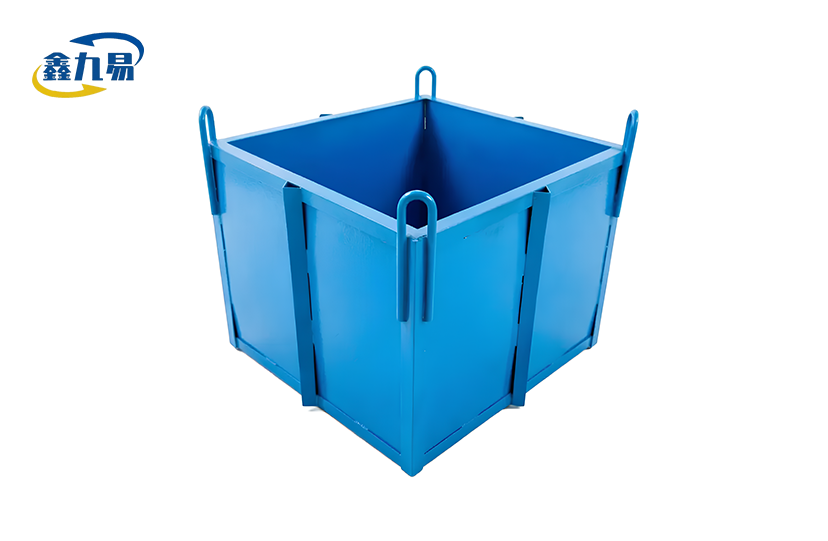
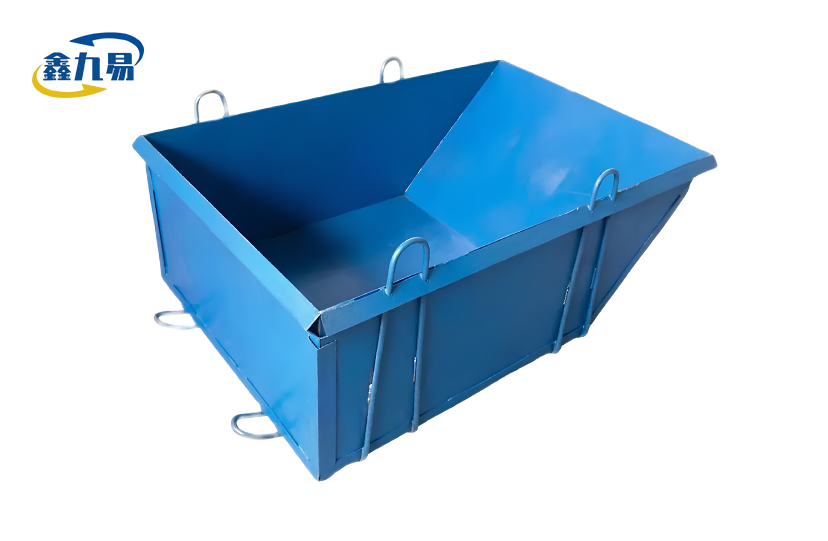
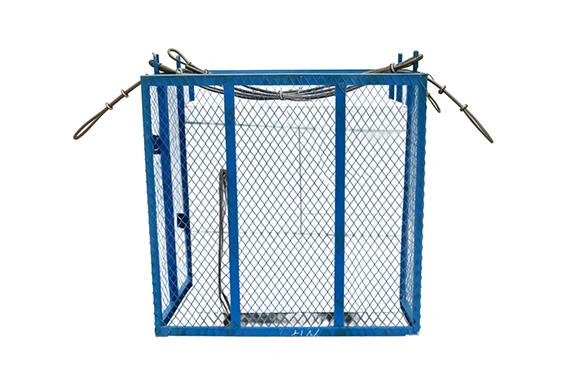
A steel mortar bin is a purpose made storage and transfer vessel used on construction sites to store concrete, mortar and bulk dry materials. These bins are made from structural carbon steel and are designed to withstand crane lifting, forklift transport and gravity discharge in a variety of jobsite situations. Whether you're working on a municipal bridge project, an industrial plant expansion, or a modest masonry refurbishment, the correct mortar bin directly impacts how effectively your crew gets material from the mixer to the pour site. This buying guide will cover everything you need to know before you buy.
Understanding Steel Mortar Bins: Definition, Types, and Uses
What a Mortar Bin Actually Does?
Mixed or dry cementitious ingredients are stored in a mortar storage bin for placement. The cargo is kept dry and it doesn't need to be moved about as much. It also can be attached to tower crane hooks or forklift tines to facilitate moving goods easier. The correct size bin on hand stops the mixer being backed up when the site is busy.
Common Bin Types and Profiles
The major kinds of profiles on the market are the conical bottom and the flat bottom. Conical-bottom bins have a bottom gate to get the contents out. Works great on damp concrete and mortar. Square bins are a stable way to store large aggregates and dry powders because of their flat bottom. Pre-cast plants and industrial workshops benefit from round silos, as they cannot be positioned as closely together as square-profile units.
Key Application Scenarios
These containers are located in practically every building location. City road and bridge crews use them to pour concrete and to transfer mortar from one deck pour to another. Earthworks and water conservation teams utilise them for work outside in the rain since the bases are sealed to keep water out. They always transport cement, fly ash and additives in factories with screw conveyors. 0.5 m³ pieces are used in small decorative sites, and these may be easily moved by a single tower crane.
Comparing Steel Mortar Bins: Making Informed Procurement Decisions
Steel vs. Plastic vs. Concrete Bins
Plastic dumpsters break when struck. They deform after prolonged exposure to UV radiation. This type of bin is exceedingly heavy, cannot be transported and is expensive to replace. Steel bins can be field welded. They can withstand repeated blows from loading tools. They don't bend, either, when the crane is loaded up with stuff. Material used with cranes should be manufactured out of steel as this is the most safe material.
Carbon Steel vs. Higher-Grade Structural Steel
For light duty and one time use, regular carbon steel Q235 is OK for a steel mortar bin. But where bins are loaded and unloaded numerous times in a shift, Q355 structural steel is much stronger in yield terms. The wall will not bow as much and the steel will survive longer. Q235 thin wall bins are commonly marketed as Q355 bins. Always insist on seeing a mill certificate and a wall-thickness inspection report before you purchase.
Weight Class and Handling Compatibility
These will assist you figure out the correct weight class for your business:
- Capacity range: Bins from 0.5 m³ to 2.0 m³ cover the majority of site applications. Larger volumes reduce trip frequency; smaller volumes work where crane lift capacity is limited.
- Lifting ring specification: Ring diameter should match your tower crane hook. A standard 18 mm ring accommodates most crane hooks, but 16–22 mm customization is available.
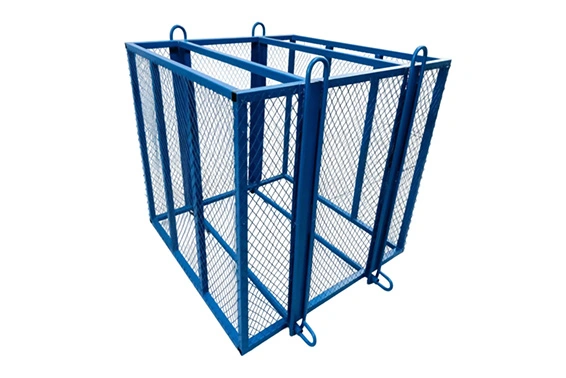
- Forklift compatibility: Flat-bottom bins with defined fork pockets allow ground-level repositioning without crane time.
What you need to know about the lifting ring: the hook on your tower crane should fit the diameter of the ring. An 18 mm ring can fit most crane hooks, but rings from 16 to 22 mm can be made to fit if needed.
How to Choose the Best Steel Mortar Bin for Your Project?
Assess Your Site Conditions First
Note down the type of crane you have, how much weight it can lift at once, the size of your floor plan, and the cubic meters of stuff you move every day before you start shopping. Bin plans need to be different for sites that use 15 m³ of brick every day and sites that only use 3 m³. This step gets rid of choices that are right in theory but don't work in real life.
Evaluate Weld Quality and Structural Reinforcement
The strength of the welds shows how long a bin can last after being moved by a crane many times. Cracks don't form in load-bearing seams where full-penetration welds are used because the material is under tension. Strong gusset plates at lifting points spread the stress over a larger area so that it doesn't just sit on one weld toe. Find out from suppliers what non-destructive testing (NDT) or ultrasonic testing (UT) results they have for the lifting lug attachments and corner seams.
Match Specifications to Your Procurement Criteria
These are the main things buyers look at when choosing:
- Standard dimensions: Length options of 800, 1000, 1200, and 1500 mm with matching width and height ranges of 600–800 mm cover most project footprints.
- Plate thickness: Checkered plate at 1.5–3.0 mm and angle iron frames at 40–60 mm provide the structural stiffness needed for heavy continuous loads.
- Surface treatment: Epoxy primer followed by polyurethane topcoat at a total dry film thickness above 120 μm protects against corrosion in moisture-laden environments.
These specs can help you find the right product level without spending too much. Just compare them to how often your project will be loaded and unloaded and to the weather.
Proper Use and Maintenance Tips for Maximizing Steel Mortar Bin Lifespan
Loading and Lifting Procedures
Never exceed the rated capacity printed on the steel mortar bin's specification plate. Overloading stresses the lifting lugs beyond their designed safety factor and risks weld separation during the lift. Distribute the load evenly before signaling the crane operator to pick up. A bin tilted under load shifts its center of gravity and increases the bending moment at the base-to-wall seam.
Routine Cleaning and Rust Prevention
Mortar sets hard within hours. After each work session, flush the interior with water and scrape residue from the discharge gate and bottom plate. Hardened mortar buildup adds dead weight and traps moisture against the steel surface. Inspect the epoxy coating quarterly. Touch up exposed bare metal immediately with zinc-rich primer to prevent rust spread.
Storage Between Projects
Store bins upright on a dry, level surface. Stack no more than two bins high with timber dunnage between units to protect the top rim from point-load damage. Cover the top opening with a tarpaulin or steel lid to prevent rain accumulation. Proper off-site storage is the single lowest-cost action that extends a bin's service life beyond ten years.
Procuring Steel Mortar Bins: Process, Pricing, and Supplier Insights
How the Procurement Process Works?
For sizes that are in stock, it usually takes between 7 and 25 days from the time you place your order to get it? There is an extra wait time for making custom sizes that depends on how many plates are available and when they need to be made. As you ask for quotes, be clear about what kind of crane you need, how big the hook hole needs to be, how much weight you need to lift, and what the site looks like. The tech team can make sure that everything works before the production starts now that they know this.
Bulk Orders and OEM Options
To save money and make storage easy, distributors and hire companies that need to stock up on tower crane accessories should buy standard 0.5/1.0/1.5/2.0 m³ units in bulk. Companies that rent out branded equipment can get OEM production with their own labels. To get the best deals on OEM batches, make sure you know the minimum order amount for each seller right away.
What to Ask Before Placing an Order?
Suppliers you can trust give you material mill certificates, wall-thickness inspection data, weld NDT reports, and load test documentation before they ship. In addition, they make sure the coating dry film is thick enough and let customers know how they can help them after the sale. If sellers can't show this information, it means they aren't responsible or providing good quality goods. This is especially true for items that are lifted by a crane, where a structural failure can directly affect safety.
Conclusion
You can use a steel mortar bin for more than just storage; it can also be used to lift things. How safe it is to use after years of repeated crane cycles depends on the type of material, the quality of the weld, the shape of the lifting lugs, and how well the bin's surface is protected. Just take the time to read through the seller's paperwork and specs before you buy something. This will protect both your budget and your crew. This guide's tips will help you find a single unit for a small brickwork project or a whole stock of several hundred bins to send out.
FAQ
What capacity should I choose for a tower crane site?
Cities with only one tower crane can use a 1.0 m³ or 1.5 m³ bin to get the most out of the crane's lifting power and trips. When working with bigger cranes (more than 2 tons), 2.0 m³ units can be used to cut down on the number of picks that need to be done each shift.
Can a steel mortar bin be moved while loaded?
No, full bins should only be moved by crane or forklift, and only as high as the maker says they should go. Too much stress is put on the base welds when you drag or tip a full bin across the floor. This voids any structural warranty.
How do I prevent mortar from bridging at the discharge gate?
It is not possible for cohesive materials to bridge when the discharge angle is between 55° and 65° from horizontal. Fixed plates for pneumatic vibrators can be stored in some bins. These can get rid of small clogs without any help from a person.
What is the typical service life?
If you clean the steel bin after each use, check the paint every three months, and store it the right way, it should last for 10 to 15 years. To keep the finish in good shape for the least amount of money, touch it up once a year.
How do I verify steel grade before purchasing?
Request the material test result (mill certificate) for the order's batch of plates. It says on the license what chemicals are used and what their mechanical properties are. Someone else used an ultrasonic gage to check the wall thickness and found that the real plate thickness was the same as what was asked for.
Request a Quote from Xinjiuyi — Your Trusted Steel Mortar Bin Manufacturer
Metal steel mortar bins from Hebei Xinjiuyi Construction Technology Co., Ltd. are made according to written rules for the materials and welds used. They have all the necessary ISO 9001, ISO 45001, and ISO 14001 certifications. We can make sizes to fit the needs of distributors, rental fleets, and project contractors. There are mill certificates, NDT reports, and load test records to back up our products. Get in touch with our team right away at global@xjy8.com or xjy8.com to find out more and get a quote that works for your project.
References
1. American Concrete Institute. ACI 304R: Guide for Measuring, Mixing, Transporting, and Placing Concrete. ACI, 2000.
2. American Society of Mechanical Engineers. ASME BTH-1: Design of Below-the-Hook Lifting Devices. ASME, 2020.
3. European Committee for Standardization. EN 14502-1: Cranes — Equipment for the Lifting of Persons. CEN, 2005.
4. International Organization for Standardization. ISO 12944: Paints and Varnishes — Corrosion Protection of Steel Structures by Protective Paint Systems. ISO, 2018.
5. Peurifoy, R. L., Schexnayder, C. J., Shapira, A., & Schmitt, R. L. Construction Planning, Equipment, and Methods. 9th ed. McGraw-Hill Education, 2018.
6. Standards Australia. AS 3850: Prefabricated Concrete Elements — Tolerances for Manufacture and Erection. Standards Australia, 2015.