Open-Air vs. Enclosed Steel Structure Processing Canopy Comparison
When construction sites or industrial facilities need overhead protection, project managers face a critical decision: Should they install an open-air or enclosed steel structure processing canopy? This choice affects worker safety, equipment longevity, and operational efficiency. Open-air canopies offer excellent ventilation and quick assembly, making them suitable for materials processing zones where airflow prevents hazardous gas accumulation. Enclosed canopies deliver superior weather protection and dust control, meeting strict environmental standards in precision manufacturing areas. Understanding these distinctions helps procurement teams select protective shelter systems that align with site-specific requirements, regulatory compliance, and long-term cost management.
Introduction to Steel Structure Processing Canopies
Steel Structure Processing At construction and industrial sites, sturdy canopies protect supplies, equipment, and personnel from environmental risks. These engineered shelter systems use high-quality structural steel (Q235B or Q345B) and meticulously constructed I-beams, rectangular tubes, and channel steel for overhead coverage. Their major function is to keep operations moving in severe weather and safeguard important gear and raw materials from UV, moisture, and falling items.
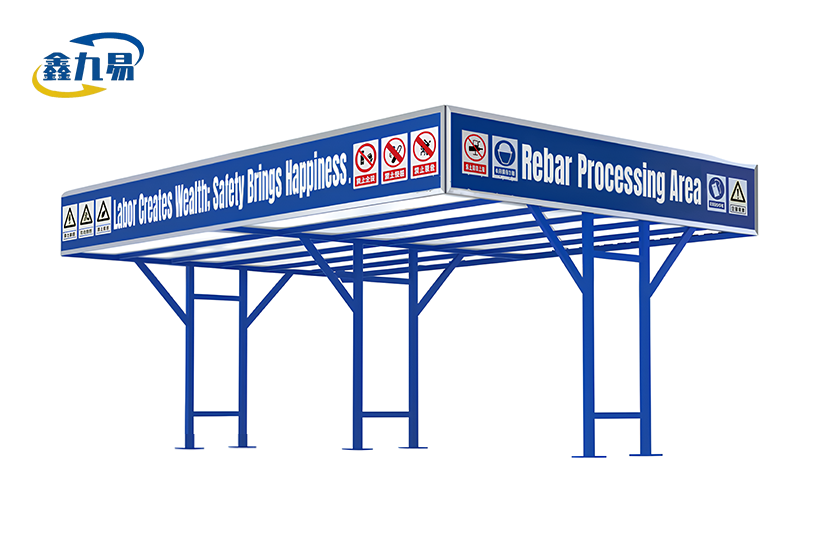
Hebei Xinjiuyi Construction Technology Co., Ltd. manufactures roof systems with double-column middles that cover a lot of ground and can support heavy loads. Our canopies are manufactured from galvanised rectangular tubes (100 mm × 100 mm columns, 2.0 mm thickness) that are hot-dip galvanised and electrostatically powder coated for durability and rust resistance. The two-column arrangement generates a central processing area for heavy loads. This prevents falling objects and damaged equipment and enforces health and fire safety.
Buying pros must comprehend the practical contrasts between open-air and enclosed arrangements. This disparity impacts operations, cost management, and maintenance. Open-air designs emphasize natural ventilation and entry, whereas enclosed versions improve insulation and weatherproofing. Understanding these design ideas helps companies make sensible procurement decisions that suit facility needs and budgets.
Key Differences Between Open-Air and Enclosed Steel Structure Processing Canopies
Design Philosophy and Structural Complexity
Open-air canopy systems emphasize simplicity and quick setup. It has horizontal beams, supporting poles, and roof panels without side walls. This simple design uses less material and installs faster, making it ideal for short-term security or budget applications. There are no wall panels, so air flows freely, removing heat, moisture, and airborne particles from material processing.
Adding vertical wall panels and closing devices to an enclosed canopy structure makes the overhead cover semi-permanently safe. This complexity requires precise engineering to handle temperature expansion, condensation, and wind pressure loads on vertical surfaces. The sealed design requires more sophisticated connecting systems and weatherproof sealing materials, which raises production precision and fitting competence.
Material Usage and Corrosion Protection
Both canopies are primarily steel, but their surfaces are handled differently. Open-air canopies are commonly hot-dip galvanised to prevent rust in partially exposed areas. The open shape allows water to evaporate naturally, reducing humidity, which increases rust formation. Our outside Steel Structure Processing Canopies are hot-dip galvanised and finished with electrostatic powder or warning baked paint. This provides them attractive marks that fulfill modern building regulations and prevent rust.
Enclosed roofs need stronger rust protection due to differing humidity levels. When indoor and outdoor temperatures fluctuate, condensation can accumulate on building steel.
As dampness builds up, more extensive covering systems are needed. Zinc-rich primers, epoxy layers, and topcoat finishes are typical of these systems. The increased security extends the service, but it costs more and takes longer.
Installation Factors and Project Timelines
Installing an open-air cover is faster because there are fewer parts. Anchor bolts secure column bases to concrete pads, and standard bolting patterns link horizontal parts. A professional crew can install a 6000 mm x 9000 mm open-air canopy in two to three days on a ready site. The modular design makes it easy to disassemble after a project. The modules can be reused at different sites, increasing ROI.
Installing an enclosed canopy requires additional steps to install wall panels, door frames, and the closing system. Each vertical panel must match the portions adjacent to it to maintain structure and prevent water in. Heating or cooling might slow weather-dependent tasks like curing sealer. Despite these problems, erecting an enclosed canopy takes one to two weeks, depending on size and customization. The lengthier timetable is because these systems add security and environmental control.
Application Suitability: When to Choose Open-Air vs. Enclosed Canopies?
Open-Air Canopies for Ventilation-Critical Operations
Steel Structure Processing Canopy systems are very helpful on construction sites with areas for processing steel bars. When cutting and bending rebar, sparks, metal shavings, and heat are created that need to be constantly aired out to keep the workplace safe and comfortable. The open design lets air flow naturally, which gets rid of dust and other particles in the air. It also protects from rain and direct sunlight from above. Workers are protected from extreme weather and don't have to deal with the stuffiness that can come from being in a small space while doing hard physical work.
Processing areas for wood have similar needs for air flow. During the cutting and shaping of wood, sawdust and other wood waste quickly build up. When large amounts of this flammable material build up in small areas, they pose a serious fire risk. Open-air shelters keep expensive woodworking tools safe from damage from rain and let air currents move sawdust around naturally. The 3700 mm height limit on our canopy systems lets tall equipment work without limiting space, and the lack of walls makes it easy to use forklifts and material carts to move materials and finished goods.
Open-air plans are also preferred for places that store heavy tools. Throughout the lifecycle of a project, construction sites need to be able to easily get to welding machines, concrete mixers, power tools, and engines. Open-air shelters make organized storage areas for this equipment that keep it safe from the weather and still make it easy for workers to get to things quickly. Our double-column design has a wide span of up to 9000 mm, which keeps materials organized and easy to get to for crane loading operations without getting in the way of people moving around the storage area.
Enclosed Canopies for Environmental Control
Enclosed canopies are the best way to protect operations that are sensitive to dust. Precision industrial tasks that involve putting together gadgets, handling drugs, or making food cannot handle airborne contamination. Enclosed roof systems make controlled settings where filtered air systems keep things clean and structural walls stop dust from getting in from the outside. The sealed design also makes it easier to control the temperature, which means that heating or cooling systems that keep the production conditions at their best use less energy.
Conditions that control temperature are necessary when things or processes need to be kept at a certain temperature. For curing concrete, covered canopies keep heat in during cold weather, speeding up the process and avoiding damage from freeze-thaw cycles. Stable temperatures and humidity levels are needed for paint application and finishing processes to work well and produce a good finish. These stable environments are provided by enclosed cover systems, which also improve product quality and lower the number of defects that happen. This is something that open-air security cannot do.
Material staging places that handle goods that are sensitive to wetness need to be enclosed. When exposed to moisture or rain, cement bags, gypsum board, and prefabricated parts break down very quickly. Enclosed shelters keep water out and keep the storage area dry, which keeps the purity of the materials until they are installed. The controlled environment also keeps the value of the inventory high, which cuts down on waste from weather-damaged items that would have to be replaced otherwise. When heating or cooling is needed, enclosed forms are better for energy economy because they keep heat in and cold air out. This is because insulated structures lose less heat than open-air ones.
Procurement Insights for Steel Structure Processing Canopies
Evaluating Manufacturer Credentials
Choosing a qualified supplier has a direct effect on how well the canopy works and how well the project turns out. Purchasing teams should check that manufacturers keep their ISO 9001 quality management certification, which shows that they have a good handle on the production process. The ISO 45001 workplace health and safety certification shows that the provider puts worker safety first during production, which is linked to the dependability of the product. Getting ISO 14001 environmental management certification means that you are using environmentally friendly methods to make things, which is something that companies that care about the future need to think about more and more.
All three ISO certifications are held by Hebei Xinjiuyi Construction Technology Co., Ltd., which means that their quality management, health and safety at work, and environmental protection systems are strong. Our factory is in the Xian County Development Zone in Cangzhou. It has all the necessary production tools and a well-developed supply chain system that makes it easy to make a lot of Steel Assembly Work Canopy at once. We offer a full guarantee and dedicated after-sales support, including installation instructions and technical questions answered after the system has been set up. This makes sure that your protective canopy systems work as expected for the full 20 years they are in use.
Customization Benefits and Order Flexibility
Standard cover layouts work well for many uses, but job sites often have their own space limitations or operating needs. Canopies that are custom-made can cover uneven sites, work with the way equipment is already set up, or blend in with nearby buildings. Together with clients, our engineering team comes up with custom solutions. They do this by making thorough models that give planners a good idea of what the project will look like. You can change the end product to exactly fit your organizational needs by adjusting the sizes, choosing the colors of the warnings, and moving the columns around.
Companies that manage a lot of building jobs each year can save money by buying in bulk at wholesale prices. When you order a lot of standard cover systems, the cost of each one goes down because of better manufacturing practices and savings for buying in bulk. Companies can keep stock on hand so that it can be quickly sent to different places. This cuts down on project delays and makes sure that the quality of their whole portfolio is the same. Smaller batch orders can still be made for specific uses or pilot programs where companies want to evaluate Steel Structure Processing Canopy performance before committing to larger purchases. Different buying strategies can be accommodated by flexible order amounts that don't affect the quality of the product or the trustworthiness of delivery.
Material Alternatives and Lifecycle Cost Analysis
Steel is usually used to build canopies because it is strong for its weight and lasts a long time, but sometimes buying teams look at aluminum or wood as options. Aluminum canopies are lighter than steel ones, which makes installation easier and lowers the need for a foundation. The material naturally resists corrosion by making oxide layers, which could lower the cost of maintenance. However, aluminum's lower structural strength limits its ability to span and hold weight, so it can't be used in heavy-duty situations where falling objects or heavy tools cause strong forces above.
Canopy structures made of wood are good for projects that care about esthetics or using natural materials. When treated correctly, wood doesn't get damaged by water or insects and is strong enough for light-duty uses. When it comes to full sunlight, wood is more comfy than metal because of its thermal qualities. Still, wood needs to be maintained more often than steel, and its lack of fire protection is still a major problem. Treating wood makes it less durable over time, so it only lasts 10 to 15 years instead of 50 or more years for steel that is properly kept. Lifecycle cost analysis shows that steel awnings are more valuable in the long run, even though they cost more up front. This is especially true in harsh industrial settings where dependability and longevity are more important than saving money in the short term.
Installation and Maintenance Best Practices for Maximizing Canopy Performance
Professional Installation Procedures
A well-prepared spot is the first step to a successful awning installation. The sites of foundations must match the exact column spacing shown on engineering plans. Before anchor bolts can be installed, concrete pads need to cure for the right amount of time to reach their design strength. Our standard assembly process sends you pre-welded parts with precisely cut connection points. This makes it easier for your crew to finish the installation faster than with traditional structures that are welded on-site. With CNC cutting, the bolt holes are perfectly lined up when the part is put together. This cuts down on the time needed for adjustments and protects the structure.
Professional service providers bring specialized tools and knowledge that keep Steel Structure Processing Canopy installation times are short, and expensive repairs are avoided. Installation teams with a lot of experience know how much torque to apply to connection bolts so that joints can handle their intended load without being overtightened, which can damage the threads, or undertightened, which lets the joint move. They know how important it is to pay attention to weatherproofing details like the order in which roof panels meet and the best way to apply sealing solution. Working with experienced workers lowers your risk and speeds up the project timeline, so building can start sooner under the protection of a canopy.
Corrosion Prevention and Periodic Inspections
Hot-dip galvanizing is a great way to protect against corrosion, but extra steps can be taken to make it last longer in harsh environments. Finishes like powder coating or baking paint add color-coded safety markings and make the item even more resistant to chemicals and water. Inspections should be done regularly—every six months for the first two years and once a year after that—to find early signs of paint degradation before the steel underneath is damaged. Connection places where metals that are not the same should be checked during inspections because galvanic rusting can start there.
Cleaning protocols keep the look and function of the canopy in good shape. A buildup of dust and dirt traps water against steel surfaces, causing rusting to happen in certain areas. Pressure washing gets rid of dirt and debris while letting you see how well the coating is sticking together. Any spots with rust bloom need to be fixed right away by wire brushing and applying touch-up paint. In industrial settings where chemicals are present, surfaces may need to be cleaned more often and coated with special systems that are resistant to certain toxic agents. These preventative maintenance tasks will protect your investment and make sure that Steel Structure Processing Canopies keep protecting you reliably for as long as they are designed to.
Troubleshooting Common Post-Installation Issues
In the first few months after installation, connections can become less secure as structural members settle under load. This is a normal thing that happens, and scheduled bolt retorquing every three and six months fixes it by making the joint tight again. Any continuous loosening is a sign of bad foundation work or bad installation of anchor bolts, which needs to be looked at by an expert to keep the structure from falling apart.
If water pools on the roof, it means that the slope or displacement under snow loads is not good enough. Even though a properly designed canopy has enough pitch to let water drain away naturally, garbage can get in the way of drainage tracks. Regular cleaning and inspection of the roof's surface keep water running off properly. If there is persistent ponding despite a good slope, it means that the structure is deflecting beyond what was intended. This means that the load capacity needs to be checked, and possibly reinforcement is needed. Taking care of these problems right away stops rust from standing water from getting worse and keeps the protection function that makes the canopy investment worth it.
Conclusion
The choice between open-air and covered Steel Structure Processing Canopy relies on the budget, airflow, and environmental control needs of your site. Open-air Steel Structure Processing Canopies work best in places where natural airflow is needed and quick entry is needed, like areas for working steel bars and storing heavy equipment. For precise tasks that need a stable environment, enclosed canopies are the best way to keep dust and temperature under control. High-quality materials, skilled installation, and regular upkeep are best for both configurations to get the most out of their protection and extend their useful life. By carefully comparing your working needs to the features of each cover type, you can choose the protective shelter system that will give your construction or industrial facility the most safety, efficiency, and long-term value.
FAQ
What factors most influence protective canopy costs?
The main things that affect the cost are the span size, the column spacing, the load-bearing needs, and the surface treatment needs. Larger spans need stronger supports and heavier structure parts, which raises the cost of materials and installation. Because they have more wall panels and sealing systems, enclosed canopies cost more than open-air ones. Custom powder coating treatments are a moderately higher cost than normal galvanizing, and rust protection designed for harsh chemical conditions costs a lot more. Total project costs are also affected by how the materials are delivered and how hard the installation is.
How long does canopy installation typically require?
Standard-sized open-air Steel Structure Processing Canopy systems usually take two to four days to build completely, as long as the spot is properly prepared. Canopies with walls need one to two weeks, based on the size and level of customization needed. When caulk is drying or concrete work is being done, bad weather can make things take longer. Professional construction teams finish jobs faster than general builders who don't know much about these kinds of structural systems.
Can canopies be customized for irregular site layouts?
Our engineering team specializes in making plans that are unique and work with the space available. We change the sizes to fit odd plans, move columns to fit where equipment is already located, and connect canopies to buildings next to them. During the planning stages, detailed drawings give you a good idea of what the finished product will look like, so you can be sure it meets all of your needs before it is made.
Partner with Xinjiuyi: Your Trusted Steel Structure Processing Canopy Supplier
Hebei Xinjiuyi Construction Technology Co., Ltd. has been making protective canopy systems for construction sites and industrial facilities around the world for more than ten years. With its superior load distribution across spans of up to 9000 mm, our central double-column design protects your material processing zones with enterprise-grade structural integrity. To make sure that every cover meets OSHA, EN, and ISO safety standards, it goes through strict quality control measures like ultrasonic weld inspection and measurement limit verification. We keep our ISO 9001, ISO 45001, and ISO 14001 certifications, which show that we care about quality management, worker safety, and being good to the environment. Get in touch with our purchasing experts at global@xjy8.com to talk about your needs for safe security. Our team offers professional technical support before the sale, custom design solutions with detailed renderings, and full installation instructions. Whether you need open-air covers for working with steel bars or sealed systems for operations that can't handle dust, Xinjiuyi can protect you reliably. Their 20-year service life engineering and dedicated after-sales support back this up. Visit xjy8.com to see all of our products and learn why building companies in Southeast Asia, the Middle East, and other places choose Xinjiuyi as their Steel Structure Processing Canopy maker of choice.
References
1. American Institute of Steel Construction. (2019). Steel Construction Manual: Design Standards for Industrial Protective Structures. Chicago: AISC Publications.
2. Chen, W., & Lui, E. M. (2021). Structural Stability of Steel Canopy Systems: Theory and Implementation. Boca Raton: CRC Press.
3. International Organization for Standardization. (2020). ISO 14122-3: Safety of Machinery – Permanent Means of Access to Machinery – Stairs, Stepladders and Guard-rails. Geneva: ISO Central Secretariat.
4. Occupational Safety and Health Administration. (2018). Construction Industry Standards for Temporary Protective Structures. Washington: U.S. Department of Labor.
5. Trahair, N. S., & Bradford, M. A. (2020). The Behaviour and Design of Steel Structures to AS 4100. Boca Raton: CRC Press.
6. Zhang, L., & Wang, F. (2022). "Comparative Analysis of Corrosion Protection Methods for Industrial Steel Canopies in Marine Environments." Journal of Protective Coatings and Linings, 39(4), 42-58.