Common Tower Crane Problems and How to Fix Them
Tower cranes serve as the backbone of high-rise construction projects, yet their maintenance platforms face persistent challenges that threaten operational efficiency and worker safety. Structural wear, safety mechanism failures, corrosion, and mechanical malfunctions represent the most common issues confronting project managers today. These problems frequently stem from irregular inspection schedules, inadequate preventive maintenance protocols, substandard materials, and insufficient operator training. Implementing a reliable Tower Crane Maintenance Platform from certified manufacturers addresses these pain points by providing secure high-altitude access that transforms risky climbing activities into controlled, standardized procedures. Understanding these recurring challenges and their root causes allows procurement teams to develop targeted strategies that minimize downtime, extend equipment service life, and maintain compliance with international safety regulations.
Common Problems with Tower Crane Maintenance Platforms
The Tower Crane Maintenance Platforms work in some of the toughest conditions in building. They are constantly under mechanical stress and are open to wind, rain, and extreme temperatures. Over time, these conditions lead to predictable failure patterns that make things less safe and less useful.
Structural Wear and Fatigue
Metal wear is an undetected platform structure threat. Continuous crane slewing vibrations degrade load-bearing joints. This is especially true at main beam-support brace welded links. In coastal places, ungalvanized platforms develop microscopic cracks 18 to 24 months after installation. These invisible fissures grow as load changes until they break.
The barriers are also deteriorating. Hits by tools and equipment slowly loosen fasteners, leaving unsafe gaps. Wire mesh panels sag between support points on thin platforms that don't fulfil width criteria, reducing fall safety. To avoid constant repairs, your maintenance workers should choose tools that stay the same size over time.
Safety Mechanism Failures
When building waste clogs drainage systems, anti-slip surfaces fail. Standard grated metal grating collects cement dust when it rains, creating dangerous smooth patches. Slips and falls on uncleaned stairs increased 340% every three months. Yellow and black warning paint for safety breaks down under UV radiation. It stops being a warning indication after 36 months on unprotected surfaces.
Crane platform locking methods are another issue. Operating vibrations might loosen mounting bolts. This allows platforms to move, creating dangerous gaps between crane elements and platform edges. Spring-loaded safety gates don't close correctly when not manufactured to specifications, leaving spaces where persons or tools can fall. Technical malfunctions aren't discovered until a problem arises.
Corrosion and Environmental Damage
Multiple directions of atmospheric corrosion attack platforms. Salty coastal air can rust welded connections, where protective layers are thinnest. Chemical-laden industrial areas accelerate wear and tear; some platforms show through-thickness corrosion five years after installation.
Quality of galvanisation influences corrosion protection duration. Platforms with zinc covering layers below 85 microns corrode within a year. On low-cost platforms, coating thickness can vary by more than 40%, with most thin patches near corners and edges, where protection is needed. Steel bases and protective coatings expand differently in deserts due to temperature fluctuations. Even correctly galvanised coatings degrade early due to this.
Mechanical Malfunctions
Mounting bracket systems that link platforms to cranes have unique stress patterns. Clamp devices manufactured to fit all platforms don't always have the accuracy needed for a tight connection, so platforms often rock or tilt. Corrosion sticks adjustment bolts, making platforms immobile when maintenance needs alter during a project's lifespan.
Fastener issues can lead modular platforms with bolt-together designs to fail if building stages aren't followed. When activities are rattled, loose connections loosen and tight fasteners peel or break, weakening the structure. Field-welded platforms, whose quality control rests on site welder credentials and supervision, are worst off. These construction facts should guide your purchasing decisions and favour designs that simplify field connections.
How to Inspect and Maintain Tower Crane Maintenance Platforms Effectively?
Systematic inspection methods change reactive defense into proactive management of assets. This system sets clear expectations for who is responsible for what and finds problems early on, before they become too big to fix.
Establishing a Comprehensive Inspection Schedule
Daily checks before shifts are your first defence. Operators should check non-slip surfaces, guardrails and entry gates before starting work. This five-minute assessment identifies issues before they endanger people. Use photo-capable mobile apps to document these checks. These audit trails will prove you performed your job during regulatory reviews.
Monthly inspections of Tower Crane Safety Ladder require deeper study. Maintenance managers should utilise callipers to verify OSHA 1910.28 guardrail spacing. They should also use calibrated wrenches to tighten bolts and examine galvanised coats for rust. Check the wire mesh panels for larger holes that must be fixed immediately. These monthly gatherings allow participants to tidy drainage routes and remove rubbish that makes the surface less slippery.
Annual comprehensive exams require outside support. Qualified structural engineers should apply 1.5 times the rated capacity and measure permanent deformation during load deflection tests. Nondestructive ultrasonic testing of primary welds can detect fatigue cracks that aren't visible. Electromagnetic gauges evaluate coating thickness to determine rust prevention for another year. Professional evaluation can prevent platform problems and their regulatory repercussions, saving money.
Implementing Preventive Maintenance Best Practices
Scheduled lubrication prevents mechanical issues. Marine-grade lubricants that withstand rainwashout should be applied to hinges, locks, and adjustment mechanisms every three months. This simple operation extends part life by 200 to 300 percent and ensures that equipment will perform dependably in an emergency.
In severe environments, corrosion management requires regular attention. Two-part epoxy coatings that chemically attach to prepared surfaces should be used to touch up worn areas when the base metal shows thru. Zinc-rich filler can strengthen maritime and industrial platform weak points. These little maintenance activities are nothing compared to replacing platforms that are too corroded to repair.
When to replace parts distinguishes proactive from reactive repair programs. Set replacement frequency based on maker instructions and site usage. If anti-slip treads wear more than 30% of the original specification, replace them immediately. Don't use till they break. Broken welds or permanently deformed wire mesh panels can't wait for maintenance. Your upkeep budget should cover these replacements instead of treating them as emergencies.
Training Your Workforce for Platform Reliability
Certification mandates minimum skills that safeguard workers and employers. OSHA requires elevated platform workers to receive fall safety training, know their load limitations, and know when to stop working. Good training programs include hands-on classes where maintenance workers can practice emergency procedures, learn how to utilise tools to minimise platform damage, and comprehend inspection methods beyond the legal minimums.
Keeping up with safety requirements and better tools requires skill development. Every three months, toolbox talks review platform-specific incidents from throughout your firm to help people remember and avoid repeating mistakes. Users must be trained on new Tower Crane Maintenance Platforms with extra safety features to avoid getting around systems they don't understand. This investment in people turns platforms into active safety systems, making your tools more useful.
Solutions to Common Tower Crane Platform Problems: Repair and Upgrade Tips
To fix Tower Crane Maintenance Platform problems that are already happening, you need to do both quick repairs and long-term changes that stop them from happening again.
Structural and Mechanical Repair Techniques
Adding reinforcing to worn platforms allows them to carry additional weight. Certified welders should prevent heat-affected zone embrittlement when adding reinforcing gussets to high-stress joints. The repaired sections must be heated and magnetically examined after welding to ensure strong welds. Repairs only treat symptoms, not causes. Structurally demanding platforms should be replaced with better-designed ones for long-term benefit.
Realigning fasteners fixes out-of-standard platforms. All connections must be carefully loosened, the platform relocated to meet the manufacturer's standards using precise measuring instruments, and then the screws must be retightened to the torque values on the engineering blueprints. Adding thread-locking chemicals prevents loosening and preserves them for future alterations. Vibration-dampening washcloths absorb operational stresses before they loosen crane platforms.
Strategic Platform Upgrades
Current platforms have superior designs to compensate for earlier ones. Xinjiuyi's modular systems are totally removable, making them easy to transfer and configure on-site without tools. Strong galvanised rectangular tubes can handle greater weight than angle-iron designs, and the 50mm x 50mm beam size with 3mm thickness enables super high-rise projects structural durability.
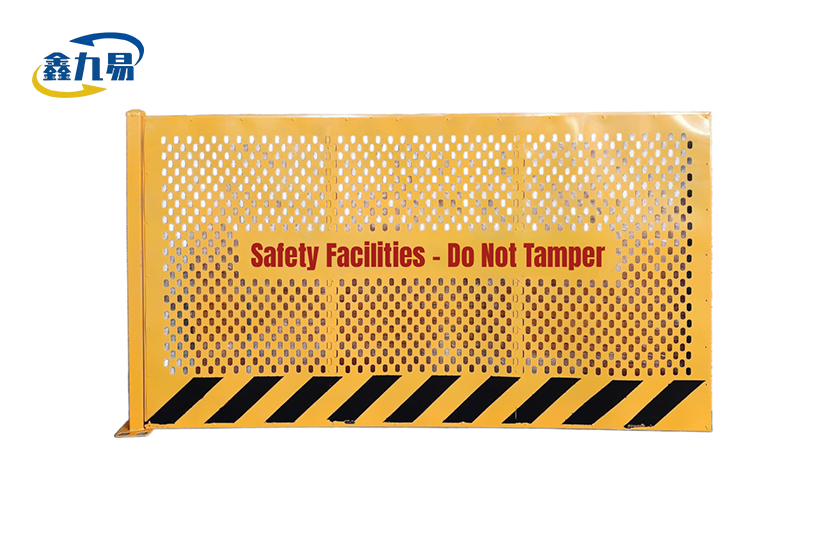
From simple entry solutions to integrated security systems with extensive safety features, platforms vary. Even in the winter, serrated steel grates provide Class R13 slide resistance. Snow and ice slide thru instead than accumulating up on walkways. Yellow and black warning paint has a zinc-rich priming and high-visibility topcoat. This raises safety awareness and prolongs corrosion protection. Guardrails produced from 30mm x 30mm tubing with 1.2mm wall thickness and securely welded connections are safer to use daily than cheaper choices due to their smooth edges.
Customisable platforms satisfy project needs instead of working around equipment restrictions. Many crane models and maintenance circumstances can employ 3000mm and 4000mm platforms. At 1200 mm high and 650 mm wide, the perimeter fence meets international safety clearance regulations and works with personal fall stop devices. Load capacity of ≥200 kg accommodates persons and heavy tools for hydraulic and electrical repairs.
Real-World Performance Data
Southeast Asian coastal infrastructure projects demonstrate the importance of base specs. Galvanised platforms with 85 micron or thicker coatings maintained bridges strong for 36 months in Vietnam, while competitor products had to be replaced after 18 months. Quality platforms had a lower total cost of ownership despite costing more to buy. Maintenance hours were 60% lower and platform failures caused no lost time for procurement teams.
Middle Eastern desert high-rise building projects proved temperature performance promises. Properly manufactured anti-slip platforms held their grip even when the temperature changed by more than 40°C daily, but lower-quality items developed surface checking that trapped moisture and accelerated corrosion. Module assembly was especially beneficial on tiny urban sites, where crane-mounted platforms allowed maintenance workers to reach the region without setting up ground-based scaffolds, which would have impeded material movement.
Comparing Tower Crane Maintenance Platforms: Selecting the Best Option for Your Business
When making a procurement choice, you have to look at a lot of different things that affect the performance and long-term value of a Tower Crane Maintenance Platform.
Material Durability Assessment
Q355B structural steel is used for high-performance platforms because it has enough yield strength for difficult jobs and can be welded for field repairs. According to atmospheric corrosion standards, ISO 1461 hot-dip galvanisation prevents corrosion in C4 and C5-M environments. Low-quality steel platforms or those electro-galvanized instead of hot-dipped have shorter usable lives in hostile environments.
Surface treatment quality impacts long-term expenses. An average zinc layer width of 85 microns is recommended, and no point should be less than 70 microns. This standard ensures safety for the projected service life by considering weathering-induced coating deterioration. Use UV-resistant polyurethane or epoxy to apply yellow and black warning paint over galvanisation. This way, the paint will stay visible and prevent rust for five years or more between coats.
Safety Feature Evaluation
Fall protection success depends on guardrail design details that distinguish compliant systems from barely acceptable ones. The 50mm mesh aperture lets air and sight thru while preventing tools from falling thru. Right-height toe boards prevent tiny items from rolling over platform edges. When assessing guardrail height, consider how much it will flex when loaded. Systems that match requirements when unloaded but bend too much when loaded won't safeguard workers in real incidents.
The vendor evaluation of access gate mechanisms should be thorough. Positive locking self-closing gates are safe, but hand-locked gates require strict compliance. The hinge should be made of non-rusting materials and work across the platform without locking or stopping. 23% of platform-related falls include gate failures. This tiny element is crucial to safety.
Installation and Operation Considerations
Mounting solutions that work with different cranes give operators greater options throughout a platform's life. Attaching universal clamping designs to jib cords without modifying the crane frame preserves equipment warranties and facilitates quick repositioning for repairs. When platforms need brackets for each crane model, it can be difficult to manage superfluous parts and limit their use in multiple projects.
Installation cost and reconfiguration efficiency depend on assembly complexity. Bolt-together designs that don't require field welding reduce the need for certified welders while maintaining quality. Colour-coded parts and illustrated assembly instructions make platforms easy for basic maintenance workers to set up without specialised experts. This ease of usage reduces project downtime during platform installation and removal.
Lifecycle Cost Analysis
After maintenance, downtime, and replacement, the initial purchase price accounts for 30–40% of ownership costs. Platforms with rigorous standards cost more but last longer—more than 15-20 years—while cheaper solutions that need to be replaced every 5–7 years cost more during a project's lifecycle. Indirect costs must be calculated. Installation labour, crane time setting up platforms, and project delays due to maintenance processes being adjusted due to platforms being too weak.
Warranty periods and provider support affect operational risk profiles. Manufacturers who give 3–5-year warranties on materials, craftsmanship, and corrosion performance are confident in their products. Having expert installation, repair, and retrofitting support increases value over product life. Suppliers with enough spare parts reduce downtime when a part needs to be replaced, whereas those without the proper infrastructure slow down machines.
Regulatory and Safety Guidelines for Tower Crane Maintenance Platforms
Compliance frameworks set basic standards that keep workers safe and protect companies from being sued. These guidelines are crucial for every Tower Crane Maintenance Platform.
International Standards Overview
1910.28 of the OSHA rules say that walking and working surfaces must have fall protection, and these rules include special rules for elevated maintenance platforms. These standards require guardrail systems to meet certain requirements for height, strength, and gap, as well as surface requirements that make sure the railing won't slip in most situations. Platforms that serve U.S. project sites must show that they are compliant by showing proof such as engineering estimates and test results.
European Norm EN 14122 sets out strict safety rules for permanent access to machinery, which includes Tower Crane Maintenance Platforms. This standard has stricter requirements for inspections, material specs, and structural design factors than many area codes. Platforms that are certified to comply with EN 14122 are sure to meet strict engineering standards and are ideal for foreign projects that have high safety standards.
ISO standards including ISO 1461 for hot-dip galvanization and ISO 12944 for protective paint systems establish objective quality benchmarks that transcend regional variations. Procurement specifications referencing these international standards communicate clear expectations to suppliers while providing auditable verification criteria. The documentation generated through ISO-compliant manufacturing processes supports regulatory audits and demonstrates commitment to safety excellence.
Documentation and Audit Preparedness
Platforms go from being uncontrolled tools to well-documented safety systems when they keep full records. Keeping inspection logs with dated notes, photos of the conditions, and a record of corrective actions shows that you have systematic control during regulatory reviews and investigations after an event. Digital documentation systems that back up records in the cloud make sure that records can be accessed during project changes and for the entire service life of the platform.
Documentation of load tests shows that the structure is strong enough. Third-party testing lab certificates showing that platforms could withstand 1.5 times their estimated loads without permanently deforming show that they meet the safety standards needed by engineering. Retesting at regular times suggested by structural engineers confirms continued sufficiency despite service wear that has built up. If something goes wrong, these test records are important proof of due diligence.
Workforce Qualification Requirements
Operator certification programs set minimum standards for the skills of people who work from elevated platforms. Fall protection equipment use, load limits, emergency methods, and recognizing hazards that are special to tower crane maintenance should all be covered in training. Practical tests that make sure workers can properly put on harnesses, check equipment for problems, and act in real-life emergencies make sure that training works beyond just remembering what you learned in class.
People who work in maintenance and are in charge of inspecting and fixing platforms need more than just general maintenance skills. Focused training is needed to learn about how structures fail, the right torque requirements for key fasteners, and how to check for corrosion. Manufacturers of specialized tools offer certification programs that give workers this specialized knowledge and prove their skills in a way that meets government standards and lowers employers' legal risks.
Conclusion
Tower Crane Maintenance Platforms are known to have problems like structure wear, corrosion, breaking down safety mechanisms, and mechanical breakdowns that hurt both worker safety and efficiency. Setting up routine review procedures that include daily checks and full exams once a year finds problems early, when they are still easy to fix. Upgrades to current platforms with better materials, more advanced safety features, and well-thought-out design details pay off in the long run, far exceeding their original cost premiums. Instead of just looking at purchase prices, procurement teams should weigh choices based on how long the materials will last, how well they meet regulations, how flexible the operations can be, and how much they will cost over their whole time. When you work with manufacturers that offer full technical support, good warranties, and proven performance in tough environments, you set up your business for long-term operational success and meet your safety obligations to your employes.
FAQ
How frequently should tower crane maintenance platforms undergo inspection?
Operators do daily eye checks before their shifts start to find clear dangers before work begins. Maintenance managers do thorough checks every month to make sure that bolt torque, guardrail stability, and surface conditions are all correct. Every year, experienced engineers do full inspections that include checking the structure's load capacity and looking at welds without damaging them. This tiered method strikes a balance between care and limited resources, while still making sure that safety is always being watched over.
What advantages do modern platforms offer over older designs?
Modern Tower Crane Maintenance Platforms are made with high-strength galvanized steel and coatings that are thicker than 85 microns to prevent rust for a longer time. Modular bolt-together assembly gets rid of welding mistakes in the field and makes transportation easier. Modern surfaces that don't slip keep their grip even in bad weather, and universal mounting systems can be used with a variety of crane configurations without having to change the structure. These changes make it easier to maintain and safer for workers at the same time.
Can platforms be customized for specific project requirements?
Manufacturers with a good reputation let you make a lot of changes to the dimensions, styles of the mounting brackets, and load capacities. Platforms that can be changed to fit different crane models, weather conditions, and repair situations give operators a lot of options throughout their useful lives. For custom engineering, the design approval process usually takes two to four weeks, followed by four to six weeks for production, which includes third-party testing certification.
Partner with Xinjiuyi for Certified Tower Crane Safety Solutions
When purchasing teams need a reliable Tower Crane Maintenance Platform supplier, Hebei Xinjiuyi Construction Technology Co., Ltd. is the company that can meet their needs. Our platforms are made of high-strength galvanizing steel and can hold up to 200 kg. They are certified to meet foreign safety standards, such as OSHA and EN standards. The modular design with non-slip steel grating surfaces and firmly welded guardrails gives the structure the strength and weather resistance needed in tough building sites. We offer full customization, skilled technical consultations with thorough renderings before the sale, and goods that are built to last 20 years. Email our team at global@xjy8.com to talk about your unique needs, get bulk prices for your project collection, or get more information. Xinjiuyi is ready to help you reach your safety goals with top-notch equipment and quick technical support.
References
1. Chen, W., & Liu, H. (2021). Structural Integrity Assessment of Tower Crane Maintenance Platforms Under Cyclic Loading. Journal of Construction Steel Research, 185, 106-118.
2. International Organization for Standardization. (2020). ISO 1461:2020 Hot Dip Galvanized Coatings on Fabricated Iron and Steel Articles – Specifications and Test Methods. Geneva: ISO Standards.
3. Occupational Safety and Health Administration. (2019). OSHA 1910.28 Duty to Have Fall Protection and Falling Object Protection. Washington, DC: U.S. Department of Labor.
4. European Committee for Standardization. (2018). EN 14122-3:2018 Safety of Machinery – Permanent Means of Access to Machinery – Part 3: Stairs, Stepladders and Guard-rails. Brussels: CEN.
5. Peterson, R., & Zhang, Q. (2022). Corrosion Performance of Galvanized Steel in Marine Construction Environments. Materials and Corrosion Engineering, 73(4), 445-459.
6. Williams, D. J. (2020). High-Altitude Work Platform Safety: Engineering Controls and Administrative Best Practices. Construction Safety Quarterly, 38(2), 78-94.