How does a safety experience zone improve workplace safety?
A safety experience zone improves workplace safety by replacing passive instruction with hands-on hazard immersion. Workers physically encounter simulated falls, electrical faults, falling objects, and equipment collisions within a controlled environment, triggering genuine psychological and physiological responses. This sensory engagement builds durable muscle memory that briefings and posters simply cannot replicate. Research consistently shows experiential learning increases knowledge retention by up to 75% compared to lecture-based formats. By exposing personnel to risk before they step onto an active site, these facilities measurably reduce violation rates, accelerate emergency response capability, and embed a proactive safety mindset across the entire workforce.


What Is a Safety Experience Zone and Why Does It Matter?
The Shift from Passive to Immersive Safety Training
Presentations, printed materials, and spoken instructions are a big part of traditional safety training. People have to listen to things that they might forget as soon as they get to work. Not not having enough information is not the main issue; it's not really understanding what's going on. When someone physically feels the instability of a platform or walks through a simulated falling-object scenario, the lesson sticks in their brain in a different way.
A construction safety training center fills in this gap by providing a specific space where people can become more aware of hazards through direct, multisensory interaction. The workers are made to see, hear, and feel fake danger. That event stays with them a lot longer than a video show ever could.
Documented Impact on Human Error Reduction
The National Safety Council says that about 90% of accidents at work are caused by mistakes made by people. Immersive training settings directly attack this number by teaching workers to automatically spot dangerous situations. Experience-based safety training has been used in construction, oil and gas, and utilities, and incident rates have consistently gone down after it was put in place. This is not a coincidence; it's based on a well-known concept in workplace psychology: learning through action changes behavior more consistently than learning through thought alone.

Core Mechanisms: How These Facilities Improve Safety Outcomes
Hazard Recognition Through Physical Simulation
The most immediate benefit of an immersive training zone is that it makes it easier to spot dangers. Workers go through scenario-based modules that teach them about risks related to heights, falling objects, electricity, fire emergencies, and machinery collisions. Each module has conditions that are like those on the job site, so workers learn how to recognize warning signs before a problem gets worse.
Here are the main ways that these tools work that make them useful:
- Accident simulation modules let them experience unstable heights, object impacts, and electrical shocks in a safe environment. This gives them a deep understanding that changes how they act on the job.
- Emergency response drills that happen inside the building train workers to follow evacuation plans, give first aid, and use fire suppression tools under real-life time pressure. These drills greatly shorten the learning curves.
- Standardized safety protocol reinforcement makes sure that every person goes through the same difficult case sequence. This gets rid of the problems that come up with informal safety training on the job.
These systems don't just tell workers about risks; they change how they think about and react to risks during live operations in a safety experience zone.
Customizable Curricula for Diverse Industries
The ability to be put together in different ways is an advantage of a well-designed training facility. When a building company works on different kinds of projects, like high-rises, bridges, and city structures, they need to focus on different kinds of risks in each place. A modular building can be set up so that the risks that are most important to each place are prioritized. Because it can be changed, training stays exact and relevant to the situation instead of being general.
Designing and Setting Up an Effective Facility
Layout Planning and Equipment Selection
A thorough site survey is the first step in designing a layout that works well. The training area needs to be big enough for workers to move between modules without getting squished, and teachers need to be able to see clearly. Ergonomic flow between stations cuts down on transition time and keeps people interested throughout the session.
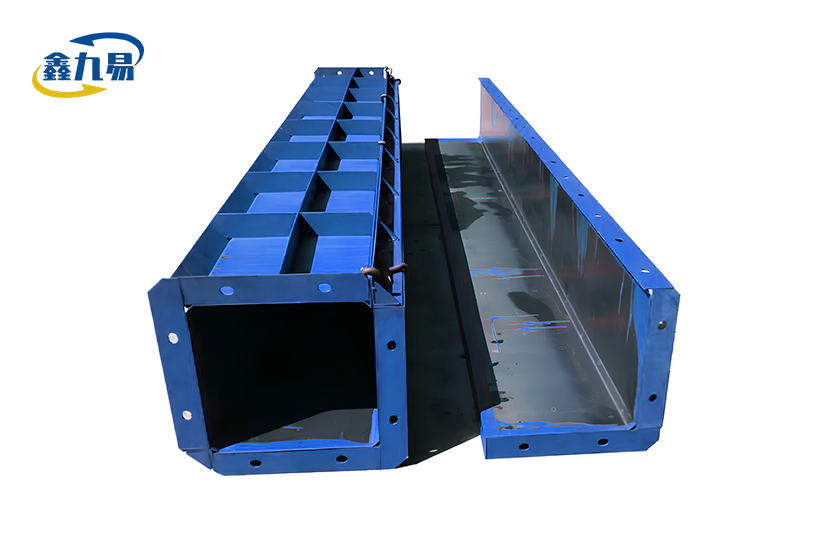
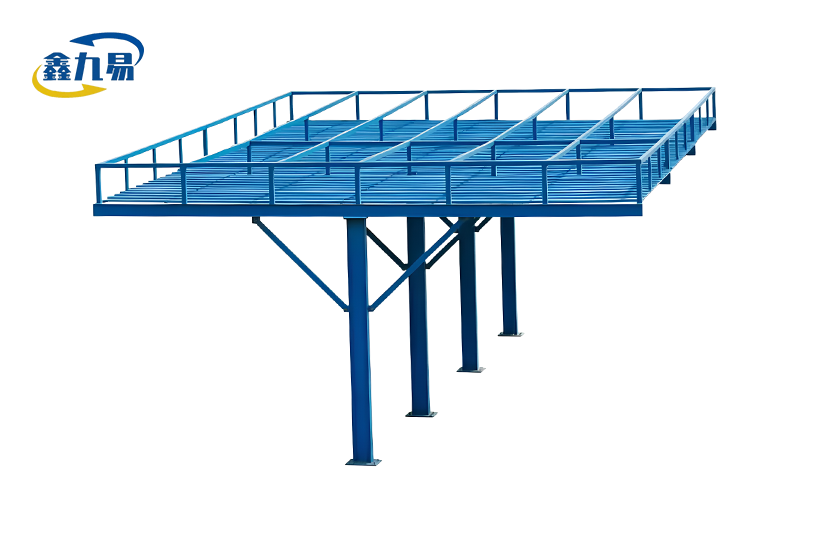
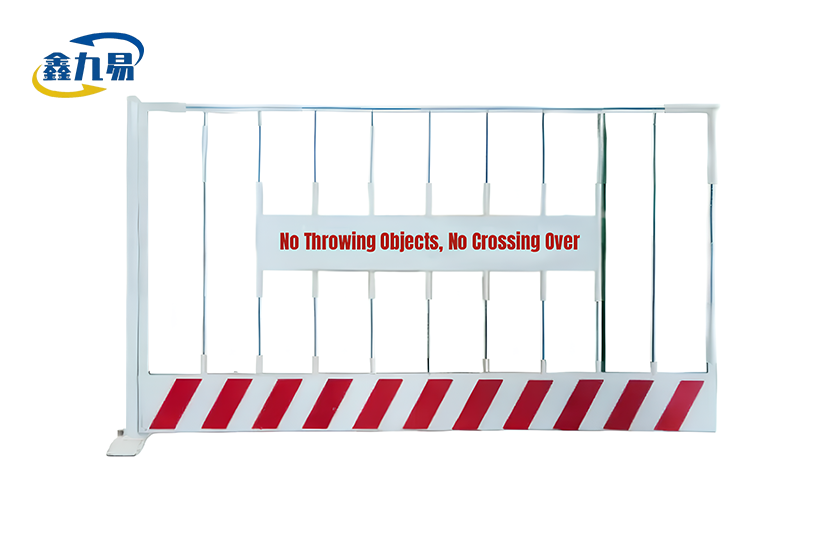
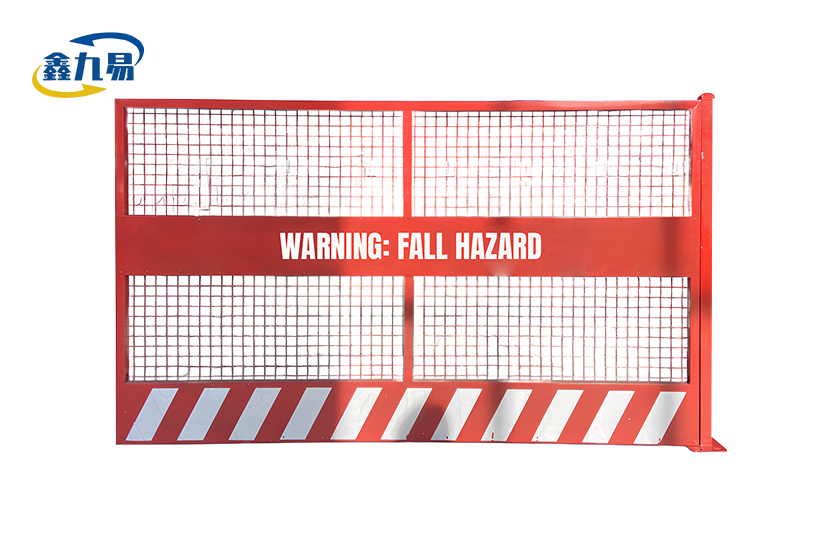
In this way, Xinjiuyi's safety experience zone is a great example of good engineering. The frame is made up of thickened galvanized rectangular tubes and angle steel that are welded together to make a load-bearing structure that doesn't bend or shake even when it's being used at high frequencies all the time. Platforms made of steel plates have coats that keep them from slipping, and standard guardrails with mesh for safety are put up in every section. These choices about the structure aren't just for looks; they make sure that the training area doesn't have any other risks.
The building can be fully customized in all three dimensions and put together in modules, so it can be set up to fit small induction areas or stretched into large, multi-zone display and observation areas. It can be used more than 80% of the time, which means that companies can move and reinstall the same system between projects, which greatly lowers the cost of each one.
Comparing Physical Facilities with Virtual-Only Alternatives
Virtual reality tools are great for visual engagement, and it's clear that they can be used to teach people about safety. However, study in the field always supports a hybrid method. The kinesthetic response, like the way your muscles react when your footing isn't stable or when you feel a guardrail, is something that VR headsets can't fully replicate. For construction induction training in particular, physical simulation leads to more deeply conditioned behavior. Both approaches work well together; one does not completely replace the other.
Real-World Evidence: What the Data Shows
Construction Industry Outcomes
A 2019 study released in Safety Science found that workers who did both classroom and hands-on safety training in a safety experience zone were 34% better at identifying hazards than workers who only did classroom training. Separately, big infrastructure companies that set up organized safety training facilities saw a drop in lost-time accidents that could be measured in the first two years after implementation.
Construction worker orientation is one of the most powerful points of intervention in any safety management system. During the first few weeks on the job, workers who are just starting out are most likely to get hurt. An interactive induction center shortens the time it takes to learn at just the right time. It also shows that the company is serious about safety during project inspections and regulatory checks, which is a good way to show that the company is following the rules.
Maintaining Your Facility for Long-Term Performance
Scheduled Inspections and Component Longevity
Under normal care, structural parts of a well-built training center should last between ten and fifteen years. Digital and mechanical parts usually get new ones every three to five years. As part of regular maintenance, elevated platforms should have structural load audits, anti-slip surface coatings inspected, and guardrail anchoring integrity checked. Galvanized steel framing doesn't rust or corrode, so it can be installed outside in a variety of climates without breaking down faster.
At its factory in Xian County, Xinjiuyi makes all of its parts using quality systems that are approved by ISO 9001, ISO 45001, and ISO 14001, making sure that every unit that leaves the factory meets written safety and structural standards. Powder-coated paint styles can be added as an upgrade for projects that need to look better and be more resistant to rust.
Conclusion
Instead of telling workers what is dangerous, immersive safety experience zone training facilities let them feel it in a safe environment. This changes how they understand and react to danger. There is strong proof that learning by doing is better than passively being taught in the building, energy, and industrial sectors. A well-designed building lowers the chance of mistakes made by people, improves the ability to handle emergencies, and gives clear benefits by lowering incidents, following rules, and reusing assets for multiple projects.
FAQ
What footprint does a standard facility require?
Usually, 150 to 300 square meters are needed for a full multi-module building. Compact versions made for limited induction areas can work in areas as small as 50 square meters without losing the ability to simulate the core.
How often should structural components be audited?
We suggest a professional structure and safety calibration check every six to twelve months, with the frequency based on the number of trainees. As part of their regular inspections, elevated platforms should be checked for both steady and dynamic loads.
Can the facility integrate with existing EHS management systems?
Modern facilities that use IoT sensors can send records of trainee performance and certification straight to corporate health and safety platforms through open API links. This makes it easier to keep track of compliance paperwork.
What distinguishes a physical facility from VR-only training?
Screen-based tools can't give you the same level of kinesthetic conditioning that physical models do. Kinesthetic conditioning is the body's reaction to unstable surfaces, impact forces, and being lost in space. The best results for safety behavior come from a hybrid approach that uses both methods together.
Partner with Xinjiuyi — Trusted Safety Experience Zone Manufacturer
Xinjiuyi creates training programs for building safety that are designed to work in the real world. Our modular safety experience zone supplier can fully customize your order, make sure the structure is long-lasting with galvanizing, and help with installation anywhere in the world. We build facilities that protect workers and meet government standards, whether you are in charge of a single high-risk project or a collection of projects spread across multiple sites. Visit xjy8.com or email us at global@xjy8.com to get a layout advice and unique quote right away.
References
1. National Safety Council. Injury Facts: Work Safety Overview. 2023.
2. Haslam, R. A., et al. "Contributing factors in construction accidents." Applied Ergonomics, 2005.
3. Lim, B. T. H., & Ling, F. Y. Y. "Improving safety performance on construction sites." Safety Science, 2012.
4. Choudhry, R. M., & Fang, D. "Why operatives engage in unsafe work behavior: Investigating factors on construction sites." Safety Science, 2008.
5. Sacks, R., et al. "Construction safety training using immersive virtual reality." Construction Management and Economics, 2013.
6. Hallowell, M. R. "Safety risk perception in construction companies in the Pacific Northwest of the USA." Construction Management and Economics, 2010.