Top 5 Factors To Consider When Specifying Stainless Steel Bar Grating
When specifying stainless steel bar grating for municipal drainage, industrial platforms, or hygienic processing environments, five core factors consistently determine whether a product succeeds or fails in service: alloy grade and corrosion resistance, load-bearing configuration, grating type and fabrication method, installation and maintenance requirements, and supplier reliability with delivery capability. Getting any one of these wrong can lead to premature failure, project delays, or costly rework. This guide breaks down each factor with practical clarity so procurement engineers, project managers, and trade buyers can make confident, specification-grade decisions.


Material Grade and Corrosion Resistance
How long the grating lasts in its surroundings depends on the grade of metal you choose. This is not an extra choice; it is at the heart of every standard.
304 vs. 316: Matching Grade to Environment
Because it has 18% chromium and 8% nickel, Grade 304 stainless steel is very good at resisting rust in most drainage, landscaping, and building projects. Grade 316 adds 2–3% molybdenum, which makes it the best choice for places with a lot of chloride, like coastal infrastructure, offshore platforms, desalination plants, and food-grade processing lines where cleaning chemicals or salt spray are always a threat. ASTM A666 says that both grades create a passive chromium oxide layer that heals itself when exposed to oxidizing conditions. However, the molybdenum content in 316 makes it much less likely that it will pit in aggressive media.
Getting 201-grade material that is supposed to be 304 is a common problem in bulk buying. The result is faster surface rust in 12 to 24 months, which can lead to warranty claims and the cost of replacement. For important sales, make sure the mill test certificates (MTCs) can be linked to the exact output batch and ask for PMI (Positive Material Identification) testing. Every lot of stainless steel bar grating that Xinjiuyi ships comes with fully traceable material documentation.
Comparing Stainless Steel Against Alternative Materials
Carbon steel gratings are cheaper up front, but they need to be galvanized or coated with epoxy, which wears off in UV light and when they are hit by objects. Fiberglass mesh doesn't react with chemicals, but it's not dense enough to hold vehicles in vehicle-rated zones. Without any surface cleaning, stainless steel trench grating can be used for 15 to 30 years. This means that the total cost of ownership is much lower over the span of a project.

Load Capacity and Structural Specifications
Every floor grate or cover for a drainage ditch works under a certain load situation. If this isn't specified correctly, it can cause damage to the structure, safety problems, and failed inspections.
Calculating the Right Load Class
Light foot traffic is divided into three groups of load requirements: pedestrian, light vehicular (such as service vehicles and forklifts), and heavy vehicular (such as trucks and emergency equipment). The NAAMM MBG 531 standard includes displacement tables that show how bearing bar depth, spacing, and span length are related to different load limits. Bearing bar depth is the main factor that determines stiffness; a deeper bar across a wider span prevents movement better than just making the bars thicker.
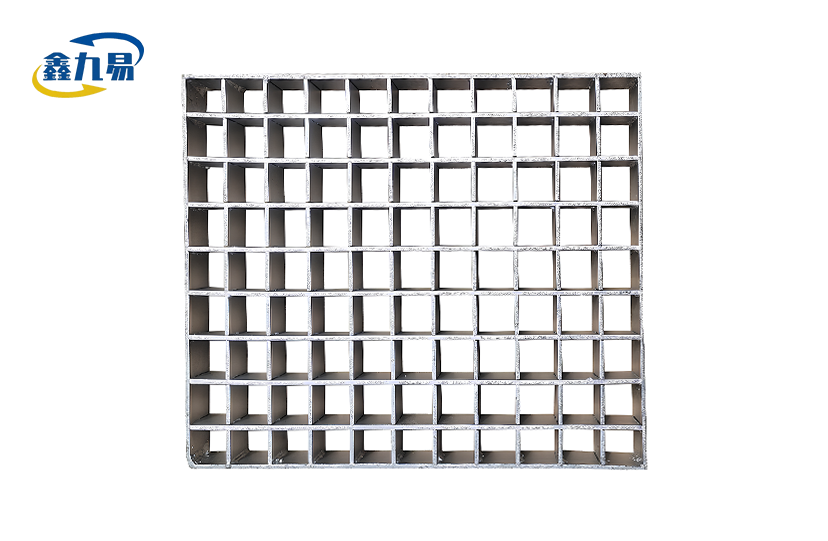
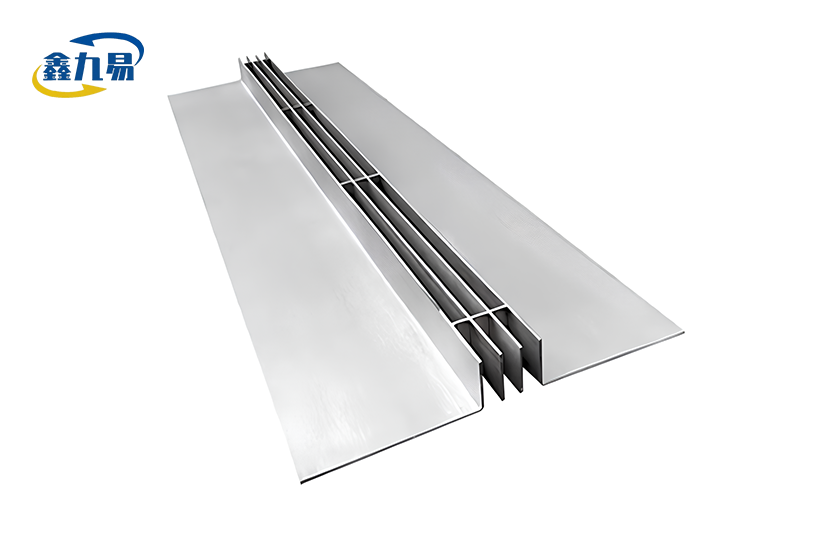
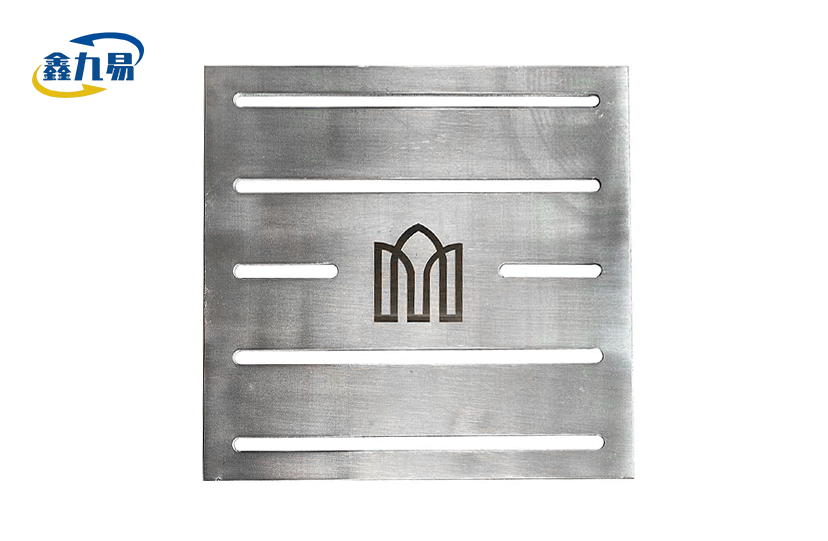
We make stainless steel bar grating at Xinjiuyi. The plate width is between 2 mm and 8 mm, and the bar heights are 20, 30, and 40 mm. Slot openings range from 20 mm to 100 mm, which gives specifiers precise control over both the rate of hydraulic flow and the amount of debris that gets caught. By giving our engineering team project drawings, you can help them figure out the exact configuration your load class needs before production starts.
Grating Types and Their Application Match
Different ways of making things don't always lead to the same structure. When you know the difference, you can choose the right solution for the situation.
Welded, Press-Locked, and Swage-Locked Gratings
Welded stainless steel bar grating uses resistance welding at every point where the bearing bar and cross bar meet. This makes joints that are rigid, permanent, and able to hold the most weight per unit of weight. Because of this, it is usually used for heavy-duty drainage trenches in city streets and factory yards. Press-locked grating has a smooth, flat surface because it automatically presses cross bars into slots that have already been punched. It's best for high-end architectural and landscape projects where both function and look are important. Swage-locked grating is a light alternative for interior platforms and mezzanine walkways that don't need to hold a lot of weight.
Specialized types to think about include grating with a serrated surface for areas that get oily or are exposed to liquids, and grating with a polished finish for food processing plants and commercial kitchens where bacteria can grow on surface irregularities and cause audit risk. Our hygienic-grade panels have consistent slot designs that allow for direct flush-cleaning and meet the surface standards of tests that are in line with FDA and HACCP.
Maintenance, Installation, and Long-Term Reliability
Picking the right product is just one part of the process. Whether it lasts as long as it was meant to depends on how it is put and kept.
Installation Practices That Protect Structural Integrity
When stainless steel bar grating panels are properly anchored, they don't move when dynamic loads or foot traffic happen, which would otherwise cause edge wear and joint fatigue over time. To keep the bearing bars from being overloaded in one spot, the frame lines should be level within ±2 mm across the width of the panel. Panels shouldn't be permanently welded into drainage channels unless they need to be taken out for inspection. Bolt-down or clip-fixed systems let you get to them without damaging the structure.
Stainless steel doesn't need as much upkeep as galvanized steel, but if you don't clean out the slot holes, debris can build up and slow down limited corrosion through crevice mechanisms. Most city sewage systems only need to be inspected and cleaned with a jet wash every three months. Cleaning surfaces once a week with pH-neutral cleaners keeps them in good shape and stops bacteria from forming in food-grade areas.
When these steps are taken regularly, drainage grating that is properly defined can last the 15–30 years that stainless metals are designed to last.
Procurement: Supplier Qualification, Specifications, and Delivery
When something is bought, the choices made about the specifications become real-world danger or trust. As much thought should go into choosing a supplier as choosing a material.
What to Evaluate Before Placing an Order?
Here are the main things that set a reliable stainless steel bar grating seller apart from one that puts the project at risk:
- Material traceability: The seller should give mill certificates for 304 or 316 metal with heat and batch numbers that match the product that was shipped. Without this, the only way to be sure is for PMI to test upon arrival.
- Dimensional accuracy: Panels that are CNC-cut and precision-welded should be within the given ranges for length, width, and hole spacing. If the dimensions vary by more than ±1.5 mm, the installation has to be redone, and the slots get out of alignment, which affects how well the drainage works.
- Customization responsiveness: In public and hygiene settings, it's usual to have non-standard sizes, curved panels, and slot designs that are made just for that project. Within 24 to 48 hours, a capable manufacturer should accept drawings and let you know if they're possible.
- Delivery scheduling: For big city projects, delivery must be done in stages that match the order of construction. Make sure that your provider can send out partial orders within 15 to 30 days and increase production without lowering quality.
- Export readiness: For trade buyers who are combining full-container shipments, export cartons, anti-rust packaging, origin certificates, and paperwork in English must be included in order for customs clearance and for the end client to accept the goods.
Xinjiuyi has a modern factory in the Xian County Development Zone of Cangzhou that is certified by ISO 9001, ISO 45001, and ISO 14001. Our supply chain can handle both large orders from cities and panels that are made to order from project drawings and measurements.
Conclusion
Choosing the right stainless steel bar grating drainage grate saves both the project and the budget for buying it. Long-term rust efficiency is based on the grade of the alloy. The load class must match the structure's setup. The way the product is made affects both its strength and how clean its surface is. Planning for maintenance makes sure that the design lasts as long as it can. Supplier qualification bridges the gap between what was planned in the specification and what was actually delivered. Each of these five factors has a direct effect on the project's results. If you take them all into account, the product will work as planned for decades.
FAQ
What are the key differences between stainless steel and carbon steel bar gratings?
Stainless steel bar grating doesn't rust because it has a chromium oxide layer built in that doesn't need to be coated. Galvanizing or painting carbon steel grating is needed, but both of these finishes break down when they come into contact with chemicals, UV light, or normal wear and tear. Stainless steel always works better than carbon steel in long-term drainage uses in terms of how often it needs to be replaced and how much it costs to maintain.
Can stainless steel bar grating be customized for irregular shapes or sizes?
Yes. Based on project drawings, manufacturers who can do CNC fabrication can make panels with non-standard lengths, widths, and slot configurations. You can get curved pieces, cuts at an angle, and slot spacing that is just right for your job. When you send in dimensional drawings during the inquiry stage, the maker can confirm that the project is possible and give you an accurate price.
How often should stainless steel bar grating be maintained to ensure maximum durability?
Every three months, municipal drainage systems should be inspected and cleaned with a jet wash to clear out clogged slots and look for cavity rust. Hygienic and food handling areas need to be cleaned once a week with neutral soaps that have been approved. Compared to carbon steel alternatives, stainless steel doesn't need to be painted or galvanized again, which makes it much easier to maintain.
Request a Custom Quote From Xinjiuyi — Certified Stainless Steel Bar Grating Manufacturer
Xinjiuyi makes stainless steel bar grating that is precisely engineered to meet your exact size, weight, and surface requirements. Their products are ISO 9001 certified, and they have a 15–30 year service life. Our team responds within 24 hours, whether you need phased bulk delivery for a city project or hygienic panels that are made just for you. Send us your drawings at global@xjy8.com or visit xjy8.com to get a quote that is tailored to your project.
References
1. National Association of Architectural Metal Manufacturers (NAAMM). Metal Bar Grating Manual MBG 531. NAAMM, 2015.
2. ASTM International. ASTM A666: Standard Specification for Annealed or Cold-Worked Austenitic Stainless Steel Sheet, Strip, Plate, and Flat Bar. ASTM International, 2015.
3. Outokumpu Stainless. Corrosion Handbook: Stainless Steel in Aqueous Environments. Outokumpu, 2018.
4. Baddoo, N. R. Stainless Steel in Construction: A Review of Research, Applications, Challenges and Opportunities. Journal of Constructional Steel Research, 2008.
5. The Nickel Institute. Stainless Steel: The Role of Nickel. Nickel Institute Publication No. 11 021, 2020.
6. Lula, R. A. Stainless Steel. American Society for Metals, 1986.