What sizes are available for square column formwork?
Square column steel formwork is available in a wide range of standard widths — 300, 400, 500, 600, 700, 900, 1200, 1400, and 1600 mm — with standard heights spanning 300 mm to 3000 mm, including common increments of 1000, 1200, 1800, 2000, and 2500 mm. Beyond these catalog dimensions, custom widths and extended heights are manufactured to match project-specific structural drawings. This flexibility makes steel column formwork the preferred choice for residential towers, commercial complexes, and infrastructure projects that demand consistent dimensional accuracy within ±1 mm tolerance.
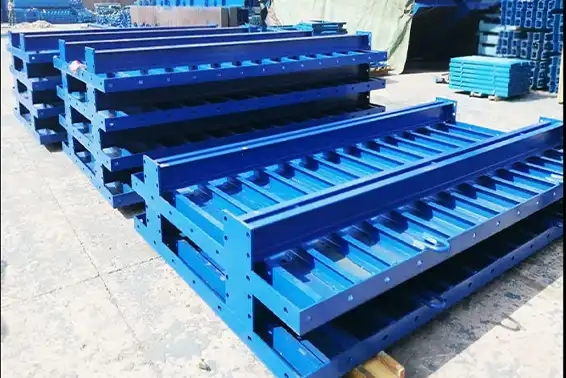
General Overview of Square Column Formwork Sizes
You can't just look up a size in a book. Choosing the right panel sizes is directly related to the load needs of the structure, the pour heights, the speed of the crew, and the cost-effectiveness of long-term reuse. Procurement teams can avoid costly mistakes when structural drawings and formwork don't match by knowing what the market has to offer and where standard sizes end and custom fabrication begins.
Standard Width and Height Ranges
There are nine standard widths of column formwork panels made by Hebei Xinjiuyi Construction Technology Co., Ltd. They are 300, 400, 500, 600, 700, 900, 1200, 1400, and 1600 mm. There are standard heights of 300, 1000, 1200, 1800, 2000, 2500, and 3000 mm. These measurements cover most of the home and business column sections used in today's building markets. This shortens the wait time for projects using standard structural grids.
Custom Sizing for Non-Standard Column Sections
In high-rise mixed-use projects and industrial buildings, it is usual for column parts to not follow standard sizes. The engineering team at Xinjiuyi uses structural plans provided by the client to make panels that are exactly what the client wants. They even make mixed-panel sets that cover different column sizes within the same building. Field-cutting and improvising on the job site are two of the main reasons why grout leaks and surface flaws happen in column building. This method gets rid of both of them.

Dimensional Specifications and Design Considerations
The measurements of a panel don't exist by themselves. During every pour cycle, width, depth, and height all affect the concrete's hydraulic pressure, the contact forces of the vibrator, and the crew's ability to move the concrete. If you get these relationships right during the buying stage, you won't have to do any structure work later on.
How Panel Width Relates to Load Capacity
When concrete is poured, wider walls take more pressure from the sides. Xinjiuyi's Q235 cold-rolled steel face plates for square column steel formwork are strong across the whole width range because they are reinforced with channel steel and angle steel stiffening ribs. For widths of 1200 mm or more, extra rib spacing makes sure that the panel face bending stays within the 2 mm flatness limit that was checked during the quality inspection.
Height Limitations and Panel Stacking
The standard height for a single panel is 3000 mm. Standardized connectors can be used to stack and secure panels for taller column pours. For joint pour heights above 6 meters, the industry says that an engineering study should be done. If you ask, Xinjiuyi can make setups with extended heights. These come with installation plans that show how to keep the structure stable during the pour, including how often to brace it and where to put the tie rods.
Comparison of Steel Column Formwork Sizes With Other Materials
Square column steel formwork is better than wood in two important ways: it stays the same shape over time, and it can be used more than once. Wood panels change shape when they get wet, which makes the tolerances for measurements bigger and the finish worse over time. Steel panels keep their shape over 300+ pour cycles, which means that the cost of acquisition is spread out over many more pours than wood options can. According to information released by the China Formwork and Scaffolding Association, projects with continuous multi-floor construction schedules that use square column steel formwork systems have lower per-pour costs.
Aluminum formwork is easier to move around because it is lighter, but it costs a lot more per square meter than steel and can't hold as much weight for large-section columns. Steel is still the most common material for column sections wider than 600 mm, because the pressures in concrete need it to be more rigid.
Here are the core differentiators that make steel the practical choice for bulk procurement:
- Geometric stability across cycles: Steel panels keep their shape within ±1 mm after being used hundreds of times, but wood breaks down after being wet and dried many times.
- Load resistance: The building of Q235 and Q345 steel can handle side concrete pressures of up to 80 kN/m², which means it can handle high-speed pump pours without the panels bulging.
- Size range availability: Steel production can handle widths ranging from 300 mm to 1600 mm in a single system, but aluminum and wood systems have a smaller maximum size.
- Sustainability profile: Higher reuse cycles lower the total amount of materials used per cubic meter of concrete put, which is in line with LEED and other green building approval standards.
These structural and cost benefits, making square column steel formwork the first choice for contractors who are in charge of large residential or commercial projects with multiple buildings.
Practical Guidelines for Choosing the Right Size
During the inquiry stage, decisions about how to buy things determine whether square column steel formwork does the work or causes it. Instead of just using the closest catalog size, matching panel sizes to structural and site conditions needs to be done in a planned way.
Matching Dimensions to Structural Specifications
The minimum panel width is set by the column cross-sections shown on the structure plans. When you figure out the interior clear dimension, you need to take into account the thickness of the face plate on all four sides. For projects with different column sizes, having a mixed panel set that covers all of those sizes within the building cuts down on the amount of stock that is sitting around between floor rounds.
Site Constraints That Affect Size Selection
The width of the entry passage, the height from floor to floor, and the capacity of the crane all affect the safe panel heights and weights that your crew can handle. Panels that are 3000 mm tall and 1600 mm wide can hold a lot of weight. Check the lifting equipment ratings before you decide on the final panel specifications. In crowded cities, Xinjiuyi's modular system lets smaller screens be joined on-site, which makes each part lighter and easier to move by hand.
Writing Accurate RFQs for Bulk Column Formwork Orders
When you send a request for quotation, you should include the column cross-section dimensions, the required height per pour lift, the total number of panels, the surface finish you want, and the delivery date in relation to the structural start date of your project. By including your structural plans, Xinjiuyi's team can make a full panel layout with connection hardware. This speeds up the accuracy of the quote and cuts down on the need for back-and-forth explanation.
Installation and Maintenance Related to Size Considerations
The size of the panel affects all parts of the process, including putting it together, taking it apart, cleaning it, and storing it. Setting up handling rules that are right for the panel's size will protect its shape and the money you spent on it to reuse it.
Large panels that are more than 1800 mm tall need to be handled by two people working together or with mechanical help during the first assembly. Before filling starts, make sure that all of the tie-rod places are locked in place, and make sure that the connection hardware torque meets the requirements for the panel width being used. It is better to apply the release force slowly along the length of the panel during stripping than all at once at one edge, which is what usually causes panels to deform in the field.
Clean the panels right away after stripping. Within hours, residual concrete sets and needs to be removed mechanically, which can leave a score on the surface. To keep panels from warping over time, store them flat on level supports. Check the weld integrity and rib attachment points every ten pour cycles as a general rule, and make changes as needed based on how the material is handled on site. Reapply the release agent before each pour to protect the finish on the surface and stop the concrete from sticking to the panel, which makes it less flat over time.
Conclusion
Choosing the right panel sizes for a square column steel formwork program affects the cost, schedule, and quality of the concrete from the very beginning of the project. Standard lengths range from 300 mm to 1600 mm and heights up to 3000 mm, which are enough for most household and business uses. Custom production can cover any part that isn't standard, though. Steel building gives procurement managers the level of surface accuracy, long-lasting use, and stable dimensions that they need for ongoing multi-floor projects. The process of going from specifications to site-ready panels is easy thanks to Xinjiuyi's manufacturing and technical support skills.
FAQ
What is the smallest width available for steel column formwork panels?
The smallest standard width is 300 mm, which works for thin column parts and some wall uses. For the creation of prefabricated parts, custom widths less than 300 mm are offered upon request.
What is the maximum panel height available?
Up to 3000 mm is the standard height. Custom fabrication is used to make heights higher than this and engineering drawings are sent with the order to show what kind of bracing is needed for the higher pour height.
Can panels accommodate multiple column sizes on the same project?
Yes, it is common for mixed panel sets with different widths to be set up in this way. The engineering team at Xinjiuyi uses your structural drawings to put together panel combinations that cover all column sections in a single building program.
How does panel size affect reuse cycles?
When panels of all sizes are kept in good shape, they can be used over 300 times. Larger panels need to be handled more carefully during stripping to protect the quality of the weld, but their structural design is made to handle the extra stress of high-capacity pours.
What lead time should I expect for custom-sized panels?
Standard catalog sizes usually ship in a shorter amount of time. For custom-engineered widths or heights that aren't in the standard range, the process of making and inspecting the product takes 14–21 days, starting with confirmation of the drawing and ending with shipment.
Partner With Xinjiuyi for Your Column Formwork Supply
When you need to buy something, Xinjiuyi can help. They have certified manufacturing knowledge and a full size range. We are a reliable company that makes square column steel formwork. We work with builders, rental trucks, and foreign wholesalers in over 30 countries. Every panel comes with full QC instructions and help with setting it up. Send your project details or structure plans to global@xjy8.com, or go to xjy8.com to get a configuration price.
References
1. China Formwork and Scaffolding Association. Technical Specification for Construction Formwork Safety. 2020.
2. American Concrete Institute. ACI 347R: Guide to Formwork for Concrete. 2014.
3. British Standards Institution. BS EN 13670: Execution of Concrete Structures. 2009.
4. Construction Industry Institute. Formwork Systems Productivity and Safety Research Report. 2018.
5. National Ready Mixed Concrete Association. Concrete in Practice: Formwork Pressure and Panel Design. 2019.
6. International Organization for Standardization. ISO 9001: Quality Management Systems — Requirements. 2015.


