How to Choose the Best American Type Frame Scaffolding?
Choosing the right scaffolding system directly impacts your project's safety record, labor efficiency, and bottom line. When it comes to American Type Frame Scaffolding, the decision requires balancing structural integrity with practical site demands. This ladder-frame system integrates climbing rungs into vertical members, eliminating separate ladders while delivering robust load-bearing capacity. Understanding material specifications, compliance standards, and supplier capabilities helps procurement managers secure solutions that protect workers and meet regulatory requirements across building construction, bridge maintenance, and industrial facilities.
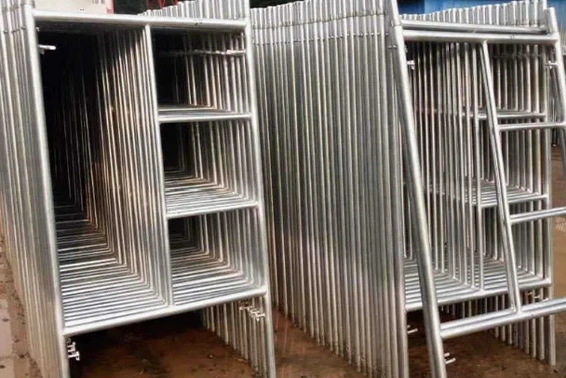
Understanding American Type Frame Scaffolding: Basics and Specifications
What Makes This System Unique?
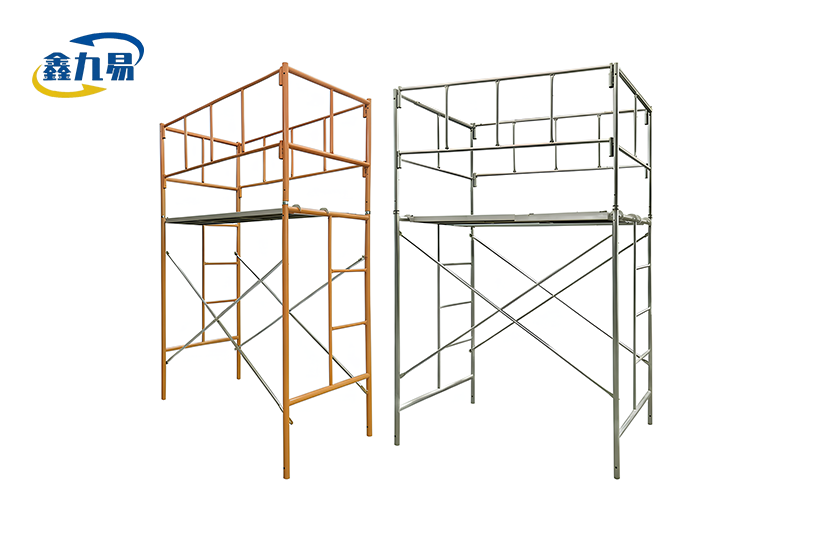
The ladder that is built into this type of scaffolding is what makes it unique. Unlike traditional frames that need tools to be accessed from the outside, the vertical posts have regularly spaced rungs that serve two purposes: they strengthen the structure and make climbing safe. This design cuts down on setup time and makes moving materials around on busy job sites easier.
These frames are mostly made from Q235 or Q355 steel tubing, which gives them strength while keeping their weight reasonable. Wall thickness is usually between 2.0 mm and 2.5 mm, which makes the structure strong without adding too much weight. Standard sizes for height are 1524 mm, 1700 mm, 1900 mm, and 1930 mm, and standard sizes for width are 950 mm to 1250 mm. These measures are in line with OSHA and ANSI standards, so they will work in all North American building sites.
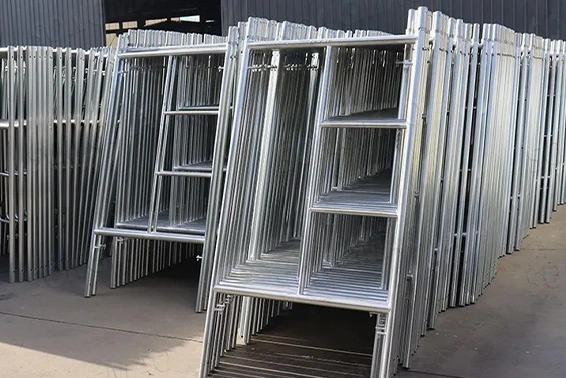
Core Components and Load Considerations
There are vertical frames, horizontal beams, coupling pins, and baseplates in each arrangement. The frames can be locked together with flip-lock, drop-lock, or slide-lock mechanisms that don't need any special tools. Cross-Braces keep the structure stable and stop it from moving side to side when dynamic loads are applied.
Frame space, material grade, and bracing design all affect how much weight can be put on a frame. When put together correctly with guardrails and platforms, the system allows for high-level masonry work, storage of materials, and operations with more than one crew. The 4:1 safety factor that OSHA requires gives people faith when doing heavy-duty jobs like spreading concrete and putting up a facade.
Surface treatments have a big effect on how long something lasts. Hot-dip galvanization is better at stopping rust in seaside or humid areas, and the structure will stay strong for up to twenty years. For shorter-term projects, electro-galvanization is a cost-effective way to protect metal, while powder painting is better for high-visibility areas like urban makeovers and event infrastructure.
Key Criteria to Consider When Choosing American Type Frame Scaffolding
Structural Integrity and Compliance
Safety rules are the basis for any process of choosing American Type Frame Scaffolding. Products need to be certified by ANSI/SSFI and meet OSHA 1926.451 standards. These qualifications show that frames have been through strict load tests and meet important limits for compatibility between components.
Weld quality has a direct effect on how reliable a structure is. High-frequency welding makes seams that are the same length of tube, and reinforced manual welding makes connections between ladder rungs stronger. Check samples for holes, undercuts, or penetrations that aren't full. Ultrasonic inspection and other non-destructive testing methods can find flaws that can't be seen with the naked eye.
Precision in measurements makes sure that frames from different runs of production can fit together easily. The vertical legs must stay straight, and the distance between the cross-members must exactly meet the technical requirements. These tight standards are kept by CNC cutting and bending equipment. This keeps on-site interface problems from delaying projects and putting people's safety at risk.
Material Selection and Environmental Suitability
The working environment determines the right material grades and how to protect the surface. Standard Q235 steel is good for most basic building uses because it has enough tensile strength and can be welded. For projects in areas prone to earthquakes or that need to last a long time, Q355 high-strength steel is a good choice because it can hold more weight while still being strong.
Scaffolding is exposed to strong corrosive agents on coastal projects and in industrial facilities. A thick zinc layer that can stand up to salt spray and chemical fumes is put on by hot-dip galvanization. Powder coating adds a second barrier and lets you change the color to help people find your site or make your brand stand out. Painting the inside of rooms that are being renovated keeps rust from getting into the finished spaces.
Assembly Efficiency and Site Adaptability
Costs for labor make up a big part of project funds. Assembling scaffolding systems that have easy-to-use locking mechanisms takes less time and doesn't require as much training. Walk-Thru frames with open arches let people walk through below the working floors, so people can still use the pavement while the urban face is being fixed up. Mason frames with ladder rungs give bricklayers and cladding workers safe places to store materials.
Screw jacks that can be adjusted can handle uneven ground and keep platforms level on sloped sites or foundations that aren't perfectly flat. Rolling towers with locking casters can be moved across flat surfaces, making them perfect for getting to pipes above in power plants or petrochemical plants. By understanding these features of adaptability, you can better match tools to the conditions of a place instead of having to find workarounds that hurt efficiency.
Comparing American Type Frame Scaffolding with Alternative Systems
Structural Design Differences
Ringlock scaffolding uses rosette connections that can hold multiple braces at different angles. This makes it more flexible for shapes that aren't simple. But this flexibility makes more parts and more complicated construction necessary. The fixed-width design of American Type Frame Scaffolding makes planning easier and speeds up the building process, especially when simple vertical access needs are present.
Cuplock systems use locking cups that are activated by gravity to get rid of loose parts and lower the risk of loss. Compared to the generally standard American Type Frame Scaffolding dimensions used across North America, the proprietary design reduces the number of suppliers that can provide the product. Adjustable tube-and-coupler connections let you make tubular scaffolding fit your needs perfectly, but it needs to be put together by skilled professionals to be safe.
Safety and Cost Implications
American Type Frame Scaffolding is different from other options that need separate access equipment because it has a ladder built in. This lowers the risk of falling that comes with setting up and locking down stand-alone ladders. Built-in guardrail attachment points in the frame design make sure that all floors have the same amount of perimeter protection.
Initial investment depends on how complicated the system is. Standardized American Type Frame Scaffolding parts usually cost less per unit than unique ringlock rosettes or cuplock connections. Maintenance costs stay low because there aren't as many small parts that can get lost or broken. Long-term ownership costs are also kept low by the wide availability of replacement parts and accessories that work with the original equipment.
European frame scaffolding often has narrower profiles that work better in tight spaces, but they might not meet OSHA requirements for heavy masonry work. The strong construction and bigger platforms of the system made to North American standards make it useful for projects that need to move a lot of materials.
Procurement Insights: How and Where to Buy American Type Frame Scaffolding
Identifying Trustworthy Suppliers
Before choosing a supplier, it's important to check their manufacturing certifications. Systematic process controls are shown by ISO 9001 for quality management, ISO 45001 for health and safety at work, and ISO 14001 for the environment. Ask for proof that the materials can be tracked and that the welding process is qualified.
The dependability of deliveries is affected by the manufacturing capacity, especially for big projects that need coordinated shipments during multiple mobilization stages. When you can, visit production sites to get a feel for how advanced the equipment is, how the quality control process works, and how the inventory is managed. Suppliers who use CNC machines and automated welding stations show that they are dedicated to producing consistent results.
Technical support is what sets exceptional vendors apart from average ones. To suggest the best designs, engineering teams should look over site plans and load estimates. Customized design solutions and detailed renderings as part of pre-sales services make it clear how standard products can be used to meet the specific needs of a project.
Bulk Purchase versus Rental Strategies
Outright buying is a better way for contractors who are in charge of a steady stream of projects to make money. When you own something, you don't have to pay rental fees for multiple jobs, and you can deploy it in a way that fits the needs of each site. When you store and take care of your equipment properly, it will last longer than twenty years, which means that your initial investment will be spread out over hundreds of projects.
It makes sense to rent for specific tasks or short-term projects. Distributors keep a wide range of frame sizes and accessories in stock, so customers can get what they need quickly without having to spend a lot of money. Carefully read rental agreements, taking note of how they handle damage, how deliveries work, and whether technology help is available.
When buying things internationally, there are extra things to think about. Shipping costs, import taxes, and the time it takes to clear customs all have an effect on the total landing cost and the schedule for the job. Cross-border deals are easier when suppliers offer combined shipping and paperwork help. If two people are just starting to do business together, payment terms like lines of credit protect both of them.
Best Practices for Safely Using and Maintaining American Type Frame Scaffolding
Proper Assembly Protocols
Start by making sure the foundation is stable. Baseplates need to be put down on solid, level areas that can hold the weight of the plates without moving. Weight is spread out over soft ground with mud sills or wooden planks. Screw jacks fix small changes in the grade while keeping the verticality level.
Before putting pressure on them, fully lock all of the connection pins. Instability is caused by incomplete involvement, which might not be seen until workers and products move to higher levels. To stop lateral forces from wind or horizontal material transfer, put cross braces at every level in a diagonal pattern that changes every other level.
According to OSHA rules, any platform that is higher than a certain height must have guardrails. Before letting people in, put up the top rails, mid-rails, and toeboards. Planked decks must fit together tightly, with few holes, and be securely attached so they don't move. Check the connections to permanent structures every so often, but not more often than what the manufacturer says.
Maintenance and Inspection Routines
Visual checks done every day find bent members, broken welds, and missing parts before they become dangerous. Take frames that are warped out of service right away; trying to fix them without the manufacturer's advice could hurt their load capacity. Check the coupling pins for too much wear that stops them from locking securely.
Clean the scaffolding before putting it away to stop rust from happening faster. Use the right techniques to get rid of concrete splatter, mud, and chemical residues without hurting protective coatings. Keep parts in dry, well-ventilated places that aren't near wet ground. Putting frames on racks in a horizontal stack stops them from warping and makes managing inventory easier.
Keep written and photographic records of big inspections. Keeping track of past repair helps with plans for future replacements and shows that you did your job during safety audits. OSHA rules say that competent people should do thorough inspections after any event that could affect the structure's stability, like when a car hits it or when it rains a lot.
Conclusion
Finding the best scaffolding depends on matching the system's features to the needs of the project. This American Type Frame Scaffolding is good for building construction, maintaining infrastructure, and industrial uses where safety and efficiency must not be compromised. Its standard measurements and strong construction make it a good choice. Compare the specifications of the materials to how they will be exposed to the environment, check the certifications and manufacturing skills of the suppliers, and set strict rules for assembly and maintenance. These steps set procurement managers up to deliver projects that keep workers safe, keep costs low, and meet tight deadlines.
FAQ
What distinguishes Walk-Thru frames from Mason frames?
Walk-through frames have an open arch at the base that lets people or tools pass below the working levels. This design keeps access to the site open during facade work in crowded cities. Mason frames have ladder rungs that go all the way up to the top. This makes them easier to climb and gives the structure more support, which is good for moving heavier materials around during brick work.
How do I verify load capacity for specific configurations?
Check the technical data sheets from the maker to find out what safe working loads are based on the platform arrangements, frame spacing, and bracing patterns. The system must be able to support four times the maximum intended load, which is what OSHA calls a 4:1 safety factor. Certifications from independent tests done by accredited laboratories are an extra way to make sure what the manufacturer says is true.
Can different brands be mixed on the same project?
Even though a lot of makers use the same size standards, small differences in tube diameter and locking pin spacing can make it impossible to make a safe connection. When you mix names, you run the risk of mismatch that weakens the structure. Before putting together parts from different sources, make sure they work together by physically trying them, or stick to a single source of supply to avoid doubt.
Partner with Xinjiuyi for Reliable American Type Frame Scaffolding Solutions
Hebei Xinjiuyi Construction Technology Co., Ltd. makes engineered ladder frame systems that are used in demanding B2B situations like industry upkeep, building construction, and infrastructure projects. Our Q235 high-frequency welded steel frames come with built-in climbing rungs, are hot-dip galvanized for extra durability, and can be made to fit your exact needs in terms of size.
We are an experienced maker and supplier of American Type Frame Scaffolding, and we keep our ISO 9001, ISO 45001, and ISO 14001 certifications to make sure that we always handle quality, keep workers safe, and care for the environment. Our engineering team offers technical support before the sale, such as load calculations and custom renderings. Our production capacity is also flexible, so it can be used for both bulk purchases and scheduled deliveries.
Contact us at global@xjy8.com to talk about what scaffolding you need. Whether you need standard configurations that can be shipped right away or custom designs that fit the needs of your specific spot, Xinjiuyi mixes high-quality manufacturing with quick service to help your project success. Today, ask for thorough specs, proof of compliance, and competitive quotes.
References
1. National Institute for Occupational Safety and Health. (2014). Preventing Falls of Workers Through Skylights and Roof and Floor Openings. DHHS Publication No. 2014-156.
2. Occupational Safety and Health Administration. (2011). Scaffolding eTool: Supported Scaffolds - Frame or Fabricated Scaffolds. U.S. Department of Labor.
3. Halperin, K.M., & McCann, M. (2004). An Evaluation of Scaffold Safety at Construction Sites. Journal of Safety Research, 35(2), 141-150.
4. Whitaker, S.M., Graves, R.J., James, M., & McCann, P. (2003). Safety with Access Scaffolds: Development of a Prototype Decision Aid Based on Accident Analysis. Journal of Safety Research, 34(3), 249-261.
5. American National Standards Institute. (2005). ANSI/ASSE A10.8-2011: Scaffolding Safety Requirements. Scaffold and Access Industry Association.
6. Haslam, R.A., Hide, S.A., Gibb, A.G., & Gyi, D.E. (2005). Contributing Factors in Construction Accidents. Applied Ergonomics, 36(4), 401-415.