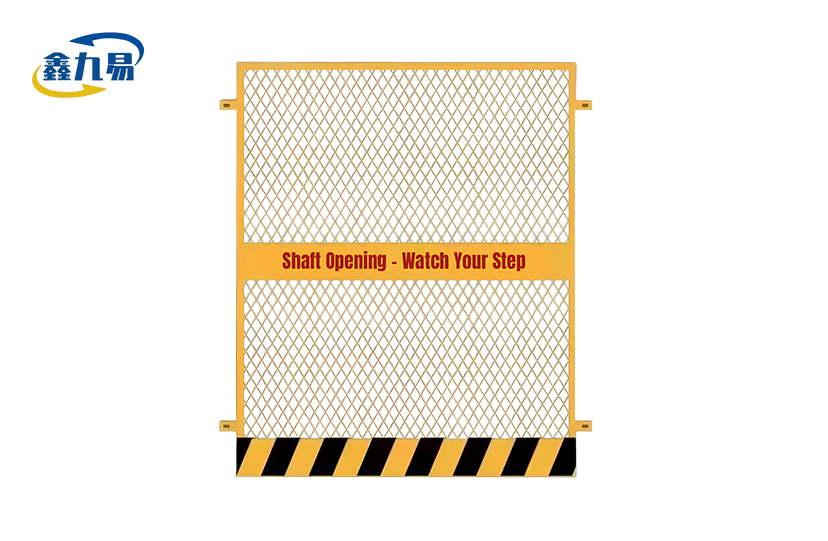
Safety Ladder Cage vs Steel Scaffolding: Key Differences
When evaluating vertical access and work-at-height solutions for your construction projects, understanding the distinction between a Safety Ladder Cage and steel scaffolding becomes critical to operational safety and compliance. A Safety Ladder Cage provides enclosed vertical access with integrated fall protection designed primarily for climbing between levels, while steel scaffolding offers horizontal work platforms that support multiple workers and materials simultaneously. The primary difference lies in their functional purpose: ladder cages excel at safe vertical transit in confined spaces like deep excavations and bridge piers, whereas scaffolding creates temporary working surfaces for extended tasks at elevation. Choosing the right system directly impacts your site's safety performance, inspection outcomes, and long-term cost efficiency.
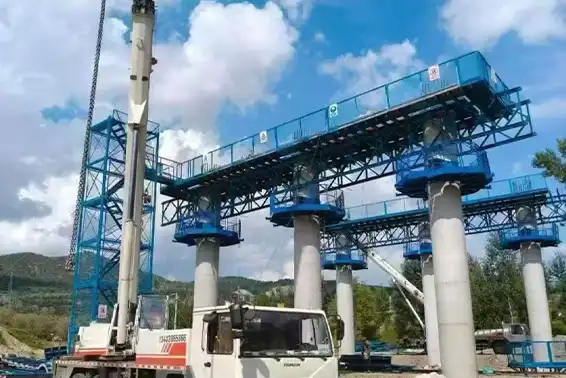
Understanding Safety Ladder Cages and Steel Scaffolding
In current construction safety management, both methods are important, but they do different things. Knowing the basic traits of these items helps procurement managers make decisions that are in line with the needs of the project and the rules that apply.
What Defines a Safety Ladder Cage System?
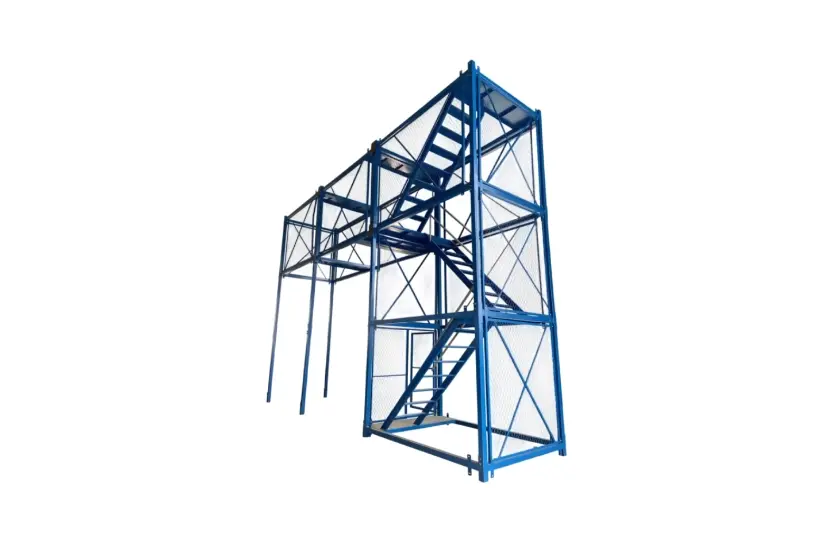
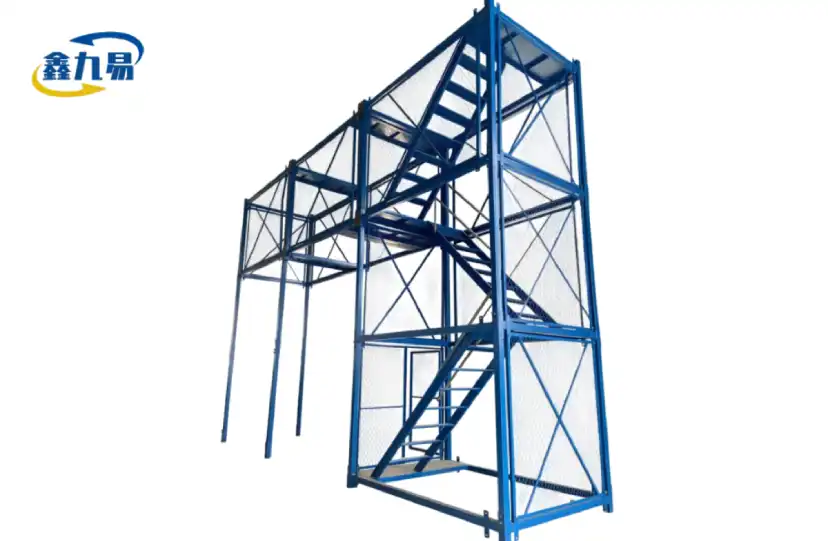
A Safety Ladder Cage is made up of a welding steel frame that goes around a fixed vertical ladder. This makes a safe cage around the rising path. At Xinjiuyi, our systems are made of high-strength rectangular tubes that are 80 mm × 80 mm and have a wall thickness of 3.0 mm. They have two layers of protection: anti-slip treads on the inside and 75 mm welded wire mesh on the outside. The bolted-together modular parts are 3000 mm long and 2000 mm wide and high, so the height can be changed without affecting the structure. Hot-dip galvanizing protects against rust for up to 20 years in normal building settings. These vertical access solutions meet OSHA 1910.28 standards and are essential in deep foundation pits, tube shafts, and tower crane attachments where traditional scaffolding can't be put up because of lack of room.
Steel Scaffolding Framework and Functionality
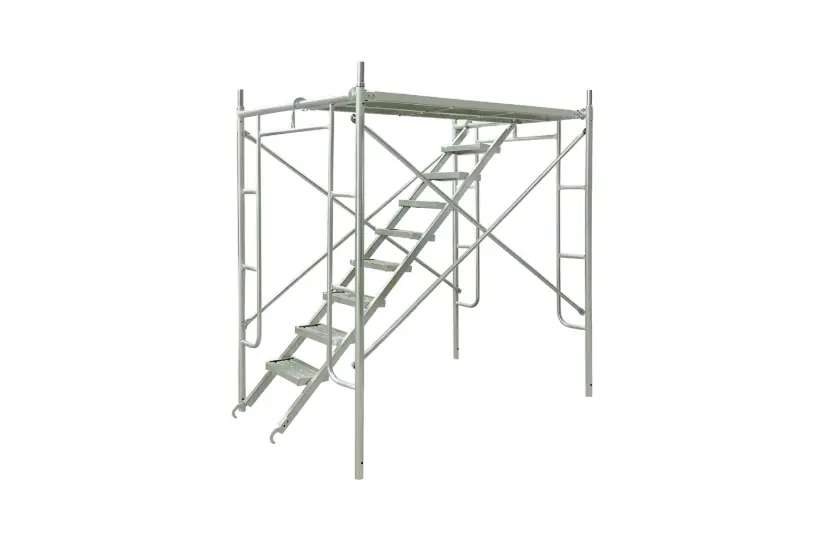
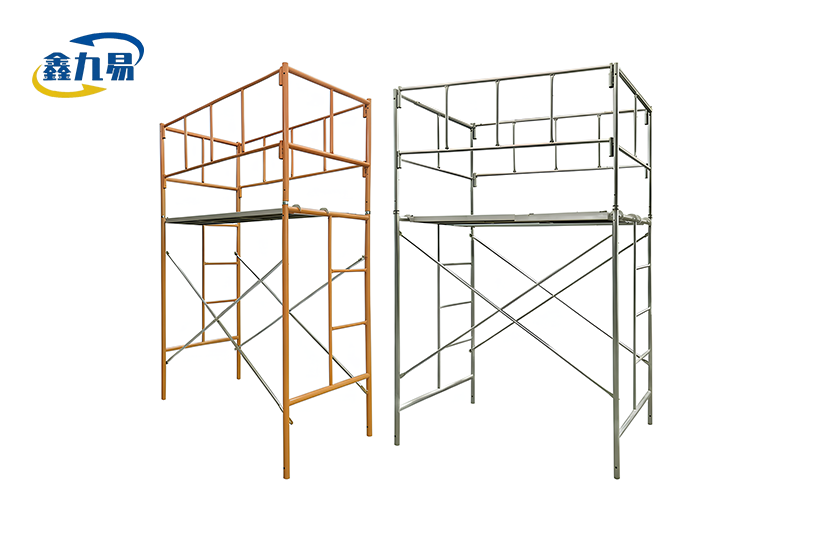
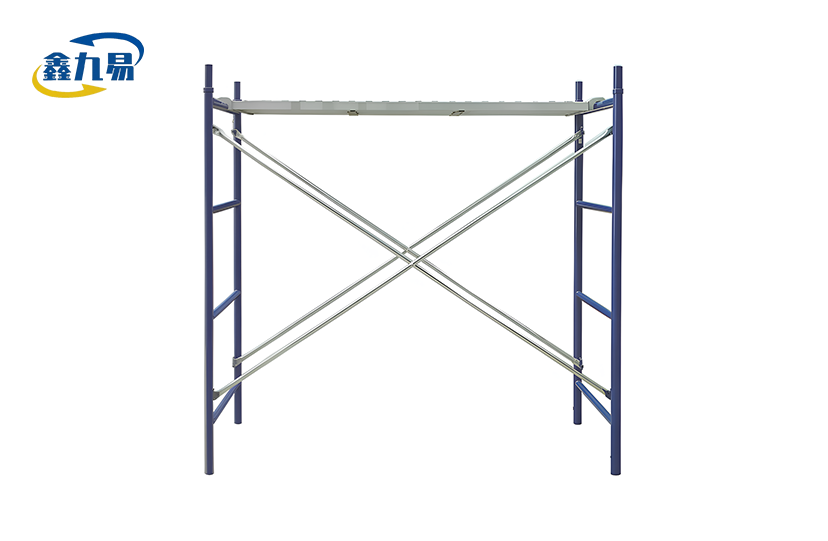
Steel scaffolding is used to make temporary flat frames that hold up people, tools, and objects at different heights. The system is made up of working decks, diagonal braces, vertical standards, and horizontal ledgers. When put together, these parts make safe structures. Frame scaffolding, tube-and-coupler systems, and suspended scaffolds are some of the most common types. Each is best for a different type of construction job. Scaffolding is great for making large work areas for tasks like finishing the outside, putting down concrete, and installing the facade. Because it is modular, the configuration can be changed as building heights rise. However, it takes more space and time to set up than fixed vertical access systems. Following the rules in ANSI A10.8 and EN 12811 makes sure that the structure will hold up under certain loads.
Regulatory Standards Governing Both Systems
There are different safety rules for vertical entry security and temporary work platforms. For ladders longer than 24 feet, OSHA requires fall safety. This is usually met by Safety Ladder Cage systems or personal fall stop equipment. Modern installations are using Safety Ladder Cage systems more and more for permanent infrastructure because they protect workers without them having to actively engage their harnesses. ANSI guidelines say that steel scaffolding has to meet certain requirements for load rate classes, platform width, and guardrails. The European EN 12810 and EN 12811 standards give international projects more design criteria. When procurement teams look at suppliers and check compliance paperwork during equipment acceptance reviews, they need to know about these legal frameworks.
Core Differences Between Ladder Cages and Steel Scaffolding
There are more operational differences between these systems than just differences in structure. These include space needs, load dynamics, and deployment strategies that have a direct impact on project planning.
Structural Purpose and Access Orientation
When workers need to get from one level to another in a tight area, Safety Ladder Cages make it easier for them to move up and down. The enclosed design keeps backward falls from happening while keeping the footprint small—our standard 2000 mm width fits in tight spaces like mechanical shafts and excavation pits. Horizontal access needs are met by scaffolding, which makes large platforms where many crew members can work on tasks that need to store tools and move materials around. Because they are oriented differently, Safety Ladder Cages are used for fixed passageways and scaffolding is used for temporary workspace support. Safety Ladder Cage systems that don't get in the way of work at ground level or take up important side space are helpful for projects that need to dig deep, build bridge piers, or use high formwork.
Load Capacity and Stability Characteristics
Vertical access systems can hold the weight of one climber plus a small amount of tools. They are usually made for one person to move from one place to another, not to take heavy loads for a long time. Our Safety Ladder Cage column tubes have walls that are 3.0 mm thick, which makes them very resistant to wind and stable during earthquakes, even at high heights. It is usual for scaffolding platforms to be rated for light-duty (25 psf), medium-duty (50 psf), or heavy-duty (75 psf) loading, based on the type of work being done. Scaffolding systems can be used to store things and set up equipment because their wider bases and vertical bracing spread loads over bigger areas. When purchasing managers look at the whole site's needs, they often choose both systems together: Safety Ladder Cages for vertical movement and scaffolding for work areas that need to be occupied for a long time.
Installation Speed and Configuration Flexibility
For projects that need to be done quickly, the ability to deploy quickly has a direct effect on construction schedules. Two people can use normal hand tools and our bolt-connection modular assembly to put up a whole Safety Ladder Cage part in less than 30 minutes. No welding is needed on-site. You can change the height by adding or removing sections without taking the whole thing apart. This lets the vertical configuration change as the digging or building goes on. Installing scaffolding takes more work because it requires putting together many parts in a planned way and making sure they are level and supported correctly. Taking down scaffolding to rearrange it interrupts nearby work activities more than making changes to a Safety Ladder Cage. The ability to be used again and again makes Safety Ladder Cages a good choice for projects that need to move equipment between multiple sites. Standardized parts stay compatible no matter where they are deployed, which lowers long-term procurement costs by giving the equipment a longer service life that spans multiple construction phases.
Installation, Maintenance, and Lifecycle Considerations
Total ownership costs and operating efficiency change over the life of an item because of practical usage factors. Knowing about these things helps procurement teams figure out the real value of an investment, which goes beyond the original purchase factors.
Deployment Requirements and Assembly Processes
Foundation mounting is the first step in installing a Safety Ladder Cage. Anchor bolts rated for pull-out forces are used to attach base plates to concrete structures or steel frameworks. With bolt links at each joint, the next parts stack vertically, making continuous climbing routes that don't have height limits. The yellow and black warning colors on our systems are appropriate for a civilized building site and improve visual safety management during checks. Setting up a scaffolding system involves leveling the ground, placing the base plate, and systematically putting up standards and ledgers based on engineering plans. When you build a platform, you have to secure the deck boards and put up guardrails at each level. The scaffolding process needs more people and coordination than putting together a Safety Ladder Cage, but both systems work best when they are installed by skilled professionals who know the manufacturer's instructions and local safety rules.
Inspection Protocols and Maintenance Demands
Safety Ladder Cages are checked visually every day to make sure the bolts are tight, the mesh is intact, and the structure hasn't shifted or corroded. Our hot-dip galvanized finish doesn't need much care other than regular cleaning to get rid of building dust—simple hosing can recover its look without any special treatments. Weld stability at stress points should be checked every three months, but our fully welded construction with ground-smooth joints gets rid of the common ways that temporary connections fail. Maintenance on scaffolding is more difficult because the platform conditions, guardrail security, and link strength have to be checked before each shift. When exposed to weather, scaffolding parts break down faster than enclosed Safety Ladder Cage systems. This is especially true at industrial or coastal sites where corrosive air speeds up the breakdown process. Due to their national standard manufacturing base, Safety Ladder Cages have simple documentation requirements for safety acceptance. This makes it easier to check compliance during regulatory audits.
Cost Analysis and Return on Investment
Permanent Safety Ladder Cage systems usually cost more up front than temporary scaffolding rentals for short-term projects. However, contractors who work on multiple projects each year will save money in the long run by owning their own systems. Find the total costs of ownership, which should include buying, shipping, putting together, maintaining, and the value of reusing over the expected number of deployment cycles. Our Safety Ladder Cage systems can be put together over and over again without losing any of their performance. The strong rectangular tube frame construction keeps the structure solid thru dozens of projects covering decades. When working on long-term projects, renting scaffolding quickly becomes expensive, while buying scaffolding needs space to be stored and parts get lost when it is used over and over again. Procurement managers who work with infrastructure contractors, bridge builders, and industrial construction companies find that investing in a Safety Ladder Cage gives them a better return on their money when the equipment is used on more than one site each year. This is especially true in deep excavation and high-pier applications where access stays the same throughout the construction phases.
Procurement Considerations for B2B Clients
When choosing strategic equipment, you have to weigh the needs of the current project against those of the long term, the dependability of the supplier, and the need for compliance assurance that keeps your company safe from regulatory and legal risks.
Evaluating Project Suitability and Application Scenarios
Project characteristics define the optimal safety technique. Workers must enter small trenches without scaffolds to dig deep foundations. OSHA-compliant climbing ways fulfil safety monitoring regulations without taking up side space with our Safety Ladder Cage systems. Modular Safety Ladder Cage pieces can be stacked to accommodate different bridge pier heights without being manufactured from scratch. However, scaffolding and Safety Ladder Cages must function together for high formwork activities. The galvanised enclosed Safety Ladder Cage works well in tunnel shafts since it doesn't let water build up. Project portfolios should help procurement teams determine which situations occur frequently enough to justify buying permanent equipment and which occur occasionally and may be satisfied by renting. Companies with more than five to ten locations per year normally earn their money back within 18 to 24 months by using their own safety gear.
Supplier Selection and Quality Verification
Manufacturer skills affect product performance and buyer satisfaction. Check if your suppliers have ISO9001 quality management certification and safety equipment production facilities. Our Cangzhou plant uses cutting-edge welding technology and standardised processes to ensure batch consistency. Request confirmation that the product fulfils OSHA 1910.28, ANSI A14.3, and EN ISO 14122-4 in the intended use areas. NDT on load-bearing weld joints reveals that the structure is stable and free of minor fractures that could endanger safety. Hot-dip galvanisation should be around 85 microns thick for long-term rust prevention. Dimensional accuracy tests ensure the Safety Ladder Cage is symmetrical, preventing climbers from getting stuck. International purchasing teams should look for vendors with flexible setups that may be customised for each site. For custom solutions that fit limited space or infrastructure, they should submit project designs.
Logistics Management and Technical Support
Delivery reliability affects project timeframes, therefore supply chain success is vital in purchasing. We collaborate with freight partners who know how to export construction equipment internationally and pack it properly to avoid damage. Project planners feel confident when they can forecast lead times. Domestic standard orders are sent within 15 days, and overseas deliveries are planned based on container availability and customs. After-sales technical support distinguishes great vendors. Our crew installs, answers operating queries during a project, and troubleshoots site conditions that produce unexpected issues. Bulk purchases offer large discounts and priority production scheduling. Large infrastructure developers and equipment distributors serving regional building markets profit most from these benefits. Look at manufacturing fault warranties and structural performance guarantees to see how confident the supplier is in the product's durability.
Practical Safety Tips and Usage Recommendations
To be operationally excellent, you need to know the best ways to make tools work at its best while still following the rules and keeping workers safe in a variety of building settings.
Safe Ladder Cage Operation Guidelines
The right way to use it starts with teaching workers about three-point contact while they are climbing. Keeping their hands and feet on the rungs will keep them from falling even if their grip or footing temporarily fails. Climbers should face the stairs both going up and down, and they shouldn't turn around when they get close to the platform levels. Carry your tools in belt holsters instead of your hands to keep full control of your climbing while you're moving up and down. The sealed Safety Ladder Cage design boosts workers' psychological confidence and lowers the fear of heights that can make them freeze in the middle of a climb. Don't make the cages too crowded; only let one person in each area at a time when multiple workers are using them at the same time. When it's freezing outside, check the rungs for ice buildup and use anti-slip treatments as needed. Even tho our non-slip treads make this risk less likely, you should still be careful. Tell the site leaders right away about any damage to the structure, loose bolts, or mesh that is coming apart. The fail-safe enclosure doesn't completely remove all risks, but following the rules for climbing makes sure that the safety system works as it was meant to.
Scaffolding Safety and Load Management Essentials
When setting up a platform, the bases must be level so that the structure doesn't lean, which makes it less stable. Install the guardrails as soon as the platform is finished—do not wait to do this important fall protection step. Spreading the load across the platform's surfaces keeps stress levels from going over the design limits. Stockpiling of materials should happen near support points instead of in the middle of the platform, where the risk of deflection is higher. It's important to keep an eye on the weather because wind loads affect the stability of scaffolding more than fixed ladder systems. Take down the scaffolding in a planned way, working your way from top to bottom and making sure the structure stays together the whole time. Tag-out broken parts right away so they can't be put back into inventory. Temporary scaffolding requires more care than permanent installations—daily checks catch problems as they start to grow before they become safety incidents.
Integrating Multiple Fall Protection Systems
For complete site safety, many different types of protection are used together to make stacked shields. For jobs higher than 24 feet, where regulations require extra safety, Safety Ladder Cages work perfectly with personal fall arrest systems. When project-specific safety plans call for double protection, our Safety Ladder Cage design includes attachment points for self-retracting lifelines. The places where Safety Ladder Cages and scaffolding platforms meet must be carefully planned so that there are no holes in fall safety. Controlling access between different level zones with gate systems improves traffic management and keeps people from getting into restricted areas without permission. Controlling vertical circulation is better with enclosed Safety Ladder Cages than with open ones, which is helpful when handling big teams or keeping work areas safe when shifts are over. Managers in charge of buying things should think about how different safety systems fit into overall plans for protecting a site, and they should choose parts that work well together instead of against each other.
Conclusion
Understanding the organizational roles, deployment features, and lifecycle costs of Safety Ladder Cage Systems and Steel Scaffolding is crucial when making a decision. Safety Ladder Cages offer constant, code-compliant entry to higher levels in small areas, where their small size and quick assembly make them the most efficient solution. Steel support is needed to make horizontal work platforms for jobs that need to be occupied for a long time and materials need to be moved around. Most big projects are better when both systems are used together, depending on the access needs. When safety, long-term cost savings, and operational dependability are the most important factors in purchasing decisions, it makes sense to buy quality Safety Ladder Cage systems from well-known brands. This is especially true for contractors who work on multiple projects each year and know that reusing equipment has a direct effect on their ability to make money.
FAQ
What are OSHA requirements for Safety Ladder Cage installations?
In the past, OSHA 1910.28 said that fixed ladders longer than 24 feet had to have cages. However, new rules allow other fall protection methods, such as personal fall stop systems or ladder safety devices. Installations that already have Safety Ladder Cage systems are still legal. According to ANSI A14.3 standards, the hoops in a cage must be no more than 48 inches apart, and the bottom of the cage must be at least 7 to 8 feet above the ground.
Can ladder cages substitute for scaffolding on construction sites?
Different jobs are done by these systems: Safety Ladder Cages allow people to move up and down, and scaffolding provides work areas. Substitution is based on the needs of the job. Scaffolding is needed for activities that need to be done while standing with tools and materials for a long time. Safety Ladder Cages work well when there is vertical flow between levels. Both methods are used on the most complicated projects because each one meets different entry needs better than the other.
How frequently should inspection occur for both equipment types?
Both systems still need to be visually checked every day before the shift starts. Safety Ladder Cages need to be carefully inspected every three months to make sure the structure is sound and the bolts are tight. When scaffolding is in use, it needs to be checked more often—every day for platform condition checks and once a week for full structural reviews. Recording what was found during an inspection helps with following the rules and avoiding liability.
Partner with Xinjiuyi for Reliable Vertical Access Solutions
Your building projects should have safety systems that are built to last and earn the trust of regulators. Xinjiuyi uses ISO-certified methods to make Safety Ladder Cage systems that meet international standards and give your sites the structural stability they need. Our modular designs, which use 80 mm × 80 mm high-strength rectangular tubes with a 3.0 mm wall thickness, offer wind resistance and earthquake stability in a wide range of difficult settings, from deep trenches to bridge piers. As a reputable company that makes Safety Ladder Cages, we offer full customization along with technical design services that create detailed renderings to help with project planning. Contact our team at global@xjy8.com to talk about your specific needs, whether you want to standardize safety infrastructure across multiple places or deal with unique access issues that need custom setups. Our facility in Cangzhou is ready to help you with your purchasing needs. We offer reliable delivery schedules and technical support after the sale to make sure that installation and operation go smoothly. Visit xjy8.com to see our full line of safety products and learn why infrastructure contractors all over the world trust Xinjiuyi to provide the safest construction sites possible.
References
1. American National Standards Institute. (2022). ANSI A14.3: American National Standard for Ladders – Fixed – Safety Requirements. Washington, DC: ANSI.
2. Occupational Safety and Health Administration. (2023). OSHA 1910.28: Duty to Have Fall Protection and Falling Object Protection. U.S. Department of Labor.
3. European Committee for Standardization. (2021). EN ISO 14122-4: Safety of Machinery – Permanent Means of Access to Machinery – Part 4: Fixed Ladders. Brussels: CEN.
4. National Safety Council. (2023). Fall Prevention in Construction: Best Practices for Vertical Access Systems. Itasca, IL: NSC Press.
5. Construction Industry Institute. (2022). Comparative Analysis of Temporary Access Systems: Safety Performance and Cost Efficiency. Austin, TX: CII Publications.
6. International Organization for Standardization. (2023). ISO 9001:2015 Quality Management Systems – Requirements for Construction Safety Equipment Manufacturing. Geneva: ISO.