Construction Ladder Cage vs Standard Access Ladders
Many procurement managers must decide between a construction ladder cage and a standard access ladder when choosing high-access options for construction and infrastructure projects. With integrated fall prevention through protected mesh and guardrails, a construction ladder cage provides sealed, adaptable safety protection designed for high-risk settings like deep excavations and bridge construction. Standard access ladders, on the other hand, let you move up and down, but they usually need extra safety features like fall stop systems to meet current safety standards. Decision-makers who want to combine safety compliance, long-term cost savings, and working reliability across multiple job sites need to know how these systems are different.
Understanding Construction Ladder Cages and Standard Access Ladders
What Defines a Construction Ladder Cage
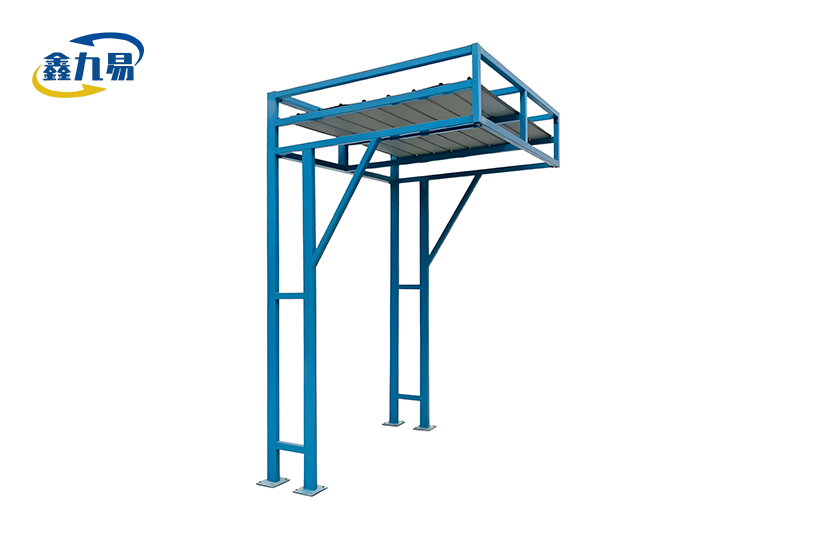
A construction ladder cage is a vertical access system that is completely enclosed and intended to keep workers safe from falls and hitting things while they climb. These modular structures are different from regular ladders because they combine safety mesh panels, non-slip treads, and strengthened frames into a single standard block. The system is made of thicker galvanized rectangular tubes and angle steel. Each column is 80 mm x 80 mm and has a wall thickness of 3.0 mm, which makes the structure stable even when there is a lot of wind. Each section is usually 3000 mm long, 2000 mm wide, and 2000 mm high, but they can be changed to fit the needs of a specific project. The welded wire mesh, which has a 75 mm opening, makes a continuous barrier that stops backward falls and lets supervisors see how the work is going. This design solves a major problem: regular homemade ladders aren't always standardized, which means they don't always meet safety standards and fail to pass site checks.
Standard Access Ladders Explained
Standard access ladders are simple tools for climbing that come in fixed, portable, and extension styles. These ladders are usually made of aluminum or steel, and the rungs are spaced out in a way that meets basic OSHA requirements for rung strength and surface friction. But they don't usually come with built-in fall protection. Instead, they use separate personal fall arrest systems like harnesses and anchor points. This setup can make operations less efficient, especially on big projects where many workers need to get to different levels at the same time. Standard access ladders are also hard to maintain because they need to be moved around a lot, which can wear down the structure, and being in acidic environments speeds up material degradation if the surface isn't properly treated. A lot of the time, procurement managers find that the initial cost savings of Standard Access Ladders are canceled out by higher insurance rates, more accidents, and the need to buy more safety gear. Insert the Construction Ladder Cage into this context as an alternative that addresses these shortcomings.


Key Regulatory Standards and Compliance
In the United States, OSHA 1910.28 sets minimum standards for fixed ladder systems. For ladders that are longer than 24 feet, they must have personal fall stop systems or ladder safety systems. ISO 14122-4 gives international guidelines on how to design safe access, including details about sizes, weight limits, and environmental concerns. These rules stress that ladder systems need to be able to handle worker comfort, moving equipment, and emergency exits. Compliance can be hard for businesses that do business in more than one area. For example, Southeast Asian markets may use EN standards, while projects in the Middle East often need to be in line with local civil defense rules. A properly certified modular construction ladder cage makes this problem easier by meeting many standard requirements. This makes it easier for HSE officers to do safety audits before a project starts. Quality Construction Ladder Cages are hot-dip galvanized, which gives them corrosion protection that is higher than 85 microns in thickness. This means they will last for a long time in harsh marine or industrial settings where salt spray and chemical exposure are constant threats.
Key Differences Between Ladder Cages and Standard Access Ladders
Safety Performance and Fall Prevention Mechanisms
The main difference is between integrated and additional security. When construction ladder cages are used, the fully enclosed frame design limits the space a worker can fall, making a safe barrier around the whole climbing path. The non-slip treads on the inside and the protective mesh on the outside work together to make a double safety barrier that stops both people falling and objects hitting from above. Standard access ladders depend on the person using them to trigger the safety features. For example, a worker must correctly put on a harness, connect to the right base, and keep three-point contact throughout the climb. Human mistakes become a big factor; tiredness, a lack of time, or not enough training can cause safety steps to be skipped. Studies of accidents on building sites show that enclosed ladder systems cut down on injuries from falls by up to 60% compared to open ladder designs. This is because the security stays the same no matter how the worker acts. This dependability directly meets the main need of the customer to lower accidents at work and the legal risks that come with them.
Material Durability and Environmental Resistance
The choice of material affects how well it works over its entire life and how much it costs to own. Good construction ladder cages are made from high-strength national standard steel that is welded together. The surfaces are then coated with high-temperature baking paint or hot-dip galvanizing to make them resistant to rust, corrosion, and the weather. The platform's 2.0 mm thick checkered plate and 5.0 mm thick protective mesh linking plate make the structure strong enough to handle the repeated impact and loading cycles that happen in busy building zones. Standard access ladders made of basic aluminum or steel that hasn't been treated may be lighter at first, but they often break too soon in places with a lot of moisture, extreme temperatures, or chemical exposure. For example, tunnel and underground engineering projects keep equipment wet and don't let much air flow through, which quickly breaks down materials that aren't properly protected. The modular design of premium construction ladder cages lets damaged sections be replaced one at a time, stretching the system's useful life to 20 years or more. In contrast, normal ladders need to be replaced completely every 5 to 7 years under the same conditions of use.
Installation Complexity and Maintenance Requirements
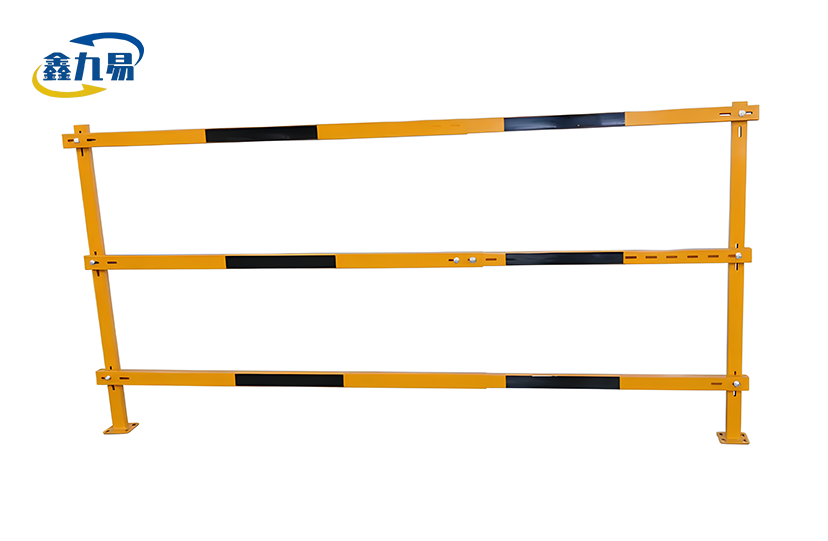
Timelines and labor costs are affected by how well installations are done. Bolt links on modular construction ladder cage systems make it easy to put together and take apart parts quickly, without the need for special tools or welding equipment. A normal three-person crew can put up a 20-meter vertical section in four hours. They can change the number of sections they use depending on the height of the project with little downtime. Standardized sizes and pre-drilled connecting points get rid of the delays that come with making custom entry solutions on-site. Even though Standard Access Ladders may seem easier, they often need a lot of work to make sure they are properly anchored, especially when meeting the load requirements for fixed installs. Construction ladder cages only need basic visual checks and cleaning every so often to get rid of debris in the mesh openings. These tasks can easily be added to regular site safety checks. The bright yellow and black warning colors make things easier to see and show that the building site is following proper rules. This lowers the risk of getting fined by the government during surprise inspections. Standard access ladder maintenance plans need to take into account things like worn-out rungs, straight side rails, and connections that don't work right. This means that professional checks need to be done more often to avoid catastrophic failure.
Choosing the Right Solution: Ladder Cage vs Standard Ladder for Your Projects
Assessing Project-Specific Requirements and Risk Profiles
Before choosing the right vertical entry method, it's important to carefully look at how it will be used. Deep excavation engineering and building a high pier bridge have their own problems. Workers have to go up and down steep slopes several times a day, often while carrying tools or materials. They may also have to deal with wind, poor lighting, or being close to heavy machinery. In these situations, the protected form of a construction ladder cage offers better safety and psychological comfort, which encourages regular use and makes it less tempting to skip safety rules. Construction ladder cage systems are modularly scalable, which means that they can be expanded vertically as projects go on without having to replace the whole installation. This is useful for building floors in high-rise buildings and getting into tunnels. On the other hand, projects that only need temporary, low-height access, like short-term equipment maintenance or infrequent roof access, may be able to use standard access ladders along with the right safety gear. However, this method requires workers to be more alert all the time and requires supervision from a supervisor.
Cost-Benefit Analysis and Return on Investment
The initial costs of acquisition are only one part of the overall economic impact. Modular construction ladder cages usually cost more up front—between 30% and 50% more than normal ladder systems of the same height. However, lifecycle analysis shows that there are strong financial benefits: bolt-connected cage parts can be used again and again over 95% of the time, meaning that contractors can use the same tools on multiple jobs over the course of 20 years. Less money spent on accident-related costs like medical bills, lost work time, and possible lawsuits leads to lower long-term economic costs. More and more, insurance companies are lowering the rates of contractors who show they are committed to building safer infrastructure. For example, contractors who install better safety infrastructure have been shown to save 15% to 25% on their general liability policies. Companies that are working on multiple projects at the same time can save even more money by buying in bulk. Customization options make sure that the investment fits exactly with operational needs instead of forcing companies to adapt to off-the-shelf limitations. Standard Access Ladders may work in situations where money is tight, but they have hidden costs that add up over time through replacement cycles, the purchase of extra safety gear, and lost productivity due to accident investigations and fines from the government.
Evaluating Suppliers and Product Certification
People who work in procurement need to make sure that possible suppliers have strong quality control systems and product certifications. Certifications like ISO 9001, ISO 45001, and ISO 14001 show that a company pays full attention to quality control, worker health and safety, and being environmentally responsible throughout the whole manufacturing process. Reliable manufacturers give out a lot of technical information, like load test results, reports on the materials used, and compliance certificates that are in line with the rules in the target market. Modern Construction Ladder Cage designs don't have removable mounting plates, so there are no safety risks related to them coming free or deforming under repeated stress. This is especially important for equipment that is used every day for long periods of time. Companies with a history of successful engineering projects show that they understand a wide range of real-world application scenarios. These companies can offer insights that generic suppliers can't match. Pre-sales technical services, such as on-demand design solutions and detailed renderings, help procurement teams see how the new features will fit in with the existing site layouts and make sure they meet the project requirements before they commit resources. Supply chain problems that can throw off construction plans can be avoided by building long-term relationships with manufacturers that can reliably meet shipping dates and handle big orders.
Installation, Safety Compliance, and Maintenance Best Practices
Step-by-Step Installation Guidelines
The stability of the structure and the best safety performance are guaranteed by proper fitting. First, make sure the base is level and stable so it can hold the weight of the workers, their tools, and any outside forces like wind pressure. Place the first part of the Construction Ladder Cage vertically and use anchor bolts that are rated for the site's dirt or building material to secure the platform base, which is made of 80 mm x 80 mm tubing that is 3.0 mm thick. Platform connecting tubes, which are 90 mm x 90 mm and have a 4.0 mm wall diameter for better joint strength, are used to connect the next parts. Make sure that all bolt connections are torqued to the manufacturer's specifications, which are usually between 60 and 80 Nm. Also, use a plumb line or laser level to check the alignment and stop lateral stress from building up. Put up protective mesh panels around the outside, making sure that the 30-degree iron frames that are 2.5 mm thick fit snugly against the main structure. Before putting everything together, make sure that all of the welds are smooth and don't have any sharp edges that could catch clothes or equipment while it's being moved. Because quality systems are modular, the height can be changed easily by adding or removing sections as the building process goes on. This keeps safety standards high throughout all stages of the project.
Compliance Checklists for OSHA and International Standards
Companies can avoid legal trouble and improve their image in competitive selling situations by following the rules set by regulators. Checklists for OSHA compliance should make sure that Construction Ladder Cage setups have enough space around the climbing area, the right signs showing load limits and how to use them, and proof that they are inspected regularly by trained staff. To meet the requirements of EN ISO 14122-4, ergonomic factors must be taken into account. For example, the distance between the rungs must not be more than 300 mm, the cage must be wide enough to fit people wearing safety gear, and the entry and exit places must allow for smooth transitions without requiring awkward body positions. For projects going after markets in the Middle East or Africa, extra certifications from local authorities may be needed. This means working with suppliers who know how to get things approved in those areas. Keep detailed records of all product certifications, installation dates, and changes made to them. This will make checks easier and show that you did your research during safety reviews. Regular training sessions for site staff on how to use Construction Ladder Cages correctly, including how to distribute loads and what to do in an emergency, support a proactive safety culture that lowers incident rates and boosts worker confidence.
Routine Inspection and Maintenance Protocols
To make tools last longer, you need to pay regular attention to signs of wear and do preventative maintenance. Damage that is easy to see, like bent parts, missing bolts, or torn mesh panels, should be found every day and written down in site safety logs. Safety officers check the connections every week by feeling them to make sure they are tight, making sure the anti-slip tread surfaces are still working and cleaning up any debris that might be blocking drains or creating slip dangers. As part of regular maintenance, the structure is carefully checked every month. Welds are checked for tiny cracks, coating thickness is measured to see how corrosion is spreading, and the stability of the whole assembly is tested under simulated load conditions. When compared to the more extensive maintenance that standard access ladders need, well-designed construction ladder cages only need to be cleaned and their fasteners retightened every so often. This means that they cause less disruption to operations. Take care of any problems right away by changing any broken parts instead of trying to fix them on the job site, which could weaken the structure. Recording maintenance tasks helps with warranty claims and shows that the equipment is being handled responsibly during regulatory reviews or insurance assessments.
Conclusion
Choosing between protected Construction Ladder Cage systems and regular access ladders has a big impact on both the safety of the building site and the long-term costs of running it. Construction ladder cages are the best choice for medium to large businesses handling complex infrastructure projects because they offer fall safety, better material longevity, and easier compliance with changing international standards. Standard Access Ladders can still be useful in some low-risk, temporary access situations, but they need more safety measures and need to be replaced more often. When looking at lifecycle value, worker safety, and regulatory alignment, procurement managers always find that modular Construction Ladder Cage systems are the best solution all around. When you buy certified, customizable safety gear from reputable companies like Xinjiuyi, vertical access goes from being a legal requirement to a competitive advantage. This lowers accident rates, speeds up projects, and builds trust among stakeholders in your commitment to responsible construction practices.
FAQ
1. What are the primary safety advantages of ladder cages compared to standard ladders?
Construction ladder cages have continuous physical barriers that stop backward falls without the user having to do anything. This is different from regular ladders, where workers have to use separate fall arrest equipment correctly. The enclosed design also keeps things from hitting from above and gives people psychological reassurance that makes them more likely to follow safety rules consistently, which lowers the chance of human error.
2. Can ladder cage systems be customized for unique project requirements?
Yes, reputable manufacturers can make any changes to the sizes, materials, and layouts to fit the needs of the site, even if it has unusually high walls, an environment that rusts metal, or structures that are already there. Surface treatments, color patterns for company branding, and modular parts that can be moved around as project stages change are all examples of customization.
3. How do ladder cages compare cost-effectively with fall arrest systems for standard ladders in terms of value for money?
Construction ladder cages cost more to buy at first, but they get rid of the need for individual harnesses, anchor points and ongoing training for fall protection systems. Integrated cage systems usually cost 40% less than keeping separate ladder and fall protection stocks over a 20-year service life. This is especially true when you consider the money you'll save on accidents and insurance.
Partner With Xinjiuyi for Superior Vertical Access Safety Solutions
Xinjiuyi makes Construction Ladder Cage systems that are built to last and meet the strict needs of global infrastructure projects. Our modular designs use national standard steel, hot-dip galvanizing, and bolt-connected assembly to make them very durable and in line with OSHA, EN, and ISO standards. We know that every construction site has its own problems; that's why our team offers personalized consultations and full customization in terms of sizes, materials, and shapes. Our quality control systems have been certified by ISO 9001, ISO 45001, and ISO 14001, so you can be sure that your jobs will be done right. Contact us at global@xjy8.com to talk about your specific needs with experienced technical advisors who can give you detailed renderings and options for buying in bulk that won't break the bank. As a reliable Construction Ladder Cage maker, we mix cutting-edge production with quick response times to customer service to make sure your vertical access solutions get to you on time and work perfectly for 20 years.
References
1. American Society of Safety Professionals. (2021). "Best Practices for Fixed Ladder Safety Systems in Industrial Environments." ASSP Technical Publication Series.
2. International Organization for Standardization. (2020). "ISO 14122-4: Safety of Machinery – Permanent Means of Access to Machinery – Part 4: Fixed Ladders." Geneva: ISO Standards Catalogue.
3. Occupational Safety and Health Administration. (2019). "Walking-Working Surfaces and Personal Protective Equipment (Fall Protection Systems)." OSHA Regulatory Update 1910.28.
4. Construction Industry Research and Information Association. (2022). "Lifecycle Cost Analysis of Temporary Access Solutions in Multi-Phase Construction Projects." CIRIA Report C812.
5. National Institute for Occupational Safety and Health. (2018). "Preventing Falls from Heights in Construction: A Comparative Study of Access Equipment." NIOSH Publication No. 2018-145.
6. European Committee for Standardization. (2021). "EN 131-1: Ladders—Terms, Types, Functional Sizes, and Safety Requirements for Metal Ladders." Brussels: CEN Standards Repository.