When Does A Ladder Need A Cage?
A ladder requires a cage when it provides vertical access beyond certain height thresholds or when used in environments where fall risks exceed acceptable safety margins. According to OSHA regulations, fixed ladders installed before November 2018 must have a Construction Ladder Cage for climbing distances exceeding 24 feet. However, newer installations mandate ladder safety systems or personal fall arrest systems for these heights, though cages remain widely adopted as effective physical barriers. Beyond regulatory compliance, cages are essential in deep excavation projects, bridge pier construction, tunnel shafts, and industrial tower installations where workers need psychological assurance alongside physical protection during vertical transit.
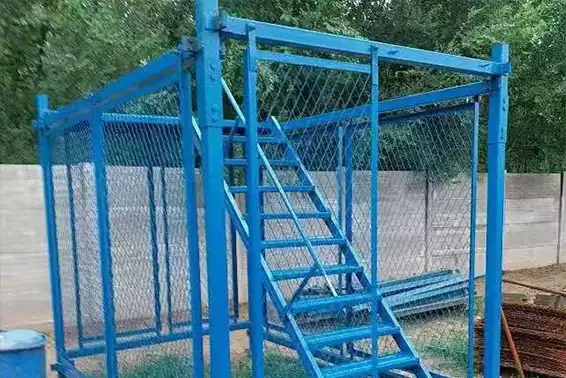
Understanding When a Ladder Requires a Cage
Whether or not to put protective cages around a ladder depends on a number of things, such as the regulations in place, the height limits, and the specifics of the job site. When procurement managers and safety officers know these standards, they can make choices that protect workers and keep operations running smoothly.
OSHA Standards and Height Requirements
OSHA 1910.28 makes it clear when extra fall safety measures are needed for fixed ladders. For ladders put in place before November 19, 2018, cages must start 24 feet above the lower level. If a company puts up a ladder after this date, they must provide personal fall stop systems, ladder safety systems, or cages for any climbing distance over 24 feet. The National Safety Council says that falls from ladders cause about 22,000 injuries every year in construction sites. This is a big reason why these rules are in place. Many companies still use cages because they offer passive safety that doesn't require workers to do anything, unlike harness systems that need workers to be properly connected.
Specific Environments Requiring Caged Access
No matter the minimum height requirements, caged ladder systems are needed in some building situations. When foundations are dug down deep, they make narrow vertical tunnels where workers need enclosed climbing ways to keep them from falling backward. Caged access is used to get to high pier platforms during bridge building, especially when wind exposure causes side forces. Caged ladder systems that are firmly placed are helpful for telecommunications infrastructure, water treatment plants with entry points to reservoirs, and industrial facilities with process towers. These places have a lot in common: they need to be accessed often, they are exposed to the weather, and they are expected to last a long time, which means that fixed safety infrastructure is needed.
Comparing Cages with Alternative Fall Protection
Personal fall arrest tools and ladder safety systems are both options, but each one meets different operating needs. For fall stop systems to work, workers have to connect harnesses to wire or rail systems. This means that mistakes could happen every time they climb. Ladder safety systems with mobile fall arresters keep you safe all the time, but they make climbing more difficult. Caged systems make real limits that stay in place no matter what the user does. This makes them perfect for places where there are a lot of people with different levels of experience. According to the Bureau of Labor Statistics, passive protection systems have 30% higher compliance rates than systems that require active input. This is very important when more than one worker needs to use the same vertical route.
Key Benefits of Installing Ladder Cages on Construction Sites
Putting in caged ladder systems has real benefits that go beyond just following the rules. The project's safety record, worker confidence, and long-term operational costs are all directly affected by these benefits.
Safety experts know that workers' mental comfort affects how well they do their jobs at heights. A study in the Journal of Safety Research found that workers who used Construction Ladder Cage caged ladders were 40% more confident and climbed them 40% faster than workers who used open ladders. The physical enclosure stops the common reflex of leaning backward when looking up while climbing, which is one of the main reasons people fall off of ladders. Good cage systems have protection mesh on the outside that keeps climbers safe from falling items, so they address more than one type of danger at the same time.
Reducing Liability and Enhancing Compliance
Accidents on the job can cost construction companies a lot of money. A major fall injury usually costs more than $40,000 in direct costs, not counting indirect costs like project delays and damage to one's image. Installing ladder cage systems that meet safety standards shows that you did your research, which can greatly reduce your liability in case of an accident. When safety audits are done, inspectors quickly see that properly placed caged access is proof of proactive risk management. Higher safety scores are usually given to sites with complete vertical access protection systems. This can have a good effect on insurance rates and the ability to compete for project bids.
Facilitating Emergency Response
When workers have medical emergencies or equipment failures at height, enclosed ladder systems make it easier to get them down. The cage structure gives rescue workers a place to attach their gear and clear lines around the area so they can get there more safely. Confined space rescue methods take caged ladder designs into account, which lets rescue teams set up safe operations faster than with open climbing systems.
Selecting the Right Ladder Cage for Your Needs
To pick the right vertical entry protection, you need to look at the properties of the material, the way it will be built, and the working needs of the site. By making smart choices, you can be sure that your safety purchase will work well for as long as it's supposed to.
Steel Versus Aluminum Construction
The choice of materials has a big effect on how well a system works and how much it costs to own. Hot-dip galvanized rectangular steel tubes used to make steel cages are very strong and don't bend easily in the wind, so they are perfect for outdoor use and tall installations. The galvanized layer protects against rust reliably in normal building settings, and it usually lasts longer than 25 years. Because steel is heavier, it needs stronger support, but it is the most stable material when there is a lot of wind, which is common at bridge sites and industrial tower installations.
Alternatives made of aluminum are about 60% lighter, which makes installation easier and lowers the load on supporting frameworks. But because aluminum has a smaller tensile strength, it needs bigger members to have the same structural function. Coastal areas and places where chemicals are present may be able to justify using stainless steel specifications, even tho they cost more at first, because the better corrosion resistance takes away the need for long-term maintenance worries.
Prefabricated Modular Systems Versus Custom Solutions
Standard modular cage parts make it easier to get what you need quickly and accurately. Hebei Xinjiuyi Construction Technology makes modular systems that can be used for most vertical entry needs. These systems are made up of parts that are 3000 mm long and 2000 mm wide and high. The bolted assembly lets two workers put together a whole section with simple hand tools in less than 30 minutes, so there's no need for expensive welding in the field. Different project places can still use modular components, which means that tools can be used more than once, which cuts costs by a large amount.
When there are architectural limitations, unusual mounting angles, or non-standard height needs, custom configurations are needed. Customized solutions are often needed for specific tasks, like getting into a tube shaft or integrating with tower cranes that are already in place. Good makers offer engineering help to create unique designs that meet particular size requirements while still being structurally sound. Procurement teams can make the most of their budgets and time by understanding the trade-offs between standards and customizing.
Durability Considerations and Quality Indicators
To tell the difference between good Construction Ladder Cage systems and bad ones, you have to look at certain design features. The frames of premium systems are fully welded, and the joints are ground smooth so there are no sharp edges or places where things could get caught. Connection nodes that are strengthened with high-strength bolts keep them from coming loose when the temperature and vibration change. When it comes to torsional rigidity, rectangular tube frames are better than round tube frames. They also keep their shape when loads are applied in different directions.
How well the surface is treated has a direct effect on how long it lasts. For proper rust protection, hot-dip galvanizing should achieve a layer thickness of at least 85 microns. Powder coating at high temperatures is better at resisting chemicals in harsh environments. Good makers test their products with salt spray to make sure they don't rust. This is especially important for tools that will be used in maritime or chemically-rich industrial settings. Asking for proof of these quality control steps helps purchasing teams check that manufacturing standards are met.
How to Properly Install and Maintain a Construction Ladder Cage?
Correct fitting methods and regular upkeep schedules are needed to get the most out of safety equipment and make it last as long as possible. If you follow known best practices, your vertical access systems will work reliably for as long as they are in use.
Installation Best Practices
Before installing a cage correctly, you should make sure that the structures that hold it up can handle both static loads and moving forces that are created during use. The bottom of the cage should be 7 to 8 feet above the lower level so that the climbers can get in and out without any problems. This way, the climbers will always be safe. To avoid pull-through failures, mounting bolts must go thru structural members with enough edge space. A lot of installation problems happen when fasteners are attached to cladding that isn't solid instead of load-bearing frames.
It's important to be very careful with vertical alignment because even small errors can add up over height and cause gaps or binding in setups with more than one piece. To keep things straight, professional installers use plumb lines and laser levels. ANSI A14.3 standards say that the distance between horizontal hoops should not be more than 48 inches. This makes sure that the cage structure is rigid enough. Some common mistakes are not tightening connection nuts enough, which lets them move and speeds up wear, and not installing anti-slip tread plates that provide stable footing.
Routine Inspection and Maintenance Protocols
Setting up regular review times keeps small problems from turning into safety risks. Visual checks should be done once a month to make sure that all the connection bolts are still tight, that the protection mesh is still in place and not torn or detached, and that the structural parts have not changed shape. During thorough checks every three months, the galvanized coating's state is checked, any corrosion is measured, and the cage's proper spacing is confirmed.
Every year, qualified people should do full inspections that include testing the load on the mounting connections and keeping records of any repairs or part replacements. Keeping maintenance records is a good way to show that you did your job during safety checks and reviews of accidents. When parts show a lot of rust, structural damage, or excessive wear, they need to be replaced right away instead of being tried to be fixed, because the structure can't be safely fixed in the field.
Even if regular checks were just done, you should do quick inspections after bad weather or impacts from falling items. The modular design of good systems lets you change only the broken parts without taking the whole system apart. This cuts down on downtime and repair costs.
Procurement Considerations for Construction Ladder Cages
Strategic procurement planning makes sure you get the right Construction Ladder Cage safety gear while also getting the most out of your budget and your relationships with suppliers. Procurement managers can make decisions that balance cost, quality, and long-term value when they know the key evaluation criteria.
Budget Planning and Cost Analysis
Protecting against vertical access is a big investment that pays off over many projects and years of service. There is a modest investment range for standard steel cage parts, but there is a premium for custom designs and specialized materials. Because they are flexible, quality systems save a lot of money because they can be used again and again. For example, cages that are well taken care of will last 20 years and be used on many different projects. To find the total cost of ownership, you have to look at things like installation work, maintenance needs, and the item's residual value when you are comparing different buying choices.
Businesses that manage multiple projects at once or build important equipment stocks can save a lot of money by buying in bulk. Many makers offer volume-based deals that lower the cost per unit by 15% to 30% for orders that go over certain minimum quantities. By negotiating framework agreements with preferred suppliers, you can be sure of stable terms and predictable availability. This gets rid of the wasteful process of bidding over and over again for routine needs.
Supplier Evaluation Criteria
When looking for trusted equipment sources, you need to look at more than just the initial buy amount. The ability to manufacture directly impacts the dependability of deliveries; suppliers with dedicated production facilities and well-established supply chains always meet project deadlines. Quality standards like ISO9001, ISO45001, and ISO14001 show that processes are being controlled in a planned way. Asking for proof of material certifications, qualifications for welding procedures, and quality testing protocols can help make sure that manufacturing standards are met.
Warranty terms show that the company that made the product is confident in its durability. Coverage that includes structural soundness, coating performance, and component functioning is very helpful for protecting against bad materials or work. After-sales technical support is very important when there are questions about installation or when the conditions on the job site mean that application guidance is needed. When planning a purchase, suppliers who offer technical advice are very helpful because they help define the best options for each project.
There are more things to think about when you buy something internationally, like how to ship it, what paperwork you need for customs, and how to pay. Experienced sellers work with freight partners who specialize in moving building equipment, making sure that the right packaging is used to keep the equipment safe during travel. Working together across time zones and languages is easier when there are clear lines of contact and quick customer service.
Purchase Versus Rental Decision Framework
A plan for buying equipment should be in line with how long the job will last, how often it will be used, and how much money is available. Buying is the most cost-effective way to handle fixed installations, places that are visited often, and organizations that are handling ongoing project portfolios. Because modular systems can be used at more than one site, they are very good for established contractors who work on a variety of project types.
Rental agreements are good for short-term projects, one-time specialized uses, or situations where protecting capital is important. But because it's hard to rent specialized safety gear and setting up temporary setups can be hard to plan, it's often better to buy, even for one-off jobs. Owning equipment also gives you more freedom in arranging and setting it up, since you don't have to worry about when it's available for rent or when you have to return it.
Conclusion
Figuring out when Construction Ladder Cage stairs need cages means knowing the rules, looking at the conditions of the place, and putting worker safety first. OSHA's height limits give us a starting point, but in operational settings, caged entry is often necessary even if the basic standards are met. Quality cage systems provide all-around safety thru physical obstacles, psychological comfort, and passive safety that works without the user's involvement. This makes them worthwhile investments in a wide range of building situations. By choosing the right materials, making sure the production quality is checked, and following the right installation and upkeep procedures, these systems will work reliably for a long time. Organizations that care about safety can protect their workers and keep operations running smoothly by using strategic procurement that balances short-term costs with long-term benefits.
FAQ
What is the minimum height requiring a ladder cage under current regulations?
According to OSHA 1910.28, fixed ladders with climbing lengths of more than 24 feet must have fall safety systems. Cages can be used on ladders that were put in place before November 2018. Newer ladders must have ladder safety systems or personal fall stop tools, but cages can still be used.
Can existing ladders be retrofitted with cage protection?
Modular bolt-on cage kits can be used for retrofitting, as long as the current ladder construction can handle extra weight and mounting forces. Engineers who are qualified to do so make sure that the base framework is strong enough for the cage attachment points.
How do caged ladders compare to personal fall arrest systems?
Cages provide passive protection that works no matter what the user does, but fall arrest systems require workers to connect their harnesses correctly every time they climb. Cages work best in places with a lot of different users and workers with different levels of experience, while fall stop systems work better in places with limited room.
What maintenance do ladder cages require?
Visual inspections every month check the integrity of the connections and the condition of the structure. Checking the state of the coating and the correctness of the measurements every three months. Comprehensive checks by trained staff once a year include load testing and documentation, which makes sure that the system continues to meet safety standards and work well throughout its service life.
Partner with Xinjiuyi for Reliable Construction Ladder Cage Solutions
Hebei Xinjiuyi building Technology makes enterprise-level vertical access protection that is designed to work in tough building settings. The frames of our Construction Ladder Cage systems are made of welded high-strength steel with 3.0 mm wall thickness, hot-dip galvanizing surfaces, and modular bolt-connected assembly that makes installation easier while keeping the structure strong. We are your reliable source for standard safety solutions for Construction Ladder Cages. Our configurations can be changed to fit deep excavation, bridge pier access, high-rise construction, and tunnel shaft uses.
Our ISO-certified manufacturing processes make sure that the quality of every unit is the same, and our technical team helps with everything from the initial design to putting the system in place on-site. We offer reliable lead times and full paperwork for safety compliance verification, whether you need standard sections with a length of 3000 mm or custom measurements for unique uses. Email our team at global@xjy8.com to talk about your project needs and get full specs. You can look at our full line of construction safety products at xjy8.com. We are dedicated to keeping workers safe on job sites around the world.
References
1. National Safety Council. (2021). "Injury Facts: Workplace Falls from Ladders." Annual Statistical Report on Occupational Safety.
2. Bureau of Labor Statistics. (2022). "Census of Fatal Occupational Injuries: Construction Industry Analysis." U.S. Department of Labor Annual Review.
3. American National Standards Institute. (2020). "ANSI A14.3: Fixed Ladders - Safety Requirements." American National Standards for Construction Safety Equipment.
4. Journal of Safety Research. (2019). "Psychological Factors Affecting Worker Performance at Height: A Comparative Study." Volume 68, pp. 47-59.
5. Occupational Safety and Health Administration. (2018). "1910.28: Duty to Have Fall Protection and Falling Object Protection." Federal Register Final Rule Documentation.
6. International Organization for Standardization. (2021). "ISO 14122-4: Safety of Machinery - Permanent Means of Access to Machinery - Part 4: Fixed Ladders." International Safety Standards for Industrial Access Systems.