Excavation Guardrail System vs. Traditional Safety Barriers: Which Wins?
When looking at investments in site safety, the excavation guardrail system always does better than standard safety measures in almost all important ways. Compared to older options like wooden barriers, trench boxes or makeshift fences, modern modular guardrail systems offer better fall protection, faster installation, regulatory compliance and lower long-term costs. Their standard design keeps setup mistakes to a minimum, and their strong construction means they will last through a variety of excavation projects. Even though traditional fences have been used for a long time, they don't always meet the latest OSHA and ISO safety standards. This leaves workers open to accidents at work and fines from the government.
Understanding Excavation Guardrail Systems and Traditional Safety Barriers
What Defines an Excavation Guardrail System
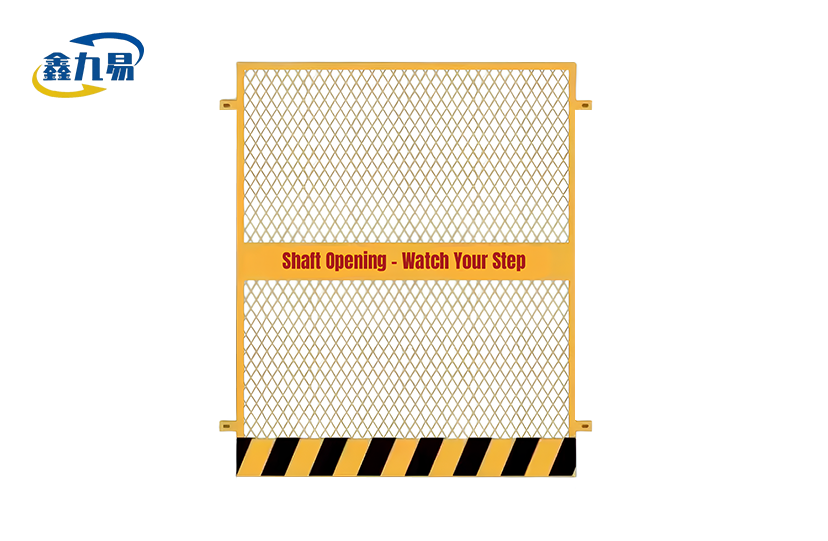
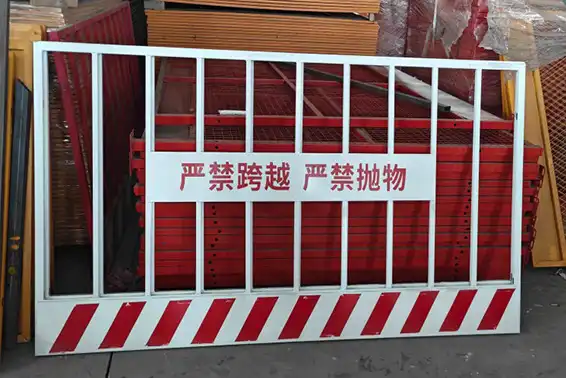
An excavation guardrail system is a special kind of movable frame that is made to keep people from falling and mark the edges of open ditches, foundation pits, and other areas that are being dug up. Unlike regular fencing, these systems meet strict safety standards like OSHA 1926.502 and BS EN 13374. They have built-in toe-boards, mid-rails, and top-rails that are made to handle horizontal loads. Our guardrails at Xinjiuyi are made from welded national standard square rectangular tubes with laser-cut edges that stay flat and free of burrs. Customisable sizes—usually 2000 mm wide and 1200 mm high—allow them to be used on the edges of excavations, in safety passages, processing sheds, lift shaft openings and pipe shaft openings. The spacing between the grilles strikes a good balance between being clear and protecting against falls. High-temperature baking paint finishes make sure that the safety glass is weatherproof and easy to see.
Traditional Safety Barriers and Their Limitations
There are many types of traditional safety barriers, such as wooden barricades, chain-link fences, plastic jersey barriers, trench boxes, and shoring systems. In the past few decades, these methods worked well enough, but their flaws are becoming more and more clear. Outdoors, wooden barricades break down quickly, so they need to be replaced often and are a splinter risk. Chain-link fence isn't strong enough to keep people from falling from high places; it often sags or falls apart when pressure is put on it from the side. Even though trench boxes and supports work well to keep things from collapsing, they don't do anything about the risk of falling from heights around the edges of excavations. Assembling makeshift barriers on-site leads to inconsistency, with different load capacities and gaps in compliance that put contractors at risk of both safety incidents and legal problems. These old systems usually need complicated setup, specialised workers, and regular upkeep, which raises the overall cost of ownership and doesn't provide the standard security that modern projects need.
Regulatory Frameworks Governing Excavation Safety
More and more strict safety rules apply to building markets around the world. For example, OSHA in North America, the Health and Safety Executive in Europe, and similar groups around the world have made standards for excavation security that must be followed. When excavations are deeper than five feet, OSHA 1926.651 requires protective systems like guardrails, fences, or barricades at the edges of the excavations. The top rail must be 42 inches high with little room for error, and mid-rails and toe-boards must be used to stop people from falling and move debris. The ISO 45001 standards for health and safety at work put even more emphasis on finding hazards and lowering risks before they happen. To stay out of trouble with these frameworks and avoid getting complaints, which can lead to big fines and project delays, procurement managers and safety officers must know how to use them. Most of the time, traditional barriers don't meet these technical requirements. On the other hand, engineered guardrail systems are designed to go above and beyond legal requirements, providing recorded compliance that meets inspection requirements and protects the company's image.
Comparative Analysis: Excavation Guardrail Systems vs. Traditional Safety Barriers
Safety Effectiveness and Accident Prevention
When choosing a barrier, safety performance is the most important thing to think about. When compared to standard options, modular excavation guardrail systems have fall protection features that are designed to make accidents much less likely. The built-in toe-board, which must be at least 3.5 inches high, holds loose materials and tools so they don't fall into the hole and hit workers below. The mid-rails close off any holes that people could fall through, and the top-rails provide safe handholds and stop horizontal forces. Bureau of Labour Statistics data shows that falls and cave-ins are still the main reasons people die on the job in construction, and lack of edge protection is blamed for many of these accidents. Traditional obstacles, such as caution tape or light fence, only serve to warn visually and don't offer any physical resistance, so they can't stop people from breaking in by accident. Even though trench boxes protect against collapse, they don't protect the edges around the outside, which creates additional fall hazards. Xinjiuyi's guardrail systems do a good job of stopping people from falling and things from falling. They meet the standard acceptance requirements for safe and civilised construction and create a strong safety barrier around foundation pits and other areas nearby.
Installation Efficiency and Ease of Operation
Install time has a direct effect on project plans and labour costs. Excavation guardrails are made in modules and have built-in locking systems that make them easy to set up quickly, even without special tools or knowledge. Standardised parts make assembly constant, which cuts down on mistakes made by people and gets rid of the differences that come with walls that are built on-site. A standard guardrail piece can be put up in minutes, and the base plates can be adjusted to fit uneven ground without weakening the structure. For traditional shoring and trench box systems to work correctly, they need to be placed with heavy equipment and installed by skilled technicians. These steps can take hours or even days. Cutting, nailing, and supporting are needed to make wooden barriers, and the quality depends on how well each worker does their job. When contractors are in charge of multiple excavations at the same time, these inefficiencies get worse. Modern guardrail systems are plug-and-play, which makes handling easier. This means that teams can quickly set up perimeter protection and move parts around as excavation zones move forward, which maximises utilisation rates across project portfolios.
Durability, Maintenance, and Lifecycle Economics
Long-term cost efficiency goes beyond the original cost of the purchase. The guardrails in Xinjiuyi are made of high-tensile steel of the Q235 or Q345 grade and have walls that are at least 2.0 mm thick. This makes them resistant to impact and increases the structure's life. Fully automatic high-temperature baking paint methods make finishes that are resistant to weathering. These finishes can stand up to acidic soil, high humidity, and UV exposure, keeping their look and safety performance even after long periods of use outside. When properly kept, our systems have service lives of more than 20 years, which is very different from standard barriers that break down quickly. Barricades made of wood rot and break apart after a few months, so they need to be replaced. Chain-link fencing rusts and sags, making it less effective at keeping people safe. Traditional rental fleets have ongoing costs and limited availability. On the other hand, owned guardrail systems pay for themselves over many years of use. The minimal maintenance needs are confirmed by regular inspections of the structure, and powder-coated surfaces only need to be cleaned every so often. Because these things last longer, budgeting is easier, there is less downtime, and the return on investment is higher. This is especially true for contractors who run rental fleets or big project pipelines.
Decision-Making Guide for Selecting the Right Excavation Safety Solution
Evaluating Critical Selection Criteria
When defining excavation security, procurement managers and engineers have to look at a number of factors. Regulatory compliance is very important—systems must meet or go beyond OSHA, EN, and ISO standards that apply to the project. Things that affect durability are the type of material used, how well it resists corrosion, and how well it has worked in similar environments in the past. Transport costs and handling needs are affected by how heavy something is and how portable it is, especially for remote or multi-site operations. Modular compatibility makes sure that parts work together without any problems, which keeps mixed-source assemblies from having compatibility problems. High-chroma safety yellow or orange finishes and other features that make things more visible help plant operators and site staff stay alert 24 hours a day, seven days a week. Customisation options let makers make products that fit the specifics of a project by giving custom sizes, mounting arrangements, and accessory choices. Stable suppliers and support services, such as expert help, fast shipping, and warranty coverage, give customers peace of mind throughout the lifecycles of their equipment. When you weigh these factors against operational priorities and budget limits, you can make smart choices that meet the needs of both current projects and long-term fleet management plans.
Comparing Leading Manufacturers and Supplier Capabilities
The world market has many sellers, each with their own strengths and weaknesses. Well-known names like Stanley and Grainger offer a large selection of products and dependable delivery networks, but their prices show where they stand in the market. Manufacturers that only make safety equipment for mining, like Kahle, Denco, and HazardGuard, offer a lot of technology know-how and new features. Xinjiuyi stands out because it has R&D, production, and sales capabilities that work together. Its manufacturing facilities are in Cangzhou, Hebei, which gives it the ability to make a lot of things and use mature supply chain systems. Our ISO 9001, ISO 45001, and ISO 14001 certifications show that we are good at managing quality, following health and safety rules at work, and caring for the environment. Importantly, our ear-plate-free design gets rid of the safety risks that come with removable mounting plates, which makes the structure much more stable on-site. Buyers should ask for documentation of load tests, weld integrity reports, coating adhesion certifications, and dimensional tolerance specifications when they are looking at different suppliers. Customers who have worked on similar projects can give you information about how well the product works in real life, how reliable the delivery is, and how quickly you can get help after the sale. These are all things that have a big impact on your overall ownership experience and happiness.
Customisation, Rental Models, and Flexible Procurement Options
Adaptable safety options are needed for a wide range of projects. For temporary installations that need to be set up and taken down quickly, lightweight modular systems with small footprints are best. Permanent installations near long-term excavations call for stronger, heavier frames that are better able to keep out the weather. Xinjiuyi lets you fully customise the sizes, styles, and colours, and the laser-cut raw materials make sure that the edges are flat and free of burrs, which makes installation safe. Our excavation guardrail systems can handle big warning signs, which makes the construction site look more professional and meets individual safety needs in situations like foundation pit care, city construction and road building. Rental models give you more control over your capital expenditures, which is helpful for workers whose work loads change or who want to try out new equipment before committing to buying it. When you buy in bulk, you get economies of scale, which means that you pay less and get better payment terms. This helps large-scale businesses. International logistics skills are necessary for clients around the world, who need providers who know how to handle export paperwork, form shipping partnerships, and understand the rules in the target country. Our committed team helps clients with everything from the initial design to quick delivery and on-site advice, making sure that projects are finished quickly, safely, and in line with all local standards.
Future Trends and Innovations in Excavation Safety Barriers
Emerging Technologies and Smart Safety Solutions
The field of mining safety is still changing as new technologies are added. Smart excavation guardrail systems now have sensors built in that check the structure's stability and find any hits or load irregularities that could make the safety less effective. Connectivity to the Internet of Things lets safety managers get real-time alerts when barriers are moved, removed, or broken, so they can fix the problem right away. New materials, like high-strength aluminium alloys and fiber-reinforced composites, make things lighter without lowering their load capacity. This makes them easier to move and handle. Self-leveling base systems automatically adjust to changes in the ground, making sure that the rails stay at the right height and in the right place around the edges of an uneven excavation. These innovations solve long-standing problems in the industry related to keeping an eye on equipment, making sure regulations are followed, and running operations more efficiently. Early adopters will be able to gain competitive benefits by lowering the number of incidents and improving the recording of projects.
Anticipated Regulatory Evolution and Compliance Impacts
Because of the high number of accidents, regulatory bodies around the world are continuing to make it harder to work in excavations. Recent OSHA programs have put a lot of focus on trenching and mining violations, and the number of citations and penalties have gone up a lot. Directives from the European Union under the Construction Products Regulation require CE marking and proof of the Declaration of Performance. This makes it harder for both equipment providers and end users to meet the rules. As infrastructure investments speed up in emerging markets in Southeast Asia, Africa, and South America, they are quickly adopting international standards. This creates opportunities for companies that sell equipment that meets these standards and makes non-conforming alternatives obsolete. Strategies for buying things need to be able to adapt to these changes, giving more weight to suppliers who have a history of meeting standards and whose products are designed to go beyond what is currently required. Some of Xinjiuyi's quality control steps are load testing, weld integrity verification, coating adhesion evaluation, dimensional tolerance confirmation, and salt spray corrosion testing. These steps make sure that products meet or go beyond changing global standards, which protects clients' investments against regulatory obsolescence.
Sustainability Considerations in Modern Excavation Protection
Environmental responsibility is becoming more and more important in all building fields when it comes to buying things. Sustainable excavation barriers put recyclable materials first, cut down on production waste, and improve lifecycle management to lower the amount of trash that ends up in landfills. Steel-based guardrail systems have built-in benefits, and old metal can be easily recycled into new goods when it's no longer useful. When compared to liquid paint systems, powder coating and hot-dip galvanisation produce fewer volatile organic compound emissions. This is in line with air quality laws and companies' commitments to being environmentally friendly. Longer service lives—Xinjiuyi's systems last more than 20 years—dramatically lower the number of replacements needed and the resources needed for each one. Green building rating systems like LEED and BREEAM now take into account site safety tools. Long-lasting, reusable barriers help earn points toward approval. These aspects of sustainability are especially important to government procurement departments, international contractors, and organisations with environmental, social, and governance goals. They create chances for sellers and buyers who are thinking ahead to stand out.
Conclusion
When you look at excavation guardrail systems and standard safety barriers side by side, it's clear that modern modular solutions are better in terms of safety, ease of installation, compliance with regulations, and cost over time. In the past, traditional barriers were useful, but now, standards and practical needs are changing, and engineered guardrail systems are better because they offer uniform safety, can be set up quickly, and last for a long time. Safety officers, project engineers, and procurement managers who are in charge of protecting excavations should give top priority to suppliers who offer certified products, the ability to customise them, and full support services. Investing in good guardrail systems pays off with fewer accidents, fewer fines from the government, and more efficient projects. These results have a direct effect on the organization's reputation and bottom line.
FAQ
1. What are the main advantages of excavation guardrail systems over traditional barriers?
Modular excavation guardrail systems offer better fall safety with designed parts that meet OSHA and ISO standards. Traditional barriers, on the other hand, don't always have enough structure resistance. Guardrails can be put up quickly and easily without the need for special tools. This saves time and money on labour compared to alternatives like complex shoring or site-fabricated options. Durability benefits are big—steel construction with finishes that prevent rust means that the barriers will last for decades, instead of having to be replaced every few years like wooden or plastic barriers do. Certified systems come with compliance paperwork, which makes inspections easier and protects against regulatory fines. Modular designs let you use the same parts for more than one project, which increases the use of assets and returns on investment.
2. How complex is excavation guardrail system installation compared to trench boxes?
Putting up guardrails turns out to be a lot easier than putting up trench boxes. Integrated pins or couplers let modular sections connect to each other, so you don't need to do any engineering math or use any heavy tools. Installations can be done in minutes per section by crews that haven't had any special training, but trench boxes need to be placed precisely by trained techs using excavators or cranes. Adjustable base plates can handle different types of soil without requiring a lot of site preparation. This makes operations easier, which frees up time and lowers labour costs while also lowering the chance of mistakes that could put safety at risk. While trench boxes protect against failure, they don't protect the edges around the outside, so extra guardrails are needed to stop people from falling. Guardrails meet both of these needs completely on their own.
3. Can excavation guardrails be customized for specific project needs?
One of the best things about current fence systems is that they can be fully customised. Manufacturers like Xinjiuyi can make products that meet specific size needs, colour preferences, and mounting arrangements for different types of excavations or company branding guidelines. Accessories like warning signs, gates for equipment access, and middle posts for longer spans make sure that systems can be used in a variety of situations. Customisation includes choosing the right materials for places that are toxic or have extreme weather. Rental models give you options for short-term or unique projects without having to commit to a large amount of money. This flexibility is very different from traditional barriers that only work in certain situations. It allows for the best security that fits the needs of operations and legal requirements in all global building markets.
Partner with Xinjiuyi for Superior Excavation Protection
Xinjiuyi is ready to raise the safety standards of your excavations with approved, long-lasting excavation guardrail systems made for B2B clients around the world. Our modular solutions keep people from falling or getting into the wrong area by offering effective area isolation, danger signs and traffic flow advice around the edges of excavations, lift shafts and processing sheds. As a reliable company that makes excavation guardrail systems, we offer products that go above and beyond OSHA and international standards thanks to our ISO-certified quality management and wide range of customisation options. Our technical team is available to help you from the beginning of the planning process all the way through delivery and on-site advice. They can provide standard parts that can be used right away or custom configurations that solve specific project problems. Email us at global@xjy8.com to talk about your excavation security needs and find out how our 20-year service life systems can give your building portfolio unbeatable long-term value.
References
1. Bureau of Labor Statistics. (2022). Census of Fatal Occupational Injuries: Construction Industry Analysis. U.S. Department of Labor.
2. Occupational Safety and Health Administration. (2021). Trenching and Excavation Safety Standards 1926.651. U.S. Department of Labor.
3. British Standards Institution. (2019). BS EN 13374: Temporary Edge Protection Systems – Product Specification and Test Methods. BSI Group.
4. International Organization for Standardization. (2018). ISO 45001: Occupational Health and Safety Management Systems – Requirements with Guidance for Use. ISO Standards Catalogue.
5. Construction Industry Institute. (2020). Best Practices for Fall Protection Systems in Heavy Civil Construction. CII Research Publications.
6. European Commission. (2021). Construction Products Regulation: Guidance on CE Marking and Declaration of Performance Requirements. EU Official Publications Office.