Rebar Processing Shed: Complete Buyer's Guide for Contractors
When picking the right steel bar processing area protection for your building project, you need to think carefully about safety standards, the structure's durability, and how well it works. A rebar processing shed is a special kind of building designed to keep cutting, bending and shaping processes in one place while protecting workers and equipment from falling objects, bad weather and dangers at work. This book tells procurement managers, project directors, and safety officers what they need to think about when they are figuring out the complicated world of steel reinforcement manufacturing infrastructure. You'll learn everything you need to know to make sure your buying decisions are in line with the size, timeline, and safety requirements of your project, from understanding core functions to evaluating supplier capabilities.
Understanding Rebar Processing Sheds: Features, Functions, and Benefits
What Makes These Structures Essential for Modern Construction
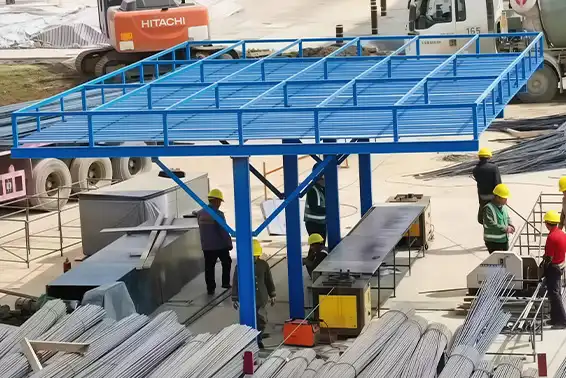
On busy building sites, areas where steel bars are made are always at risk from falling materials, bad weather, and disorganised work flows. With these special protective cages, places where things are being worked on can be turned from a mess into controlled spaces where cutting and bending can be done safely. The main job is to separate dangerous mechanical tasks from other people who are visiting the site. This greatly lowers the risk of accidents and damage to equipment.
Rust caused by weather is a hidden danger that makes the bond between concrete and reinforcing steel weaker. During important pre-installation stages, these protective structures keep raw materials and finished parts from coming into contact with water. In addition to protecting against the weather, they set up clearly defined safety zones that meet the health and safety rules for normal building practices. This will help your project pass safety checks without having to be pushed back, which could cost a lot of money.
Core Structural Components That Deliver Reliability
Heavy-duty portal frames made from Q235B or Q345B grade structural steel are common in modern steel bar processing enclosures. The structure is made up of 18# I-beam columns and thickened, galvanised rectangular tubes. This gives it the strength to support gantry cranes and automated bending machines. Supporting the structure are main beams that are 50 mm x 50 mm and 2 mm thick. Side beams and purlins keep the structure strong over spans of 6 to 18 meters.
Professional-grade installs are set apart from less-than-stellar ones by surface treatments. Hot-dip galvanising adds a zinc covering that protects against rust in damp places, and electrostatic powder coating gives it an extra layer of defence. This two-step process stretches the service life by up to 20 years, even in harsh seaside areas where salt spray speeds up the breakdown of metals, making it a reliable finish for equipment such as a rebar processing shed. Standardised red-white or yellow-black warning colour schemes make sure that warnings are easy to see and meet safety marking standards.
Productivity Gains Through Centralized Operations
By putting all the manufacturing tasks under one secure canopy, the flow of materials is sped up and processing time is cut down. To get to the cutting machines, bending machines, and welding stations, workers don't have to go through dangerously dispersed work zones. This efficient use of space cuts down on useless movement and lets managers keep an eye on quality control from one central location.
When processing takes place within clear limits, organised scrap control is possible. The enclosed space makes it easier to collect scrap metal and pieces that were not used, which recovers recyclable steel that would have been spread out on the site otherwise. Cutting down on material waste has a direct effect on your project's bottom line and supports environmental sustainability goals, which are becoming more and more important in competitive bidding situations.
How to Choose the Right Rebar Processing Shed for Your Project
How to pick the best rebar processing shed for your project:
Matching Dimensions to Your Processing Volume
The first step in the decision process is to accurately estimate how much steel you need every day and how much space your working equipment will take up. Projects that need 5 to 10 tonnes of rebar every day usually need small buildings that are 6 m x 4 m and have a 3.7 m ceiling height. For infrastructure projects that handle 50 tonnes or more, wide layouts with 18-meter spans and built-in overhead crane systems are needed.
Think about the next stages of the project when you set the dimensions. Adding frame sections to modular bolt-connected designs lets you expand, so you can change your facility as processing needs rise. This ability to grow is especially helpful for long-term infrastructure projects where the amount of steel needed increases as the building moves from base work to the superstructure stages.
Evaluating Automation Integration Capabilities
Handheld tools used for manual processing don't need much electrical infrastructure beyond power outlets and lights. In these situations, the shed's main job is to protect against the weather and keep trash out. Automated stirrup benders and CNC cutting centers need strong electrical systems with dedicated circuit protection and good grounding to keep equipment from breaking down during power outages.
Better ventilation systems get rid of welding fumes and metal dust from high-speed cutting operations in automated environments. When comparing different suppliers' products, make sure that the standard configuration includes ventilation or that you'll need to make custom changes. These factors have a big effect on the total cost of installation and the time it takes to get up and running.
Assessing Structural Certifications and Load Ratings
Manufacturers with a good reputation will show proof that they follow ISO 9001 quality management standards and give you the results of structure load testing. Ratings for wind resistance usually talk about typhoon survival at grade 10 to 12, which is very important for construction sites near the coast. A snow load limit of more than 0.5 kN/m² allows year-round use in places where it rains in the winter.
When lifting things from above is needed in a rebar processing shed, the column specs must clearly state the crane load capacity with properly engineered rail beam mounting points and corbels. Most standard shed designs can't handle the concentrated loads that 3 to 10 tonne crane systems put on them without extra support. By making these requirements clear during the initial talks with the seller, you can avoid having to make expensive changes to the structure after delivery.
Calculating Total Cost of Ownership
The amount you paid for something at first is only one part of your financial research. When sending abroad, the cost of transporting big structural parts can be more than 15% of the total cost of the equipment. Installation labour, whether it's done by your crew or the supplier's expert team, is an extra cost that depends on how easy it is to get to the spot and how ready the foundation is.
Over the structure's 20-year life, it will need maintenance like checking the bolt connections on a regular basis, painting over high-wear areas, and maybe even replacing damaged roof panels. Suppliers who provide specific repair plans show that they care about the long-term performance of their products. This information helps your team make a budget for preventative care that keeps them from having to make last-minute fixes during important project phases.
Installation, Operation, and Maintenance Best Practices
Preparing Your Site for Efficient Assembly
How well the foundation is prepared affects how easily the work goes or if there are frustrating delays. At column locations, the shed needs level concrete pads or compacted gravel bases that are accurate to within ±20 mm. Survey stakes that mark the exact locations of columns make it possible for installation crews to work quickly without having to keep measuring again and again.
Make sure that there is enough space on your site for delivery cars and, if necessary, a crane to lift the assembled frame parts. On urban building sites where access is limited, parts may need to be put together by hand, which can add 3 to 7 days to the installation process based on how complicated the structure is. Telling your seller about the limitations of the spot during the procurement process helps you make realistic plans for schedule and resources.
Implementing Safety Protocols for Daily Operations
In steel processing zones, accidents can be avoided by making sure operators are properly trained. Workers need to know how to use lockout-tagout for upkeep tasks, the right safety gear for cutting and welding, and how to shut down the business in an emergency. As the project goes on and the crew changes, regular safety briefings help everyone stay safe.
Set up clear traffic patterns that separate places for delivering materials from storing finished goods within the rebar processing shed. Using durable paint or tape to mark the floor helps forklift workers find their way and keeps people and vehicles from colliding in the enclosed area. Metal-rated fire extinguishers should be put up in more than one place, checked every month, and changed before their expiration dates.
Conducting Preventive Maintenance Inspections
Checking that Grade 8.8 or 10.9 fasteners keep the right tension should be part of every three months' worth of walkthroughs that use calibrated torque wrenches to record how tight the bolt connections are. When wind blows or a crane is used, loose connections weaken the structure and make it more likely to collapse. It is much cheaper to re-tighten before something breaks than to fix parts that have already fallen apart.
Digital gauges are used to check the thickness of galvanised coatings and find places where rust is speeding up because of chemical contact or mechanical damage. Rust can't spread into the base metal if touch-up paint is applied quickly to damaged areas. This proactive approach keeps the structure's resale value high when it's moved from one project site to another.
Testing the electrical grounding system makes sure that lightning safety stays strong even when the weather changes with the seasons. To safely get rid of electrical charges during storms, ground resistance should be less than 4 ohms. Testing by experienced electricians once a year gives you proof that meets insurance standards and keeps your employees safe from electrocution risks.
Innovations and Future Trends in Rebar Processing Sheds
Smart Technology Integration Reshaping Operations
Sensor networks built into modern processing areas keep an eye on things like temperature, humidity, and air quality in the surrounding area. These systems let managers know when conditions stray from the ideal ranges, which stops rust from forming overnight because of wetness. Data logging lets you keep records that show how to properly handle materials for quality assurance checks.
By looking at patterns of vibration and power use in cutting and bending machines, AI-driven equipment tracking can tell when repair needs to be done. Predictive alerts let you schedule repairs for planned downtime so that they don't happen during busy production times. This technology lowers the overall cost of repair while also making tools more available, which has a direct effect on sticking to the project schedule.
Sustainable Design Meeting Corporate Responsibility Goals
Compared to traditional high-intensity discharge lights, energy-efficient LED lighting systems use 60% less electricity and make it easier to see for precise work. Installing solar panels on the roofs of sheds reduces the need for power from the grid. This is especially helpful in remote areas where utility lines aren't stable. These green technologies are in line with corporate sustainability efforts that are becoming more and more important in the prequalification process for contractors.
Evolving Business Models for Flexible Procurement
Recycling structure parts that can be taken apart and used in more than one project cut down on the amount of building waste that ends up in landfills. Manufacturers with return or swap programs for equipment support the ideas of the circular economy and give freelancers clear ways to handle their assets. When comparing single-project disposal to multi-project redeployment scenarios, this method lowers the total cost of ownership.
Leasing gives you access to top-notch processing equipment without having to pay a lot of money up front, which can make project financing harder. Short-term rental choices are good for workers who are moving into new areas where buying permanent facilities is too risky. Lease-to-own agreements let you test how well equipment works before you commit to buying it outright. This lowers the risk of buying from suppliers you haven't worked with before.
When project plans grow or more contracts are won, modular extension kits let you add more capacity in small steps. This gives you the freedom to avoid over-investing in facilities that are too big during the early stages of a project and to avoid bottlenecks when processing needs suddenly rise, such as when a rebar processing shed reaches its limit. Suppliers who offer standard extension parts show that they understand the goals of contractor cash flow management.
Buying Guide: How and Where to Purchase Your Rebar Processing Shed
How and where to buy your rebar processing shed: a buying guide
Identifying Qualified Suppliers and Manufacturers
Having certifications like ISO 9001, ISO 45001, and ISO 14001 shows that you care about quality management, worker health, and being environmentally responsible. These credentials show that the company has mature production systems that can keep the quality of their products consistent across large orders. When looking at new suppliers, ask for site audit records or third-party inspection certifications.
When project deadlines call for quick delivery, manufacturing ability becomes very important. Orders can be filled within 7 to 10 days by suppliers who keep standard parts in stock. However, lead times may go up to 4 to 6 weeks for unique designs that need specialised engineering. By knowing these dates, you can schedule the arrival of the shed to coincide with the completion of the site's preparations, which saves installation workers the cost of wasted time.
Navigating Procurement Terms and Warranty Coverage
For 12 to 24 months after delivery, most standard warranties cover flaws in the structure or the covering. For high-end buildings, you might be able to negotiate for longer warranties that cover early rust-through or weld failures. Make sure you know if the coverage includes on-site repair work or just new parts that need to be installed by your team.
Understanding Total Cost Components
For small orders, you can pay in full up front, or you can set up payment plans based on when the fabrication is finished, the product is delivered, and the installation goes well. Suppliers who offer flexible terms show that they are financially stable and believe in the quality of their products. When doing business across borders, letter of credit agreements through well-known banks protect both parties.
Clear price lists should include the cost of the base structure, any custom changes, any upgrades to the surface treatment, and the cost of shipping. Installation services may be quoted separately or as a package, based on what the provider can do and where the spot is. When specs don't go into enough detail about things like foundation needs, electricity connections, or help with handling permits, hidden costs show up.
Streamlining the Order and Delivery Process
For shipping structure parts that are too big for standard containers, you need special carriers that can handle items that are too big for standard containers. When you send goods internationally, you may have to pay extra for customs clearance, port handling, and storage fees if you can't get to the receiving facilities right away. Established trucking networks make it easier to plan deliveries and reduce the number of damaged packages. These networks are especially helpful for exports within regions.
During the first meetings, site plans should be shown to show the available space, entry routes, and any nearby obstacles that might affect the installation method. Giving these details up front lets you get accurate quotes and avoids confusion about whether something is possible. The technical teams can help you find the best configurations for your space and operational needs.
Pre-delivery planning makes sure the foundation is ready, that equipment can get to where it needs to go, and that the installation teams' schedules work with your project's timeline. Suppliers who offer full installation guides and on-site expert help make it easier for your staff to learn. Video recordings of the steps needed to put together structures are useful for moving them or teaching new crew members how to do their jobs on future projects.
Conclusion
Investing in infrastructure for handling steel bars is a smart move that will have a direct effect on site safety, operating efficiency, and regulatory compliance. When choosing the right protection structure, such as a rebar processing shed, you have to weigh the needs of the project at hand against the structure's long-term flexibility and sturdiness. Frameworks that are strong and made from high-quality materials that don't rust will last for decades and be used on many projects. Partnering with manufacturers who show they have engineering knowledge, clear pricing, and quick technical support will make sure that your procurement decision helps the project succeed instead of hurting it. The information in this guide gives you the confidence to look at your choices and set up working zones that keep your workers safe while improving the flow of steel fabrication work.
FAQ
1. How does automation enhance safety in these processing environments?
Automated cutting and bending systems cut down on the amount of heavy steel sections that have to be handled by hand, which means that injuries from repetitive lifting are less likely to happen. Precision controls get rid of measurement mistakes that waste materials and require extra work, which limits the time workers spend in potentially dangerous areas. Technicians can keep an eye on processes from safe places, away from moving parts and flying objects, thanks to remote operation.
2. Can these structures be relocated between different project sites?
Bolt-connected modular designs allow for 3 to 5 relocation cycles of taking apart and putting back together without damaging the structure. Handling things the right way during takedown and transport keeps galvanised coatings in good shape and keeps frames from warping. Certified installation experts make sure that the proper reassembly keeps the original safety and load ratings.
3. What factors most significantly influence final pricing?
The base cost is based on the structure's size and how much weight it needs to hold. Extra costs are added for certain surface treatment options, especially heavy-duty rust protection for seaside areas. Adding automation, which needs stronger electrical systems and better ventilation, makes things more complicated. Customisation for overhead crane support with specialised column strengthening is the most expensive thing that can be changed from the stock options.
Partner With Xinjiuyi for Proven Steel Processing Protection
Hebei Xinjiuyi Construction Technology Co., Ltd. is ready to help you come up with the perfect way to process steel bars for your project. Our factory in Cangzhou makes enterprise-level safety buildings that are certified by ISO 9001, ISO 45001, and ISO 14001, which means that our quality management systems meet international standards. As a company that only makes rebar processing sheds, we offer full customisation from the initial design to the final installation. Our expert teams are also available to help you on-site and offer advice on long-term care.
Our special ear-plate-free fence integration gets rid of common weak spots, and our 20-year service life promise shows that we're sure the structure will last. Whether you need protection for a high-rise building in the city or for infrastructure construction in the middle of nowhere, our engineering skills can turn your needs into installations that are reliable and meet building codes. Get in touch with global@xjy8.com right away to talk about your processing volume, site limitations, and deadline goals. Get clear pricing information, detailed renderings, and delivery schedules that work with your project's goals. This is backed by decades of innovation in building safety.
References
1. American Concrete Institute. (2019). Guide to Fabricating and Placing Concrete Reinforcing Bars. ACI Committee Report 315-19.
2. Occupational Safety and Health Administration. (2021). Construction Industry Safety Standards for Reinforcing Steel and Post-Tensioning Operations. OSHA Publication 3146.
3. International Organization for Standardization. (2018). Quality Management Systems for Construction and Building Materials. ISO 9001:2015 Application Guidelines.
4. National Association of Reinforcing Steel Contractors. (2020). Best Practices Manual for Rebar Fabrication Facilities. NARSC Technical Series Volume 12.
5. Steel Construction Institute. (2017). Design Guide for Weather-Resistant Construction Site Temporary Structures. SCI Publication P420.
6. Construction Industry Institute. (2022). Modular Construction and Prefabrication: Impact on Site Safety Performance. CII Research Report 352-11.