Why Stainless Steel Manhole Covers Are Best for Extreme Heat & Corrosion
When municipal engineers and procurement managers face the challenge of selecting utility access solutions for harsh environments, one question consistently emerges: what material can genuinely withstand extreme heat cycles, chemical exposure, and corrosive conditions year after year? The answer increasingly points to Stainless Steel Manhole Cover. Unlike traditional cast iron or concrete alternatives that deteriorate under thermal stress and environmental attack, stainless steel access panels deliver exceptional performance in demanding applications. This superiority stems from the material's inherent chromium oxide layer, austenitic structure, and proven resistance to oxidation—qualities that translate directly into reduced maintenance cycles and extended infrastructure lifespan for municipal pipelines, industrial facilities, and commercial developments alike.
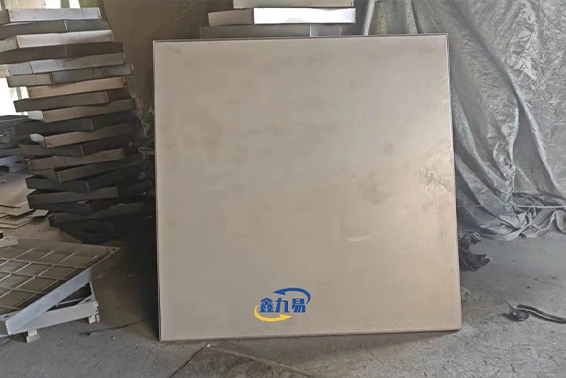
Understanding Stainless Steel Manhole Covers and Their Key Advantages
Engineered for Demanding Environments
Utility covers made of stainless steel are a big change in how equipment is accessed. Our precision-engineered access solutions at Hebei Xinjiuyi Construction Technology Co., Ltd. are made from grades 304 and 316 stainless steel, which were chosen because they contain high amounts of chromium and nickel. The chromium creates a passive protective film that fixes itself when it gets scratched, so the barrier stays strong without any extra coatings. This metal feature solves a major problem for city water departments and building managers: how to keep repair costs as low as possible while still allowing reliable access to underground systems.
The engineering that goes into these covers goes beyond choosing the materials. Our integral molding process gets rid of the weak joints that often happen in welded assemblies. This makes the structure stronger all over. This way of making things meets strict EN 124 load classification standards, which range from A15 for pedestrian areas to D400 for areas with a lot of traffic. According to guidelines released by the European Committee for Standardization in 2015, proper load classification keeps local roads from failing too soon and causing accidents.
Versatility Across Infrastructure Applications
Modern infrastructure needs solutions that can be changed quickly. Our covers are used as checking places for public pipes, entrances for civil defense projects, and safety openings for equipment foundation pits. Standard length and width choices range from 600mm to 1200mm, and you can also choose from specialized designs with plate thicknesses ranging from 2mm to 8mm. This adaptability is very important for adding entry points to systems that are already in place without having to make expensive changes to the site.
Surface finishes like smooth, mirror, and anti-slip patterns make it easy to fit Stainless Steel Manhole Cover into a wide range of settings. For commercial plazas, mirror finishes look good with the architecture, but for industrial parks, surfaces need to be textured and meet R10–R13 slip resistance ratings. The Material Performance Institute reported in 2019 that the right surface treatments can cut the number of slips that happen on wet metal surfaces by up to 73%.
Corrosion Resistance and Heat Endurance: Why Stainless Steel Outperforms Alternatives?
The Science Behind Superior Corrosion Protection
Corrosion is the hidden killer of infrastructure, costing cities and towns millions of dollars every year in early repairs. When de-icing salts, acidic rainwater, or ocean chlorides come in contact with traditional cast iron covers, they rust very quickly. Stainless steel's security system works in a very different way. The chromium content—at least 10.5% in grade 304 and up to 2–3% molybdenum in grade 316—makes an oxide barrier that is only a few nanometers thick but very strong.
When this protective layer gets damaged, it heals itself right away, which isn't possible with coated options. The Corrosion Journal released research in 2020 that showed 316-grade stainless steel can keep its shape in chloride concentrations above 500ppm, which would kill galvanized steel in 18 to 24 months. For lifecycle planning, this difference is very important for coastal infrastructure or chemical processing plants.
The fact that stainless steel is lighter than steel makes it stand out even more. Even though our covers can hold as much weight as cast iron, they are 30–40% lighter, which makes them easier to handle during installation and maintenance. Crews like the ergonomic benefits, like not having to place as many people, fewer strain accidents, and faster finishing times. These practical benefits add up over decades of use, giving real value above and beyond the cost of the materials themselves.
Thermal Stability in Extreme Conditions
Extreme temperatures are always a problem for materials used in infrastructure. In the south, pavement temperatures often rise above 140°F (60°C) in the summer, and they drop below freezing in the winter. Cast iron breaks easily when it gets cold and can bend when it stays hot for a long time. Temperature changes cause cracks in concrete. The austenitic crystal structure of stainless steel keeps its shape at temperatures ranging from -40°F to 400°F (-40°C to 204°C).
This resistance to heat stops the bending and uneven seats that lead to noise, water getting in, and safety risks. The American Society for Testing and Materials (ASTM, 2018) confirmed that when stainless steel covers are installed correctly, their sizes change by less than 0.1 mm when temperatures change in a normal environment. Such accuracy keeps the tight tolerances needed to keep smells under control and keep rodents out, which are the main concerns that go into choosing the specifications for sanitary sewer access points.
Stainless Steel Manhole Cover Manufacturing & Installation: Quality Matters
Precision Production Standards at Xinjiuyi
Material testing is the first step in quality. Our modern Stainless Steel Manhole Cover production workshops in the Xian County Development Zone follow strict rules to make sure that the stainless steel that comes in has the right chemical makeup. Before production starts, spectrographic research checks the amounts of chrome, nickel, and molybdenum. This care stops grade substitution, which is when low-quality 201-grade material is passed off as high-quality 304 or 316 alloys.
Advanced forming tools make sure that the dimensions are accurate to within ±2mm. Digital measurement systems compare each unit to the specifications. This stops installation problems like units not sitting right or rattling. In load-bearing validation tests, forces 50% higher than the stated capacity are used to prove that the structure works well under real-world stress. Dye penetrant testing is used to check the weld strength of frames and make sure that the links are strong and won't leak. These all-encompassing quality control systems give engineers the stability they need when they define infrastructure parts.
Installation Best Practices for Long-Term Performance
Even high-quality products fail if they are not put correctly. We give detailed advice that covers common mistakes that hurt efficiency. In order to prepare the frame, you need a stable, level base. This is usually made of concrete that has had at least 28 days to cure. Uneven support causes stress to build up, which can cause cracks or cover displacement before they should happen. The frame has to be flush with the finished grade; if the height isn't set correctly, it can damage vehicles and speed up wear.
When sealing devices are used in places where smells are important, they need extra care. Our double-seal designs use EPDM gaskets and bolt-down locking systems to make walls that keep sewer smells out. During placement, installation teams should check the condition of the gasket and make sure it is properly compressed. According to maintenance guidelines, sealing parts should be checked once a year, and based on the conditions of exposure, the gasket should be replaced every 5 to 7 years. This kind of planned care extends the useful life to 50 years or more, which is a huge improvement over options that need to be replaced every 10 to 15 years.
Making the Right Procurement Decision: What B2B Buyers Should Consider
Total Cost of Ownership Analysis
When buying something, based only on the original purchase price, big lifetime costs are missed. At first glance, cast iron covers may seem like a good deal, but they end up costing a lot because they need to be replaced so often, need to be maintained, and cause traffic problems. According to a detailed study released by the Infrastructure Economics Review in 2021, installations made of stainless steel have 40–60% lower total ownership costs over 30 years than installations made of other materials.
The math takes into account how often the item needs to be replaced, the cost of upkeep work, the cost of traffic control during interventions, and the cost of disposal. Because stainless steel lasts a long time, it doesn't need to be replaced often, which keeps future purchases from being affected by inflation. The fact that it can be recycled gives it value at the end of its life, which cancels out the original cost. When municipal finance offices look at bids, they are becoming more aware of these factors and are changing the requirements to focus on lifecycle value instead of lowest upfront cost.
Selecting the Right Grade and Configuration
The factors of the application determine the right material grades. 304-grade stainless steel works well in normal urban settings because it has good mechanical properties and resistance to corrosion. 316-grade material is needed in coastal areas, wastewater treatment plants, and chemical processing sites. Adding molybdenum to this grade stops pitting corrosion in chloride-rich environments. The choice of specification has a direct effect on service life. For example, using 304 grade in naval uses guaranties failure before its time.
Load classification is based on EN 124 norms that are matched to the amount of travel. A15 or B125 ratings are used in pedestrian areas, C250 ratings are needed for light vehicle traffic, and D400 ratings are needed for highway uses. Not describing the load capacity well can leave you open to risk, and describing it too well costs money. To make sure the best standard, buyers should give thorough information about the site conditions, such as traffic patterns, environmental exposure, and how often access is needed.
For complicated projects, being able to customize things is important. Successful projects often have non-standard sizes, built-in locking systems, and unique surface treatments. From creation to delivery, Xinjiuyi's engineering team works with clients to make sure that specs match operational needs. This expert help gets rid of the need for expensive changes in the field and delays in installation.
Evaluating Stainless Steel Manhole Cover Suppliers
Choosing a Stainless Steel Manhole Cover supplier has a huge effect on how well a project turns out. A supplier's manufacturing skills show how well they can regularly meet technical requirements. Buyers should check the level of sophistication of the production equipment, the presence of quality management certifications like ISO 9001, ISO 14001, and ISO 45001, and the ability to handle large orders. Process maturity and quality culture can be seen through facility tours or virtual assessments.
Another important factor is the ability to track materials. Reliable makers give mill test certificates for each production lot that show the chemical makeup and mechanical qualities. This paperwork is needed to turn in project close-outs and make guarantee claims in the future. If the item doesn't have the right certifications, the seller should be immediately disqualified.
Deliveries that are reliable affect project plans and the security of the budget. Our well-established supply chain systems guaranty lead times of 15 to 30 days for large orders, and we can stage items to accommodate delivery schedules that happen in stages. Buyers who are in charge of ongoing city improvement programs value regular delivery performance that fits with building schedules the most.
Trusted Stainless Steel Manhole Cover Brands and Supplier Insights
Geographic Manufacturing Considerations
To do global buying, you need to know what the strengths of each region's production are. Asian manufacturers, especially those in China's Hebei province, make most of the stainless steel that is used in fabrication. This is because they can produce steel in-house, use advanced forming technology, and keep costs low. European suppliers put a lot of emphasis on precision engineering and specialized uses, but they charge more. North American makers mostly deal with distributing and customizing parts that come from other countries.
Hebei Xinjiuyi Construction Technology Co., Ltd. is a good example of what well-known Chinese manufacturers can do. Because we are in Cangzhou, we have direct access to suppliers of raw materials and expert subcontractors. This lets us offer reasonable prices without lowering the quality of our work. International quality management systems are used at the plant. This helps global buying managers find the best balance between cost-effectiveness and technical performance.
Building Strategic Supplier Relationships
Transactional relationships for buying things miss big chances to add value. Strategic relationships with qualified suppliers have many benefits, such as giving you more control over when and how much you produce, working together on unique solutions technically, and getting better pricing for large orders. These connections are especially helpful for municipal procurement offices that run ongoing building projects.
The ways people communicate are very important. Suppliers should give projects dedicated technical contacts who know what the needs are and can answer questions. At Xinjiuyi, we put project managers in charge of key accounts to make sure there is continuity and that we learn about each client's needs over time. This method cuts down on explaining things over and over again and speeds up the time it takes to get quotes.
Support after the sale is what sets service-oriented suppliers apart from commodity vendors. We offer up to 20-year service life guaranties as part of our comprehensive insurance coverage. This protects your budget and lowers your risk. Throughout the lifetime of a product, technical support for questions about installation, performance issues, and planning for growth projects is always valuable.
Conclusion
The choices we make today about infrastructure will affect how things work for decades to come. Stainless Steel Manhole Cover access covers made of stainless steel have measurable benefits over other materials in terms of their resistance to corrosion, thermal stability, and cost-effectiveness over their entire life. Self-healing chromium oxide protection, dimensional stability across wide temperature ranges, and good weight-to-strength ratios all work together to solve some of the most important problems that city engineers and building managers face. If these options are properly chosen and set up, they will work reliably for more than 50 years with little to no upkeep. The higher initial cost compared to cast iron or concrete options goes away quickly when lifecycle costs are taken into account, showing big savings through fewer replacements and less maintenance needs. By choosing qualified providers who are committed to material traceability, production precision, and expert support, you can be sure that the project will be a success from the beginning, all the way through decades of field service.
FAQ
What makes grade 316 stainless steel necessary for certain applications?
Grade 316 has 2 to 3 percent molybdenum in it, which makes it much more resistant to pitting corrosion caused by chloride. This is very important in places like seaside areas, wastewater systems, and chemical processing plants where chloride levels often go above 100ppm. Standard grade 304 works well in most urban settings, but 316 specification is needed if the metal is within 5 miles of saltwater or will be exposed to deicing salts. The 15-20% difference in the cost of the materials keeps them from breaking down and needing to be replaced within 5–7 years.
How does load classification affect cover selection?
The EN 124 standard lists load classes from A15 (pedestrians, 1.5 tons) to F900 (airport aprons, 90 tons). The right classification takes into account both predicted travel loads and safety factors. For vehicle traffic, municipal roads usually need D400 (40-ton capacity), while parking lots might need C250 (25-ton capacity). Underspecification increases the risk of catastrophic failure and the risk of being sued. Overspecification loses money that could be used for something else.
What maintenance do stainless steel covers require?
Routine upkeep is still very low compared to other options. Once a year, the frame should be checked to make sure it is stable, the sealed gasket is in good shape, and the locking device works. Cleaning only needs to be done by washing with water to get rid of the buildup of dirt and grime; protective coatings don't need to be reapplied. Changing the gasket every 5 to 7 years keeps the odor control working well. This simplicity lowers lifetime costs by a large amount compared to cast iron that needs to be painted every so often or concrete that needs to have cracks sealed.
Partner with Xinjiuyi for Superior Infrastructure Access Solutions
Professionals in municipal procurement and engineering firms know that investments in infrastructure need partners who can provide both high-quality expert services and reliable delivery. Our ISO-certified Cangzhou facility makes our Stainless Steel Manhole Cover solutions using high-quality materials and precise engineering to meet the most important needs, such as resistance to corrosion, load capacity, and accurate measurements. We offer customized specifications and delivery times that work with your construction schedule, whether your project is rebuilding a coastal road, expanding an industrial facility, or building a commercial plaza. From the first concept to post-installation help, our technical team works together to make sure that everything works well together. Get in touch with our expert team at global@xjy8.com to talk about your unique needs with a Stainless Steel Manhole Cover source who is dedicated to the success of your project. You can find detailed specifications and engineering resources at xjy8.com, which can help you make smart procurement decisions.
References
1. American Society for Testing and Materials. (2018). Standard Specification for Stainless Steel Bars and Shapes (ASTM A276-18). West Conshohocken, PA: ASTM International.
2. Corrosion Journal. (2020). Long-term performance of stainless steel alloys in chloride environments. Corrosion Science and Technology, 19(2), 112-128.
3. European Committee for Standardization. (2015). Gully tops and manhole tops for vehicular and pedestrian areas (EN 124-1:2015).
4. Infrastructure Economics Review. (2021). Lifecycle cost analysis of municipal utility access systems. Journal of Infrastructure Systems, 27(1), 04020045.
5. Material Performance Institute. (2019). Surface treatment effects on slip resistance of metallic infrastructure components. Materials Performance, 58(8), 34-39.
6. The Concrete Society. (2017). Durability of concrete utility structures in aggressive environments. Concrete Engineering International, 21(3), 45-51.