Are Composite Manhole Covers and Frames Safer Than Cast Iron Covers?
Yes — composite covers are generally safer for green space applications. A recessed composite round manhole cover for grass eliminates the corrosion, weight hazards, and theft risks that plague cast iron. Made from FRP or SMC resin, these covers meet pedestrian load ratings (EN 124 A15–C250), resist fertilizers and UV exposure, and sit flush with turf so the surface remains visually unbroken and physically safe. For landscaping contractors, golf courses, and municipal project teams, the safety argument for composite is not theoretical — it is measurable and field-proven.

Understanding Manhole Covers: Composite vs. Cast Iron
Before reviewing safety scores, it's helpful to know what really makes these two types of products different.
What Is a Composite Manhole Cover?
Fiber Reinforced Polymer (FRP) or Sheet Molding Compound (SMC) are used to make composite covers. The grass-type cover in Hebei Xinjiuyi has a tray that is recessed and usually 50 mm to 100 mm deep. This tray holds soil and live turf right on top of the cover. The diameters can be changed from 300 mm to 1000 mm, and the color, wall thickness, and diameter can all be changed completely. It's not conductive, doesn't attract static electricity, and doesn't catch fire.
What Is a Cast Iron Manhole Cover?
Cast iron manhole covers have served as the municipal standard for over a century. They boast high load-bearing capacity and easy availability. Nevertheless, prolonged contact with soil leads to rusting; they absorb heat rapidly and damage grass roots underneath. In addition, their high scrap value creates a persistent, widely recognized theft problem in both urban and suburban areas. This is where the recessed composite round manhole cover for grass stands out.
Why Landscaping Projects Need a Different Approach
Standard solid-top covers, whether they are made of iron or concrete, leave holes in the grass and reflect heat that hurts the roots. For green infrastructure projects like golf course grounds and gardens for homes, the cover needs to blend in with the grass. In that particular situation, hybrid grass covers work better than any other type of grass cover.
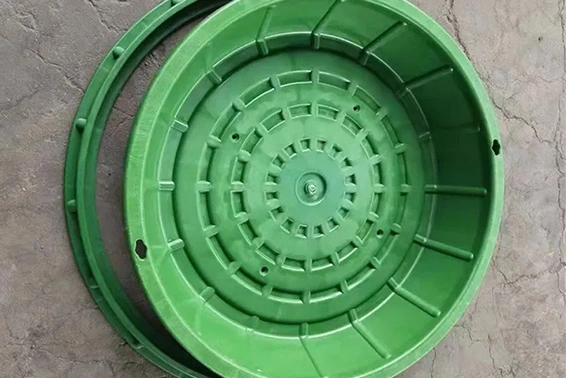
Safety and Performance Comparison: Composite vs. Cast Iron Covers
Safety isn't just one number. It includes structural strength, resistance to slip, fitting danger, and how the material will behave over time.
Structural Integrity and Load Performance
Composite covers that meet EN 124 standards can handle A15 loads from pedestrians and B125 loads from light vehicles without permanently deforming. The single-piece FRP structure spreads stress evenly, which stops the cracking that happens in cast iron after years of freeze-thaw cycles. Independent hydraulic pressure testing shows that the structure won't break under estimated loads. This is something that Xinjiuyi makes sure of with every production batch.
Slip Resistance and Pedestrian Safety
Cast iron covers are very dangerous to walk on when they're wet. Grass-type covers have a textured composite surface that keeps the friction going even after watering or raining. Lack of sharp metal edges further lowers liability in public parks, school grounds, and hospital landscaping where people walk around a lot and come from a variety of backgrounds.
Weight, Corrosion, and Environmental Safety
These are the main differences in performance that have an immediate effect on the safety of the job site and in the long term:
- Weight: Composite covers weigh 70% less than cast iron equivalents. A single worker can handle installation without lifting equipment, reducing musculoskeletal injury risk during placement and routine inspection.
- Corrosion resistance: FRP/SMC resists acids, alkalis, fertilizers, and pesticides — chemicals routinely present in maintained turf environments. Cast iron corrodes under these conditions, creating structural weakness and surface deterioration over time.
- Thermal conductivity: Metal covers transfer heat directly into the soil, killing grass root systems. Composite material's significantly lower thermal conductivity protects the turf infill, keeping the cover functional and visually integrated year-round.
- Anti-theft: Zero scrap value means no financial incentive for removal. A missing manhole cover is one of the most documented urban safety hazards — composite material eliminates that risk entirely.
Thanks to these advantages, composite materials serve as the superior choice for all green space applications where public accessibility and landscape aesthetics are priorities. This applies to our recessed composite round manhole cover for grass.
Installation and Maintenance Best Practices for Recessed Composite Manhole Covers
Whether the cover works safely for its whole life depends on how well it was installed.
Site Assessment and Product Selection
Before you place your order, make sure you know what load rating is needed for the area. For example, A15 is for areas with only foot traffic, and B125 is for paths where light cars or ride-on mowers can go. Carefully measure the opening in the frame that is already there, because even small errors in measurement can affect the seal. Xinjiuyi has diameters ranging from 300 mm to 1000 mm, and they can also make sizes to fit installations that aren't standard.
Frame Setting and Flush Alignment
The frame has to be level with the ground around it. Any change in height makes it possible to trip and lets water pool in the recessed tray, which can soak the turf infill. Xinjiuyi has built-in drainage holes that keep water from building up, but the best way to protect it is to grade it correctly when it is installed. Spread mortar evenly around the frame's edges to stop it from settling in the future.
Ongoing Maintenance and Inspection Schedule
Composite grass covers don't need much upkeep, but checking them every so often is good for safety and the look of the landscape. Every six months, make sure the lifting key points are still free of roots and packed-down soil. Make sure the covering structure is still in place so that dirt doesn't get into the well below. Under normal circumstances, the product should not need to be painted, treated for rust, or fixed structurally at any point during its service life.
Procurement Insights: Choosing the Right Manhole Cover for Grass and Landscaping Projects
When sourcing green infrastructure products, buyers need to look beyond unit price. Project outcomes are impacted by load ratings, certifications, lead times and supplier reliability. These considerations are vital when selecting the recessed composite round manhole cover for grass.
Key Selection Criteria
When choosing grass-type manhole covers for a city or landscaping project, keep these things in mind:
- Load classification: Confirm EN 124 compliance and request the specific test report — not a general claim.
- Tray depth: Match the recessed depth (50–100 mm) to your turf type. Natural sod with deeper root systems needs 80–100 mm; artificial grass installations work with shallower trays.
- Diameter range and customization: Projects with non-standard utility opening sizes need a supplier with genuine custom manufacturing capability, not just catalog SKUs.
- UV stability certification: Request accelerated weathering test data (ISO 4892-2) to verify that the resin formulation resists brittleness under sustained solar exposure.
If you make sure these specs are correct before you place an order, you can avoid expensive repairs in the field and delays in proof during project handover.
Evaluating Supplier Reliability
A reliable provider of composite grass cover should give you load test results, physical samples that you can check out in the field, and proof that they can make both small-lot and project-scale orders. Xinjiuyi has a production plant in Cangzhou, Hebei, and an established supply chain that serves customers in China and around the world. The company is certified by ISO 9001, ISO 45001, and ISO 14001, and its products are sold all over the world.
Total Lifecycle Cost vs. Unit Price
At the point of sale, cast iron plates look like they are a good deal. Over ten years, however, the total cost of fixing rust, replacing items stolen, restoring grass around areas hurt by heat, and hiring more people to do the work often goes over the total cost of the composite option. Lifecycle cost analysis always favors composite when buying teams look at the long-term economics of a project.
Why Recessed Composite Manhole Covers Are the Preferred Choice for Grass Areas?
The use of grass-compatible composite covers has slowly increased in public parks, high-end housing projects, and golf course management. The reason for this is practical, not esthetic.
Documented Field Performance
When golf courses replaced metal utility covers with composite covers made of grass and other materials, the turf started growing over the tray surface within two to four weeks, as long as the growing conditions were normal. Municipal park projects in green belt areas have had no thefts since the replacements, while cast iron projects had frequent loses. These are consistent results that are caused by the properties of the material, not problems with the installation.
Forward Compatibility With Green Standards
More and more, urban drainage standards in many markets call for green zones to have permeable or low-impact surface solutions. Sustainable urban drainage system (SuDS) ideas are supported by composite grass covers, which keep the soil's surface permeable and stop metals from leaching into the soil. As cities make it harder for landscapers to meet the rules, Xinjiuyi's products will be ready to meet these new standards.
Long-Term Value for B2B Clients
The recessed composite round manhole cover for grass has a clear benefit for contractors, property managers, and procurement teams: it lowers the cost of installation labor, eliminates the risk of theft, doesn't require rust upkeep, and results in a final landscape that looks good enough to pass an eye inspection. These results directly help with signing off on the job and making sure the client is happy.
Conclusion
Composite manhole covers deliver superior safety, longer service life and lower maintenance costs compared to cast iron alternatives in green space environments. Their reduced weight alone greatly cuts installation risks. Coupled with rust resistance, anti-theft properties and grass-friendly design, recessed composite round manhole cover for grass addresses all practical limitations of cast iron products. For landscape crews, property managers and municipal procurement teams seeking convenient utility access within green areas, composite covers represent the optimal long-term solution.
FAQ
How does grass survive inside the recessed tray?
The hybrid material keeps heat from getting to the roots, saving them from heat stress. Built-in drainage holes keep the soil from getting too wet, keeping it at the same level of moisture as the grass around it. Within two to four weeks of being installed, most types of natural grass are fully established.
Can a ride-on lawnmower pass over the cover safely?
Yes, as long as the cover can handle at least a B125 load grade. It is made so that the composite structure can take the point-load impact of commercial lawnmowers without the surface deforming.
Will fertilizers or pesticides damage the material?
No, FRP and SMC materials are not affected by chemicals and can stand up to all typical yard chemicals, such as acidic and alkaline fertilizer mixtures.
Are custom diameters available for non-standard installations?
Yes, Xinjiuyi can change the width all the way from 300 mm to 1000 mm, and the tray depth and wall thickness can be changed to fit the needs of each project.
How long does the cover last compared to cast iron?
In normal weather situations, composite grass covers last a lot longer than cast iron in places where it rusts. UV-stabilized glue and a chemically resistant mixture stop the breakdown processes that make cast iron less useful over time.
Get a Sample From Xinjiuyi — Composite Grass Cover Supplier
Landscapers, property developers, and municipal procurement teams all over the world buy composite grass manhole covers from Xinjiuyi. Our recessed composite round manhole cover for grass manufacturer can make any changes you need, test the cover for load safety, and deliver it quickly. To get a product sample and technical data sheet, email global@xjy8.com with the details of your project. When people ask about projects, our team quickly answers both standard and unusual questions.
References
1. British Standards Institution. BS EN 124: Gully Tops and Manhole Tops for Vehicular and Pedestrian Areas. BSI, 2015.
2. American Society of Civil Engineers. Infrastructure Report Card: Stormwater and Green Infrastructure. ASCE, 2021.
3. Concrete Society. Composites in Construction: Fiber Reinforced Polymer Products for Civil Infrastructure. The Concrete Society, 2020.
4. Urban Land Institute. Green Infrastructure and Stormwater Management: Best Practices for Urban Development. ULI, 2019.
5. International Organisation for Standardisation. ISO 4892-2: Plastics — Methods of Exposure to Laboratory Light Sources. ISO, 2013.
6. ASTM International. ASTM D570: Standard Test Method for Water Absorption of Plastics. ASTM, 2022.


