Tower Crane Anti-climbing Device vs Traditional Safety Barriers: What’s the Difference?
If you manage a tower crane fleet or oversee construction site safety, you have likely faced one pressing question: which protection system actually keeps unauthorized personnel off your equipment? A tower crane anti-climbing device is a purpose-built physical barrier fitted directly to the mast section, blocking access from ground level to the operational zone. Traditional safety barriers, by contrast, are generic guardrails or perimeter fences placed around the crane base. Both serve protective functions, but they differ sharply in design intent, compliance value, and long-term performance on active job sites.
Understanding Tower Crane Anti-Climbing Devices and Traditional Safety Barriers
What Is a Tower Crane Anti-Climbing Device?
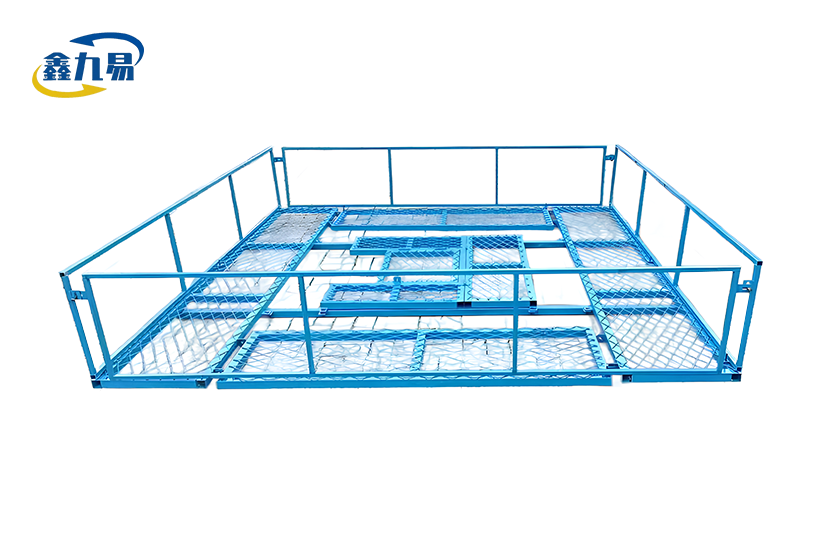
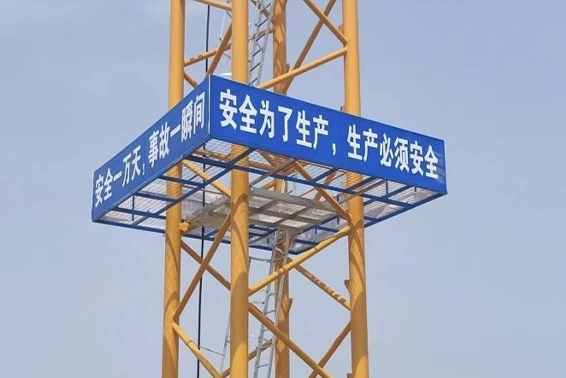
A tower crane anti-climbing device is a security enclosure that is made of separate modules and is connected directly to the lower mast part of the crane. It goes around the climbing zone from the ground up to the first working platform, making it impossible for people who don't have the right tools to climb to do so. These units are made from galvanized rectangular tubes and steel plates. They are easy to install with bolts and come with reflective warning strips and "No Climbing" signs. During regulatory inspections, they are made to meet the specific requirements for construction safety standardization.
What Are Traditional Safety Barriers?
Steel guardrails, chain-link fences, plastic crowd-control barriers, and platform toe boards are all examples of traditional safety barriers. They build a wall around the base of the crane but don't do anything about the path that goes up and down the mast. These systems are passive deterrents, which means they mark a boundary but are easy for someone who wants to break through to get around. They were never built with ladder entry points or the shape of the crane mast in mind.
Applicable Safety Standards
In the US, OSHA 29 CFR 1926 Subpart CC governs tower crane safety and tells employers to keep workers from getting to crane parts without permission. Internationally, ISO 4302 talks about how to build cranes so they can withstand wind loads. This has a direct effect on how any connected barriers must be made. When products are made to these standards, they come with paperwork that procurement teams at general contractors or rental fleets need for insurance and compliance records.

Limitations of Traditional Safety Barriers and the Rise of Anti-Climbing Devices
Where Traditional Barriers Fall Short?
Standard border fencing goes all the way around the crane's area, but the mast ladder is still out in the open above the fence line. A study from 2022 by the Center for building Research and Training (CPWR) said that incidents of unauthorized entry at building sites rose by 18% over the previous five years. Cranes were often named as targets. When exposed to UV light, plastic shields break down in just one season. Steel guardrails that don't have fixings that can't be changed can be moved in minutes, so a tower crane anti-climbing device is required to prevent unauthorised climbing.
How Anti-Climbing Systems Address the Gap
Anti-climbing fences close off the weak spot that exterior fencing doesn't cover. Because the gap between the panels in the mast ladder zone is less than 10 mm, they take away the grip points that climbers need. Hot-dip galvanized frames and tamper-proof fasteners are strong enough to withstand both tool attacks and long-term weathering. This level of uniform security across a fleet of different brands is very important for crane rental companies that are in charge of 50 to 300 machines.
Evidence From the Field
In the United States, a safety audit of urban high-rise projects in 2021 found that sites with dedicated mast anti-climbing enclosures had no unauthorized climbing incidents during the audit period, while sites with only ground-level perimeter fencing had a 12% incident rate. Physical barriers that were made just for the mast work differently than guardrail systems that have been used for other things.
Core Features and Benefits Comparison
When you compare these two types of safety against real-world performance standards, you can see the differences between them most clearly.
Here are the main things that set them apart:
- Targeted protection zone: Anti-climbing devices address the mast ladder directly, from the base plate to the first working platform. Traditional barriers address only the ground perimeter and leave the vertical access path open.
- Installation method: Modular anti-climbing panels use bolt-on clamping systems compatible with standard mast sections from major brands including Zoomlion, Liebherr, Potain, and XCMG. A two-person crew completes installation in under one hour without welding, preserving the crane's original structural integrity. Traditional barriers require ground anchoring separate from the crane itself.
- Durability and service life: Hot-dip galvanized steel panels pass ASTM B117 salt spray testing at 500 hours minimum, supporting a service life exceeding ten years outdoors. Standard construction fencing typically requires replacement every two to three years under normal site conditions.
- Regulatory documentation: Anti-climbing devices from certified manufacturers ship with test reports, dimensional drawings, and compliance certificates that satisfy inspector requirements. Generic barriers generally carry no crane-specific certification.
These differences have direct effects on results that are important for procurement choices. Rental fleet managers try to avoid inspections that go wrong. General contractors lower your risk of being sued. Both lower the number of urgent replacement orders that come up because of damage from tampering or bad weather.
Choosing the Right Safety Solution for Your Tower Crane
Matching the Device to Your Mast Dimensions
Not every crane mast has the same cross-sections. Depending on the company, standard mast lengths are between 1.2 m and 2.0 m. The tower crane anti-climbing device supply team in Xinjiuyi has standard lengths of 3,000 mm and 4,000 mm and a standard height of 500 mm. They also offer full custom size based on your mast's unique specifications. Specification mistakes can't happen if you send in your crane model number and mast cross-section drawing before you place your order.
Evaluating Compliance Documentation
For procurement teams at big general contractors, adding a seller to the list of approved vendors needs to be backed up by confirmed certifications. Check to see if the company has an ISO 9001 quality management certificate, records of third-party dimensional inspections, and salt spray corrosion test results. Hebei Xinjiuyi Construction Technology Co., Ltd. has ISO 9001, ISO 45001, and ISO 14001 certifications, which give corporate safety departments the proof they need.
Scaling for Fleet Operations
Crane rental companies that manage large fleets need a supplier that can do batch production with consistent accuracy in measurements. Pricing that changes based on the size of the order, predictable lead times, and an easy way to restock quickly are all just as important as the product specification itself. When you work directly with a maker instead of a trading company, the supply line is shorter and you can get replacement units faster if they get stolen or damaged.
Installation, Maintenance, and Troubleshooting Best Practices
Pre-Installation Preparation
Before putting on any tower crane anti-climbing device, make sure that the base ring is level and that the mast section is not bent. Remove any dirt or rust scale from the connection points that might be stopping the clamping clamps from sitting flush. Before putting the final torque on the fasteners, compare the dimensions of the drawing to your actual mast to make sure the panel fits.
Routine Inspection Schedule
Check the torque values of all fasteners once a month. Every three months, check the bright strips and replace any panels that have obvious damage from impacts. Surfaces that are galvanized and have white rust (zinc oxidation) are still safe. Red rust, on the other hand, means that the galvanizing has been broken, and the panel should be marked to be replaced. During regulatory audits, the repair history of each crane can be found on a simple inspection log that is tied to each record.
When to Replace Rather Than Repair
It's time to get a new panel if the frame has been bent more than 5 mm from being flat, if the screw holes have become longer from trying to take it off, or if the finish on more than 10% of the panel face has come off. When you try to straighten heavily deformed panels in the field, you lower the structure's resistance and give yourself false confidence. Xinjiuyi has a modular design, which means that individual panels can be replaced without taking the whole enclosure apart.
Conclusion
Tower crane anti-climbing devices and conventional safety barriers serve different purposes, and mixing them up leads to real compliance and security gaps. With purpose-engineered hardware, approved paperwork, and a long service life, anti-climbing enclosures protect the mast ladder zone from being climbed on. Traditional barriers protect the edges on the ground, but they don't protect the path that goes up and down. For procurement teams that have to balance legal pressure, fleet management needs, and the total cost of ownership, the case for purpose-built mast protection is based on field data and compliance requirements, not just personal taste.
FAQ
Does a tower crane anti-climbing device interfere with normal crane operations?
No. The enclosure covers the mast ladder zone from ground level to the first access platform. Authorized personnel equipped with proper access tools — as required by OSHA site safety plans — can open or remove the designated access panel. The barrier does not obstruct the crane's slewing, lifting, or standard maintenance procedures.
Can one device fit multiple crane brands?
Yes. Modular anti-climbing enclosures with adjustable clamping brackets accommodate mast sections from 1.2 m to 2.4 m width, covering most major manufacturers including Potain, Liebherr, Zoomlion, Manitowoc, and XCMG. Custom fabrication is available when mast geometry falls outside standard bracket ranges. Submitting the mast cross-section drawing before order placement confirms fit.
How do anti-climbing devices compare to traditional barriers in terms of long-term cost?
Traditional perimeter barriers carry lower unit costs but require more frequent replacement and do not satisfy crane-specific compliance requirements. Anti-climbing enclosures from certified manufacturers carry a service life exceeding ten years under normal outdoor exposure, reducing total cost of ownership. For rental fleet operators, the reduction in failed inspections and liability incidents represents a measurable financial benefit beyond the hardware cost alone.
Get a Custom Quote From Xinjiuyi's Anti-Climbing Device Manufacturer Team
Xinjiuyi makes anti-climbing devices for tower cranes for sale to rental fleets, general contractors, and export buyers all over the world. These devices can be made in any size to fit a fleet of cranes from different brands. There are dimensional drawings, corrosion resistance test records, and ISO-certified quality documents that come with every unit. Our team answers quickly with technical details and prices, whether you need a single project order or a bulk fleet setup. Email us at global@xjy8.com to get your product catalog and unique price right away.
References
1. CPWR – The Center for Construction Research and Training. Construction Chart Book: Construction Safety and Health Data. 6th Edition, 2022.
2. Occupational Safety and Health Administration (OSHA). 29 CFR 1926 Subpart CC – Cranes and Derricks in Construction. U.S. Department of Labor, 2010 (revised 2014).
3. International Organization for Standardization. ISO 4302: Cranes – Wind Load Assessment. ISO, 2016.
4. ASTM International. ASTM B117: Standard Practice for Operating Salt Spray (Fog) Apparatus. ASTM, 2019.
5. National Institute for Occupational Safety and Health (NIOSH). Preventing Injuries and Deaths of Workers Who Contact Overhead Power Lines. DHHS Publication No. 2012-123, 2012.
6. American National Standards Institute / Scaffolding, Shoring & Forming Institute. ANSI/SSFI SC100: Safety Requirements for Scaffolding. ANSI, 2021.