Adjustable Steel Prop: Complete Guide for Concrete Formwork Support
An adjustable steel prop is a key vertical support system for concrete forms. Its height can be changed telescopically to meet the needs of different structures during slab and beam casting. Unlike hard wooden shoring, these telescopic props offer accuracy down to the millimeter, safety under axial loads, and the ability to be used again and again for different projects. When managing formwork while concrete cures, having reliable vertical support stops the structure from deforming, makes sure the measurements are correct, and keeps your workers safe. This guide talks about technical details, buying strategies, and real-world examples to help project managers, buying officers, and health, safety, and environmental (HSE) workers make smart choices for their building projects.
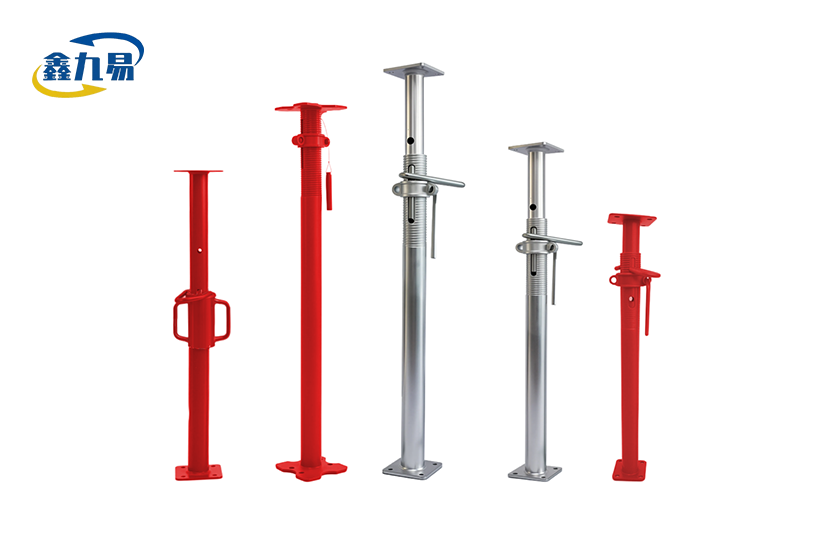
What Is an Adjustable Steel Prop and Its Key Uses?
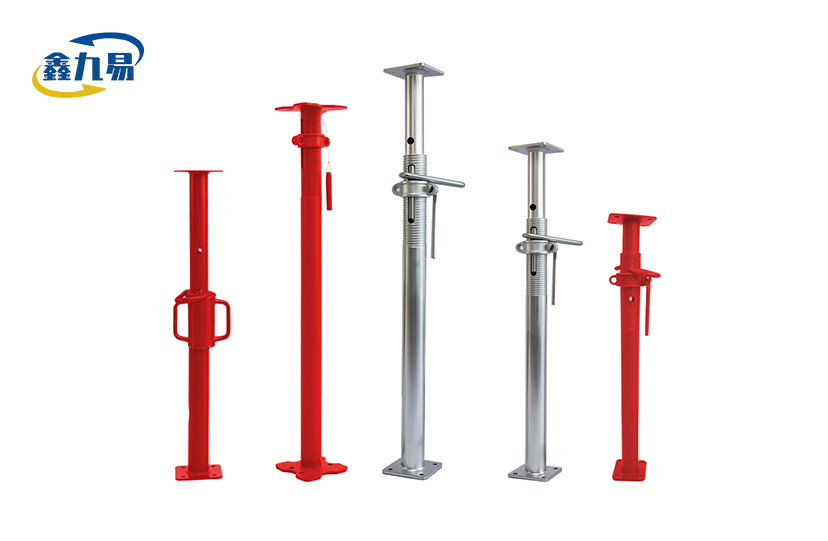
Adjustable steel props are made up of two steel tubes that fit together tightly: an inner pipe and an outer shell. They are linked by a strong threaded mechanism that lets you change the height. This flexible design lets you change the height from 1.7 meters to 5 meters, so it can be used for home floor slabs, industrial plant ceilings, and bridge deck formwork without any problems. The threaded collar allows exact vertical alignment even after the initial installation. This makes up for any flaws in the base that would make the formwork less stable.
Core Applications in Modern Construction
Three stages of building are dominated by temporary needs for vertical support. These props hold up the weight of the wet concrete, formwork panels, and building tools while the concrete is being poured. During the curing time, they keep the pressure even, which stops the block from deflection that weakens the structure. When renovating, shoring props act as temporary needling supports, keeping existing masonry walls stable while workers replace broken beams or make new openings.
For slab-to-slab formwork methods, these tools are very important in high-rise building. The height can be changed to accommodate differences in floors, and the standard base plate sizes work with formwork beam grids. For bridge soffit support, you need quick-deployable props that can fit under deck forms, where regular scaffolding wouldn't work. When lining a tunnel, the supports need to be able to stand up to being put in and taken out over and over again without breaking. Wooden supports can't do this.
Advantages Over Traditional Support Methods
When ceiling sizes change from one project zone to another, using fixed-height scaffolding parts can be hard to manage. Timber shores produce a lot of trash, don't have uniform load ratings, and break down quickly when they come into contact with pavement that is alkaline and wet. Standardized production, recorded load limits, and corrosion-resistant surface treatments on steel props get rid of these wastes. When compared to traditional shoring methods, the modular snap-type connection system cuts down on labor hours by about 40 percent because crews can set up supports without having to use welding equipment.
Reusability changes the economics of equipment. A well-kept steel prop can be used 200 to 300 times, which is more than enough to repay its cost. Wooden supports, on the other hand, break down after just one use. The ability to collapse and move makes it easier for contractors to manage multiple job sites at the same time because it lowers the amount of space needed for storage between projects.
Technical Specifications and Safety Guidelines
Adjustable steel props are made by Hebei Xinjiuyi Construction Technology out of Q235 carbon steel, which was chosen because it has the best combination of tensile strength and flexibility. This type of material doesn't buckle when radial loads are higher than 30 kN, and it keeps its structural flexibility so it doesn't break easily. The inner tubes have diameters between 40 mm and 48 mm, and the outer tubes have diameters between 48 mm and 60 mm. Wall thickness requirements range from 1.6 mm to 4.0 mm, which are the same for light-duty and heavy-duty loads.
Dimensional Parameters and Load Capacities
Different building heights can be accommodated by standard length choices. The 1.7-meter to 3-meter range works well for household buildings with normal ceiling heights. 2.7- to 5-meter models with a 4.0 mm wall thickness are used in industrial settings that need a longer vertical reach. Due to the slenderness ratio effect, the safe working load capacity goes down as the extension height goes up. A prop that is stretched to its full length can only hold about 60% of its capacity when it is at its shortest length. Always look at the load charts that the maker makes that match your unique extension needs.
Environmental resistance is based on the choice of surface treatment. Hot-dip galvanization adds a zinc coating that is 60 to 80 microns thick. This protects props that are exposed to water, alkaline concrete, and changes in temperature. This treatment works well for building along the coast, where salt air speeds up corrosion. The cost of pre-galvanized products is about average, and they provide enough security for indoor uses. When project requirements call for colour-coded load rating systems, powder painting and baking improves both the look and longevity of the material.
Installation Best Practices
The right way to put something starts with checking the base. Make sure the base plates rest on flat, packed areas that can hold heavy loads without moving. Use a spirit level to make sure the props are level—any deviation from verticality of more than 3 degrees greatly reduces the load capacity. To change the height, turn the threaded collar until the prop touches the formwork beam. Then, move the prop forward another half turn to create preload tension.
Inspection methods keep structures in good shape over time. Before each launch, check the tubes for dents that are deeper than 5 mm. These dents make the tubes less resistant to bending. Make sure that the thread engagement shows that the inner and outer tubes overlap by at least 50 mm. Every month, grease the adjuster threads to keep them from sticking. If a prop is permanently deformed or has cracks in the base plate joints, it needs to be replaced.
Critical Safety Protocols
Never put more weight on your extension than what the manufacturer says is safe. Overloading leads to sudden buckling failure, which puts people in danger and damages the formwork. Structural engineers will tell you how far apart to put the props based on the volume of the concrete, the weight of the forms, and the live construction loads. Depending on the span and width of the rock, the typical distance between them is between 0.9 and 1.5 meters.
Keep clear records of when each prop in your fleet was inspected, how it was loaded, and how many times it was used. When units reach the manufacturer's recommended cycle limits, they should be thrown away. Trying to stretch their service life past the point of structural fatigue causes too much risk. When not in use, props should be kept in a dry, well-ventilated area to avoid rust that weakens their load-bearing ability.
Comparing Adjustable Steel Props with Alternative Solutions
Before they can be put in place, fixed-height shores need to have accurate elevation surveys done. Any uneven substrate needs to be shimming or cutting, which takes time and causes alignment mistakes. Adjustable steel props get rid of this waste by letting you change their height on-site, so changes can be made without any extra work.
Performance Against Jack Posts and Scaffolding Props
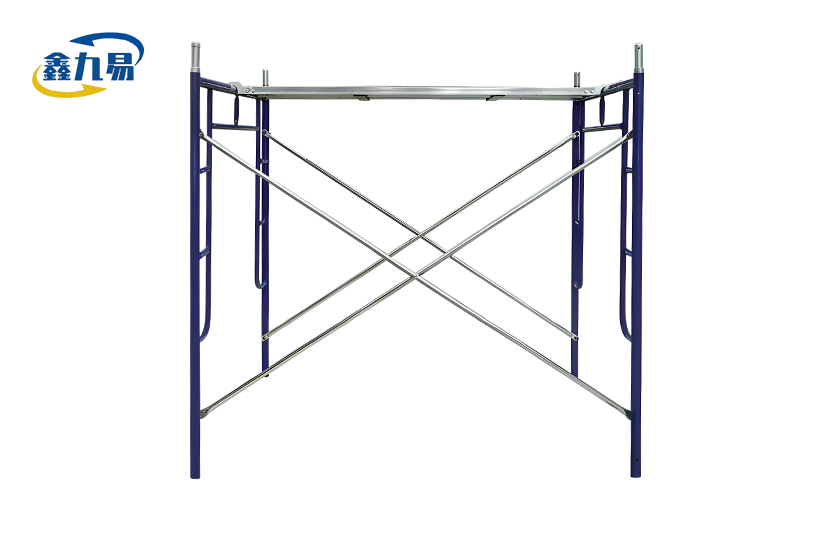
Jack posts can be adjusted in the same way, but they are usually made of lighter materials that aren't good for supporting the weight of concrete formwork. Their screw mechanisms don't have the strong threading that you'll find on construction-grade shoring props, so they can only hold loads that are appropriate for home renovations. Modular frame systems work with scaffolding props to provide support on the sides through cross-bracing. This setup works well for tasks that need large horizontal work areas, but it makes things more complicated when simple vertical support is all that's needed.
The quality of the material has a big effect on how well it works. Props made from Q345 steel have a higher yield strength than those made from Q235 steel, so they can hold more weight with the same tube size. This benefit helps projects with very thick slabs or where fewer props can make it easier to get to the formwork. The higher cost of materials usually adds 15 to 20 percent to the unit cost. This is a good investment for heavy-duty business uses but too much for normal home projects.
Evaluating Price-Quality Trade-Offs
Because of limited funds, purchasing officers are tempted to choose low-cost props with thinner walls and smaller tube sizes. When used within their stated limits, these units meet load standards. However, they have shorter service lives and smaller safety margins. Specific wall thickness below 2.0 mm speeds up the spread of fatigue cracks, which limits the number of effective launches to about 100. When early replacement needs are taken into account, the initial cost savings are lost.
Instead of fillet welds, premium props have base plates that are fully penetrated and bonded. This eliminates any holes that could weaken the link. When it comes to rust protection, hot-dip galvanization is better than electro-galvanization or painting. These quality differences make the service life last longer, from 10 years to 20 years with the same level of use. This means that the total cost of ownership is lower, even though the initial cost is higher.
Procurement Guide for Adjustable Steel Props
To find solid, adjustable steel props, you need to look at the production skills, quality certifications, and logistics infrastructure of the suppliers. Well-known companies use ISO 9001 quality management systems to keep records of how materials are traced, how to weld, and how to test for load. Ask for copies of the certifications that show the product meets the safety standards set by EN 1065 in Europe or AS 3610 in Australia. These standards make sure that the product meets safety standards that are recognized around the world.
Supplier Evaluation Criteria
The power to manufacture things decides how reliably large projects can be delivered. Suppliers with specialized production lines for steel props can meet large orders quickly, which is something that makers who make a variety of goods can't do. When you visit a site, you can see how advanced the equipment is. For example, automated tube cutting and precision welding stations make the dimensions more consistent than manual fabrication methods.
Customer references can give you an idea of how good the after-sales service is. Talk to procurement managers at companies that have worked on projects like yours and ask about how on-time deliveries are, how often products arrive damaged, and how quickly technical support responds. Suppliers who offer engineering advice services are very helpful because they can look over your formwork plans and make suggestions on the best props, spacing, and surface treatments.
Bulk Procurement Strategies
When buying groups of more than 500 units, volume savings become important. Talk about different price systems, such as lowering the unit cost, giving free replacement parts, and extending the warranty terms. Set up framework agreements for multi-year purchases to protect prices against changes in the cost of steel and ensure that there is enough inventory.
International logistics coordination can be hard for buyers from other countries. Reliable sellers keep in touch with freight forwarders who know how to ship building equipment and handle customs paperwork, container loading, and port clearance at the destination. Props are safer during transport when they are packed together, and loads that are properly set up can fit between 800 and 1,000 normal props in a 40-foot container.
Rental Versus Purchase Considerations
For short-term projects, renting equipment is a good way to avoid buying new equipment that will only be used for a short time. Rental rates are usually between 2% and 4% of the purchase price per month, so buying is a better deal for projects that last longer than 24 months. Rental companies take over the depreciation and care of your equipment, which makes your routine work easier but limits your ability to customize and change your schedule.
Why Choose Our Adjustable Steel Props for Your Projects
The factory that Xinjiuyi uses in Cangzhou, Hebei, is certified by ISO 9001, ISO 45001, and ISO 14001, which means that they follow integrated quality management, occupational health protocols, and environmental stewardship. Our engineering team has decades of experience designing forms, and they work with structural engineers to make sure that the adjustable steel props they recommend meet your exact load needs and site conditions.
Quality Assurance and Performance Validation
Every production batch is put through destructive load testing to make sure that the maximum capacity is at least 20% higher than the ideal rate. Ultrasonic weld checking makes sure that the links between the base plates meet full-penetration standards. This gets rid of any flaws below the surface that could cause the structure to fail. Chemical composition analysis checks that the levels of carbon and manganese meet the requirements for the Q235 grade. This makes sure that the material properties are the same across all of your equipment.
Our hot-dip galvanisation method adds zinc coatings that are thicker than the standard in the industry. This makes the metal more resistant to corrosion in tough settings. Testing with salt spray shows that protection lasts for more than 1,000 hours before red rust appears, which is exactly what coastal and marine building needs. Threaded collar tolerances keep the adjustment smooth over the life of the part and stop too much play that could affect the vertical alignment.
Customization Capabilities
Catalogue items can't always meet the needs of every project. We make custom lengths that match your building plans. This way, you don't have to make changes in the field, which can void warranties and pose safety risks. Adjustments to the wall thickness take into account the calculated load requirements. This stops waste from over-specification while making sure there are enough capacity reserves. Customizing colors helps with site safety rules by letting you see the load grade, which lowers the chance of using it incorrectly.
During our pre-sales engineering meeting, we look over your formwork plans and figure out the best prop spacing, load distribution, and extension heights. This service finds possible problems before the equipment is sent out, so there aren't any expensive delays caused by not having enough space or the right specs. Technical help lasts until the project is finished. Our team is ready to answer questions about installation and fix problems that come up on the job site.
Proven Project Performance
Adjustable steel props from Xinjiuyi are used by infrastructure contractors in Southeast Asia, the Middle East, and Africa to build bridge decks, high-rise apartment buildings, and industrial facilities. Our heavy-duty props were used in a recent 42-story mixed-use project in Jakarta. During the 18-month concrete casting program, there were no formwork problems. In the Philippines' North-South Railway project, our props were used for 850 repeated rounds of tunnel lining work without any structural damage. This proved that the claims of longevity were true in tough field conditions.
These case studies show how reliable things really are in the real world, which is something that buying specs and catalogue claims can't fully show. Our willingness to give you customer references that show how the product has been used in a variety of situations gives you confidence in its performance before you commit to it.
Conclusion
Choosing the right adjustable steel prop support equipment has a direct effect on the safety of the project, the ability to stay on schedule, and the long-term prices of the equipment. When compared to cheaper options, steel shoring props from manufacturers with strict quality control systems, engineering support, and track records of working well in the field are the best value. Knowing the technical details, the right way to put something, and how to keep it in good shape will protect your employees and make sure that the equipment lasts as long as possible. Strategic buying in bulk and working with multiple suppliers can help you save money without lowering safety standards.
FAQ
1. What determines the load capacity of a shoring prop?
The load capacity is based on the steel grade, extended height, tube diameter, and wall thickness. The slenderness ratio goes up as you extend the adjustable steel prop, which lowers the buckling resistance. A prop that can hold 30 kN at its shortest length might only be able to hold 18 kN when it is fully extended. Instead of depending on the highest stated capacity, you should always look at the manufacturer's load charts that are specific to your extension needs.
2. Can these props be reused across multiple projects?
If you do the right inspections and upkeep, you can reuse something hundreds of times. Between uses, check tubes for dents, make sure threads are in good shape and grease the adjustment mechanisms. When the manufacturer's recommended limits are reached—usually 200 to 300 launches, but this can vary based on load intensity—props should be thrown away. Trying to keep structures in use past the point of tiredness causes too many safety risks.
3. How do shoring props differ from scaffolding components?
Shoring props hold up formwork vertically, and scaffolding makes work platforms that people can use to get to their jobs. Props have strong tube sections and threaded adjustments that are best for axial compression loads. The parts of a scaffolding system are connected through coupling systems that make the structure stable on the sides and flat on the top and bottom. However, each member can only support lower loads vertically than a dedicated shoring prop.
Partner with Xinjiuyi for Reliable Formwork Support Solutions
Xinjiuyi is the only company you need to make adjustable steel props because they have both advanced production skills and customer-focused engineering support. Our Q235 steel props have been hot-dip galvanised, have exact threaded adjustment mechanisms, and can hold loads that meet the strictest building standards. Our technical team creates solutions that are specific to your project, whether they are working on high-rise concrete placement, bridge deck formwork, or the building of an industrial facility. Get in touch with us at global@xjy8.com to talk to our engineering experts about your formwork support needs. We offer thorough quotes, help with load calculations, and shipping schedules that work with your project's schedule. Our manufacturing is ISO-certified, and we have 20 years of field performance to back us up.
References
1. Smith, J.R. (2021). Formwork Systems and Temporary Structures in Concrete Construction. Construction Engineering Press.
2. International Federation for Structural Concrete (2019). Guidelines for Formwork Safety and Load Distribution. Technical Report No. 142.
3. Anderson, P.T. & Williams, M.K. (2020). "Comparative Analysis of Adjustable Shoring Systems in High-Rise Construction," Journal of Construction Engineering and Management, Vol. 146, Issue 8.
4. European Committee for Standardization (2018). EN 1065: Adjustable Telescopic Steel Props – Product Specifications and Design. Brussels: CEN Publications.
5. Chen, L. & Rodriguez, F. (2022). Steel Properties and Applications in Temporary Construction Support. Materials Science and Engineering Monograph Series.
6. Construction Industry Research and Information Association (2020). Best Practice Guide for Formwork and Falsework Safety. CIRIA Publication C675, London.