Carpenter Working Canopy Explained: Uses, Benefits, and Applications
A carpenter working canopy is a standardized, heavy-duty protective shelter engineered specifically for woodworking machinery operations on active construction sites. Unlike a general-purpose tent or improvised cover, this structure combines a high-strength steel framework with fire-retardant cladding to isolate noise, contain dust, and block wood chip splashes. It satisfies civil construction acceptance requirements and fire safety regulations simultaneously. Whether you manage a single job site or oversee regional procurement for multiple projects, understanding what this shelter does — and how to choose the right one — directly affects your compliance record, worker safety, and operational continuity.

What Is a Carpenter Working Canopy and Its Core Uses?
Defining the Structure and Its Purpose
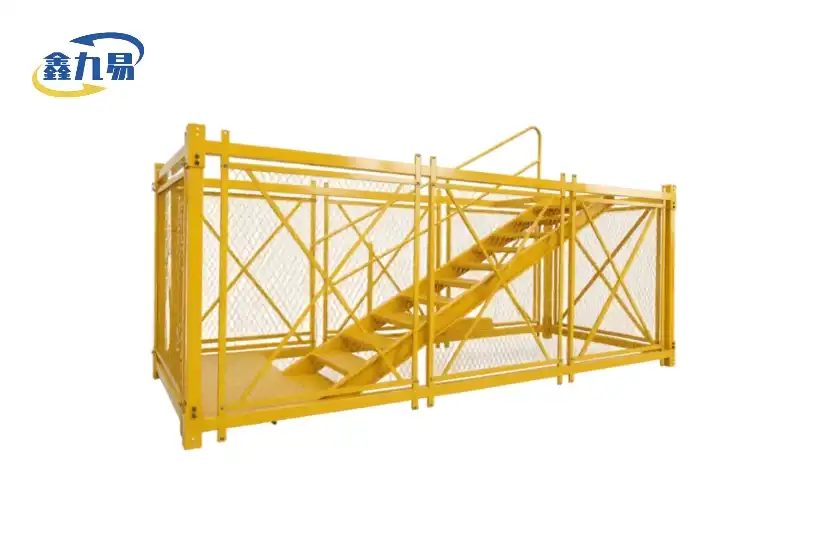
At its core, a Carpenter Working Canopy is a semi-permanent, moveable structure that makes a controlled space for cutting wood, making forms, and storing lumber. Hebei Xinjiuyi Construction Technology Co., Ltd. makes the Xinjiuyi Carpenter Working Canopy. It is made of 50 mm × 50 mm main beams and 100 mm × 100 mm steel columns with a wall thickness of 2.0 mm. The normal footprint is 6,000 mm long, with widths of 3,000 mm, 4,000 mm, or 6,000 mm, and a clear inner height of 3,700 mm. This is big enough to fit tall formwork panels and vertical storage for materials.
Three Primary Application Scenarios
Construction workers put these structures in three different site zones, each with its own set of operating needs:
- Timber cutting and processing areas: Overhead covers keep precision equipment and piles of raw wood from getting wet, which is good for circular saws, table saws, and miter stations. The two-way open-column design lets workers get to both sides easily, and the sawdust and chips stay in the designated area.
- Formwork fabrication zones: To cut and put together concrete forms, you need to accurately measure and mark them. The 3,700 mm clear height lets full-length panels and vertical stacking fit, so the team can keep working even if it rains or gets very hot.
- Lumber storage and material staging: Kiln-dried wood quickly soaks up moisture from the air. A covered staging area keeps materials from bending, swelling, and fiber separation, all of which lower the quality of the material before it is installed.
These three situations are typical of what safety directors and procurement managers have to deal with every day when they are trying to plan a site layout that is both legal and efficient.

Benefits of Using Carpenter Working Canopies in Industrial Settings
Safety, Compliance, and Productivity in One Investment
There is a lot of evidence that shows that a designated woodworking shed is good for worker safety. The U.S. Bureau of Labor Statistics says that weather-related dangers and being hit by something are two of the main reasons why building workers get hurt. A physically sound Carpenter Working Canopy controls both directions at the same time by keeping garbage in check and blocking out the weather.
These are the main benefits this structure brings to busy job sites:
- Regulatory compliance: The fire-resistant top and surround panels meet fire safety acceptance standards for building sites. This lowers the risk of failing checks and having to pay a lot of money to fix problems. Production at Xinjiuyi that is ISO 9001-certified also meets the paperwork needs for quality checks.
- Material preservation: Storing lumber under cover stops it from warping because of moisture. Keeping kiln-dried wood safe from a single rainstorm can save thousands of dollars in repair costs and schedule delays.
- Worker productivity: When they work under a safe, weatherproof shelter, they keep up their steady output. When bad weather shuts down cutting stations without warning, it affects schedules for finishing and pouring concrete further downstream.
- Cross-project asset value: The bolt-connection, modular assembly design makes it possible to take parts apart and move them from one project site to another. The cost of ownership per project is much lower when the same thing is used for more than one project.
All of these benefits solve the problems that safety directors keep bringing up: failed inspections, lost materials, sped-up schedules, and ongoing costs for buying things. All four are covered by a single, well-designed Carpenter Working Canopy.
Types and Designs: Choosing What Fits Your Needs
Steel Frame vs. Modular Prefabricated Systems
There are two main structure methods available on the market. Traditional welded steel systems, like the Xinjiuyi type, focus on being load-bearing strong and having a long service life. The company says that its product line is designed to last 20 years. While modular metal systems are lighter to move, they usually don't have as much stability when they're loaded with wind for a long time. National-standard steel construction is the better choice for long-term or semi-long-term site installations that need to be accurate in size and meet fire safety standards for a Carpenter Working Canopy.
Customization Parameters That Matter
There are different space limits and branding needs for each site. The engineering team at Xinjiuyi can change the width from 3,000 mm to 6,000 mm, make custom height tweaks for machinery clearance, include corporate color schemes in the coating specification, and put up safety warning signs in multiple languages. For OEM buyers and regional wholesalers, this means that they can work with a single supplier to meet all of their clients' needs without having to go to multiple providers.
How to Build, Install, and Maintain a Carpenter Working Canopy?
Installation Sequence and Safety Protocol
A level, firmly packed base is the first step in a proper placement. Before any bolts are tightened, the parts should be put out and matched up with the installation instructions. Standardized welding and bolt-connection systems on Xinjiuyi Carpenter Working Canopy buildings make it possible for two or three people to put them together without using heavy lifting tools. Before the roof panels are put on, anchor points at the base of each column should be firmly fixed to the ground according to the wind load requirements in the area.
Maintenance Practices That Extend Service Life
Regular inspections greatly increase the working life of structures. A useful repair plan has the following items:
- Monthly visual checks of column base welds and bolt torque after heavy rain or wind events.
- Biannual coating inspection to identify rust initiation points, particularly at cut edges and weld areas where the powder coating can wear away during manufacturing.
- Annual fire-retardant panel inspection to confirm material integrity has not been compromised by UV light, impact, or chemical touch.
These steps keep the structure strong and make sure the shelter meets all the requirements for fire safety acceptance for its entire service life.
Procurement Guide: How to Source the Right Woodworking Site Shelter?
Evaluating Suppliers Against Project Requirements
It takes more than just comparing prices to find a good seller for a Carpenter Working Canopy. Some important things that are looked at when judging are the material certification (national standard steel with recorded wall thickness), the surface treatment process, the fire-retardant material compliance paperwork, the wait time for customization, and the technical support provided after delivery. When buyers don't check the materials, they often get steel that was supposed to have a 2.0 mm wall thickness but only has a 1.5 mm wall thickness. This is a common way to save money that lowers both the load rating and the resistance to rust.
It is based in the Xian County Development Zone in Cangzhou, Hebei, and is certified by ISO 9001, ISO 45001, and ISO 14001 to do business. Before being sent out, each part is checked for its dimensions and structural stability. The business keeps standard specifications in stock so they can be shipped right away, and they can also handle custom orders through a well-established supply chain.
For regional wholesalers looking for a reliable Carpenter Working Canopy provider, stable factory prices, consistent quality, and quick customization help lower the operational risk that often cuts into distribution profits. For OEM buyers, quality control methods that are written down and production workflows that work with NDAs protect brand integrity by making sure that large-scale output is always the same.
Conclusion
Building sites need a Carpenter Working Canopy—it's not an extra that you can buy if you don't need one. It keeps workers safe, keeps supplies safe, pleases regulatory officials, and can be used on different projects. The building's specs are important. The width of the columns, the size of the beams, the quality of the coating, and the building's fire-retardant approval all affect how well the structure meets safety and compliance requirements over many project cycles. All of these needs are met by Xinjiuyi's steel-frame woodworking canopy, which is made in a certified factory and can be customized in many ways. It also comes with full project support.
FAQ
What size carpenter working canopy should I specify for a mid-scale formwork zone?
Most setups for making one-station formwork can use the normal size of 6,000 mm x 3,000 mm. A 6,000 mm × 6,000 mm arrangement is enough space between work areas if your site does parallel cutting and assembly at the same time. Before production starts, Xinjiuyi's team can look over your site plan and give you advice on the sizes for a Carpenter Working Canopy.
Can the canopy be relocated between project sites without structural damage?
Yes. The bolt-connection form of the system lets it be fully taken apart into parts that can be moved. For moving, you don't need to do any extra cutting or bonding. When saved and treated properly, components keep their exact sizes through multiple assembly processes.
What proof is there that fire safety and compliance are acceptable?
For the fire-resistant panels and steel framework, Xinjiuyi provides material certification documents and product specification sheets that are in line with what is needed for acceptance on the construction site. You can give these papers to site leaders, safety testers, and third-party auditors to back up your claims.
Does Xinjiuyi support OEM branding and safety labels in more than one language?
Yes. The coating and panel specification can include company logos, brand colors, and safety instructions in more than one language. You can use non-disclosure agreements (NDAs) to keep private design information safe.
What is the lowest amount that can be ordered by a distributor?
You can email Xinjiuyi directly at global@xjy8.com to talk about volume limits, regional marketing terms, and framework deal structures that work for your market.
Get Your Custom Woodworking Canopy Quote from Xinjiuyi
For real safety requirements and multi-project reuse, Xinjiuyi provides approved, customizable Carpenter Working Canopy options. We are a trusted manufacturer for construction companies, regional distributors, and OEM brand buyers around the world because our manufacturing is ISO-certified, our designs last 20 years, and we offer full technical support. You can email our team at global@xjy8.com or go to xjy8.com to get a quote for your project and instructions on how to put it together today.
References
1. U.S. Bureau of Labor Statistics. Census of Fatal Occupational Injuries Summary. 2023.
2. International Organization for Standardization. ISO 9001: Quality Management Systems — Requirements. 2015.
3. National Fire Protection Association. NFPA 701: Standard Methods of Fire Tests for Flame Propagation of Textiles and Films. 2019.
4. Occupational Safety and Health Administration. OSHA 29 CFR 1926: Safety and Health Regulations for Construction. U.S. Department of Labor, 2022.
5. American Society of Civil Engineers. Minimum Design Loads and Associated Criteria for Buildings and Other Structures (ASCE 7-22). 2022.
6. International Labour Organization. Safety and Health in Construction: ILO Code of Practice. 1992.