Steel Canopies Built for Strength, Style & Speed
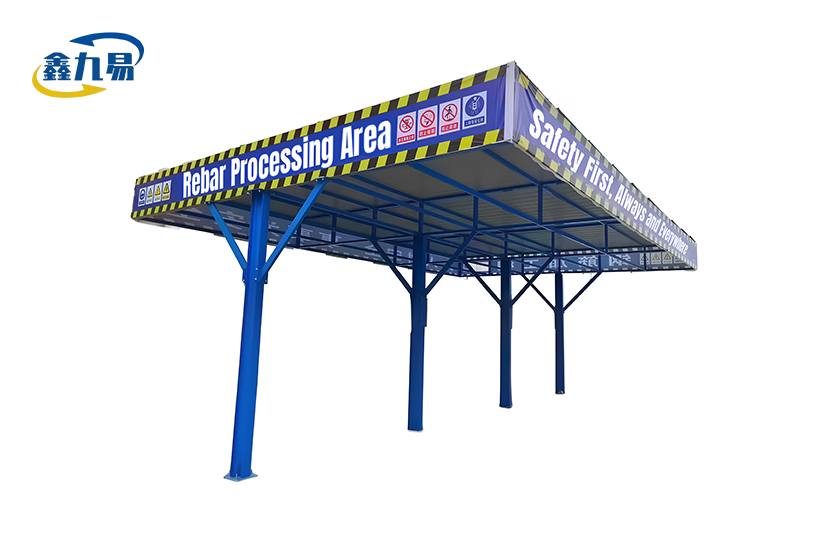
When a job site demands overhead protection that can handle heavy loads, wide spans, and daily wear, a steel structure processing canopy delivers where other shelter systems fall short. At Hebei Xinjiuyi Construction Technology Co., Ltd., we design and manufacture heavy-duty canopy systems built around a central double-column frame — giving contractors the structural coverage they need for rebar processing, woodworking zones, and material staging areas. This guide walks through everything procurement managers, HSE officers, and project managers need to know before sourcing a canopy system.

Understanding Steel Structure Processing Canopies
To handle steel, a dome is more than just a roof. It's a protective structure made from high-grade structural steel that was designed to go over busy work areas on construction sites, in industrial yards, and in logistics operations. These systems are made from standard parts and put together with great accuracy, unlike temporary plastic sheets or wooden frames.
Common Types and Applications
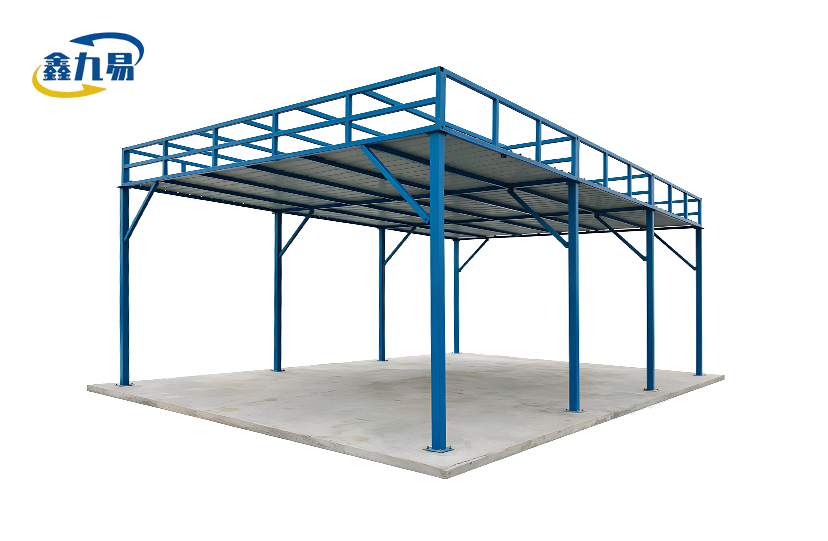
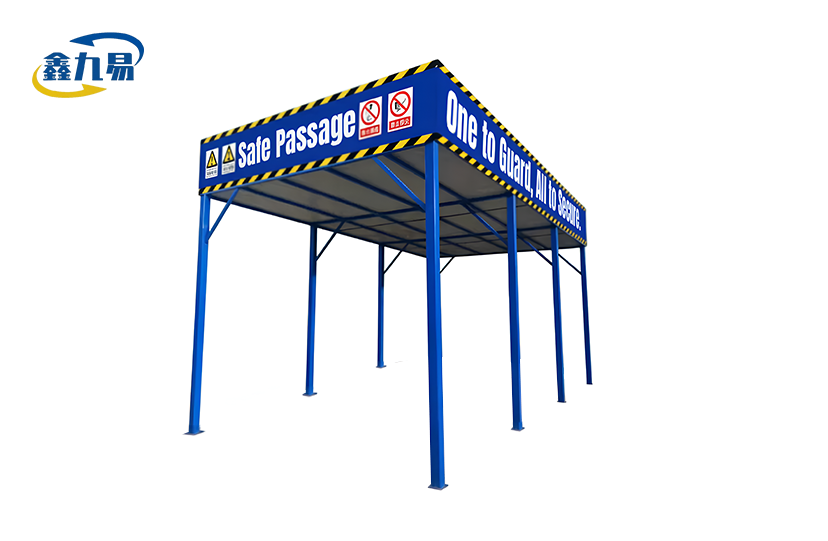
There are three main types of steel canopy systems: fixed canopies, which provide constant or semi-permanent coverage; modular canopies, which can be taken apart and moved between stages of a project; and wide-span canopies, which are built around central column systems for areas that will be under a lot of weight. Each type is used for a different purpose on the site, like keeping equipment storage areas safe or covering busy fabrication yards.
Alignment with Structural Standards
Reliable roof systems are made to meet international building standards, such as ASTM A36 for materials and ISO 1461 for hot-dip galvanizing. The American Institute of Steel Construction (AISC) says that properly built steel structures keep their load integrity under both static and dynamic stress situations. This makes them the best choice for protecting construction workers from the elements.
Fabrication Process Overview
The first step in making a good steel structure processing canopy is checking the materials. Mill test papers show the steel type, which is usually Q235B or Q345B. After that, CNC machines are used to cut the parts, they are welded at controlled temperatures, and protection coatings are applied to end the job. Before parts are packed up and sent to the site, measurement tolerance checks are done on each step.

Advantages of Steel Structure Canopies: Strength Meets Style
Steel always does better than other building materials in terms of both technical and economic factors. According to a report from the Steel Construction Institute, structural steel has a strength-to-weight ratio that is about three times higher than reinforced concrete. This means that it can support large spans without having too much material mass.
Steel vs. Alternative Materials
When B2B buyers working in tough environments look at steel compared to aluminum, plastic, and wood, the differences become clear. Here are the main differences that you should know about:
- Steel vs. Aluminum: Steel carries higher load capacity at a lower material cost per unit area. For heavy fabrication zones, aluminum lacks the structural mass to resist impact from falling debris or crane loads.
- Steel vs. Plastic or Fabric: Plastic shelter systems degrade rapidly under UV exposure and offer no fire resistance. Steel, finished with intumescent coatings, achieves fire ratings of R60 or R90.
- Steel vs. Wood: Wood deteriorates in wet environments and presents fire risk in processing zones. Hot-dip galvanized steel withstands C3 to C5 corrosive classifications.
Because of these benefits, workers who are in charge of long-term jobs that require moving the canopy many times choose galvanized steel.
Design Versatility and Site Aesthetics
In addition to being strong, modern steel canopy systems can be powder-coated in warning yellow, safety red, or colors that are specific to the brand. When electrostatic powder coating is put on top of hot-dip galvanizing, the surface finish doesn't chip or fade for years. On the surfaces of columns, you can put both safety directions and company names. This supports good building practices and helps the site's branding at the same time.

Steel Canopy Processing Methods: Ensuring Strength & Speed
On busy job sites, the speed of deployment is important. Delays in putting up shelters can stop the processing of materials, which creates a risk to the schedule. Modern ways of making things directly deal with this.
CNC Cutting and Robotic Welding
CNC plasma or laser cutting makes sure that the holes for bolts and the plates that join them are lined up to within a few millimeters. The crew bolts the parts together without grinding or making any other changes on the job site. When robots weld the main beam links, they make uniform weld seams that are then checked with ultrasonic testing (UT) to make sure there are no internal flaws. This is the precise fabrication process of the steel structure processing canopy.
Modular Assembly Workflow
Each cover unit comes as a kit that has already been put together and has parts that are clearly marked. The steps for putting it together are simple: anchoring the base plate, putting up the column, installing the main beam, attaching the side beams, and placing the purlins. Standard modular construction benchmarks say that this method cuts the time needed to put together structures on-site by about 40–60% compared to traditional field-welded structures.
Quality Assurance Before Dispatch
The following checks are done on every unit before it leaves the plant. Anti-corrosion layers meet or go beyond 85 μm, as shown by Dry Film Thickness (DFT) tests. Load simulations are used to make sure that the bending limits meet the local standards for snow and wind loads. There are records that connect each batch of steel to its mill certificate. These steps keep B2B buyers from getting goods that don't pass safety checks at the job site.
Maintenance and Longevity Tips for Steel Structure Canopies
A galvanized steel canopy is meant to last more than 20 years if it is well taken care of. ISO 12944 divides corrosion environments into five groups, ranging from C1 (mild indoor) to C5 (severe coastal or industrial). The frequency of maintenance should be based on the site's classification.
Routine Inspection Schedule
For inland sites, inspections every two to three years are usually enough. Checks should be done once a year in coastal areas or places with a lot of humidity. During each check, the crew looks for harm to the coating, loose joints, and any signs of surface rust at weld spots or bolt connections.
Corrosion Prevention Protocols
Fix any damage to the finish right away with a zinc-rich primer, before rust gets below the coated layer. Adding an extra fluorocarbon topcoat during fabrication greatly extends the time between coatings for sites in tropical areas, which includes Southeast Asia, the Middle East, and coastal Africa.
Handling Common Structural Issues
Joint failures at bolted connections are usually caused by mistakes in the installation torque, not weak materials. During installation, make sure that all of the nuts are tightened to the recommended levels. Then, do another check after the first heavy rain. If the steel below keeps its cross-sectional dimensions, surface dents caused by machine contact do not weaken the structure.
How to Choose and Source the Best Steel Structure Processing Canopy
Finding the right provider for a canopy system affects more than just price. It also affects the schedule, compliance, and long-term safety of the site. Here are the things that buying managers with a lot of knowledge put first:
Supplier Certification and Capacity
Make sure that any company that makes a steel structure processing canopy has the ISO 9001 quality management certification, the ISO 45001 workplace health certification, and the ISO 14001 environmental certification. These credentials show that the factory uses quality systems that have been checked out instead of less formal ways of making things. All three certificates are held by Xinjiuyi, which also runs a production plant in the Xian County Development Zone of Cangzhou, Hebei.
Customization and Technical Support
A good provider should be able to change normal canopy sizes to fit different site plans without making lead times longer. You can choose any size column, span width (up to 9000 mm × 6000 mm), height, and surface finish from Xinjiuyi. Before production starts, pre-sales technical teams make detailed renderings of the designs. This gives procurement managers a visual reference for project approvals.
Procurement Criteria Checklist
Before choosing a seller, B2B buyers should think about the things below:
- Verified mill test certificates for all steel grades used in production
- Evidence of non-destructive testing on primary weld seams
- Documented project references from comparable construction environments
- Confirmed lead times and shipping capacity for large-volume orders
- After-sales technical support availability and response protocols
By using these criteria to judge suppliers, you can lower the chances of inconsistent quality and delivery delays, which are two of the biggest problems that construction procurement teams around the world say they have.
Conclusion
Construction crews can count on steel covers built around a central double-column frame to protect them from the elements in the toughest and most dangerous work areas. In areas where rebar is processed, wood is worked on, heavy equipment is stored, and materials are staged, the right steel structure processing canopy keeps workers, equipment, and materials safe without slowing down site operations. The fastest way to get a canopy that meets project requirements and international safety standards is to work with a certified manufacturer who has a history of making quality products and offers full customization services.
FAQ
What span width can a steel structure processing canopy cover?
The center double-column roof supports at Xinjiuyi can normally hold up to 9000 mm x 6000 mm of weight. Based on estimates from structural engineering, custom sizes can be made for sites with wider or less regular plans.
How long does installation take?
On-site building of a basic unit usually takes two to four days because the parts are pre-fabricated, CNC-cut, and connected with precision bolts. Larger setups with more than one bay may take longer.
What steel grade is used in the main frame?
The main frame is made of either Q235B or Q345B high-strength steel, which are both approved by national standards for use in building overhead protection.
Is the canopy reusable across multiple project sites?
Yes. The bolted connection system makes it possible to take the whole thing apart without having to cut or weld. Moving and putting together parts at the next project site increases the value of the investment over multiple operations.
What surface treatment options are available?
There are three levels of finish: basic hot-dip galvanizing for basic corrosion protection, galvanized with spray paint for more color options, and powder coating with baking finish for the best durability in harsh environments.
Get Your Steel Structure Processing Canopy Quote from Xinjiuyi
Heavy-duty overhead protection systems are sold by Xinjiuyi to construction crews in South America, Africa, Southeast Asia, and the Middle East. We are a certified steel structure processing canopy maker with ISO 9001, ISO 45001, and ISO 14001 approvals. For every order, we provide full technical paperwork, help with custom design, and on-time delivery. Email our team at global@xjy8.com right now to get project details and a price quote.
References
1. American Institute of Steel Construction (AISC). Steel Construction Manual, 16th Edition. AISC, 2022.
2. Steel Construction Institute (SCI). Design of Steel Structures for Durability and Corrosion Resistance. SCI Publication P290, 2019.
3. International Organization for Standardization. ISO 1461: Hot Dip Galvanized Coatings on Fabricated Iron and Steel Articles. ISO, 2022.
4. International Organization for Standardization. ISO 12944: Paints and Varnishes — Corrosion Protection of Steel Structures by Protective Paint Systems. ISO, 2018.
5. American Society for Testing and Materials. ASTM A36/A36M: Standard Specification for Carbon Structural Steel. ASTM International, 2019.
6. Occupational Safety and Health Administration (OSHA). Construction Industry Standards: Fall Protection and Overhead Hazard Controls. U.S. Department of Labor, 2021.