Why Choose American Type Frame Scaffolding for Construction?
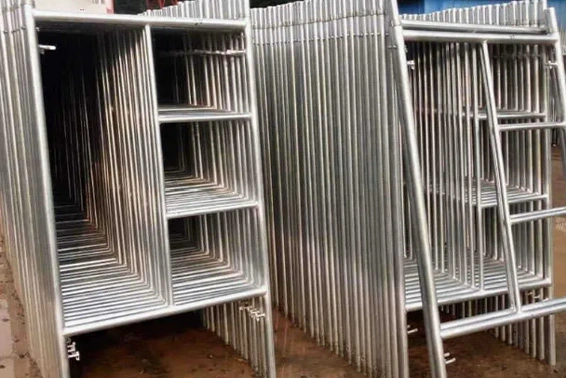
American Type Frame Scaffolding is a ladder-style modular system that meets safety standards, can be put together quickly, and lasts for a long time. It is increasingly being used by project managers and safety officers to look at temporary work platforms for high-rise buildings, bridge maintenance, or industrial facilities. Unlike tubular or ringlock systems, this frame-based design has climbing rungs built right into the vertical members. This means you don't need separate ladders, and it's easier to set up on busy job sites. Its standard sizes and tool-free locking mechanisms meet both OSHA 1926.451 and foreign standards, which makes it a good choice for workers who are in charge of many projects in different settings.
Understanding American Type Frame Scaffolding: Design, Specifications, and Benefits
Modular Architecture Rooted in North American Standards
This method is different from European ones because it has a ladder-frame layout. Each vertical frame has horizontal rungs spaced out at regular distances. These rungs serve two purposes: they strengthen the structure and make it safe to climb. This unified design is the result of decades of improvement in the US building industry, where speed and ease of movement are still very important. We use Q235 high-frequency welded steel tubing to make these frames at Hebei Xinjiuyi Construction Technology Co., Ltd. because it is strong in tension and easy to weld. Wall thickness is between 2 mm and 2.5 mm, which is the right amount of thick to balance load capacity with weight that can be handled by hand during building.
Standard frame heights are 1524 mm, 1700 mm, 1900 mm, and 1930 mm, which are all good for standard floor-to-ceiling gaps in both business and private buildings. With widths ranging from 950 mm to 1250 mm, crews can set up working platforms that are perfect for brick work or putting up siding. These measurements match cross braces and deck boards from several different sources, making sure that they will work on all job sites. When projects need non-standard sizes, like when matching different floor heights in historic renovations or industrial retrofits, our engineering team changes the specs by making custom fabrication runs.

Material Science Meets Corrosion Resistance
Service life is directly affected by how the surface is treated. Electro-galvanization adds a thin coat of zinc that protects against water in controlled indoor settings or short-term use outside. Powder coating or hot-dip galvanisation are the best ways to protect things from rain, humidity along the coast, or the chemical atmospheres found in petrochemical plants. In the second method, frames are submerged in 450°C molten zinc, which forms a coating that is metallurgically joined and can last for up to 20 years in hard circumstances. Before products leave our Cangzhou facility, our quality control procedures use ultrasonic gauges to check the uniformity of the coating thickness at several points on each frame.
Picking the right finish depends on how long the project will take and the surroundings. A facade repair in downtown may only need basic electro-galvanization, but the growth of a desalination plant in the Middle East needs special hot-dip protection. During the quotation process, we help procurement managers make this choice by looking over site plans, climate data, and repair routines.
Comparative Advantages Over Alternative Systems
When compared to tube scaffolding, which needs skilled workers to use couplers to join each pipe, ladder frames take about 40% less time to set up. Ringlock systems are easy to put together, but they don't have the natural mounting feature that is built into American-style frames. Kwikstage scaffolding is flexible, but it has more parts, which makes it harder to keep track of inventory and move things. Our frames have coupling pin systems that can be locked without tools. This lets teams quickly build platforms with more than one level while keeping the structure rigid. This means lower labour costs and faster project timelines, which are very important for contractors who are working to tight deadlines.
Core Benefits: Why American Type Frame Scaffolding Is Ideal for Construction Projects
Compliance with International Safety Regulations
Safety officers give more weight to equipment that meets or goes beyond the standards set by the government. Our ladder-frame systems follow OSHA rules that say each part must have a 4:1 safety factor, which means it can handle four times its rated working force before breaking. Manufacturing limits are set by the ANSI/SSFI SC100-5/05 standards. These make sure that the vertical legs stay parallel and the locking pins line up perfectly across production runs. Xinjiuyi's ISO 9001 approval backs up our quality management methods, from checking the raw materials to packaging them up at the end. These credentials give contractors peace of mind during government procurement audits and help them avoid fines during site inspections.
The built-in guardrail compatibility of American Type Frame Scaffolding meets fall protection requirements in addition to certifications. Frames can use standard toe boards, top rails and mid-rails without needing to be changed in the field. This plug-and-play method makes compliance paperwork easier and lowers the chance of human mistake during installation, which is a common reason why accidents happen on job sites with too few workers.
Streamlined Assembly Reduces Onsite Labor
Each frame weighs about 15 to 20 kilograms, which is easy for two people to move and lift. Cross braces are attached with flip-locks or slide-locks, which are easy to use—just push or twist them into place. Ladder frames can be put up quickly and quietly, unlike systems that need torque wrenches or hammers. This means that they don't cause as much trouble in occupied buildings or noise-sensitive urban areas. It only takes hours to train new crew members instead of days, which helps contractors who are having trouble finding skilled workers.
We saw this speed at work on a recent high-rise building job in Southeast Asia. In less than three shifts, the client put up seven levels of scaffolding, which covered 500 square meters. The built-in ladder rungs let bricklayers get to working heights without having to move external ladders, which kept the work flow going. Material workers stacked mortar buckets and block boxes on intermediate platforms. This made the ground level less crowded and raised the safety score for the site.
Adaptability Across Diverse Construction Scenarios
Because ladder-frame scaffolding is modular, it can be set up in different ways to suit different tasks. Engineers use frames with extra base jacks to make up for sloped ground under piers when they fix the bridge deck. In order to fix up tunnels, narrow beams are used that don't take up too much space and offer stable bases for pouring shotcrete from above. Power plant maintenance crews like that the system works with rolling casters, which turn static towers into mobile units that can be used to inspect turbines in large generator halls.
Teams working on interior renovations use the small size to get through narrow hallways in schools or hospitals without stopping normal operations. Not having protruding couplers lowers the risk of electrical wires or HVAC pipes getting caught, which is a worry in retrofit settings. Event planners choose ladder frames for temporary grandstands or lighting rigs because the standard sizes make it easier to keep track of rental items and make it possible to take them down quickly after shows.
Making an Informed Decision: Comparing American Type Frame Scaffolding with Other Systems
Structural Distinctions That Influence Performance
Crews can build around uneven building facades or monument contours with tubular scaffolding because it is the most geometrically flexible type of scaffolding. But each connection needs a right-angle coupler or swivel clamp, which means there are more parts to check and more places to look. There are rosette connections every few inches on ringlock systems, which let horizontal and diagonal members lock into holes that have already been made. While ringlock trusses are easy to put together, the bases must be perfectly levelled during setup because any error builds up vertically and makes the structure less stable.
Ladder-frame scaffolding is a good middle ground. The rungs on vertical frames are welded at the factory under controlled conditions, so they come already put together. This gets rid of the need for on-site welding, which can start fires when flammable materials are used in renovation projects. With cross braces, you don't have to take exact measurements during erection because they join at set points. The frame's design evenly spreads weight through the vertical legs and into base plates or screw jacks, so load capacities stay the same from level to level.
Cost Analysis: Initial Investment Versus Lifecycle Value
When purchasing managers compare up-front prices, they don't always look at the total cost of ownership. American Type Frame Scaffolding costs a little more than basic tube parts, but they make up for it by saving money on labour costs during setup and takedown. Using this method instead of tube-and-clamp for a 100-meter-long facade project could save between $8,000 and $12,000. This is because of the higher wages in North America and Western Europe.
Durability makes cost savings last longer. Frames that are well taken care of can last 15 to 20 years, but heavy-use tube couplers may break after only five years. Surface treatments stop rust-related wear and tear, which cuts down on the number of replacements needed. When clients buy in bulk, they can get better prices and shipping times that work with their project steps. This lowers the cost of storage and keeps their capital from being locked up.
Selecting Systems Based on Project-Specific Requirements
General builders who are in charge of a lot of different projects often keep a mix of teams. Ladder frames are used in business fit-outs and residential projects where standardisation speeds up the work process. Tubular scaffolding is still the best choice for restoring historic buildings or building projects that need custom shapes. During large maintenance shutdowns in factories, when thousands of cubic meters need to be set up quickly, ringlock systems work very well.
When buying things, people should weigh the pros and cons of being flexible and simple. Premium surface treatments are needed for long-term projects in corrosive environments, but basic finishes are fine for short-term work inside. Talking to makers during the design phase can help you find ways to save money and time by doing things like reuse base jacks for different projects or choosing frame heights that keep deck cuts to a minimum.
Procurement Insights: How to Purchase American Type Frame Scaffolding Successfully
Evaluating Manufacturers and Suppliers
Checking licenses is the first step in finding dependable American Type Frame Scaffolding providers. Strong operating controls are shown by ISO 9001 for quality management, ISO 45001 for workplace health, and ISO 14001 for environmental management. Ask for test results from a third party that prove the load capacity, weld integrity, and coating thickness. We give our customers access to full inspection records at Xinjiuyi, which include reports of chemical composition for steel batches and results of non-destructive tests for important weld joints.
Manufacturing capacity is important for big projects. Our factory in Cangzhou has CNC cutting tools and automatic welding lines that make 10,000 frames every month. This makes sure that the quality is always high and that the frames are delivered on time. Site visits show that the production process is well organised, with measure tools that are always accurate and skilled welders who have been trained to meet AWS D1.1 standards. Buyers can better plan their purchases to coincide with building stages when lead times and order minimums are clear.
Logistics Considerations for International Orders
For global infrastructure projects to work, shipments must be coordinated between continents. Depending on their size, standard 40-foot high-cube containers can hold between 800 and 1,000 ladder frames. When you combine orders, you can save money on freight costs, but staged deliveries may work better for construction projects that are done in stages. Understanding customs classifications, which are harmonised tariff codes for steel scaffolding parts, can help you avoid delays and extra fees.
Minimum order quantities show how efficiently the product can be made. Standard setups ship in smaller lots, while custom sizes or finishes may need 500 units or more to cover the cost of the tools. When buyers negotiate yearly supply deals, they get reserved production slots and better prices, which is helpful when they are working on multiple projects at the same time.
Rent Versus Buy: Strategic Financial Planning
Renting is a good option for short-term projects or for contractors who want to try out equipment before buying it. Specialised companies take care of rental cars and offer delivery, inspection, and pick-up services, which makes handling easier. However, rental fees add up quickly; projects that last longer than six months often reach the cost of buying the same equipment.
When you own something, you have control over its access and don't have to pay rent every month. Depreciation schedules spread out the cost of an investment over several years, so the tax approach is in line with how the item is used. When contractors have steady work, they spread the cost of scaffolding over several projects, which makes the cost-per-project figures much lower than those of rental options. Leasing choices through equipment loan companies are a good middle ground because they protect cash flow while building equity.
Maximizing Performance and Longevity of Your American Type Frame Scaffolding
Preventive Maintenance Protocols
Problems are found before they put people in danger during regular inspections. After every project, visual checks find frames that are bent, welds that are cracked, or locking pins that are broken. Frames that have deformed more than 5 mm should not be used anymore because fixing breaks down the material's features. Functional testing is done on coupling mechanisms, which means that pins must fully connect and easily release without binding. Surface coatings are checked for rust bloom or flaking. Small repairs can extend the life of the coating, but major corrosion needs to be replaced.
We suggest that competent people trained in scaffold safety do thorough inspections once a year. These checks write down frame serial numbers, load test results, and the state of the coating. This makes maintenance records that meet insurance policy and government requirements. Using a colour-coded system for tags—green for approved, yellow for repair, and red for disposal—makes keeping track of inventory easier and stops broken parts from getting to job sites.
Onsite Best Practices for Safe Erection
OSHA 1926.451(a) says that competent people must oversee the building of scaffolding. Base plates should rest on flat, firm surfaces. Adjustable screw jacks should be able to make up for small differences in the grade, but they shouldn't go past the limits set by the manufacturer. Cross braces are put in diagonally, making triangle-shaped cells that resist pressure from the side. There are guardrails on all open ends and sides. The top rails are 42 inches above the platform, and the mid-rails are in the middle.
Platform decks must completely cover work areas, leaving no holes bigger than 1 inch. This keeps tools and materials from dropping. If you only connect the locking pins partially through the frame legs and cross brace ends, they could suddenly come loose when the load is applied. When putting up scaffolding over six feet high, workers wear fall protection belts and attach lanyards to structural steel or approved tie-off places instead of American Type Frame Scaffolding parts.
Training and Safety Culture Development
Putting money into crew instruction pays off in a clear way. Certified training programs teach how to figure out loads, do inspections, and handle emergencies. Every two years, refresher courses go over best practices again and bring up to date rules or equipment designs. Before each shift, there are toolbox talks about the unique dangers of the job site. For example, when wind speeds reach 25 mph, loose parts need to be secured, and snow needs to be removed before work can resume.
Creating a culture where workers feel able to report unsafe conditions stops accidents from happening. Near-miss reporting tools keep track of close calls so that problems can be fixed before they happen. Teams that keep their accident records clean are rewarded, which encourages good behaviour and shows that management cares about safety, which is important for keeping skilled workers in competitive job markets.
Conclusion
Choosing the right temporary work platform affects the whole project, from the safety of the workers and the delivery of the project on time to the long-term cost control. These concerns are met by American Type Frame Scaffolding, which has a built-in ladder design, standard sizes, and follows all international rules. The system is easy to put together without any tools, which saves time and money. It is also built to last, so it can be used for decades in a variety of settings. When procurement managers work with certified manufacturers, they get access to technical support, the ability to make changes, and reliable delivery schedules that work with complicated building projects. Using disciplined training and repair procedures helps tools last longer and keeps workers safe, protecting both human capital and financial investments during multi-year infrastructure projects.
FAQ
1. What distinguishes Mason frames from Walk-Thru frames?
Mason frames have a horizontal section across the bottom that makes the structure strong and gives you a place to store things while you're laying bricks. Walk-Thru frames have an arched opening at the base that lets people walk under raised platforms. This is great for keeping entry open in busy streets or buildings that are already occupied. Both types can use the same cross braces and meet the same load standards, so the choice depends on how the site needs to be circulated.
2. How do I verify cross-compatibility between manufacturers?
Check three important measurements: the distance between connecting pins along the vertical legs, the frame's width at the connection points, and the tube diameters. Even small changes make it impossible to lock securely, which poses a safety risk. Before placing a large order, ask suppliers for dimensional drawings and try on samples to see how they fit. Standardization in the business makes things more compatible, but limits between manufacturers are different.
3. Which surface treatment suits coastal construction projects?
In places with a lot of salt, hot-dip galvanisation is the best way to protect metal from rust. The thick layer of zinc-iron metal protects against chloride entry, which means it can be used in sea situations for more than 15 years. Powder coating lets you choose how it looks, but it needs primer layers and regular checks to keep its protection. If money is tight, electro-galvanization with planned covering changes every three to five years may be the best option.
Partner with Xinjiuyi for Reliable American Type Frame Scaffolding Solutions
Xinjiuyi stands as your dedicated American Type Frame Scaffolding manufacturer, combining ISO-certified quality management with flexible customization capabilities. Our Cangzhou production facility delivers ladder-frame systems engineered for demanding environments—from petrochemical plants to high-rise residential towers—backed by two decades of service life under proper maintenance. Whether your project requires standard configurations or non-standard dimensions to match unique site conditions, our engineering team provides design support and detailed renderings during the pre-sales phase. Procurement managers and safety officers trust our OSHA-compliant products to meet regulatory inspections while simplifying onsite assembly through tool-free locking mechanisms. Contact us at global@xjy8.com to discuss your specifications, request load test documentation, or arrange factory audits that verify our manufacturing capabilities. We support global construction enterprises with competitive pricing on bulk orders, coordinated logistics, and technical guidance that transforms complex safety challenges into streamlined solutions.
References
1. American National Standards Institute. (2016). ANSI/SSFI SC100-5/05: Specifications for Steel Scaffolding in Vertical Shoring Systems. Washington, DC: Scaffold and Access Industry Association.
2. Occupational Safety and Health Administration. (2019). OSHA 1926 Subpart L: Scaffolds - Safety Standards for Construction. Washington, DC: US Department of Labor.
3. Construction Industry Institute. (2018). Comparative Analysis of Modular Scaffolding Systems: Cost, Safety, and Productivity Metrics. Austin, TX: University of Texas Press.
4. British Standards Institution. (2017). BS EN 12810: Facade Scaffolding Made of Prefabricated Components - Performance Requirements and General Design. London: BSI Group.
5. National Association of Scaffolding Contractors. (2020). Guide to Scaffolding Inspection, Maintenance, and Service Life Management. London: NASC Publications.
6. International Organization for Standardization. (2015). ISO 9001:2015 Quality Management Systems - Requirements for Manufacturing and Service Industries. Geneva: ISO Central Secretariat.