What is a safety experience zone?
A safety experience zone is a purpose-built, immersive training facility designed to simulate real workplace hazards in a controlled, zero-risk environment. Rather than relying on slide decks or verbal briefings, it places workers directly inside recreated accident scenarios — fall arrests, electrical shock simulations, falling object impacts, and more. Through sensory engagement involving sight, sound, and physical sensation, the facility builds genuine hazard awareness and instills lasting protective behaviors. For construction sites, infrastructure projects, and industrial facilities worldwide, a safety experience zone has become an indispensable tool for induction training, regulatory compliance, and accident prevention.
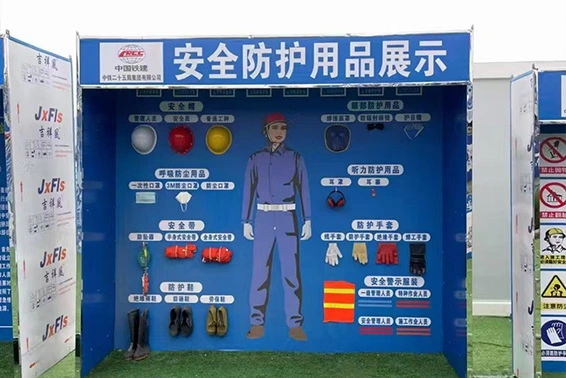
Understanding the Safety Experience Zone
A well-known problem with traditional safety talks is that passive teaching rarely changes people's behavior in a way that lasts. According to a study published in Safety Science, hands-on learning helps people remember things up to 75% better than traditional classroom training. This hole is directly filled by a safety experience zone, which turns vague ideas about risk into real, memorable experiences.
How Immersive Training Changes Worker Behavior?
If a worker actually goes through a virtual fall from a height or feels the ground move under a shaky scaffold, it leaves a very different psychological mark than watching a training video. The body remembers that meeting as a real danger, creating a protective reflex that lasts long after the workout is over. This is the main way that danger modeling facilities work so well on busy building sites.
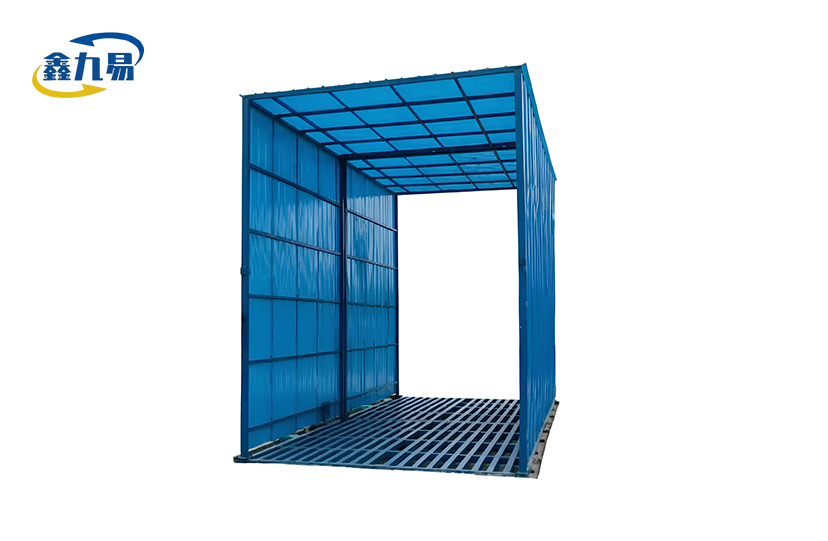
At Hebei Xinjiuyi Construction Technology Co., Ltd., our building is designed to do just that. The frame is made up of thickened, galvanized cylindrical tubes and angle steel that are bonded together to make a load-bearing structure that doesn't bend when it's used continuously at high frequencies. Steel plate platforms with non-slip coatings, protective mesh panels, and standard guardrails are set up by zone, making training areas for each type of danger.

Essential Components and Training Modules
A well-thought-out safety experience zone construction safety training center is broken up into useful modules, each of which focuses on a different type of workplace danger. The modular architecture lets the procurement team change the layout based on the size of the site and the training that needs to be done first.
Here are the core training modules typically integrated into a comprehensive facility:
- Fall arrest and height simulation: Workers practice controlled descents on raised steel platforms with standard guardrails and full-body harness connection points. This helps them get used to anchoring themselves before they ever work at height.
- Falling object impact station: This is a special area that shows how tools and materials move when they are dropped. It does this by using weighted drop tests inside safe enclosures to show risk without hurting anyone.
- Electrical hazard awareness: Arc-flash and ground-fault simulators with insulated enclosures and clearly marked exclusion zones teach workers how to lock out and tag out and how far away they should be from electrical equipment.
- Emergency evacuation drills: Timed evacuation situations within the facility boundaries teach teams how to muster and report incidents, making it easier for them to act quickly and safely in real emergencies.
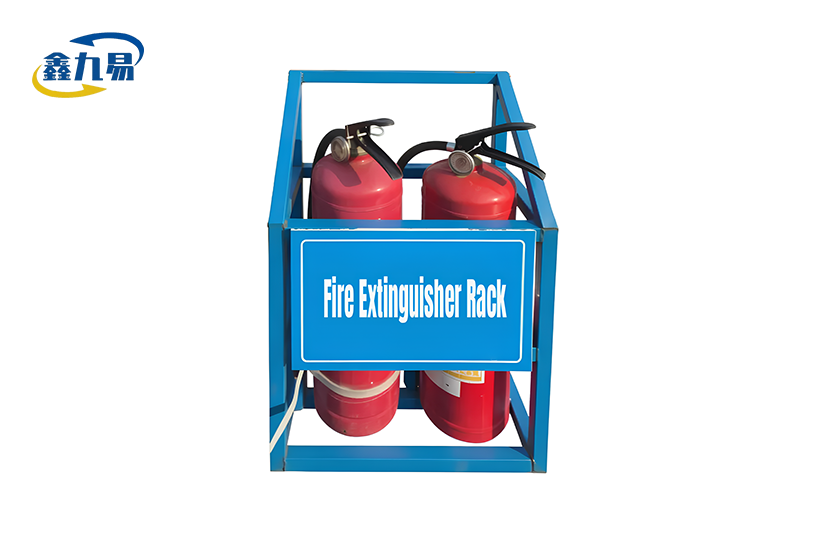
- Fire suppression practice: For fire control practice, hands-on extinguisher operation stations let workers get used to tools they might not touch until there is a real fire.
Together, these modules cover the "Big Five" construction risks that are recognized by OSHA and other international HSE frameworks in a safety experience zone. Beyond individual skill-building, the integrated layout of the facility supports pre-job induction sessions for large incoming crews, project observation tours for clients and regulatory inspectors, and periodic refresher drills throughout the project lifecycle.
Structural Durability That Supports High-Frequency Use
The frame of Xinjiuyi's building is zinc to protect it from rusting in outdoor conditions. For projects that need a more attractive look or to promote a brand, a powder-coated finish is also available. Our Xian County facility uses ISO 9001, ISO 45001, and ISO 14001-certified processes to carefully make each part. This makes sure that the structure stays strong for the whole installation's life.
Comparing This Approach With Traditional Safety Training
In building settings, traditional induction training like written handbooks, classroom talks, or projected slide shows has a built-in flaw. When workers go to a high-risk place for the first time, they need more than just knowledge. They also need to be able to use good judgment, which can only be done by having experience.
According to studies cited in the Journal of Safety Research, the number of accidents on sites that use safety experience zone experiential safety training facilities is significantly lower than on sites that only use traditional methods. Simulated exposure to a danger creates a physical memory that lasts longer than information that is only recalled.
Reusability Reduces Long-Term Procurement Costs
One real difference between a modular facility and a fixed training system is that modules can be moved around. Xinjiuyi's design makes it easy to take apart and move things quickly, and more than 80% of it can be used again in other projects. The facility can be moved, put back together, and used at the next spot with little downtime and no damage to the structure once the job is done. This makes the cost of compliance-grade safety training infrastructure a lot less per project for construction companies that work on jobs in more than one region.
Implementing a Construction Safety Training Facility: A Practical Roadmap
Setting up a hazard training center correctly needs careful planning of the steps. Installing things quickly without a layout plan or skipping teacher introduction hurts the training results the building is meant to provide.
We help with the implementation process at Xinjiuyi, and it follows a set order. We start with a site survey and layout consultation. Based on your available footprint, whether it's small or spread out over several zones, we create a custom configuration drawing. Then, our team manages production based on the details you confirm. Before shipping, the whole surface is treated and the quality is checked. On-site, we help with installation and train instructors so that your safety officers can use every module with confidence from the start.
Post-deployment, we recommend a structural audit every six to twelve months, depending on trainee throughput. This schedule is in line with international safety engineering guidelines and keeps both the players and your compliance record safe.
Conclusion
A safety experience zone is not an add-on that can be chosen, it is an investment in the safety of the workers and the confidence of the government. Construction companies and project managers can get better training results than from talks alone when they use physical danger simulations instead of passive teaching. The modular, galvanized steel building in Xinjiuyi is made to withstand the demands of active construction sites. It is portable and strong enough to be used for many projects over its lifetime. There are fewer accidents, better records of following the rules, and workers who are fully aware of the dangers they will face when they get to the job site.
FAQ
What industries benefit most from a hazard simulation facility?
Due to the large amount of height work, heavy tools, and electrical systems, construction and civil building areas have the most demand. These zones are also used by oil, gas, and chemical processing plants to practice lockout/tagout and emergency escape processes. To cut down on arc-flash events, the smart grid and utilities use special electrical safety devices.
What site area is required for installation?
A typical full-service facility takes up 150 to 300 square meters of space. Compact configurations made for limited spaces can work in areas as small as 50 square meters and still have the core fall, electrical, and object-impact modules.
Can the facility be customized to match specific brand or regulatory standards?
Yes, Xinjiuyi lets you change all dimensions and modules. For foreign EPC projects and export deployments, we also support English-language signs, bilingual instructional material, and color schemes that are specific to the brand.
How long does the equipment last?
The galvanized steel structure parts can last up to 20 years with normal upkeep, which is in line with Xinjiuyi's higher standards for product engineering.
Does the facility support export and international shipping?
The form of the modular structure makes it work perfectly with shipping containers. We have sent facilities to EPC projects overseas and can provide full technical documentation, HSE compliance certificates, and help with customs clearance needs.
Build Safer Sites With Xinjiuyi — Contact Our Safety Experience Zone Supplier Team
Xinjiuyi provides enterprise-level safety experience zone options that are built to last, be portable, and have a measured effect on training. Our team can help you with custom layout design, certified manufacturing, and full installation support, whether you are setting up an induction area for a single project, making facilities the same across a national construction portfolio, or supplying an EPC site overseas. To get a site-specific configuration suggestion, email our foreign team at global@xjy8.com or visit xjy8.com.
References
1. Saurin, T. A., Formoso, C. T., & Guimarães, L. B. (2004). Safety Science, Elsevier, Vol. 42.
2. Haslam, R. A., Hide, S. A., Gibb, A. G. F., et al. (2005). Applied Ergonomics, Elsevier, Vol. 36.
3. Lingard, H., & Rowlinson, S. (2005). Occupational Health and Safety in Construction Project Management. Spon Press.
4. Hallowell, M. R., & Gambatese, J. A. (2009). Journal of Safety Research, Elsevier, Vol. 40.
5. Chi, C.-F., Chang, T.-C., & Ting, H.-I. (2005). Safety Science, Elsevier, Vol. 43.
6. International Labour Organization. (2020). Safety and Health at the Heart of the Future of Work. ILO Publications.