Is a Ladder Cage Required for My Steel Building?
Safety managers and people who work in procurement often wonder if a construction ladder cage is necessary when they are planning vertical entry options for steel buildings. The simple answer relies on the height of the ladder, local laws, and safety rules at work. In the United States, fixed ladders longer than 24 feet were required by OSHA rules to have safety systems. Personal fall arrest systems are now the norm for higher installations, but ladder cages are still widely used and very useful for medium- to low levels, deep excavation sites, bridge building, and tunnel entry points. Picking the right method will protect your employees, make sure that rules are followed, and lower your company's risk of being sued.
Understanding Ladder Cages and Their Necessity in Steel Buildings
What Defines a Ladder Safety Cage System
A ladder safety cage is a secure structure that goes around fixed vertical ladders. It is made up of horizontal hoops and vertical bars that form a closed rising path. This cage keeps workers from falling backwards while going up or down, providing constant passive safety without the need to engage an active harness. The design usually has a cage diameter of 27 to 30 inches and hoops that are no more than 48 inches apart to keep the structure rigid and give the user confidence.
These enclosures cover the whole edge, unlike simple handrails. In steel buildings, where wind exposure, changing weather, and limited room make it hard to use standard fall protection equipment, these are especially useful. Because they are modular, sections can be added or taken away as the height of the building changes. This makes them flexible for changing project needs.
Common Types Found in Steel Construction Projects
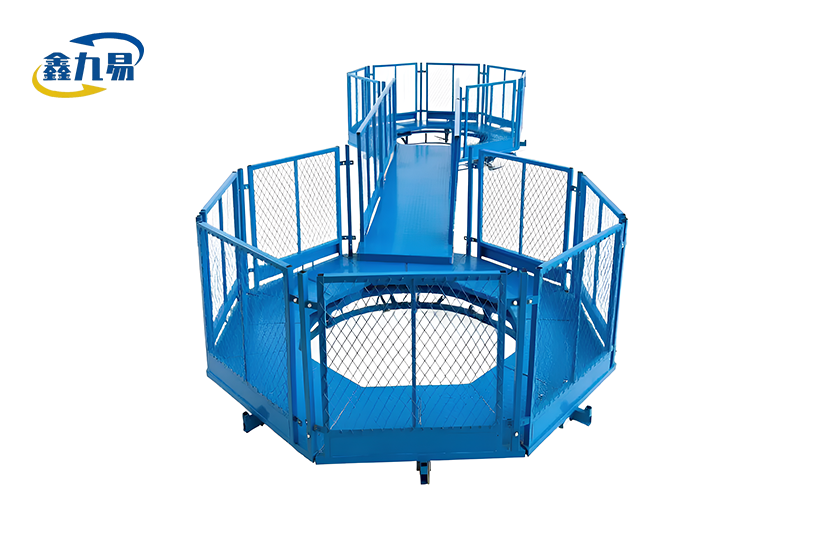
Depending on the needs for entry and the weather, steel building projects use a variety of ladder cage designs. At platform levels, walk-through safety gates make it safe to get on and off the platform while keeping fall protection in place. Flared bottom parts let you get to the ground level without any problems and keep people from climbing without permission by keeping the lowest hoops high. Some systems have rest areas built in at regular intervals to keep workers from getting too tired while they climb long steel structures or industrial buildings.
Material choices have a big effect on how well something works and how long it lasts. For a construction ladder cage, hot-dip galvanized steel cages are very strong and don't rust, making them perfect for steel buildings that are outside in bad weather. Stainless steel versions work well in coastal areas or chemical processing plants with corrosive air that need materials that are very strong. For retrofit installations on existing steel structures that can't hold as much weight, aluminum alloy options are better for a construction ladder cage.
Regulatory Requirements and Regional Standards
OSHA Standard 1910.28 governs fixed ladder safety systems in the United States. For heights above 24 feet, ladders that were put in place before November 2018 could use cages as their main fall protection. For newer installs, ladder safety systems or personal fall stop systems are required. Cages are still legal as an extra safety measure or for ladders below the threshold height. Cages are still used in many steel building projects because they are reliable and easy to use.
International standards make things more difficult for procurement teams around the world. The European EN ISO 14122-4 rules spell out exact space sizes and load standards for structures. These international standards are being adopted more and more by markets in the Middle East and Southeast Asia. This makes it possible to standardize procurement across multiple project locations. Knowing about these regional differences helps purchasing managers choose equipment that meets the needs of local inspectors while also being consistent across the whole global portfolio of the company.
Installation and Safety Standards for Ladder Cages on Construction Sites
Step-by-Step Installation Process for Steel Structures
To make sure the building is safe and the rules are followed, installing ladder cages on steel buildings needs to be carefully planned and carried out. To start, the total climbing height must be accurately measured, and mounting points must be found on the steel framework. Structural engineers have to make sure that the steel parts can hold up both the cage assembly's "dead load" and the "dynamic loads" that come from workers moving around and being exposed to wind.
Anchor points are usually welded or bolted directly to the steel building's vertical beams or other structural members, spaced out to match the height of the cage sections. Each section is joined to the next by bolted joints, and alignment pins make sure that everything is in the right place before the final tightening. All connections must be torqued to the manufacturer's specs. During the first few weeks of service, the assembly should be re-torqued every so often as it settles under working loads.
Most of the time, the installation process goes from bottom to top, with one section being secured before the next is lifted into place. This method lowers the risk of falling during assembly and lets quality be checked at every step. After the whole installation is done, it is inspected carefully to make sure that the hoop spacing, cage diameter, and secure fastening at all connection points are all correct before workers are allowed to use it.
Material Comparisons: Steel Versus Aluminum Systems
The standard for building ladder cages is hot-dip galvanized steel, which is the best combination of strength, durability, and cost-effectiveness. Steel cages can take a lot of impact loads and side forces without permanently deforming. This is important for steel buildings where equipment is moved or materials are handled near vertical entry points. The galvanized coating is usually more than 85 microns thick, and in normal industrial settings, it protects against corrosion for 25 to 50 years.
Cages made of aluminum metal are lighter, which makes them easier to place and lessens the load on the steel building frame. This is especially helpful when adding columns after the fact when the current ones don't have a lot of spare capacity. But because aluminum has a lower modulus of elasticity, you might need thicker members or more bracing to get the same level of rigidity, particularly for a construction ladder cage. It's also important to carefully specify the material to make sure it works with different metals so galvanic rusting doesn't happen when aluminum touches galvanized steel.
Specifications for load capacity must match how the equipment is expected to be used. Standard designs allow at least one worker with tools and gear to fit, and each climbing section is usually rated for 250 to 300 pounds of distributed load. Higher capacity ratings may be needed in steel building applications where materials need to be moved around a lot, but this raises the cost of the materials and puts more stress on the building frame's structure.
Inspection Protocols and Maintenance Requirements
Regular inspections keep the ladder cage working well and meet regulatory requirements. Visual checks should be done once a month to look for clear damage, missing parts, or bolts that aren't tight. Weld integrity, coating condition, and dimensional accuracy are checked every three months, paying special attention to high-stress areas near anchor points and platform connections. Professional checks by trained safety staff once a year provide written proof of ongoing compliance and structure soundness.
The main goals of maintenance work are to protect the coating and make sure of the mechanical integrity. Galvanizing that is damaged should be fixed right away with zinc-rich paint to stop rust from spreading. Fasteners need to be re-torqued from time to time. This is especially important in the first year after installation, when temperature cycling and shaking cause them to settle. Drainage holes at the bottom of vertical parts must stay empty so that water doesn't build up and speed up rusting inside.
An audit trail showing due care is made by writing down all inspection results and repair actions. Keeping these records helps protect businesses during safety checks and shows that they are managing risks proactively in case something goes wrong. Digital inspection platforms make this process easier by letting reports be sent in real time and follow-up actions be scheduled automatically.
Ladder Cage Alternatives and Comparisons
Evaluating Ladder Safety Rails and Fall Protection Systems
Another option is ladder safety rails, which use a rigid rail system with a shuttle device connected to the worker's harness. Some users like this technology because it lets them climb without being blocked and without the visual confinement of a cage. When a worker falls, the shuttle automatically engages, stopping them within inches. But this system needs active user participation—workers have to properly connect their harnesses before each climb, which means mistakes could happen.
Personal fall arrest systems with retractable lifelines give you the most options, but they need to be properly trained and enforced all the time. Putting on full-body straps and connecting to anchor points above takes more time for each rise. When it comes to steel buildings with a lot of vertical traffic or a lot of access points, these separate systems can slow things down and make them less effective than passive protection systems.
Cage systems work best when many workers without special training need to access them often. The enclosed design gives people a sense of security that makes them more likely to use the right climbing method and lessens their hesitation. This is especially helpful for new construction workers or maintenance teams that aren't familiar with how certain steel buildings are laid out. This passive defense method gets rid of compliance worries about harness use and lowers the administrative load of training records.
Prefabricated Versus Custom Design Options
Prefabricated modular cage systems come with standard parts that can be quickly put together by bolting them together. These units usually come in 2000mm height increments and set widths of around 2000mm. This lets builders choose the right number of parts to get the total climbing height they need. Standardization makes it easier for companies that manage a lot of steel buildings to keep track of spare parts and lets buyers choose from a wider range of suppliers.
Custom-engineered solutions are made to fit specific architectural limitations or operational needs. Custom design costs are worth it if they include angled entry tracks that can fit irregular steel building shapes, built-in rest platforms at certain heights, or special coatings for harsh environments, and if they incorporate a construction ladder cage to provide enclosed fall protection along the climbing path. The engineering process usually takes two to four weeks for design approval and scheduling fabrication, and the costs are high because the method isn't standard.
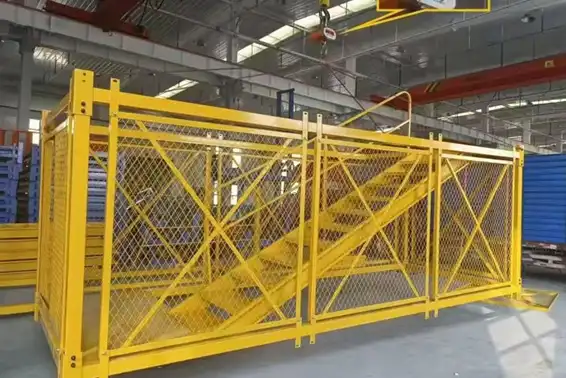
Manufacturers of modular systems like Xinjiuyi use thicker, galvanized rectangular tubes with 80mm x 80mm column sections and 3.0mm wall thickness. These tubes provide strong structural performance while keeping standard dimensions. The welded frame construction with bolted assembly joints resists wind loads very well without slowing down installation in the field. Standard pieces that are 3000mm long, 2000mm wide, and 2000mm high can be used for most vertical entry needs in steel buildings and can be quickly specified and ordered.
Specialized Features: Safety Gates and Surface Treatments
Ladder cage systems with safety gates at platform entry points keep people from falling while still letting normal traffic flow. Automatic self-closing spring-loaded gates close themselves after a worker goes through them, so they don't need to be latched by hand. The width of the gate opening should be between 600mm and 750mm so that workers wearing tool belts and carrying equipment can get through without compromising the safety boundaries.
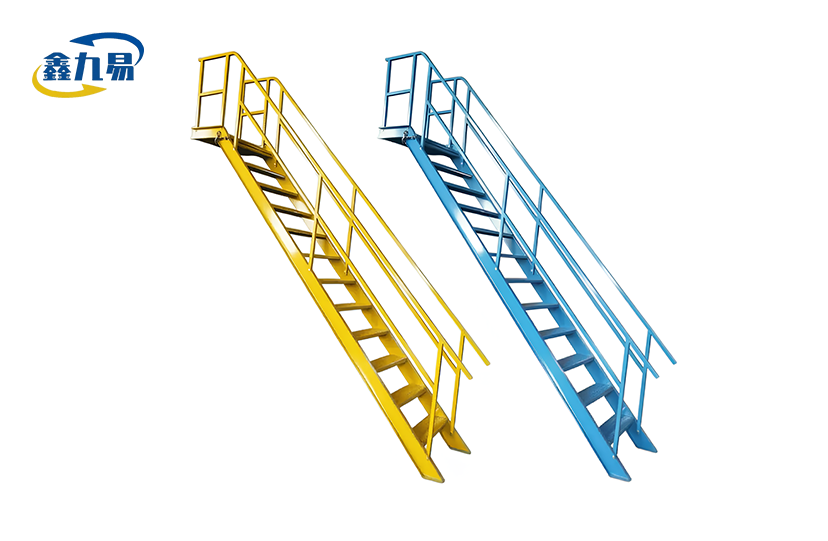
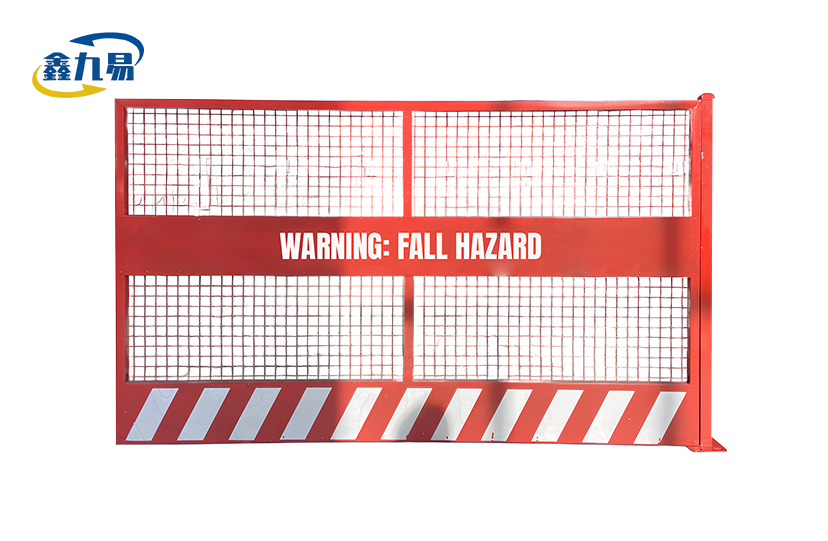
Surface treatments make things last longer and make them easier to see. High-temperature baking paint finishes give long-lasting color that can stand up to UV light and wear and tear. High-contrast color schemes like yellow and black make warnings much easier to see. This helps workers quickly find access points in complex steel building environments and raises safety awareness. Hot-dip galvanizing is still the best way to protect steel buildings from corrosion. This is especially true for buildings near the coast or in industrial areas where air pollution is a problem.
Safety features that can't be skipped include non-slip coatings on ladder rungs and platform surfaces. Chequered plate platforms that are 2.0mm thick give you a safe place to stand even when it's wet or dirty from construction debris. Stair half-treads that are treated in the same way keep people from slipping when they are climbing. These seemingly small details make a big difference in the number of accidents that happen and show that the company is committed to full safety management.
Procurement Guide for Ladder Cages in Steel Building Projects
Supplier Selection Criteria for B2B Buyers
Quality certifications are the first thing that you should look at when checking potential ladder cage sellers. ISO 9001 certification shows that quality management systems are well-established, and ISO 45001 certification shows a strong dedication to health and safety at work throughout the manufacturing process. Suppliers that do business with other countries should have proof that their products meet the standards for load capacity, impact protection, and sealing performance. This proof should come from a recognized laboratory.
Assessing suppliers' manufacturing capacity makes sure they can meet project deadlines without lowering quality. Site trips show how things are made, how to control the quality of the welding, and how to keep track of supplies. Most of the time, suppliers with specialized welding bays, automated cutting equipment, and climate-controlled paint facilities provide more uniform product quality than businesses that rely on manual processes and manufacturing areas outside.
Technical help skills are what set good providers apart from great partners. Custom models and 3D images from pre-sales engineering services help project teams see how installations will look and find any problems that might arise before they commit to buying something. Support after the sale, like help with installation, training for inspections, and quick warranty service, lowers the total cost of ownership and keeps projects on schedule when problems happen in the field.
Pricing Considerations and Bulk Order Benefits
The price of a ladder cage depends on how much the materials cost, how hard it is to make, how the surface is treated, and how many are ordered. For regular steel building projects, standard galvanized steel modular systems are usually the most cost-effective choice. Stainless steel or custom-engineered solutions cost more because they have to meet specific performance requirements or fit within specific size limits.
When a company is in charge of several steel building projects or a big development that needs a lot of vertical access points, volume discounts become important. Setting up blanket purchase agreements with preferred suppliers locks in good prices and makes sure that materials will be available for construction projects that last for more than one year. Standardization across a company's entire product line is also possible through these partnerships, which makes training and managing spare parts easier.
When you do a total cost study, you should include the labor costs for installation, the costs of ongoing upkeep, and the expected service life. Systems that are put together with bolts require less work in the field than bonded systems, which makes up for the higher original unit costs. Protective coatings that extend the time between upkeep tasks lower lifetime costs, even though they cost more up front. Long-term planning based on a 20-year service life expectation leads to more value than minimum-cost procurement based only on the initial purchase price.
Professional Installation and Maintenance Support
Professional installation services reduce the risks of completion and make sure that all regulations are followed from the beginning of the project. Installation teams with a lot of experience know how to properly anchor steel buildings and follow safety rules when working at heights while putting together cages. Their knowledge stops common mistakes like not tightening enough, not aligning properly, or not attaching structures enough that could weaken the system's stability.
Maintenance agreements set up regular inspections, keep track of paperwork, and give repair needs priority attention. While extending the useful life of assets, these programs help companies that don't have their own experts keep up with regulatory requirements. When compared to reactive maintenance methods that cause unexpected cost spikes when neglected maintenance reaches critical levels, predictable annual costs make budgeting easier.
Staff training programs for facility care make it easier for people inside the building to do regular checks and small repairs. Building operators can take care of their own vertical access systems by getting training from the supplier that includes inspection checklists, torque specifications, and coating repair procedures. This sharing of knowledge increases the return on equipment investments and makes the relationship between the buyer and the supplier stronger.
Case Studies and Practical Insights
Successful Steel Building Implementations
It had to be safe to get to pier construction sites that were 30 to 60 feet above the water for a big bridge-building job in the southeast of the United States. The project team asked for a modular galvanized steel construction ladder cage with rest platforms built in every 20-foot interval. As work on the pier continued, the bolted-together system made installation go quickly. As the work increased, more construction ladder cage pieces were added to keep up with the demand. Over the course of 18 months, the method let hundreds of workers do their jobs of putting in rebar, installing forms, and finishing the concrete without any problems.
Chemical processing equipment was housed in an industrial steel building complex that needed corrosion-resistant vertical access to HVAC systems and process monitoring stations on the roof. Engineers chose stainless steel ladder cages made of 316-grade alloy because they are better at keeping out outside contaminants. The custom design included platform landings at middle levels, which made it easy for repair teams to move tools and new parts. After five years of constant use in a harsh setting, inspection records showed that the cages' structures stayed strong with little maintenance.
For safe access to foundation work 40 feet below grade, workers had to dig deep for a metro transit station. Temporary modular ladder cages were put up one step at a time as the excavation went deeper. These cages covered the vertical exit for machine workers and inspection staff. The systems stayed in place while the foundation was being built for 14 months. After that, they were taken apart and moved to other parts of the project. This ability to be used again and again saved a lot of money compared to building access systems from scratch, and it also made sure that safety standards were met in all of the work sites.
Addressing Common Procurement Challenges
Problems in the supply chain can cause cage deliveries to be late and construction schedules to be pushed back. This risk is lessened by procurement managers who qualify multiple suppliers and keep lead time expectations realistic. From order to delivery, standard modular systems usually take four to six weeks. Custom designs, on the other hand, can take eight to twelve weeks, depending on how complicated the engineering is. Getting suppliers involved early on in the planning stages of a project makes it possible to schedule production so that it fits with building goals.
There are times when safety requirements, design limitations, and price limits all clash in the specifications. Project engineers, safety officers, and suppliers must work together to solve problems in order for solutions to be successful. Value engineering looks for ways to meet important performance standards by using different materials, changing the size, or implementing the plan in stages. This way, costs are spread out over a longer period of time without affecting worker safety.
International purchasing makes things like following rules, shipping issues, and payment terms more difficult. Working with sellers who have experience in export markets makes customs paperwork easier, makes sure that ocean freight is properly packaged, and sets up payment methods that work for everyone. Making sure that goods meet the standards of the target country before they are shipped avoids delays and costly repairs that need to be done after delivery.
Key Takeaways for Procurement Managers
A successful ladder cage procurement balances many factors instead of focusing on the best one. Baseline standards that can't be changed include safety performance, legal compliance, and structural longevity. Within this framework, choices about procurement weigh the original cost against the value over the lifecycle, standard goods against custom solutions, and relationships with suppliers against transactional buying methods.
Including safety staff and field supervisors early on in the development of specifications makes sure that they can be used in the real world and that workers will accept them. Workers are less likely to use equipment that they find awkward or scary, even if it works technically well. On the other hand, systems that build trust through careful planning and high-quality implementation promote correct use and help create a positive safety culture.
Regulatory analysis, supplier evaluation criteria, cost-benefit calculations, and risk assessments should all be included in the paperwork that backs up procurement decisions. This record holds everyone responsible, makes it easier to share knowledge when staff changes, and sets standards that will make future buying processes easier. When companies put money into strong procurement processes, they get benefits across all of their projects, like higher efficiency and fewer safety incidents.
Conclusion
You should carefully look at regulatory requirements, project-specific conditions, and your organization's safety priorities to decide if your steel building needs a construction ladder cage system. Even though OSHA rules give us a starting point, a full risk assessment usually shows that extra safety measures are needed above and beyond what is required by law. Modern modular cage designs are adaptable and affordable, and a construction ladder cage can be used for a wide range of steel building tasks, from building bridges to industrial facilities.
To be successful at procurement, you need to look at providers' quality certifications, manufacturing skills, and expert help, not just price. Lifecycle value is the right way to make a decision because properly defined systems usually last 20 years. Procurement managers protect workers, meet regulatory requirements, and ensure efficient project execution across their organization's steel building portfolio by working with experienced manufacturers who know how to meet construction safety standards and deliver consistent product quality.
FAQ
1. When is a ladder cage system mandatory for steel buildings?
OSHA Standard 1910.28 says that fixed stairs higher than a certain height, usually 24 feet, must have fall protection. Cages can be used on ladders that were put in place before November 2018, but most newer installations need ladder safety systems or personal fall arrest systems. Cages are often used for low heights or as extra safety because they are reliable and easy to use. State and local laws may have stricter requirements, so it's important to look at these laws when planning a project.
2. How do steel and aluminum ladder cages compare?
Steel cages are very strong and don't break easily when they get hit. They are perfect for steel buildings that get a lot of use or industry settings where people move things around. Galvanized steel is very good at stopping corrosion and lasts for 25 to 50 years. Aluminum cuts down on weight by about 60%, which is helpful for retrofit installations on structures that can't hold as much weight. But aluminum needs to be carefully spec'd to stop galvanic corrosion, and it might need to be reinforced to match the rigidity of steel.
3. What inspection frequency maintains compliance?
Visual inspections done once a month find obvious damage and loose parts. Weld strength, coating state, and structural alignment are all checked with thorough inspections every three months. Professional inspections by trained staff once a year provide documented proof of compliance that is needed by most regulatory frameworks. Installations that get a lot of use or places that are rough might need to be checked more often. Keeping thorough records of inspections shows that you are doing your job and helps with planning proactive maintenance.
Partner with Xinjiuyi for Comprehensive Ladder Safety Solutions
To keep workers safe while they're working at heights on your steel building projects, you need reliable tools backed by engineering know-how and quick service. The ladder cage systems that Xinjiuyi sells have been tested and are certified by ISO 9001, ISO 45001, and ISO 14001; they combine strict quality control with useful design features that have been developed over many years of experience on construction sites. Our modular systems are made up of thicker galvanized rectangular tubes, ground-smooth joints made with precision welding, and bolt-reinforced nodes that keep the system from coming apart and can withstand heavy wind loads.
Our technical team can help you with standard configurations for easy access to steel buildings or custom-engineered solutions for difficult excavations and high-rise applications. They do this by giving you detailed drawings and realistic renderings that make installation requirements clear before you commit to buying. Get in touch with our knowledgeable experts at global@xjy8.com to talk about your vertical access safety needs and get specifications that are specifically made for your project. As a reliable provider of construction ladder cages for infrastructure projects around the world, we offer goods that keep your workers safe and meet strict safety standards.
References
1. American National Standards Institute. (2017). Safety Requirements for Fixed Ladders: ANSI A14.3. Washington, DC: American National Standards Institute.
2. International Organization for Standardization. (2016). Safety of Machinery - Permanent Means of Access to Machinery: ISO 14122-4. Geneva: ISO Standards.
3. Occupational Safety and Health Administration. (2018). Walking-Working Surfaces and Personal Protective Equipment (Fall Protection Systems): Final Rule. Federal Register, Volume 81, Number 223.
4. National Safety Council. (2020). Fall Prevention Guidelines for Construction and General Industry. Itasca, IL: National Safety Council Press.
5. American Society of Civil Engineers. (2019). Steel Construction Manual: Access Systems and Safety Requirements, 15th Edition. Reston, VA: ASCE Publications.
6. Construction Industry Research and Information Association. (2018). Temporary Access Solutions for Construction Sites: Technical Guidance Note 427. London: CIRIA.