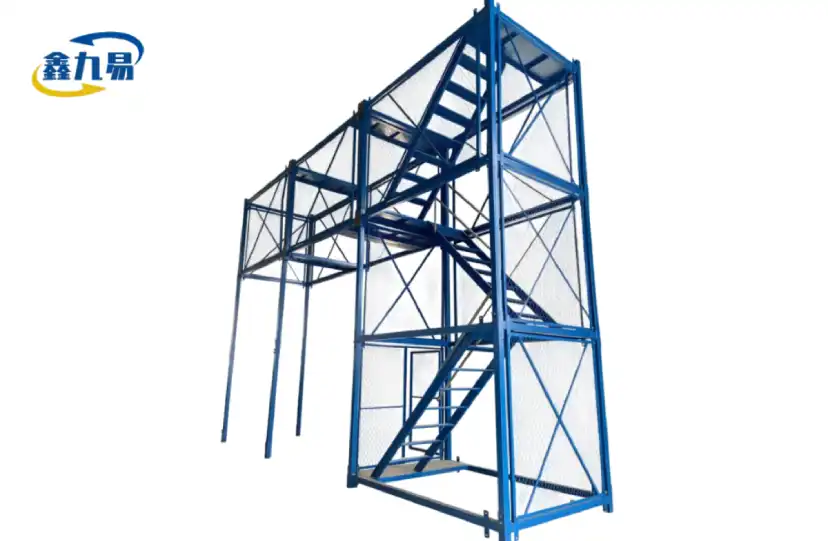
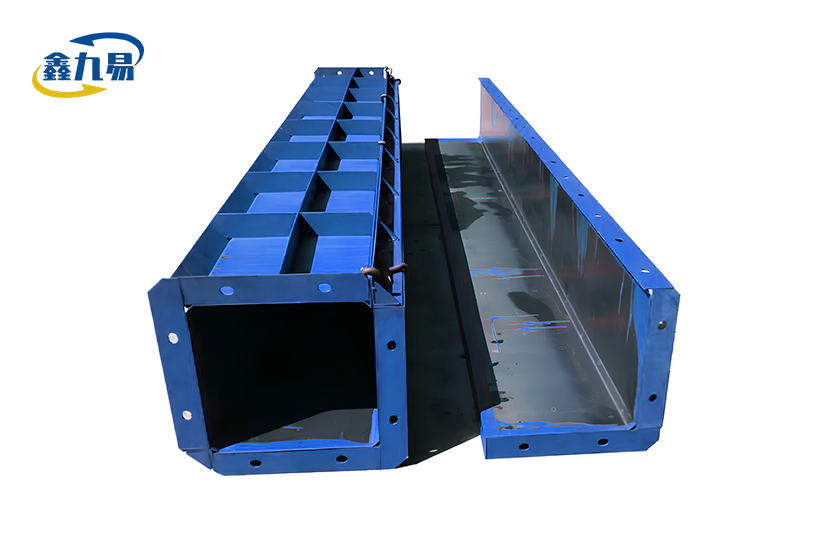
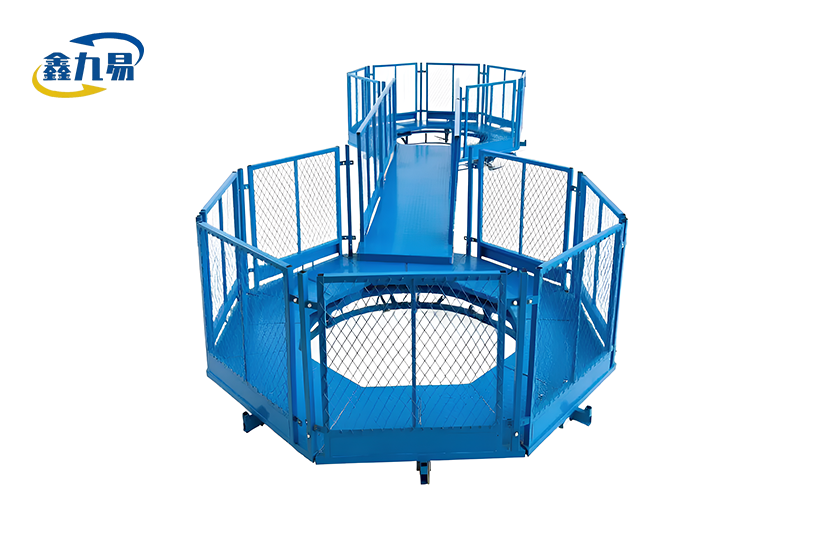
What are the safety requirements for a pier cap work platform?
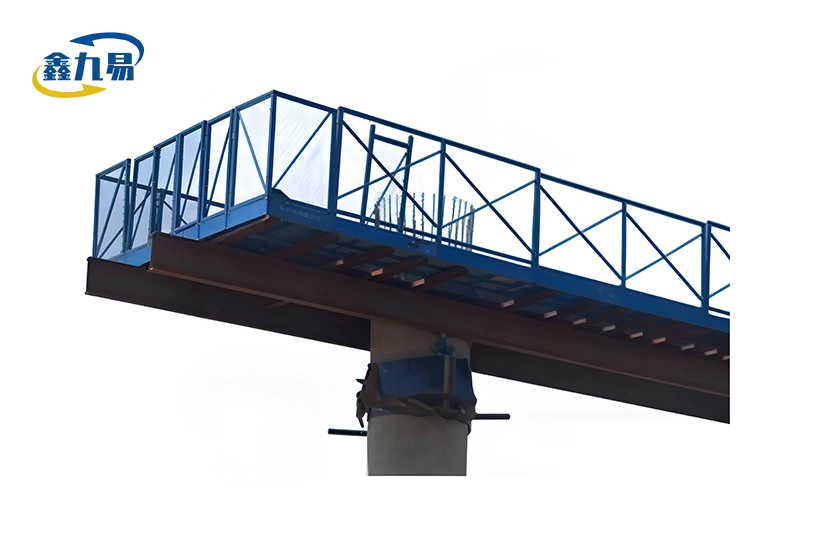
A pier cap work platform is a specialized elevated access structure engineered to support bridge construction crews performing rebar fixing, formwork installation, and concrete pouring at the tops of bridge piers. Meeting rigorous safety requirements is not optional — it is the foundation of every compliant bridge project. These requirements span structural load capacity, fall arrest systems, anti-slip decking, material certifications, and periodic inspection protocols. Regulatory frameworks such as OSHA 1926 Subpart L and EN 12811-1 define the minimum standards that every bridge cap platform must satisfy before workers set foot on it.
Understanding Pier Cap Work Platform Safety: An Overview
When building a bridge pier, workers are often more than 20 meters above the ground, sometimes right above moving traffic lanes or open water. At those heights, one structure failure or an edge that isn't watched can have terrible results. The U.S. Bureau of Labor Statistics says that falls are still the top cause of death in the building industry, killing about 36% of all construction workers each year.
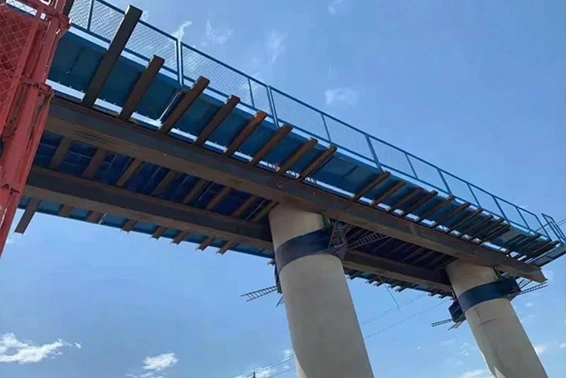
This type of risk can be reduced by using a properly designed pier top platform instead of ground-based scaffolding. This is because the platform connects directly to the current pier structure. This pier-mounted method gets rid of the need for extensive foundation work, cuts down on mobilization time, and moves working loads through the pier's own structural capacity instead of using separate ground supports.
Aligning regulations is also very important. For elevated work surfaces, OSHA 29 CFR 1926.502 says what the guardrail's height, opening size, and load resistance should be. European standards for temporary work tools are set by EN 12811-1. Depending on the use, these standards require load classes between 2.0 and 6.0 kN/m². Procurement teams and site engineers need to make sure that any platform they choose comes with proof that it meets the standards that apply to their project.

Core Safety Requirements for Pier Cap Work Platforms
Structural Material and Load-Bearing Standards
How safely and reliably a bridge pier cap platform works over many deployment cycles depends on its structural backbone. I-beams, channel steels, and thickened galvanized rectangular tubes are used to make high-quality platforms. This mix makes the connection points strong while keeping the unit weight doable. The main frame of the Xinjiuyi Pier Cap Work Platform, for example, is made of 50 × 50 mm square tubes with 1.5 mm wall thickness. It is strengthened with 50 mm equal angle steel at 4.0 mm thickness where bending forces are strongest.
Load capacity needs change depending on how hard the task is. A platform that supports crews gathering rebar, putting up formwork panels, and pouring concrete all at the same time must be able to handle both live and dead loads without showing any signs of deformation. Testing for static load at 1.25 times the rated capacity and testing for dynamic load at 1.1 times the rated capacity are standard quality control standards that are backed by companies like SGS and TÜV.
Fall Prevention and Perimeter Protection
On elevated bridge platforms, guardrail systems must meet certain size and weight limits. OSHA requires that the top rail be between 39 and 45 inches high, and that there be mid-rails and toe boards to stop tools or materials from flying out. Guardrails around the edges made of 40 × 40 mm square tubes provide the structural resistance needed to stop a worker's fall. Every opening in the secure envelope is filled with expanded metal mesh that has holes measuring 60 × 100 mm. This stops small pieces of trash from becoming projectile hazards below.
Corrosion Resistance and Durability Requirements
Steelwork in outdoor bridges is subject to rain, salt spray, UV rays, and changes in temperature. Hot-dip galvanizing that follows ISO 1461 gives structure parts a zinc covering that is 85 microns thick or more. This gives them a service life that usually lasts more than 20 years in harsh coastal or high-humidity environments. Before being galvanized or painted to protect it, every part of the Xinjiuyi platform is derusting. This makes sure that the base metal doesn't have any mill scale or oxidation that would make the covering less adherent.
Routine Inspection Protocols
Giving birth is not the end of safety. Site teams should do checks every three months that include checking the torque of all the bolts at the main connection points, looking at the weld lines for fatigue cracks, making sure that the anti-slip checkered plate decking is still in place, and measuring the coating thickness on parts that have surface discoloration. Finding small cracks or loosened fasteners early on stops the damage from getting worse over time and causing structural failure in the middle of a project.
Safe Usage Practices and Operational Guidelines
Correct construction is just as important as correct planning. Connection mistakes are less likely to happen with modular Pier Cap Work Platforms that are put together using standard mechanical fasteners instead of welding in the field. Traditional tube-and-clamp scaffolding takes days to set up, but a pre-assembled platform unit can be craned into place and fixed in just two to four hours. Misalignment problems that cost a lot of money to fix at the factory can be avoided by having a professional oversee the first rollout of each new pier shape.
For work on elevated bridges, you need to wear hard hats that meet ANSI Z89.1 standards, steel-toed shoes, and full-body harnesses with shock-absorbing lanyards that are attached to certified attachment points. Workers must get written training on things like maximum load limits, not stacking materials above each other, and stopping work when wind speeds stay above 15 m/s, which is the level that is commonly used in both OSHA guidelines and EN 12811-1 operational clauses.
How you handle materials on the platform has a direct effect on how stable it is. Crews should evenly spread rebar bundles and formwork panels, making sure that heavy loads are never piled up at the edges of the cantilever. When cement paste or rainwater makes the surface of properly described platforms 2.0 mm anti-slip checkered plate, it keeps its grip, but only if workers keep the deck clear of any debris that has gathered on it.
Comparing Pier Cap Work Platform Safety with Alternative Solutions
Pier-mounted platforms are easier to set up than traditional scaffolding that is held on the ground. Setting up separate scaffold supports over water or soft soil requires a lot of groundwork and comes with a risk of settlement that a pier-anchored system doesn't have at all. Above the active traffic lanes, ground scaffolding makes it hard for vehicles to get through. A suspension-style pier platform keeps the road open with no vertical intrusion.
When moving platforms often is needed for multi-pier bridge projects, modular platforms are safer than fixed metal platforms. Fixed assemblies get damaged when they are moved from one place to another. Modular units with standard connection hardware keep their dimensions within ±2 mm during reassembly cycles, which stops the uneven loading that happens when clamps don't fit properly. Adjustable hydraulic platforms allow precise height control for piers with complicated shapes, but they need regular upkeep and there is a chance that an actuator will fail, which is not a problem with mechanical modular systems.
Documentation completeness is what sets one bridge cap platform supplier apart from another for procurement managers. Every shipment should come with load calculation reports, material mill certificates, weld inspection records, and coating test results. When platforms don't have this tracking chain, they aren't following the rules, no matter how good they look.
Case Studies and Best Practice Examples
On high-speed train viaduct projects in Southeast Asia, workers used modular pier cap work platforms to install more than 200 repetitive pier caps in less than three hours per pier, which directly shortened plans for the whole substructure. Because the platforms were modular, the same stock could serve piers with diameters from 1.2 meters to 2.4 meters by simply rearranging the spanning beams. This was possible without having to make any new parts.
Post-incident analyses have shown that non-standard custom platforms where fabrication plans were different from site measurements are a common way for things to go wrong. When the platform got to the site, it wouldn't fit properly on the pier corbel, so the crew had to make do with temporary connections. Investigators found that this was because the client's bridge engineer and the platform maker didn't look over the drawings together enough. This way of failing is completely eliminated by strict measurement coordination during the design review stage and a first-article acceptance test before mass production.
Before letting work begin, a useful site checklist for procurement and engineering teams should check the following:
- Confirm load calculation documentation matches the shape of the actual pier and the expected total loads.
- Verify guardrail height, mesh filling, and toe board placement all meet the standards that apply.
- Check coating thickness with a DFT gauge on a representative sample of the delivered parts to check the coating thickness.
- Confirm that all primary bolted connections have been torqued to the right level and marked.
- Validate that PPE anchor points have been properly filled.
When suppliers work together to offer on-site installation help during the first deployment, instead of just documentation, it's much less likely that mistakes will be made during assembly that will compromise the whole fall protection system.
Conclusion
There are three main safety requirements for a bridge pier cap work platform: the structure must be strong and have been load tested, there must be surrounding fall protection that meets OSHA or EN standards, and the materials must be long-lasting and not corrode so they can be used outside for a long time. Platforms that meet all three pillars let project teams cut down on time, save money on groundwork, and pass safety checks without having to do any extra work. When procurement teams put traceable material certifications and precise customization ahead of unit cost, they invest in results that keep workers and the project safe.
FAQ
How is a pier cap platform secured to the pier structure?
Bolts or anchors cast into the wall give the platform bracket system its strength and connect it to the pier body. These screws are made to withstand both shear and tension forces that are created when concrete is poured and formwork is loaded.
Can one platform design fit multiple pier shapes?
Yes. Pier heads that are square, round, or flared can be supported by modular frame systems and movable spanning beams. Xinjiuyi platforms can be changed to fit different pier diameters and cap beam sizes, which makes sure they fit right before they are mass-produced.
What wind speed requires work to stop?
Safety rules in the industry say that actions at heights must stop when wind speeds continuously reach 15–20 m/s. This is in line with OSHA guidelines and EN 12811-1 operational requirements.
How long does installation typically take?
It only takes two to four hours to crane a pre-assembled modular unit into place and secure it, which is a lot faster than using tube-and-clamp scaffolding.
What inspections are required during a long project?
Platforms used in multi-month bridge building projects are usually inspected every three months to check the tightness of the bolts, the condition of the welds, the integrity of the deck, and the thickness of the coating.
Partner with Xinjiuyi for Certified Bridge Platform Solutions
Xinjiuyi offers a fully approved Pier Cap Work Platform that is made to meet OSHA and EN safety standards. It comes with full load calculation paperwork and is manufactured in a way that is compliant with ISO 9001. We are a trusted Pier Cap Work Platform supplier to bridge contractors all over the world. We offer custom engineering, fast delivery, and help with installation on-site. Contact our technical team at global@xjy8.com or visit xjy8.com to discuss your project requirements today.
References
1. American Society of Civil Engineers (ASCE). Minimum Design Loads and Associated Criteria for Buildings and Other Structures (ASCE 7-22). 2022.
2. European Committee for Standardization (CEN). EN 12811-1: Temporary Works Equipment — Scaffolds: Performance Requirements and General Design. 2003.
3. Occupational Safety and Health Administration (OSHA). OSHA 29 CFR 1926 Subpart L — Scaffolds. U.S. Department of Labor, 2023.
4. International Organization for Standardization. ISO 1461: Hot Dip Galvanized Coatings on Fabricated Iron and Steel Articles. 2022.
5. U.S. Bureau of Labor Statistics. Census of Fatal Occupational Injuries Summary. U.S. Department of Labor, 2023.
6. Construction Industry Institute (CII). Best Practices for Temporary Structure Safety in Bridge Construction Projects. University of Texas at Austin, 2021.