Pier Column Work Platform vs Full Hall Scaffolding: Which Solution Is Better for Construction?
When managing bridge pier construction or high-altitude infrastructure projects, selecting the right access solution determines safety outcomes, project timelines, and your bottom line. The pier column work platform delivers targeted, modular safety systems for vertical structures, while full hall scaffolding offers expansive coverage for large-scale operations. For bridge engineering projects demanding rapid assembly, diameter adaptability (φ1200 mm to φ2000 mm), and corrosion-resistant durability, specialized pier platforms outperform traditional scaffolding in efficiency, cost-per-use, and OSHA-compliant fall protection.
Introduction
Construction access equipment management involves sending workers to high areas safely, swiftly, and within budget. Pier column work platforms and whole hall platform systems are your main buying alternatives. Each has its own operational function, but project managers with tight timelines and safety standards sometimes don't know which to choose.
Full hall scaffolding has long been used to cover vast spaces and allow workers to cross floors or enormous structure sections. Building bridge piers, highway flyover columns, or working at high elevations is difficult with this usual procedure. It requires more resources, takes longer to assemble, and doesn't work with round or tapering designs. Many building workers die each year when they fall off scaffolds, according to OSHA (2022). Customized safety solutions tailored to project needs and risks are crucial.
Specialized pier access platforms were constructed due to building issues. These modular systems were created for bridge and high-pier engineering. They provide sturdy work surfaces with fall safety by wrapping around columns. Choosing between these platforms affects your project's safety record, workforce efficiency, equipment return value, and safety acceptance criteria.

Understanding Pier Column Work Platforms and Full Hall Scaffolding
What Defines a Pier Column Work Platform
Pier column work platforms are high-altitude safety systems designed to protect vertical structural parts. These platforms make connecting rebar, setting up forms, and pouring concrete at high levels safer around bridge piers, support columns, and pylons.
This approach uses modular steel structures constructed of I-beams, channel steels, and thicker, galvanized rectangle tubes. This material provides stable load-bearing capacity for changing building sites. Hebei Xinjiuyi Construction Technology Co., Ltd. offers platforms for circular pier diameters ranging from φ1200 to φ2000 mm. Any adjustments to rectangular or tapered profiles are possible. For loading strength, the frame's square tubes are 50 mm x 50 mm and 1.5 mm thick, while the hoop brackets are 8 mm thick.
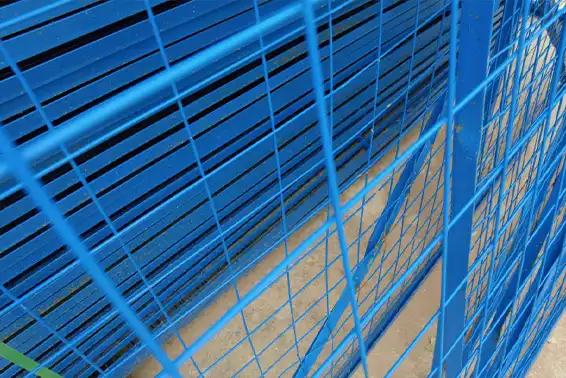
Every design element is safety-engineered. The fence system features double-layer tubes (40 mm × 40 mm, 1.2 mm thick) to prevent falls and 2 mm checkered panels for safe wet walking. The toe boards and built-in metal mesh with 60 mm × 100 mm holes prevent injuries from falling objects. All sections are derusting and then galvanizing or painting to generate corrosion-resistant goods that can withstand bridge-building site circumstances.
Full Hall Scaffolding System Overview
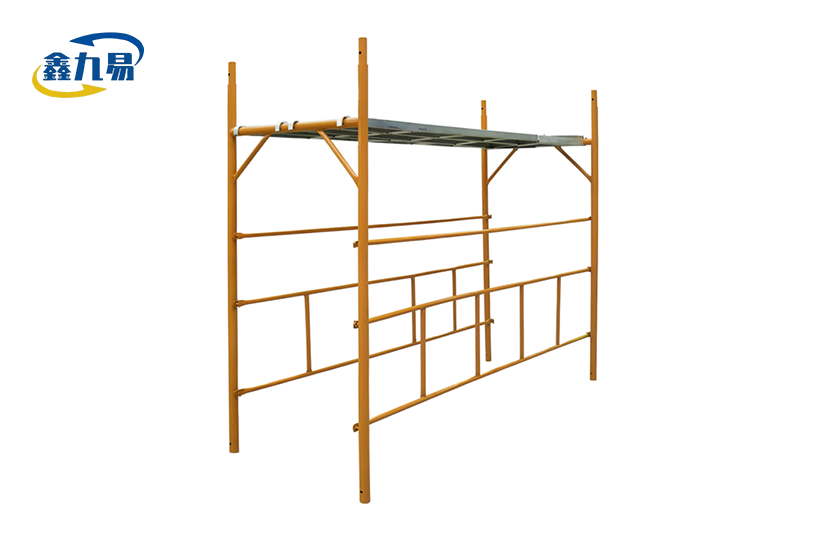
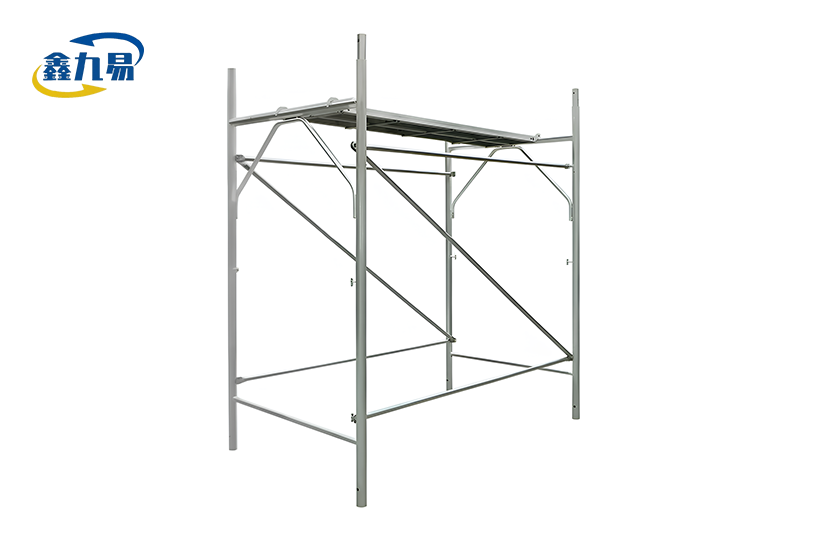
Complete modular frameworks cover huge horizontal expanses, usually floors or building sections, in full hall scaffolding. Diagonal braces, horizontal ledgers, and vertical standards are grid-arranged to support planking over huge regions. This strategy is ideal for commercial building interiors, industrial facility maintenance, and major remodeling projects where numerous crews must access broad regions simultaneously.
Couplers, or unique locking devices, can be used with steel tube-and-coupler systems or aluminum alloy frames. The modular architecture of the pier column work platform enables projects to grow in phases, but each new section must be aligned, fastened, and inspected to ensure stability. Setup involves specialized knowledge and work to ensure proper support, load distribution, and compliance with EN 12811 scaffolding performance criteria (European Committee for Standardisation, 2003).
The key distinction is application focus. Full scaffolding provides wide access. Pier platforms, however, provide vertical security around structural elements, making them perfect for projects with many columns.
Comparative Analysis of Pier Column Work Platform vs. Full Hall Scaffolding
Safety Compliance and Fall Protection
Safety performance distinguishes good equipment from great solutions. Small pier platforms contain many safety features. They combine double guardrails, toe boards, safety nets and non-slip surfaces to create OSHA 1926.451-compliant fall prevention systems. The sealed design prevents falls by setting up barriers around the work area. High-strength bolt connections eliminate welding weak points that could compromise the structure under dynamic stresses.
Full hall scaffolding has guardrails and horizontal netting between segments. Despite working when placed correctly, the open framework design means protection quality depends on how well it is assembled and how well personnel follow instructions. Poorly attached planking, gaps between sections, and weak support all offer risks. Scaffolding accidents are mainly caused by improper assembly or lack of fall protection, according to NIOSH (2021).
Working on bridge piers is dangerous because of the wind, limited ground access, and the necessity for sturdy platforms while pouring concrete. Pier-specific platforms have a robust frame that keeps them stable in rough weather. However, traditional scaffolding requires many supports and tie-ins to stay put.
Installation Efficiency and Labor Requirements
Time directly impacts job cost. Pier platforms are flexible, so trained workers may easily assemble and disassemble them. The parts can be disassembled and relocated between job sites without heavy equipment. Adjustable hoop clamps allow the same platform to be utilized for multiple piers in a project. This versatility reduces tool costs and simplifies operations coordination.
Full-length hall scaffolding is laborious to install. Each standard, ledger, and brace must be aligned and attached separately. More parts and lengthier assembly are needed to increase coverage. Temporary access labor costs double when this practice is reversed during disassembly. For projects with many piers of varied sizes, scaffolding must be set up differently at each location, which takes time and effort.
The efficiency gap widens when employed repeatedly during project phases or job sites. Pier platforms simply need bolt checks between deployments to maintain their shape. Scaffolding must be disassembled and reassembled with each move. This wastes crew time that may be employed for other building chores.
Cost Analysis and Economic Value
The overall cost of ownership, not just the initial purchase price, drives buying decisions. Pier platforms are smart investments that pay off over time. Galvanized steel construction can withstand years of heavy use without deteriorating. Less building work, faster installation, and no width-specific work lower project costs. Its flexible architecture enables it to grow as funds allow, unlike scaffolding systems that must be entirely set up before usage.
Full hall scaffolding costs more for tall buildings. It takes a lot of materials to reach the working height around the columns, although most of the framework is only support. Rental models accumulate costs over long project timelines, whereas purchase models invest in instruments that may not work in future projects.
Pier platforms are bolted together and don't rust, making them cheaper to maintain and easy to repair. Couplers, tubes, and scaffolding planking must be regularly inspected for damage, wear, and corrosion, and new parts are expensive. Due to their size and weight, scaffolding transport costs more.
Load Capacity and Operational Performance
Working platforms must support people, tools, and supplies without straining the structure. Pier column work platform systems, designed for bridge construction, calculate load based on form weight, concrete volume, and crew needs. The I-beam and channel steel frames evenly distribute weight, and the 2.0 mm support tube thickness stabilizes the frame under changing situations. Material staging areas are incorporated into the platform, eliminating dangerous workarounds.
Full support systems are rated for load classes by EN 12811, often ranging from light-duty (75 kg/m²) to heavy-duty (600 kg/m²). However, the right load capacity at height demands additional bracing and closer part spacing, which utilizes more resources and complicates assembly. The open framework design makes secure storage harder; therefore, extra solutions are needed, making site planning harder.
For extreme-weather bridge constructions, environmental performance is crucial. Even in salty coastal areas where cross-sea bridges are built, galvanised pier platform finishes don't corrode. Traditional scaffolding, especially painted steel tube-and-coupler systems, corrodes quickly and weakens, requiring replacement before its time.
Decision-Making Guide for Procurement Managers and Engineers
Matching Solutions to Project Requirements
The characteristics of the project should guide the choice of equipment. Pier-specific platforms are very helpful for building bridge piers, highway overpass beams, and other vertical infrastructure work. The width can be changed, safety systems are built in, and it can be set up quickly. These features directly meet the needs of the project. Pier platforms make the best use of resources when work is focused on clear vertical elements instead of covering large horizontal areas.
Full hall scaffolding is good for projects that need a lot of horizontal access, like fixing building walls, doing maintenance on multiple levels of equipment, or doing renovations that cover whole floor sections. The method works great when crews need to reach large areas at the same time and when working heights are pretty consistent across the project area.
When building a bridge in stages, where the piers move at different speeds, time constraints make pier platforms the best choice. Being able to quickly set up, use, and move platforms supports flexible scheduling that works with the order of construction. Equipment that cuts down on setup time is helpful for projects that have to deal with weather windows or yearly restrictions.
Evaluating Supplier Credibility and Support
Choosing the right supplier has an effect on long-term happiness, not just during the original transaction. Managers in charge of buying things should make sure that the company meets the requirements for ISO 9001 quality management, ISO 45001 health and safety at work, and ISO 14001 environmental management. These certificates show that consistent and safe products are made in a planned way.
When customization is needed, the ability to make something is important. Suppliers with their own engineering teams can do detailed load calculations, change designs to fit non-standard pier profiles, and provide technical documentation that meets the needs of project safety verification. At Xinjiuyi, we offer skilled pre-sales technical services that make thorough renderings for project planning, and our precision production lets you fully customize all of our product lines.
Support after the sale tells you if the equipment is worth buying over its whole life. Your teams can get the most out of the platform's safety performance and longevity by following thorough paperwork, upkeep instructions, and quick expert support. When project deadlines require quick responses, how close a supplier is to major transportation hubs affects delivery times and the availability of replacement parts.
Warranty and Service Considerations
For equipment to have a warranty that lasts up to 20 years, the materials and manufacturing must be very good. Specifications for buying things should include proof of corrosion resistance tests, load capacity checks by a third party, and detailed instructions for maintenance. When it comes to long-term oxidation protection, galvanized coats should be at least 85 microns thick, especially in seaside or high-humidity areas.
Delivery planning affects how long a job takes to finish. Suppliers who run effective supply chain systems can make sure that packages don't interfere with building plans, which can save money by avoiding expensive delays on the job site or problems with storage. Lead times for customization depend on how much a seller can make. Manufacturers with a lot of experience and established production lines can deliver faster than those who treat each order as a one-of-a-kind piece.
Practical Use Cases and Maintenance Tips
Deployment in Bridge Engineering Projects
High-speed rail viaducts make the benefits of pier platforms very clear. For these projects, dozens or even hundreds of piers have to move at the same time across land where cranes can't go because of slopes or lack of clearance. Around each pier, modular platforms are put in place to make safe work areas for putting down forms, putting together rebar, and finishing the concrete. It's easier to get the right tools when the platform width can be changed as the designs of the piers change along the line.
Building a cross-sea bridge puts a lot of stress on the earth. Salt spray speeds up rust on equipment that isn't properly covered, but these projects can't afford for structures to fail. Galvanized pier platforms can handle these conditions and keep their structural integrity, which is important for worker safety. The covered form also protects against wind, so work can continue in mild weather that would stop open scaffolding operations.
Fixing urban viaducts needs solutions with small footprints that keep traffic moving. Pier column work platform systems are set up and used in small areas, while vast scaffolding gets in the way of activities on the street. Quick installation and removal between shifts keeps safety standards high while minimizing the impact on the public.
Maintenance Protocols for Extended Service Life
Regular inspections keep safety performance high for the whole life of the equipment. Visual checks done before each launch find broken parts, developing rust, or bolts that need to be tightened. After working with concrete, anti-slip walking surfaces should be cleaned so that material doesn't build up and make them less stable. Zinc oxidation can cause white rust to form on galvanized surfaces. This isn't physically harmful, but the covering should be wire-brushed off to keep it working well.
Pay extra attention to bolt connections. When putting together, high-strength fasteners should be torqued to the right levels, and they should also be checked every so often during long deployments. Broken threads or bent parts need to be replaced right away; you should never fix important structural elements in the field. Keeping a supply of spare bolts on hand keeps projects from being held up by small component failures.
Long-term value is protected by storage between jobs. Platforms that are stored outside should be kept above the ground so that water doesn't build up and should be placed so that water can drain away. Covering parts keeps them out of direct sunlight and rain, but they still need to be ventilated to keep condensation from building up. Indoor storage is the safest option, but you need enough room and tools to move the things you store.
Future Trends and Innovations in Construction Platforms
Smart Materials and Modular Design Evolution
Technology in construction keeps getting better at making solutions that are lighter, stronger, and more flexible. High-strength aluminum metals can reduce weight without lowering load capacity. This makes them easier to move and less demanding on the people who install them. Composite materials with carbon fiber support show potential for preventing corrosion and lasting longer, but their current high costs make them hard for many people to use.
The next step in modular design is to use quick-connect mechanisms instead of bolts to make assembly systems that don't need any tools. These new ideas cut down on the need for skilled workers and speed up deployment, but they still have to meet the standards for structural stability set by traditional fastening methods. Engineering is always getting better by finding the right balance between safety and ease of use.
The integration of digital tracking holds a lot of promise. Load sensors built into station frames could give leaders real-time information on how weight is distributed, so they can stop overloading situations before they get too dangerous. Environmental monitors that measure wind speed, temperature, and sound make predictive maintenance possible by finding situations where stress makes parts wear out faster.
Sustainability and Environmental Responsibility
Sustainability efforts in the construction industry are having a bigger effect on buying decisions. Longevity of equipment has a direct effect on its environmental impact. For example, platforms with 20-year service lives avoid the manufacturing, transportation, and disposal problems that come with replacing them often. The fact that galvanized steel can be recycled at the end of its useful life supports the ideas of a circular economy, since scrap metal still has a lot of value.
The way things are made affects their environmental qualities. Suppliers who use energy-efficient production, programs to cut down on trash, and emission controls show that their loyalty goes beyond the function of the product. The International Organization for Standardization (2015) says that ISO 14001 certification for environmental management shows that a company is seriously caring for the environment.
When purchasing managers try to find a balance between cost and sustainability, they should look at the total effects over the whole lifespan instead of just the original price. Equipment that needs to be replaced often or creates a lot of maintenance waste has hidden environmental costs that forward-thinking companies are taking into account more and more when they decide what to buy.
Conclusion
Pier column work platforms and full hall scaffolds are both good options for building projects, but for bridge engineering and vertical structure projects, specialized pier platforms are safer, more efficient, and more cost-effective. Their modular design, built-in safety features, and ability to change to different diameters all solve the problems that project managers face when they have to work at heights near beams and piers. Full scaffolding is useful for horizontal access, but pier platforms are better because they are designed to solve specific problems in a way that standard scaffolding can't. As safety standards for construction change and project timelines get shorter, buying custom-made access equipment is not only a good idea but also a must if you want to stay ahead of the competition.
FAQ
How does the service life of a pier platform compare to traditional scaffolding?
Quality pier platforms made of galvanized steel that are properly protected against corrosion can last up to 20 years with the right care. Traditional scaffolding parts, especially tube-and-coupler systems, need to be replaced every 10 to 15 years because the couplers wear out and the tubes rust. Pier platforms' bolt-assembly design lets you change individual parts without having to replace the whole system, which extends its economic life.
Can pier platforms accommodate irregular or tapered column shapes?
Pier platforms that can be adjusted have telescopic frames and flexible mounting parts that are made to fit shapes that aren't standard. Customizations made during production can accommodate rectangular piers, sections that taper, and columns with different diameters. Giving detailed pier geometry specifications during procurement ensures a good fit and stops people from trying to make changes in the field that could damage the structure.
What are the real cost advantages of purchasing versus renting access equipment?
When tools will be used for more than one job over a few years, ownership economics say it's better to buy it. Over long periods of time, rental costs add up quickly and often top buying costs within 6 to 12 months. Reusing bought equipment adds value without costing money on a regular basis, but organizations have to handle storage, upkeep, and transport. Rental is best for short-term needs or one-time projects where the cost of owning can't be spread out over time.
Partner with a Trusted Pier Column Work Platform Manufacturer
For construction safety, you need tools that you can depend on. We at Xinjiuyi have built our reputation on providing engineered pier access solutions that keep your crews safe and speed up the project schedule. Our pier column work platforms are built to last for 20 years and can be fully customized in diameter (φ1200-φ2000 mm). They are backed by ISO 9001, ISO 45001, and ISO 14001 certifications that show our dedication to quality, safety, and environmental responsibility. Our technical team can help you with high-speed rail viaducts, cross-sea bridges, or urban infrastructure projects. They can do professional design support before the sale, thorough load estimates, and quick help after the sale. Visit xjy8.com or email our team at global@xjy8.com to talk about your specific needs and find out why procurement managers choose Xinjiuyi as their Pier Column Work Platform supplier.
References
1. Occupational Safety and Health Administration. (2022). Safety and Health Regulations for Construction. U.S. Department of Labor.
2. European Committee for Standardization. (2003). EN 12811-1: Temporary works equipment - Part 1: Scaffolds - Performance requirements and general design. CEN.
3. National Institute for Occupational Safety and Health. (2021). Preventing Falls in Construction. Centers for Disease Control and Prevention.
4. International Organization for Standardization. (2015). ISO 14001:2015 Environmental management systems. ISO.
5. American National Standards Institute. (2020). ANSI/ASSE A10.8-2019: Scaffolding Safety Requirements. ANSI.
6. Construction Industry Institute. (2019). Modular Construction in Infrastructure Projects. University of Texas at Austin.