What safety risks can be simulated in a safety experience zone?
A safety experience zone can simulate a wide range of construction hazards that workers face daily. These include fall-from-height scenarios, falling object strikes, electrical contact, fire emergencies, mechanical entrapment, and trench collapse. By walking through these controlled simulations, workers build visceral hazard recognition that passive lectures simply cannot create. Research consistently shows that experiential training reduces human error probability and improves compliance with occupational health and safety standards. At Xinjiuyi, our modular training facilities are engineered to replicate each of these risk categories with structural precision and measurable safety outcomes.
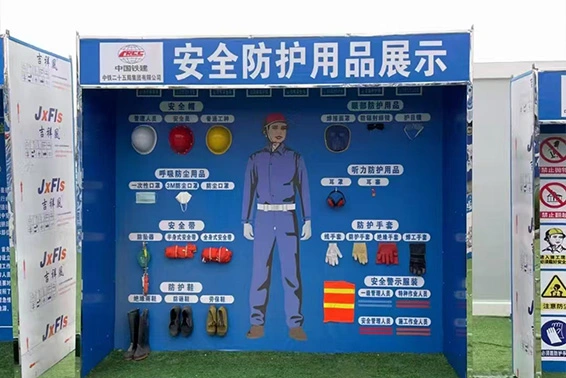
Why Immersive Hazard Simulation Outperforms Traditional Safety Briefings?
Most accidents on building sites don't happen because workers don't know what to do. They happen because workers don't have any instincts. The body needs a trained response, not a slide from an orientation deck, when a scaffold sways or an overhead load moves.
The National Safety Council says that injuries to workers cost U.S. businesses more than $167 billion a year, and building is always one of the most dangerous fields. More than 60% of construction deaths every year are caused by OSHA's "Fatal Four": falls, being hit by something, being electrocuted, and getting caught in or between something. These are the exact risks that a well-designed safety experience zone is made to deal with.
From Passive Learning to Kinesthetic Memory
When you do experiential training, you use your sight, hearing, and body at the same time. Activating multiple senses forms physical memory, which is the kind of memory that stays strong when things get tough. This is how a worker reacts to a real wobble that is different from how someone who has only read about fall arrest systems would react. That learned response is what keeps people alive.
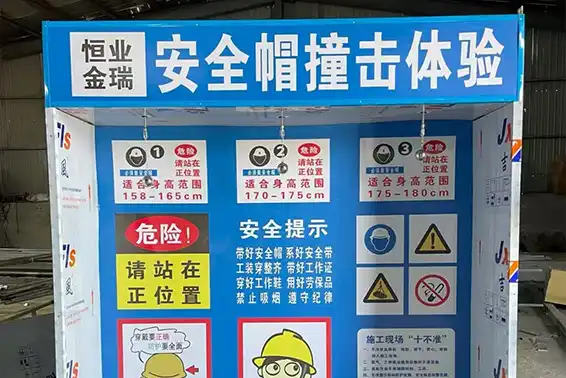
Key Safety Risks Commonly Simulated in a Construction Training Facility
A full immersive safety experience zone covers all of the risks that might be present on the job site. The following groups contain the main modeling modules that are used in standard setups in the industry. They are in line with OSHA regulations and the international ISO 45001 safety standards for the workplace.
A well-designed safety experience zone should cover the following main types of hazards:
- Fall-from-height simulation: On steel-plate platforms with standard guardrails, workers practice controlled elevation scenarios where they learn how to properly attach their harnesses, be aware of their surroundings, and perform an emergency self-rescue. Falls are still the main reason people die on the job in the US, so this is the most important part of any training program. This game makes you more cautious in a way that no school activity can match.
- Falling object and overhead strike hazards: Workers wearing helmets stand under loads that are suspended and hear and feel the sounds that come before an object falls. This lesson reinforces the use of PPE and the right way to stand in busy lift zones. Studies show that about 10% of all building deaths each year are caused by being hit by something, which makes this scenario just as important.
- Electrical hazard and arc flash exposure: Controlled low-voltage contact models and lockout/tagout (LOTO) process drills help workers get used to working safely and securely around electricity. One of OSHA's "Fatal Four" is electrocution, and technicians who have practiced LOTO in real-life situations respond much more quickly and correctly in the field.
- Fire emergency and evacuation response: Timed evacuation drills and smoke generators teach workers how to find exits, use fire extinguishers, and follow muster point routines without getting scared. Emergency response time is cut down by a significant amount when workers have been through a simulated fire scenario before a real one.
- Mechanical entrapment and caught-in hazards: Entrapment and caught-in hazards in rotating machinery and confined spaces are simulated to show how to deal with these risks, which cause a lot of serious injuries. Before they face these dangers on a real site, workers practice guard inspection and confined space contact routines in a safe place with no consequences.
These courses cover the most important statistical threats that building workers face right now. All of these things work together in one safety experience zone to make a full onboarding experience that meets all the rules and actually changes how workers act.
How to Design Effective Safety Risk Simulations?
To make a good safety experience zone, you have to think about the layout, the order of the modules, and how long the structure will last. A poorly planned zone can make new dangers instead of preventing them, which is a worry that procurement managers should have.
Matching Modules to Site-Specific Hazard Profiles
There are different kinds of risks at each building site. For example, a high-rise residential project needs strong fall and scaffold simulation, while an installation of utilities puts electrical isolation and trench safety at the top of its list of priorities. By matching the structure of your safety experience zone to the main types of hazards on the site, you can be sure that every hour of training leads to behavior changes that can be used right away. Before deciding on a final module configuration, Xinjiuyi's team measures the site and looks at the risks.
Structural Integrity as a Non-Negotiable Baseline
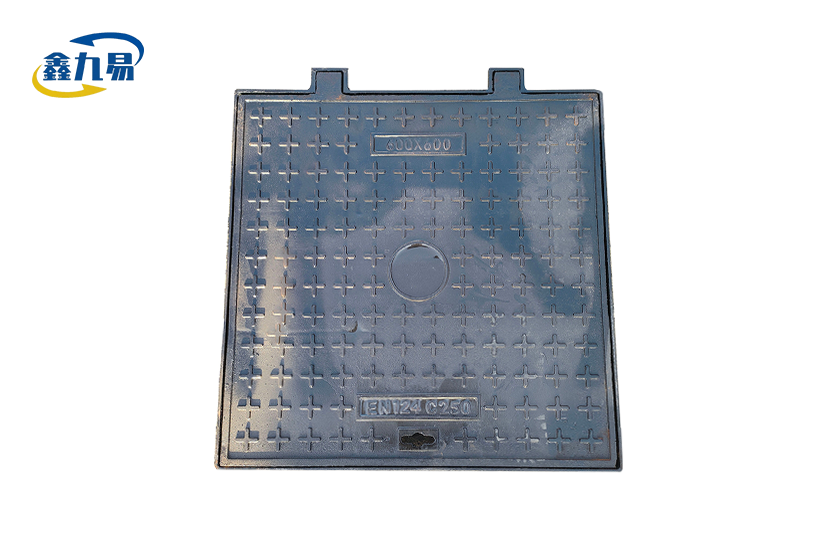
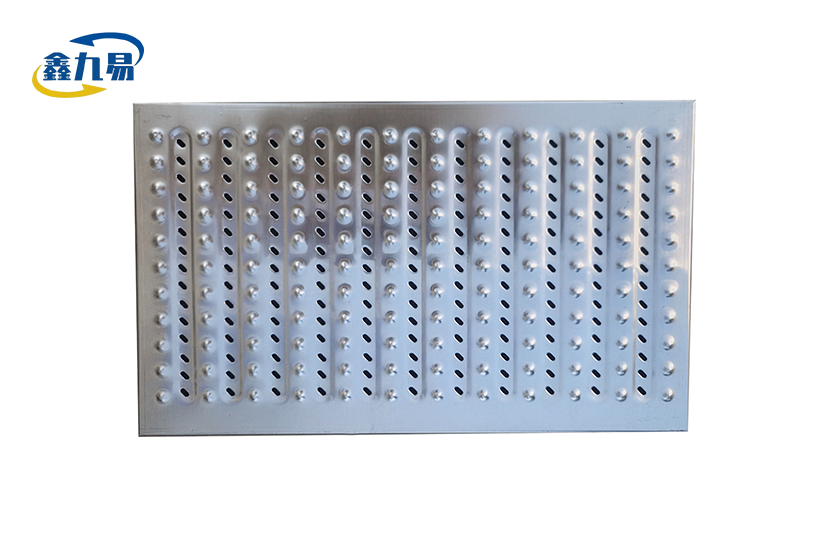
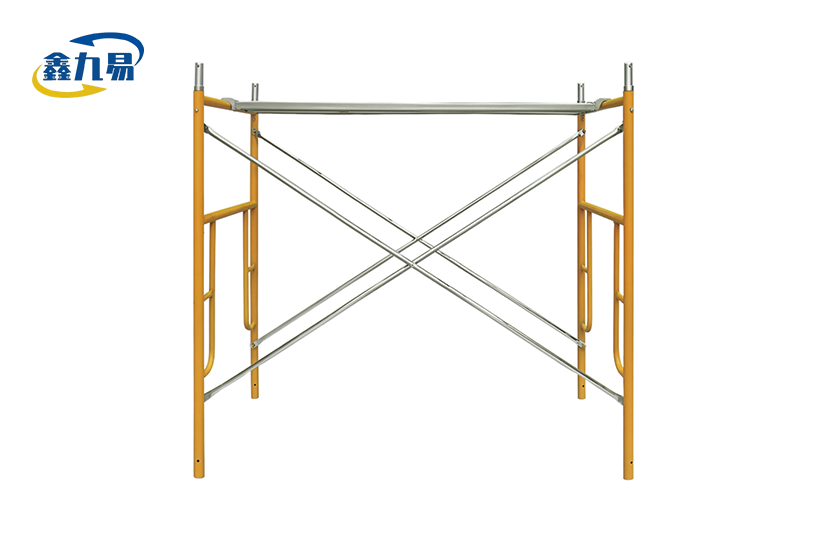
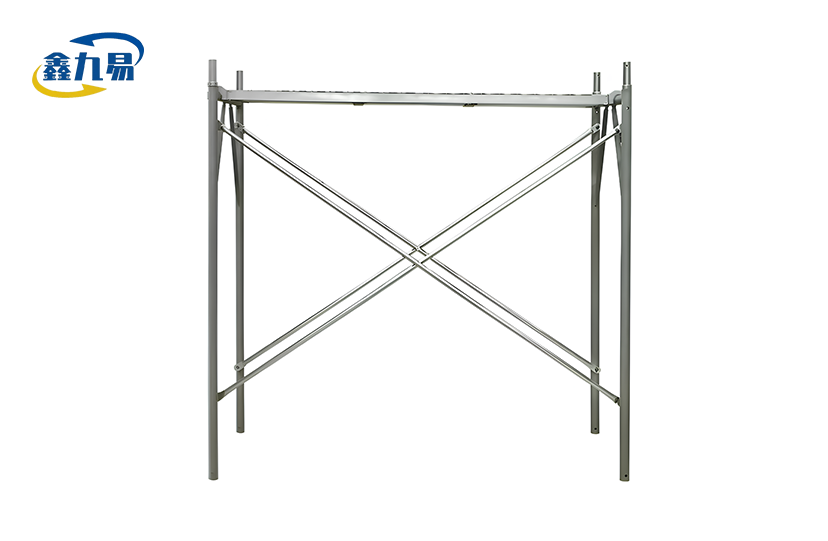
Before a safety experience zone can be used for learning, its frame must be physically sound. Every safety experience zone frame at Xinjiuyi is made by welding thickened galvanized rectangular tubes and angle steel together. This creates a load-bearing structure that doesn't bend or shake even when it's used over and over again at a high frequency. Steel-plate platforms have coverings that keep them from slipping, and normal guardrails with mesh for safety are put up all over. This building standard makes sure that the building itself never turns into a danger, which is a failure mode that hurts both safety and the organization's reputation.
Modular Design for Multi-Project Reusability
When a project is over, a safety experience zone that doesn't work well is considered a "sunk cost." The modular building system from Xinjiuyi can be quickly taken apart and moved, and more than 80% of it has been used in other projects. This design choice directly lowers the cost per project of keeping a safe, high-quality safety experience zone, which is a big factor in figuring out the total cost of ownership for procurement teams that are in charge of multiple building projects.
Procurement Considerations When Sourcing a Safety Training Facility
When buying construction safety experience zone tools, choices are made about more than just the unit price. Long-term value is affected by things like durability, the ability to customize, customer service after the sale, and quality qualifications that can be checked. A company that can create an eye-catching area that falls apart after two seasons will eventually charge more than a high-quality solution made to last ten years of use in the field.
Xinjiuyi has ISO 9001, ISO 45001, and ISO 14001 standards, which are independent checks of their quality management, health and safety at work, and environmental performance. When the parts are made in Xian County, they are all carefully checked for quality. For international EPC projects, full technical documentation in English, HSE compliance packages, and containerized shipping configurations are all available to make sure that customs clearance and on-site deployment go smoothly.
Conclusion
By simulating real construction risks in a controlled setting, workers are able to completely change how they think about and react to risk. Each part in a properly designed safety experience zone, from fall-from-height platforms to electrical separation drills, builds the natural reaction that keeps people from dying. Whether or not those simulations are real and safe depends on how well the building is built. The galvanized modular design, wide range of customization options, and proven ability to be used again and again make Xinjiuyi's safety experience zones a solid long-term investment for construction companies doing business in China and other countries.
FAQ
What is the minimum space required for a functional construction safety training zone?
Between 150 and 300 square meters is usually enough space for a standard, complete setup. A compact safety experience zone made for sites with limited space can work in 50 square meters, but module coverage will be less.
How long does installation take on a new project site?
Xinjiuyi's modular assembly method lets most setups be fully set up and running in two to five working days, though this depends on the number of modules and how easy it is to get to the site.
Can the training facility be reconfigured between projects?
Yes. The modular design makes it easy to take apart, move, and put back together again, and more than 80% of the parts can be used again, which is great for businesses with multiple locations.
Does Xinjiuyi support international projects with English-language documentation?
In the Middle East, Africa, and Southeast Asia, Xinjiuyi helps overseas EPC and local contractors with their projects by providing full technical documentation in English, HSE compliance files, and custom signage.
How frequently should simulation equipment be audited for structural safety?
Professional structure inspections should be done every six to twelve months, with the frequency depending on the number of trainees and the weather outside.
Partner With Xinjiuyi — Your Trusted Safety Experience Zone Manufacturer
Xinjiuyi builds building safety experience zones that work in the real world, not just look good in a showroom. Our galvanized modular systems, ISO-certified quality processes, and dedicated customization team will make sure that your safety experience zone meets all safety standards and worker engagement requirements. Get in touch with us right away to ask for a layout consultation or a technical proposal that is specifically made for your project. You can email our global team at global@xjy8.com or go to xjy8.com to learn more about all of our safety experience zone options.
References
1. National Safety Council. Injury Facts: Work Injury Costs. National Safety Council, 2023.
2. Occupational Safety and Health Administration (OSHA). Construction Industry: Focus Four Hazards. U.S. Department of Labor, 2022.
3. International Organization for Standardization. ISO 45001: Occupational Health and Safety Management Systems. ISO, 2018.
4. Salas, E., Tannenbaum, S. I., Kraiger, K., & Smith-Jentsch, K. A. "The Science of Training and Development in Organizations." Psychological Science in the Public Interest, 2012.
5. Hale, A., & Borys, D. "Working to Rule, or Working Safety? Part 1: A State of the Art Review." Safety Science, 2013.
6. Lingard, H., & Rowlinson, S. Occupational Health and Safety in Construction Project Management. Spon Press, 2005.