Top Benefits of a Construction Ladder Cage for Job Site Safety
Introduction
One of the most important things for safety officers to think about when they walk through construction sites is how to keep workers safe during vertical access. This kind of safety is provided by a construction ladder cage, which makes a closed path that makes it much less likely that someone will fall while climbing to higher work areas. These safety structures are important parts of any complete site safety program because they give workers at heights both physical barriers and mental security.
Proper vertical access protection is important for many reasons, not just following the rules. Site managers know that every time someone climbs a ladder, there is a chance of an accident. This is especially true for deep digs, bridge building, and high-rise projects. Putting money into reliable ladder safety systems has a direct effect on preventing accidents, keeping projects going, and improving the general reputation of building companies. In this guide, we'll look at how these protective enclosures deal with real-life safety issues and meet strict international standards such as OSHA and EN rules.
Our talk is mostly about useful tips for procurement managers, health and safety officers, and project leaders who check safety gear at various places at the same time. We look at structural requirements, how this system compares to others, and buying strategies that balance short-term costs with long-term operational efficiency. By knowing the technical details and performance traits of these safety systems, decision-makers can safely choose equipment that keeps workers safe and keeps projects on schedule.
What Is a Construction Ladder Cage and Why It Matters for Safety?
Defining the Protective Enclosure System
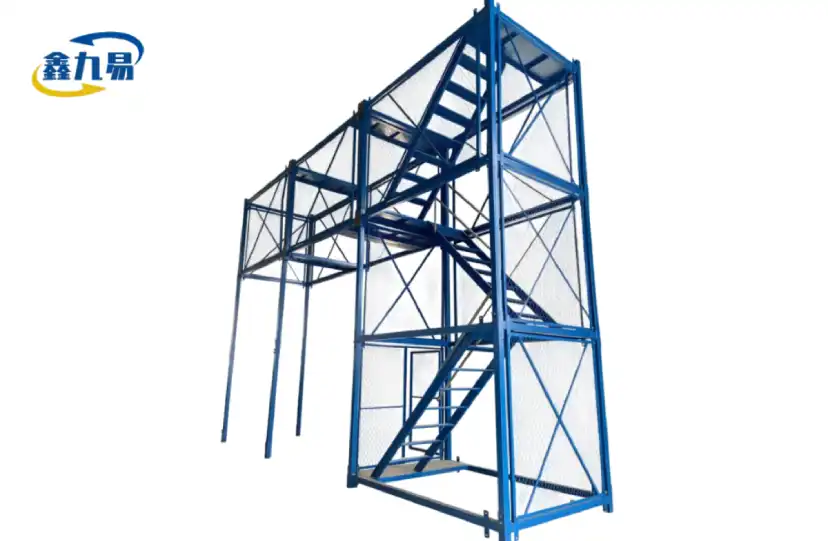
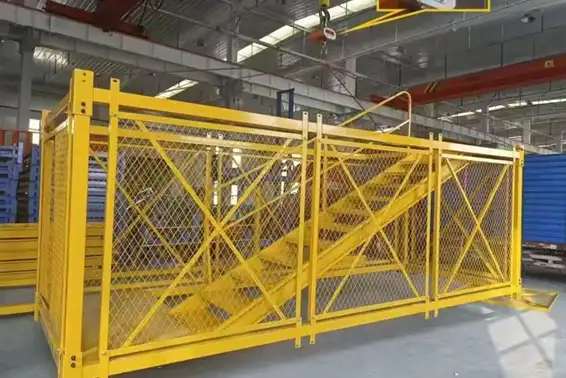
For workers reaching high platforms, foundation holes, or bridge piers, a construction ladder cage acts as a three-dimensional safety barrier around fixed vertical ladders, forming a safe rising path. Open ladders put climbers at risk of falling backwards, but these enclosures have horizontal hoops and vertical bars that physically keep climbers inside the path. Usually, the protective structure starts about seven feet above the ground. This lets people get in without any problems and keeps them safe throughout the climbing zone.
Structural Components and Material Engineering
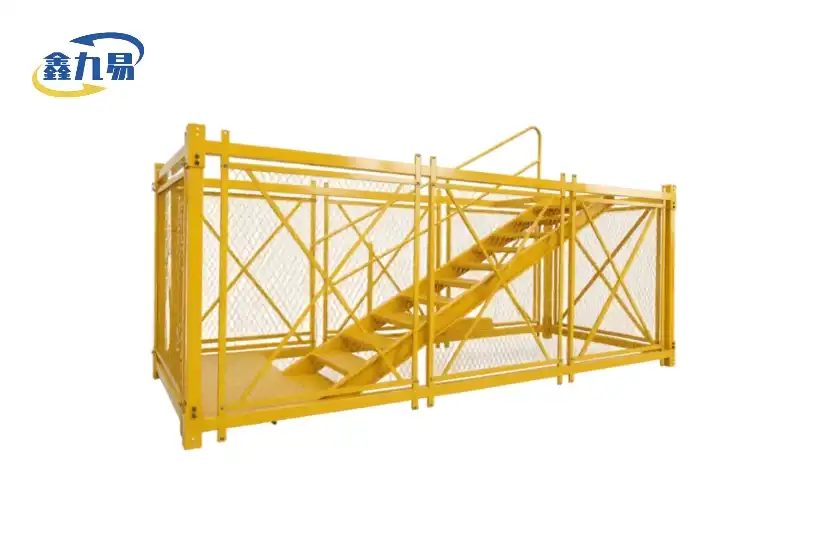
Modern ladder safety systems use high-strength galvanized steel made from 80 mm x 80 mm rectangular tubes with a 3.0 mm thickness as the main columns. This makes sure that the systems can hold a lot of weight in a variety of weather conditions. The modular design lets sections that are 3000 mm long, 2000 mm wide, and 2000 mm high be put together in any way that fits the needs of the project. Checkered anti-slip plates that are 2.0 mm thick provide a stable base, and protective mesh panels with a 75 mm opening for welding wire stop tool drops and debris falls, providing double protection against falls by people and falling objects.
Regulatory Framework and Compliance Requirements
Safety rules for vertical access tools have changed a lot over the years. For example, OSHA guidelines set specific requirements for ladder protection systems based on how high they are used and how often they are used. Unprotected vertical access is one of the most dangerous things to do on building sites, which is why regulations put so much stress on preventing falls. Ladder protection systems that are properly specified help businesses meet their legal obligations and show they care about worker safety, which is becoming an increasingly important factor in getting contracts with big developers and government infrastructure projects.
Addressing Critical Safety Gaps
Construction companies are exposed to a lot of risk when they use traditional makeshift ladders and temporary entry solutions. Workplace safety groups have found that falls from heights are regularly one of the main reasons why major injuries happen in buildings. When you have a properly designed protective climbing system, you don't have to use ad hoc solutions to keep people safe. Instead, you can use standard equipment that works the same way on all project sites and in all operational situations.

Top 5 Benefits of Using Construction Ladder Cages on Your Job Site
Installing professional-grade construction ladder cages has measurable benefits in terms of improving safety, running operations more efficiently, and making money. When procurement managers and safety directors look at vertical access solutions for their projects, these benefits directly address the main concerns they have.
Enhanced Worker Protection and Confidence
The sealed design makes a wall that stops backward falls, which are the most common and dangerous type of ladder injury. Workers who climb in these protected passages say they feel more confident, which makes them more stable on their feet and less likely to rush. The mesh panels protect against falling tools and materials from above at the same time, giving workers at different heights full protection. This dual-function approach to safety works especially well on busy job sites where many people are working at the same time on different levels.
Regulatory Compliance and Inspection Readiness
When equipment is made according to national construction safety regulations, it's easy to meet international safety standards. Standardized design elements meet OSHA, EN, and ISO standards, making it easy to keep track of paperwork for safety checks and project reports. Safety officers like that these systems set a uniform standard for protection, so there are no questions about whether or not the protection is good enough during regulatory reviews. According to safety standards, the bright yellow and black warning colors make things easier to see and show that serious attention is being paid to site safety rules, which are factors that are becoming more and more important when choosing a contractor for big projects.
Long-Term Durability and Cost Efficiency
High-strength steel construction that has been hot-dip galvanized gives the structure great weather protection and a life span of up to 20 years with proper upkeep. The modular, bolt-connected design means that sections can be used on more than one project, which cuts down on equipment costs by a large amount when calculated per project. When compared to replacing cheap temporary solutions or dealing with accident-related costs, procurement managers find that the initial investment in good ladder protection systems pays off in a big way. The surface treatment that prevents corrosion keeps the structure strong even in tough places like seaside building projects or chemically contaminated industrial sites.
Rapid Installation and Operational Flexibility
The modular assembly system makes it easy for site crews who don't have special installation skills to set up things quickly. Sections are joined together with strong bolts, and workers can change the total height by adding or removing modules as the needs of the project change. This ability to change is very helpful during phased construction, where access needs change as projects move from the foundation stage to the structural stage to the finishing stage. The ease of reconfiguration lowers the cost of moving tools between project sites, which is an important factor for workers who are in charge of more than one place at the same time.
Liability Reduction and Insurance Benefits
Standardized safety systems create written proof of proactive risk management, which is very important when accidents happen despite precautions being taken. Insurance companies are becoming more aware that contractors who use certified safety gear have lower risk profiles and may be able to get better premium rates. Less frequent accidents have a direct effect on the rate of experience modification, which creates long-term financial benefits. Project managers also say that their relationships with clients and regulatory bodies get better when sites regularly show that they care about worker safety by choosing the right equipment.
Ladder Cage vs Other Ladder Safety Solutions: Making the Right Choice
Comparing Protection Approaches
Fall arrest systems that use personal harnesses and lifelines are very important for safety, but workers have to connect and disconnect them correctly every time they climb, which can lead to mistakes. Construction ladder cages provide passive protection that doesn't depend on what the person does each time, so there is no variation in compliance. While safety rails protect the edges of a structure, they don't provide the three-dimensional cage that lowers the risk of falling backwards while rising. When deciding what kind of safety to use for different types of workers and situations on the job site, procurement teams can better understand these practical differences.
Evaluating Material Performance Characteristics
Galvanized steel construction is stronger and less likely to break than aluminum alternatives. This is especially important in heavy industrial settings where equipment may be handled roughly or hit by moving machinery. The thickened rectangular tube design, which is 80mm × 80mm and has a 3.0mm wall thickness, is very good at resisting wind loads, which is very important for high-rise buildings and exposed bridge piers. The fully welded frame structure with ground-smooth joints gets rid of weak spots that appear in mechanically fastened parts after a long time of use, and when combined with a construction ladder cage, this keeps the equipment safe for as long as it works.
Assessing Environmental Suitability
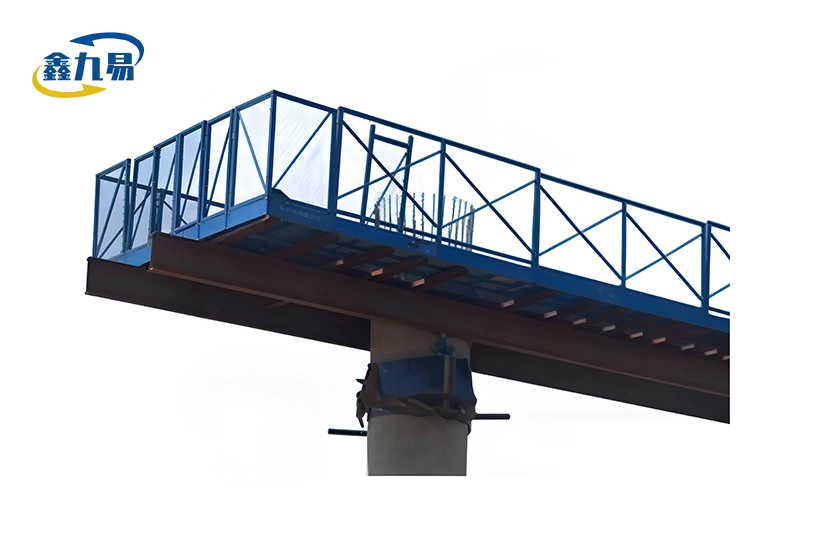
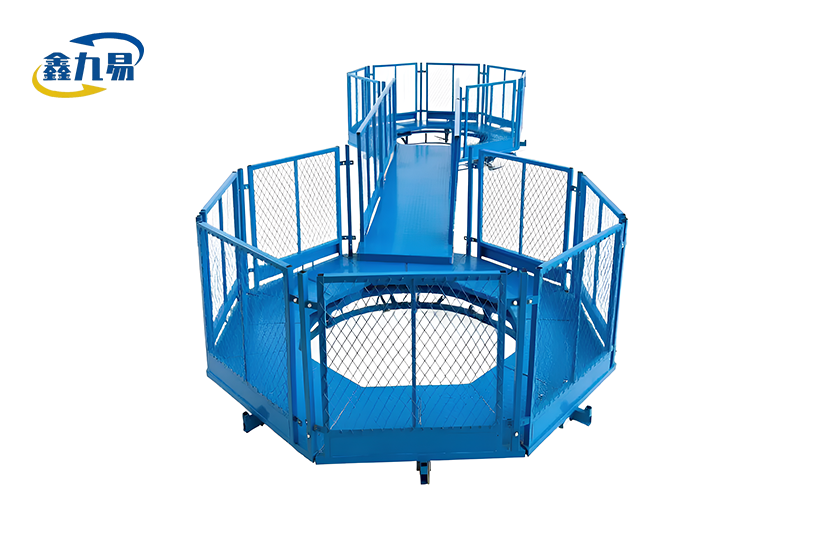
For deep excavation projects, you need strong systems that stay stable even when nearby equipment vibrates and the ground changes. When building a high-pier bridge, the structures need to be able to withstand strong winds and provide safe access in exposed areas. For tunnel shaft uses, small designs that can fit in tight spaces while still meeting all safety standards are needed. If procurement workers know about these environment-specific needs, they can match equipment specs to the specifics of a project instead of choosing general solutions that might not work well in tough situations.
Economic Analysis and Total Cost of Ownership
The initial cost of purchase is an important factor, but the total economic impact includes the cost of maintenance, the useful life, the possibility of reuse, and the value of preventing accidents. When looking at the whole lifespan of a project instead of just one installation, high-quality modular solutions are more valuable. When compared to disposable or one-time-use options, the ability to reuse tools across multiple jobs completely changes the economic picture. When purchasing managers do a full lifecycle cost analysis, they always find that buying long-lasting, standard systems makes more money in the long run than trying to find cheaper equipment at first.
How to Procure the Best Construction Ladder Cage for Your Business Needs?
Establishing Performance Criteria
To do a good job of procurement, you must first clearly define the operational needs that are unique to your project portfolio. The factors for evaluation should include the range of climbing heights, the conditions of the surroundings, the expected service life, and the ability to be used again and again at different locations. The technical specs should list the structural factors that make sure there is enough protection for the construction ladder cage. These should include the size of the columns, the width of the platforms, the standards for protective mesh, and the requirements for surface treatment. Standardized specifications offer consistent protection and allow for site-specific configurations through modular design approaches.
Supplier Evaluation and Due Diligence
In addition to product specifications, a supplier's skills have a big effect on how satisfied a customer is with the performance and support services of their equipment over time. Companies that have ISO9001, ISO45001, or ISO14001 certifications have well-established quality management systems that make sure that production standards are always met. When projects need big amounts of equipment supplied quickly, production capacity is important. Technical help after the sale is very important when there are questions about installation or when projects need to be set up in a way that works best for the site, such as when integrating a Construction Ladder Cage into the site-specific layout. Procurement teams can check a supplier's claims before committing to large equipment orders by asking for detailed product documentation, certification records, and project references.
Customization Options and Engineering Support
Standard modular setups work well for many uses, but for more complicated projects, custom solutions that work with the site's limitations are often better. Manufacturers who offer engineering support can change standard dimensions, add special mounting features, or add extra safety features that make the product safer in odd situations. Having access to detailed design renderings helps project teams picture how to install equipment and find problems that might arise before the fabrication process starts. Early on in the specification process, procurement professionals should talk about the ability to customize to make sure that the chosen providers can meet the unique needs of the project without having to wait too long or charge more.
Logistics and Supply Chain Considerations
When you buy something from another country, it's more difficult to keep track of shipping times, customs processes, and coordinating deliveries with project deadlines. Strategies for buying in bulk can save you a lot of money and make sure that you have the right tools on hand when building needs to start and access systems need to be installed. Setting up clear ways to talk to suppliers about order status, production schedules, and tracking shipments stops expensive project delays caused by problems with getting the right equipment. Professional procurement teams include extra time in their equipment supply plans in case something goes wrong. They also keep in touch with their suppliers on a daily basis to deal with any delays that might happen before they affect activities that are on the critical path.
Installation and Maintenance Best Practices for Construction Ladder Cages
Deployment and Assembly Protocols
The first step in a proper installation is to thoroughly prepare the site, making sure that the foundation conditions are good enough to hold buildings that are weighty. The modular bolt-connection system lets regular construction crews put it together by following the manufacturer's instructions. They don't need any special skills or tools to do it. A pre-installation inspection of all parts makes sure that the shipped materials were undamaged and that they come with all the fasteners and connection hardware they need. To keep the structure's integrity, assembly steps should be done according to the engineer's plans. Pay special attention to the connection torque needs and alignment tolerances that make sure the load is evenly distributed across the frame structure.
Ongoing Inspection and Preventive Maintenance
Examination of important parts on a regular basis increases the life of the construction ladder cage and keeps it safe during operational times. Tightness of the bolt connections should be checked as part of regular inspections, especially after the first fitting and after any big hits or vibrations. The state of the surface coating needs to be checked on a regular basis to find places where the protected galvanizing may have been worn down by wear and tear or impact. This way, problems can be fixed before they get worse and cause corrosion damage. Protective mesh panels need to be checked for damage or deformation that could make them less effective at stopping falling objects. Recording inspection activities creates important records that show ongoing safety care during project audits or investigations into accidents.
Training and Operational Procedures
In addition to the physical security the building provides, workers who know how to use their tools correctly are much safer. Training programs should stress the right way to climb, the right shoes to wear, and the weight limits for the things that can be carried while climbing. Site-specific procedures might include ways to control traffic when multiple workers need to get to the same area at the same time, what to do in bad weather, and how to report broken parts that need to be fixed. A safety culture grows when workers know how technology protects them and how they can help keep the system working by using it correctly and telling the boss right away when it needs repair.
Service Life Extension and Refurbishment Options
Quality ladder safety systems will work for decades if they are properly kept, but eventually parts will need to be replaced or fixed up to keep up with the original performance standards. Modular designs make it easy to change only the parts that are broken, so companies can replace worn-out parts while keeping useful core parts. Cleaning and re-coating the surface to renew the process continues the defense against corrosion in harsh settings. Building relationships with equipment manufacturers that support long-term maintenance makes it easier to get compatible replacement parts and technical help for refurbishment projects, which increases the return on the initial investment in equipment.
Conclusion
Choosing the right vertical access protection systems is a big choice that affects the safety of workers, following the rules, and the efficiency of operations on all types of building projects. Construction ladder cages that are properly designed and built offer many benefits beyond just preventing falls. These benefits include worker trust, project consistency, and a clear commitment to safety excellence. When purchasing managers know about the technical details, comparative advantages, and lifecycle economics of these systems, they can make decisions that are good for both employees and the company.
This guide talks about modular construction, long-lasting materials, and standard designs that can help with difficult vertical access situations that come up in deep excavations, high-rise construction, bridge projects, and tunnel operations. Companies that buy good safety gear from companies that care about building excellence and customer service build strong safety grounds that can be used for many projects over long periods of time.
FAQ
1. What height triggers the requirement for ladder protection systems?
Different places have different rules, but OSHA guidelines used to say that fixed ladders taller than 24 feet had to have ladder caging systems. Current rules put more and more emphasis on full fall protection for any elevated access, with specific needs being decided by risk assessments done at each site. The people in charge of project safety should look at the local rules that apply and do risk assessments to figure out what safety steps will work best for their situation.
2. Can these protective systems be retrofitted to existing site access points?
Many existing ladder configurations can be retrofitted with modular designs. However, proper engineering evaluation should be done to make sure that the structures are adequate and work with each other. To make sure the work is safe, retrofit projects need to carefully look at the current ladder's load capacity, mounting options, and clearances. Talking to professional engineers or the makers of the equipment can help you figure out the best way to do things and make sure that any systems that are added later meet all safety standards.
3. How do ladder protection systems compare economically to personal fall arrest equipment?
Lifecycle cost analysis usually recommends fixed ladder protection systems for long-term or permanent installations because they need less training and maintenance than personal fall arrest systems. To make sure it's used correctly, fall arrest equipment needs to be inspected often, worn-out parts replaced, and workers trained on how to use it properly. Ladder cages protect workers without them having to do anything each time they're used. This lowers the chance of noncompliance while saving money over longer periods of time.
Partner with Xinjiuyi for Comprehensive Job Site Protection
To keep your employees safe, you should work with a construction ladder cage supplier that is dedicated to technical quality and customer success. Hebei Xinjiuyi Construction Technology Co., Ltd. makes ladder security systems that are built to meet international safety standards and give your projects the longevity and dependability they need. High-strength galvanized steel, precise welding, and flexible design principles are used in our ISO-certified factories to make safety systems that work reliably for decades of tough use.
We know that making decisions about procurement means balancing the needs of a project right now with the needs of the business in the long term. Our technical team offers full support, from coming up with the initial specifications to helping with installation and ongoing maintenance. Xinjiuyi provides solutions that meet your exact operational needs, whether your projects need standard configurations or custom engineering to fit the conditions of a specific site. Full product customisation and detailed design rendering services make sure that the equipment fits your project requirements perfectly before it is built.
Get in touch with our team at global@xjy8.com to talk about your needs for vertical access protection. We'd love the chance to show you how our Construction Ladder Cage systems and wide range of safety products can help you meet your safety goals and save you a lot of money on all of your projects. Find out why infrastructure contractors all over the world choose Xinjiuyi as their first choice for making construction ladder cages for projects that need the highest level of safety.
References
1. American National Standards Institute. (2018). Safety Requirements for Fixed Ladders - ANSI A14.3. Washington: ANSI Standards Publication.
2. International Organization for Standardization. (2016). Safety of Machinery - Permanent Means of Access to Machinery - ISO 14122-4. Geneva: ISO Technical Committee.
3. Occupational Safety and Health Administration. (2020). Walking-Working Surfaces and Personal Protective Equipment—Final Rule 1910.28. Washington: U.S. Department of Labor.
4. National Safety Council. (2019). Injury Facts: Construction Industry Fall Prevention. Itasca: NSC Research Division.
5. European Committee for Standardization. (2017). Fixed Ladders for Use on Buildings - EN 353-1 Safety Standards. Brussels: CEN Technical Secretariat.
6. Construction Industry Institute. (2021). Best Practices for Construction Site Access Systems and Fall Protection. Austin: CII Research Publication Series.