Why Choose Heavy-Duty Ductile Iron Gully Gratings for Road Drainage Projects?
When a road drainage system fails, the consequences go beyond flooding — sunken covers, cracked frames, and rattling grates create real safety hazards and costly rework. Choosing the right drainage component from the start matters. A ductile iron gully grating offers the load-bearing strength, anti-settlement design, and 25+ year service life that municipal roads and industrial sites demand. Manufactured from spheroidal graphite iron with tensile strength ≥ 500 MPa and compliant with EN 124 load classes C250 through F900, it outperforms cast iron, plastic, and composite alternatives across every performance category.
Understanding Heavy-Duty Ductile Iron Gully Gratings
What Makes Ductile Iron Different?
A controlled spheroidization process turns graphite flakes into round nodules inside an iron matrix. This makes ductile iron, which is also known as spheroidal graphite iron. Its name comes from the fact that it has a different structure. Gray cast iron breaks quickly when hit, but ductile iron bends a little before giving way, collecting energy without breaking in a big way. ASTM A536 says that Grade 500-7 ductile iron must have a tensile strength of at least 500 MPa and an elongation of at least 7%. This shows that it can be used for high-stress drainage applications.
Benefits Specific to Road Drainage
Spheroidal graphite iron is about twice as resistant to contact as regular gray iron. This means that fewer gratings will break, fewer will need to be replaced quickly, and fewer safety events will happen on busy roads. The natural calming qualities of the material also stop vibrations from traveling, which is important in areas with a lot of noise pollution, like neighborhoods and business districts. When these qualities are combined with precise casting, they make a drainage cover that stays stable, flat, and quiet for decades of use.
How It Compares to Other Materials?
Steel gratings rust faster without heavy protective treatment. Plastic and composite gratings can't handle loads of D400 or more, which is what's needed for main roads. It is still easy for cast iron gratings to break suddenly when they are loaded with moving objects. In real life, ductile iron gully grating is strong enough for F900-rated heavy industrial use but light enough per unit to make installation work doable. When procurement teams compare performance to total lifecycle cost, this material always gives the best value that can be defended.

Key Technical Specifications and Standards
EN 124 Load Classifications Explained
According to EN 124:2015, drainage covers and gratings can handle six different types of loads. These range from A15 (for walking and bike paths) to F900 (for airports and heavy dock loading). For city road projects, D400 is the usual class for major roads that can hold up to 40 kN of weight. E600 is used in areas with a lot of industrial traffic, and F900 is used in port facilities and airport taxiways. Choosing the wrong class is not a small mistake; it is a structural failure waiting to happen.
Certifications Supporting Global Procurement
As normal, a 50–100 micron bitumen coating is put on each unit. For situations that are harsh on chemicals, an epoxy covering can be added as an upgrade. Salt-spray tests and freeze-thaw cycling make sure that building projects near the coast and in cold climates work well. The EPDM rubber sealing strips built into the frame stop water from getting in at the point where the grating meets the frame. This stops the movement of smells and the backflow of sediment that speeds up pipeline erosion.
Practical Applications in Road Drainage Projects
Municipal and Highway Infrastructure
Expressways, viaducts, tunnels, and ring roads in cities put constant dynamic loads on drainage covers. The D400 and E600 classes of road drainage gratings work well at high-speed intersections and expressway entrances, where stopping forces put extra stress on the sides of the gratings. The fixed hinge system keeps the cover from moving, even when the brakes are applied hard over and over again. This eliminates the displaced-cover danger that hurts riders and damages cars. For viaducts and tunnels that are hard to get to for maintenance, the 25-year or longer service life cuts down on the costs of lifecycle interventions by a large amount.
Industrial Parks and Logistics Zones
Standard cast iron gratings can't handle the point loads that are put on them by forklifts, reach stackers, and articulated trucks that are fully loaded. F900-rated heavy-duty ductile iron gully grating units are cast in one piece, with no welds or bolts connecting the parts. This means there are no weak spots where big machines can hit them over and over again. The corrosion-resistant coating method is also useful for port facilities and container yards because it keeps structures strong in salt spray settings, where iron-based materials break down quickly without protection.
Residential and Commercial Zones
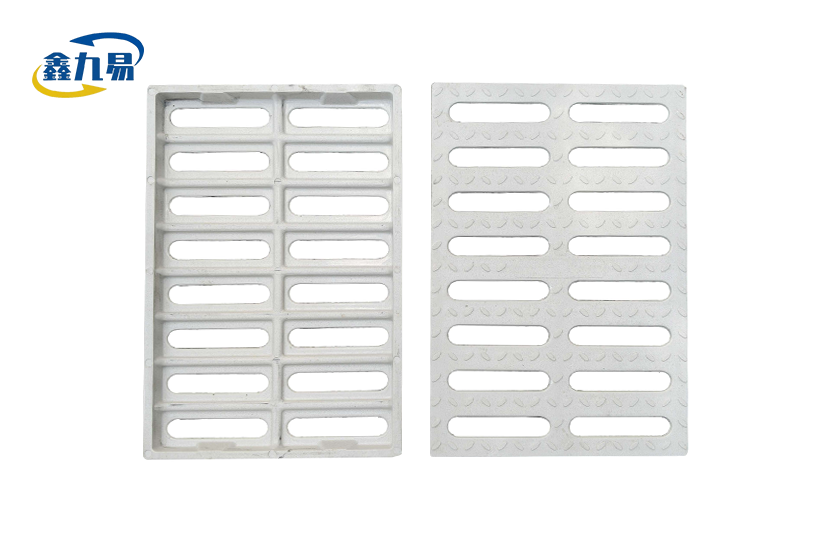
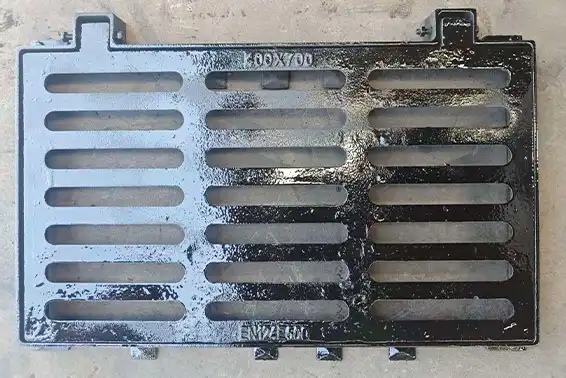
Community roads, garage doors, and business street drives need drainage systems that are safe for people walking on them and look good with modern paving. The non-slip pattern on each grating meets safety standards for wet conditions, making it less likely that someone will slip in heavy rain. The lengths of the slots are designed to balance the hydraulic intake capacity with the safety needs of walking heels. The precision-cast frame fits flush with the asphalt or concrete around it, so there is no chance of tripping or tire damage from covers that are raised or sunk.
How to Choose the Right Ductile Iron Gully Grating for Your Project?
Assess Traffic Load and Environment First
Before choosing a drainage grating, you should find out what kind of wheel load class, traffic frequency, and environmental exposure you can expect. For a major road, a D400 unit can handle up to 40 kN per wheel. Upgrading to an E600 unit adds a significant safety margin in mixed heavy-traffic areas. Check that the seller gives you freeze-thaw cycle test results and not just a general corrosion resistance claim if you live in a freeze-thaw climate or near the coast.
Verify Supplier Documentation and Traceability
If you ask, any reputable iron grating supplier should give you heat-batch traceability, third-party load test certificates, and material analysis reports right away. Ask for records of measurement inspections, metallographic analysis that confirms the spheroidalization grade, and documents that show agreement with EN 124. If a supplier has ISO 9001 certification, it means they have a documented quality management system. However, physical test reports are still the most important thing when buying infrastructure.
Balance Customization Against Lead Time
Most city uses don't require anything bigger than 600 mm, 700 mm, or 750 mm in length and 400 mm or 450 mm in width for ductile iron gully grating. Pattern tooling is needed for non-standard sizes, which adds to both the cost and the lead time. Plan for non-standard specs early on in the project timeline, ideally during the planning phase, so that you don't have to rush things later. Xinjiuyi can fully customize non-standard items with technical plans and sample approval before production starts in full.
Advantages of Choosing Heavy-Duty Ductile Iron Gully Gratings Over Alternatives
Tighter budgets, tougher safety checks, and longer asset lifecycle standards are all things that put pressure on road drainage buying teams. The main reasons why spheroidal graphite iron gratings are better for performance make them the best choice for big infrastructure projects.
- Superior load-bearing without weight penalty: Ductile iron achieves F900-class load capacity while maintaining a strength-to-weight ratio that keeps installation labor practical. Heavier alternatives like steel offer no structural advantage at this scale.
- Anti-settlement integrated frame design: The frame and grating work as a single load-bearing unit, distributing pressure evenly into the surrounding road structure. This prevents the differential settlement that causes sunken covers and surrounding pavement cracking.
- 25+ year service life with minimal intervention: EPDM sealing, corrosion-resistant coating, and captive hinge anti-theft design collectively reduce the frequency of maintenance callouts. Over a full project lifecycle, this significantly lowers total cost of ownership compared to cheaper alternatives that require replacement within 5–8 years.
These performance traits directly address the most expensive ways for city drainage infrastructure to fail: cracking before they're supposed to, rework needed because of settling, and replacement needed because of theft. All of these reasons make it clear from the start that ductile iron should be used.
Conclusion
It doesn't make sense to skimp on material quality when it comes to road drains. Noise complaints, gratings that break, and covers that sink are not small problems; they are upkeep problems and safety risks that cost a lot over time. When fitted with an anti-settlement frame and properly sized to EN 124, spheroidal graphite iron drainage gratings take care of all three types of failure right from the start. A well-specified ductile iron gully grating pays for itself many times over compared to cheaper options that fail within one infrastructure cycle. It has a service life of 25 years or more, comes with full certification documentation, and can be customized for non-standard projects.
FAQ
What load class should I specify for a main carriageway road?
EN 124 sets the standard for main carriageways as D400, which can handle wheel loads of up to 40 kN. E600 adds an extra safety margin to roads that are known to have a lot of industry or transportation traffic. The F900 is only used in airport taxiways, port facilities, and heavy dock loading areas.
How does ductile iron compare to plastic or composite gratings in durability?
Most plastic and composite gratings don't meet D400 or higher load classifications, so they shouldn't be used in places with a lot of vehicle activity. Ductile iron gratings that have been tested according to EN 124 can handle the rated loads without permanently deforming more than 1/100th of the clear opening. In the field, plastic alternatives usually need to be replaced every three to five years on roads that get a lot of use.
Can non-standard sizes be manufactured?
Yes, Xinjiuyi lets you make any kind of non-standard changes you want. Pattern making is needed for custom sizes, so project teams should confirm the details early on. Before agreeing to full production, engineering drawings and a sample proof step are made.
What documentation is provided with each order?
Material test certificates, EN 124 load compliance reports, certificates of origin, and packing lists are all examples of standard paperwork. For foreign projects, there are versions in English.
What prevents the grating from rattling or shifting?
The machined contact areas and secure hinge system make the fit stable and stop the door from rocking in the frame. The rattling sound that comes from drainage covers that don't fit properly is stopped by EPDM rubber strips that are built in.
Partner With Xinjiuyi for Your Drainage Grating Requirements
Xinjiuyi sells ductile iron gully gratings that meet EN 124 standards to municipal contractors and international purchasing teams in many markets. We are a reliable ductile iron gully grating manufacturer for projects that can't afford material failure because our production process is ISO 9001/14001/45001-certified, we provide full third-party documentation, and we can make customizations that aren't standard. Email global@xjy8.com with the details of your project or to ask for a sample. Our team quickly answers all technical questions and helps you with the whole procurement process, from the initial specification to confirming delivery.
References
1. British Standards Institution. BS EN 124-1:2015 — Gully Tops and Manhole Tops for Vehicular and Pedestrian Areas. BSI Standards, 2015.
2. ASTM International. ASTM A536-84: Standard Specification for Ductile Iron Castings. ASTM International, 2019 (reapproved).
3. American Foundry Society. Ductile Iron Data for Design Engineers. AFS, 2010.
4. Motz, H., & Geisler, J. "Properties of Ductile Iron." International Journal of Cast Metals Research, Vol. 24, No. 3–4, 2011.
5. Warrick, R. J. "Nodular Iron Castings: Engineering and Metallurgy." Transactions of the American Foundrymen's Society, Vol. 88, 1980.
6. Transportation Research Board. Drainage Infrastructure Maintenance and Performance in Urban Road Networks. TRB National Academies, 2018.