How to Choose an Elevator Shaft Work Platform: Models, Load Capacity, and Installation Requirements
Choosing the right Elevator Shaft Work Platform means balancing safety compliance, structural durability, and operational efficiency. The ideal platform should deliver reliable load-bearing capacity, meet international safety standards like OSHA and ISO, and adapt quickly to varying shaft dimensions during high-rise construction or maintenance projects. Procurement managers must evaluate modular design flexibility, material quality, and long-term service life while ensuring installation simplicity and full fall protection. This selection process directly impacts project timelines, worker safety, and regulatory approval across diverse construction environments.
Understanding Elevator Shaft Work Platforms: Types and Key Features
What Makes These Platforms Essential for Vertical Construction?
Elevator Shaft Work Platforms protect technicians installing guide rails, wiring and landing door assemblies in vertical shafts. Traditional pipe-and-clamp scaffolding takes too long and is unstable in limited lift cores. Modern products offer fall protection, a safe area to stand, and adaptable pieces that fit most doors. These systems overcome the issues of placing heavy equipment in tight vertical spaces by making it safer to transfer items and place personnel at precise heights.
The main role goes beyond entry. Elevator Shaft Work Platforms eliminate the need for cutting or welding on-site, so building teams can quickly install safety devices without learning new skills. This standardised technique reduces setup time by 60% while maintaining job site safety.
Platform Classification: Fixed vs. Adjustable Systems
Fixed-configuration Elevator Shaft Work Platforms are appropriate for projects with typical shaft dimensions, usually 2000 mm long and 1900 mm broad. These pre-assembled pieces with fixed sizes are ideal for major projects where all lift cores must satisfy the same criteria. The construction is more rigid and has fewer mechanical failure points without moveable elements.
Adjustable Elevator Shaft Work Platforms have telescoping legs and flexible frames. This versatility helps retrofit existing structures or mixed-use locations with floor-to-floor shaft sizes. The telescoping construction allows simple swapping of hoistway widths without affecting load integrity. It handles 1.5–4-meter shafts. Procurement teams that manage several projects should use Adjustable products since they may be used for many tasks without being customised.
Material Composition: Steel vs. Aluminum Alloys
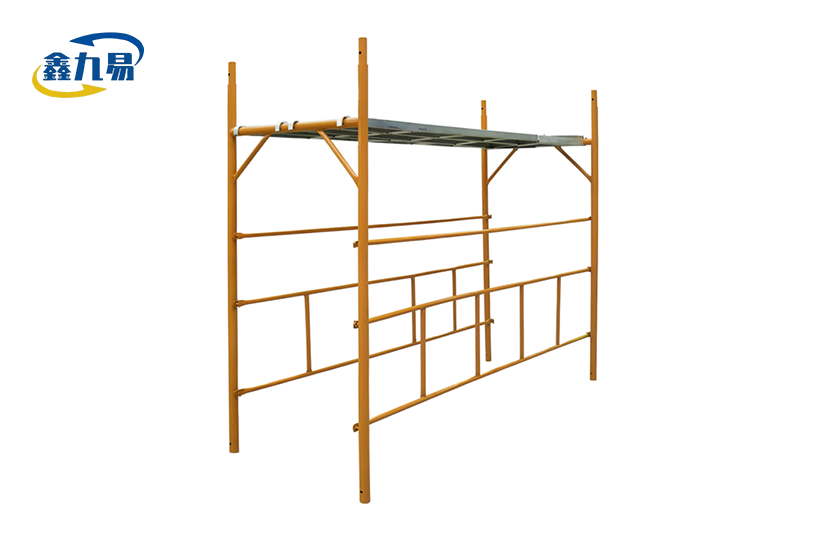
Professional Elevator Shaft Work Platforms are built of high-strength steel to support additional weight. This structure can support up to 1,500 kg with its primary frame constructed of I-beams, thicker rectangular tubes (50mm × 50mm, 2.0mm wall thickness), and 100mm channel steel. Full welding strengthens critical connection nodes, and the joints are ground smooth and burr-free to avoid becoming trapped during typical operations. Heavy-duty power equipment, material stacks and numerous technicians can stand still on steel products.
Aluminium alloy Elevator Shaft Work Platforms like 6061-T6 are lighter and suitable for hand-installed or mobile installations. Lighter products are easier to travel via narrow building halls but can only carry lighter loads. Industrial product activities that require heavy part maintenance or long-term worker engagement should use steel fabrication.
Compliance with International Safety Standards
Legal Elevator Shaft Work Platforms have certificates proving they follow OSHA 1926 Subpart L and EN 1808 for hanging access equipment. These standards specify fence heights, toe board sizes, and non-slip surface treatments. Good product manufacturers employ 1.5 mm checkered plate decking to prevent slips on wet or debris-covered surfaces. Complete fall arrest protection is provided by peripheral guardrails with mid-rails and toe boards.
The ISO 9001 accreditation confirms that the product supplier follows organised quality control throughout manufacturing. ISO 45001 certifies the supplier's workplace health management commitment. Elevator Shaft Work Platform buyers should ensure non-destructive weld joint testing using ultrasound or magnetic particle inspection. This prevents stress-point connecting problems. These inspections are crucial when worker safety depends on structure strength over 100 meters.
Critical Factors in Selecting Elevator Shaft Work Platforms
Evaluating Load Capacity Requirements for Your Application
Finding an Elevator Shaft Work Platform's busiest moments is the first step in determining its load capacity. The products must carry 1,200 to 1,500 kg to install 150- to 200-kilogram guide rail and hold three workers and their power tools. Workers consider impact forces when placing heavy pieces or using pneumatic equipment. On average, dynamic load adds 25% to static weight calculations.
For simple maintenance chores like checking wiring or calibrating sensors, lift shaft work platforms under 800 kg are fine, but they can't construct structures. Procurement staff should request controlled load testing at 125% of rated capacity. This testing ensures the product construction is sturdy even when stressed during demanding installation phases. With a tiny capacity, displacement hazards are high and safety checks may be illegal.
Platform Dimensions and Shaft Compatibility
Standard 2000 mm long and 1900 mm wide Elevator Shaft Work Platforms are sufficient for most home and business elevator systems with shaft widths of 1.8 to 2.5 meters. To accommodate big guide rail systems, freight lifts in high-rise business buildings generally require custom-built products longer than 2500 mm. The height parameter—usually 2850 mm for standard units—determines the vertical operating range before readjustment.
Due to building tolerances, buyers must check shaft measures at multiple floors. Telescopic outriggers and levelling systems on adjustable Elevator Shaft Work Platforms compensate for these faults, keeping them stable even in shafts larger than 30 mm. Custom product fabrication is needed for mine shafts and industrial lift towers with non-standard diameters that exceed adjustability ranges.
Installation Process and Site Requirements
Two-person teams can carry modular Elevator Shaft Work Platform parts thru 900 mm entrances and service passages because each weighs 25–50 kg. The product assembly takes 60–90 minutes and requires no special tools using pin-and-socket or bolt-together joints. This strategy works effectively in occupied buildings where hot work rules prohibit scaffolding.
Place the product base plate and level it with built-in jacks or shim plates to begin work. Support legs meet the shaft walls, dispersing the load across multiple bearing points. Guardrail pieces can be connected using quick-connect clips to complete the product fall protection ring when the main frame is level and in place. Detailed installation instructions with step-by-step images reduce training time and ensure all workers can assemble high-quality parts.
Comparing Elevator Shaft Work Platforms: Features, Pricing, and Market Options
Manual vs. Motorized Systems: Efficiency Trade-offs
Hand-cranked winches or block-and-tackle devices lift manual Elevator Shaft Work Platforms. Moving between floors is hard work for 15–20 minutes. This time-consuming procedure fixes electrical issues and reduces maintenance. This makes manual products safe in low-power or spark-prevention areas. Maintenance teams that manage long-term equipment stocks like the simple mechanics.
With electric winches or hydraulic lifting systems, motorised lift shaft work platforms can be moved in three to five minutes with little operator effort. After months of work, this efficiency advantage rises, lowering labour costs despite the greater initial expenditure. Battery-powered Elevator Shaft Work Platforms leave you free from temporary power outlets, but buyers must factor in battery replacement costs into their total cost of ownership calculations. Projects with strict installation plans benefit from motorised lift shaft work platforms' shorter end times.
Surface Treatment Options and Environmental Durability
Hot-dip galvanisation prevents corrosion sufficiently enough for indoor use with controlled humidity. The zinc coating prevents rust after 5–7 years in dry regions. Galvanized-plus-paint Elevator shaft operation platforms with a polyester powder coat layer last 10-12 years and look better by letting you choose from multiple colours, making safety discussions easier on a multi-contractor site.
For Elevator Shaft Work Platform projects near the seaside, underground or in chemical-laden industries, premium high-temperature baked paint finishes resist rust better. Preparing the surface, applying electrostatic powder, and sealing at high temperatures creates a strong, chip-resistant covering that stays in place after multiple assembly and movement. Bright, long-lasting colours help you see in dark shafts and track product tools throughout projects.
Rental vs. Purchase: Financial Strategy Considerations
Renting equipment for Elevator Shaft Work Platform operations under six months saves money and ensures its quality. Most product rental agreements include safety checks and part replacements, so the supplier handles maintenance. However, hiring expenses can exceed the cost of a product for projects lasting more than eight months.
Contractors who manage a constant stream of projects or facility maintenance departments that maintain multiple buildings should buy a Direct Elevator Shaft Work Platform. The versatile product can be utilised in dozens of projects and last 15–20 years with regular maintenance. Procurement teams should compare leasing expenses to the product purchase and regular inspections to determine the break-even point. When you own products, you may set your own schedule and avoid delays caused by tool shortages during peak building seasons.
Trusted Elevator Shaft Work Platform Suppliers and Brands in the Global Market
Evaluating Manufacturer Credentials and Certifications
Reputable Elevator Shaft Work Platform makers keep their ISO 9001 quality management certification, as well as their ISO 14001 environmental standards and ISO 45001 safety methods for the workplace. With these certifications, you can be sure that the products you make are always the same, that your workplace is safe, and that you are being environmentally responsible when you buy materials and deal with waste. Instead of taking what a supplier says at face value, buyers should use independent registrar databases to make sure that the product certification is valid.
Some things that show how much an Elevator Shaft Work Platform plant can make are its size, the level of sophistication of its welding tools, and its quality control system. When compared to manual fabrication shops, places that use CNC cutting tools and automated welding stations get better weld penetration and dimensional accuracy. Having specialized testing facilities like load testing frames, salt spray chambers, and non-destructive testing tools shows that the product company is committed to checking more than just meeting minimum standards. Requesting Elevator Shaft Work Platform facility tours or third-party audit reports that show actual production capabilities can be helpful for procurement managers.
Customization Capabilities for Project-Specific Requirements
Standard Elevator Shaft Work Platform stock items can be used in most situations, but custom solutions are often needed for unique building situations. When a company has its own engineering team, it can change the size of the product to fit unusually wide shafts, add project-specific connection points for specialized lifting equipment, or change the load rates for heavy-duty industrial uses. Usually, this process of the product customization starts with thorough models of the shaft's dimensions and a list of the loads that it needs to carry.
Creating detailed 3D models before the products are built helps procurement teams see how the custom platforms will fit with other temporary structures, such as material hoisting systems or waste chutes. Responsive Elevator Shaft Work Platform manufacturers send these design previews within three to five business days, so you can make changes and get them just right before you commit to production. Custom product manufacturing wait times are usually two to four weeks longer than standard product delivery, so you need to get involved early in the planning stages of the project to avoid scheduling problems.
After-Sales Support and Technical Assistance
Comprehensive Elevator Shaft Work Platform support programs include on-site installation help for the first setup, making sure that teams know the right way to put things together and check for safety. This hands-on training lowers the chances of the product overuse, which could put workers in danger or damage tools by not being handled properly. The product manufacturers that offer support materials and video lessons in more than one language make it easier for foreign project teams to share information.
Ongoing expert product help answers questions from users in the field about odd installation conditions, fixing mechanical problems, and finding new parts for things that wear out quickly, like locking pins or adjustment bolts. Maintaining regional product parts inventories by suppliers cuts down on downtime when parts need to be replaced during active projects. Service agreements that include regular Elevator Shaft Work Platform inspections are in line with LOLER and OSHA rules that say thorough checks must be done every six months. These agreements provide important proof for following the rules and proving insurance coverage.
Final Checklist: How to Make the Right Choice for Your Elevator Shaft Work Platform?
Matching Platform Specifications to Project Scope
A thorough Elevator Shaft Work Platform study of the project is the first step in choosing the right platform. Write down the most people who can be working at the same time, the heaviest things that need to be put on the product, and the total height of the shaft that needs to be covered. When building a high-rise over 30 floors, it's better to buy multiple Elevator Shaft Work Platforms than to keep moving around single units. This is because having multiple installation crews working at the same time speeds up the whole process. In mixed-use projects with different shaft sizes between building zones, the product methods that can be adjusted are needed to keep the variety of equipment to a minimum.
An Elevator Shaft Work Platform budget has to take into account more than just the cost of purchase. It also has to account for logistics of transporting, storage between projects, and regular repair intervals. The products made to be taken apart and moved many times can handle these handling cycles better if they are made of properly treated steel and have stronger connection points. Carefully read the product guarantee terms; full coverage for 3–5 years shows that the maker is confident in the product's long-term reliability.
Supplier Reliability and Delivery Performance
When Elevator Shaft Work Platforms need to work with other building sequences, delivery timeline guarantees are very important. Reliable Elevator Shaft Work Platform suppliers give project managers firm production schedules with penalties for late deliveries. This keeps project managers' schedules from getting thrown off. References from similar-sized product projects in similar industries show trends of consistently meeting deadlines and producing high-quality work.
Ask for specific Elevator Shaft Work Platform case studies that show how platforms worked in environments like yours, such as high humidity along the coast, extreme temperatures, or heavy industry use. Photos of finished product projects show that you know how to do things in real life, not just what you can do in theory. Strong product suppliers keep client reference lists so that you can talk directly with past buyers about how well the product worked in real life and how good the customer service was after the sale.
Documentation and Compliance Verification
Full Elevator Shaft Work Platform packages come with a lot of technical paperwork, like structural calculations signed off by professional engineers, material certifications that link steel grades to mill test reports, load testing results with photos to prove them, and the product maintenance manuals that explain how to do inspections. During safety audits and governmental reviews, this paperwork is very important.
Check that the design of the product meets the rules in your area. For example, OSHA rules in the US, EN standards in the EU, and other regional codes may have different requirements. Elevator Shaft Work Platforms that are certified by more than one standard give contractors who work in international markets more options. Keep all product certifications in the project files. They will be part of lasting safety records that can be looked at during probes of accidents or compliance checks.
Conclusion
Selecting the right Elevator Shaft Work Platform entry option requires balancing technical specifications, safety compliance, and long-term value. The tough needs of high-rise construction and maintenance operations are addressed by the products built from high-strength steel with verified load capacity up to 1,500 kg, featuring modular designs and comprehensive fall protection. Procurement decisions should prioritize manufacturers offering ISO certification, customization capabilities, and responsive technical support. Understanding the distinctions between fixed and adjustable product systems, manual versus motorized operation, and surface treatment options enables informed choices aligned with specific project demands. Proper evaluation of the product supplier credentials, delivery reliability, and after-sales service ensures partnerships that support safe, efficient construction practices across diverse applications.
FAQ
What are the key safety regulations that apply to elevator shaft platforms?
The United States' OSHA 1926 Subpart L says that Elevator Shaft Work Platforms must have certain guardrail configurations, load capacity labels, and fall protection systems. For European markets, suspended access equipment needs to be certified according to EN 1808 standards, which check for structural integrity and safety device performance. All Elevator Shaft Work Platforms that meet the standards have perimeter guardrails that are 1 meter high and have mid-rails and toe boards, as well as non-slip walking areas and safe anchorage points that can hold fall stop systems. Regular inspections by qualified people every six months make sure that the rules are still being followed, and daily pre-use checks make sure that Elevator Shaft Work Platform mechanical components function properly.
How often should platforms undergo professional inspection?
LOLER rules and OSHA guidelines say that trained inspectors must thoroughly check Elevator Shaft Work Platforms every six months while they are being used. These checks make sure the product structure is strong by looking at welds, load-bearing links, and surface treatments for damage or rust. In the time between formal inspections, operators conduct daily functional checks before each use, testing locking mechanisms, guardrail security, and Elevator Shaft Work Platform leveling adjustments every day before each use. All checks are written down and kept as lasting safety records.
Should my company rent or purchase shaft platforms for ongoing projects?
When an Elevator Shaft Work Platform project lasts longer than eight months, it usually reaches financial break-even favoring purchase over rental. Ownership is best for contractors who are in charge of continuous construction pipelines or facility maintenance departments, since proper upkeep can extend the service life of an Elevator Shaft Work Platform beyond 15 years. The product rental suits short-term projects under six months or companies testing equipment before committing to purchase, though availability constraints during peak seasons may cause scheduling conflicts.
Partner with Xinjiuyi for Your Shaft Platform Needs
Hebei Xinjiuyi Construction Technology Co., Ltd. manufactures nationally standardized modular Elevator Shaft Work Platforms from our advanced facility in Cangzhou. Our engineering team delivers custom Elevator Shaft Work Platform solutions precisely matching your shaft dimensions and load requirements, with platforms supporting up to 1,500 kg through reinforced I-beam and channel steel construction. Every unit undergoes rigorous quality control including weld inspection and load testing, backed by ISO 9001, ISO 45001, and ISO 14001 certification. We provide detailed 3D renderings during the design phase and comprehensive technical support from installation through ongoing product maintenance. Whether you need equipment for high-rise construction, elevator modernization, or industrial maintenance applications, our 20-year service life guarantee ensures long-term value. Contact our team at global@xjy8.com to discuss your project requirements with experienced product suppliers committed to your safety and success. Visit xjy8.com to explore our complete product range and request detailed specifications.
References
1. American Society of Safety Professionals. (2021). Best Practices for Elevated Work Platforms in Construction Environments. ASSP Technical Publications, Chicago, IL.
2. European Committee for Standardization. (2019). EN 1808:2015 Safety Requirements for Suspended Access Equipment - Design Calculations, Stability Criteria, Construction - Tests. CEN-CENELEC Management Centre, Brussels.
3. Occupational Safety and Health Administration. (2020). OSHA 1926 Subpart L: Scaffolds and Work Platforms - Compliance Guide for Construction Industry. U.S. Department of Labor, Washington, DC.
4. International Organization for Standardization. (2018). ISO 14122-2:2016 Safety of Machinery - Permanent Means of Access to Machinery - Part 2: Working Platforms and Walkways. ISO Central Secretariat, Geneva.
5. Construction Industry Research and Information Association. (2022). Temporary Works Toolkit: Guidance on Elevator Shaft Access Systems. CIRIA Publication C766, London.
6. National Institute for Occupational Safety and Health. (2019). Engineering Controls for Construction Fall Prevention: Practical Applications in Vertical Shaft Environments. NIOSH Publication No. 2019-132, Cincinnati, OH.