How Adjustable Steel Prop Improves Concrete Formwork Stability
The safety of a concrete form depends on how the loads are distributed vertically, and this is precisely where flexible support systems really shine. An adjustable steel prop gives millimeter-level accuracy during slab and beam construction, getting rid of the uncertainty that comes with using traditional wooden supports. Our designed props at Hebei Xinjiuyi Construction Technology Co., Ltd. are made of Q235 carbon steel and have telescopic ranges of 1.7 to 5 meters, so they can be used for both low ceilings in homes and large-scale industry projects. The threaded adjustment system fixes any problems with the base in real time, which keeps the formwork from moving while the concrete cures. This feature makes building safer by keeping measurements accurate under changing loads. This way, your structure's stability stays intact from the start of the pour to the end of the set.
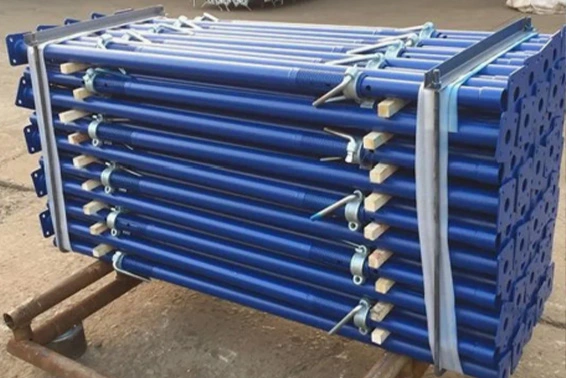
Understanding Adjustable Steel Props and Their Role in Concrete Formwork Stability
Support systems for construction sites should be able to change to the conditions of the site instead of making workers work around fixed equipment limits. Steel shoring props meet this need thanks to smart mechanical design.
Core Technical Characteristics That Define Performance
Today's props are made up of two steel tubes that are centered around each other and have outer diameters between 48 mm and 60 mm and inner diameters between 40 mm and 48 mm. Wall thickness changes from 1.6 mm to 4.0 mm are directly related to load-bearing ability. This lets contractors match the specs of their tools to the needs of the structure they have planned. The device that makes these systems work is the threaded tube. Fixed-height options need to be shimmied or cut, but this design lets you change the height during installation and the pour cycle. When working with uneven substrates or when formwork settlement calls for mid-project fixes, project managers like this level of flexibility.
Material uniformity is very important to our production process at Xinjiuyi. Chemical composition research is done on each prop to make sure that the amounts of carbon and manganese meet the requirements for the Q235 grade. This type of steel is the most ductile, which means that the props will bend under heavy loads without breaking in a catastrophic way. This is an important safety factor when placing concrete.
How Vertical Load Distribution Prevents Formwork Failure
During placement, concrete puts out a lot of hydraulic pressure, and new mix acts like a fluid until it starts to set. If the formwork isn't properly supported, it can bend, shift, or fall over under these forces, which can be dangerous and cause delays that cost a lot of money. Three different features of adjustable steel prop help with this problem. The design of the base plate spreads point loads across substrate contact areas, which lowers the pressure on the ground. The shape of the tube keeps its vertical orientation when it is compressed, which stops it from moving laterally and making it harder to place the formwork correctly. The adjustment system moves the load around as the weight of the concrete rises during the pouring process. This fixes any small settlement problems before they become big problems with the structure.
Operational Principles Enabling Site Adaptability
Conditions on a project rarely match up with how engineers imagined it would be. Different floor substrates have different heights, existing structural elements get in the way, and architectural details need special support arrangements. Because of this, adjustable systems let you change the height all the time instead of forcing you to make small changes all the time. Crew members can fine-tune prop extensions to fit the conditions of the job site, which lets them level formwork planes even when the supporting surfaces aren't perfectly flat. This feature cuts down on the time needed to shimmy fixed supports and gets rid of the waste that comes with cutting wood sides to specific lengths.
Evaluating Adjustable Steel Props vs Alternative Support Solutions
To choose the best casual work tools, you need to know how the different technologies affect performance. Purchasing choices affect how much a project costs, how safe it is, and how well it sticks to its plan.
Comparing Flexibility and Deployment Speed
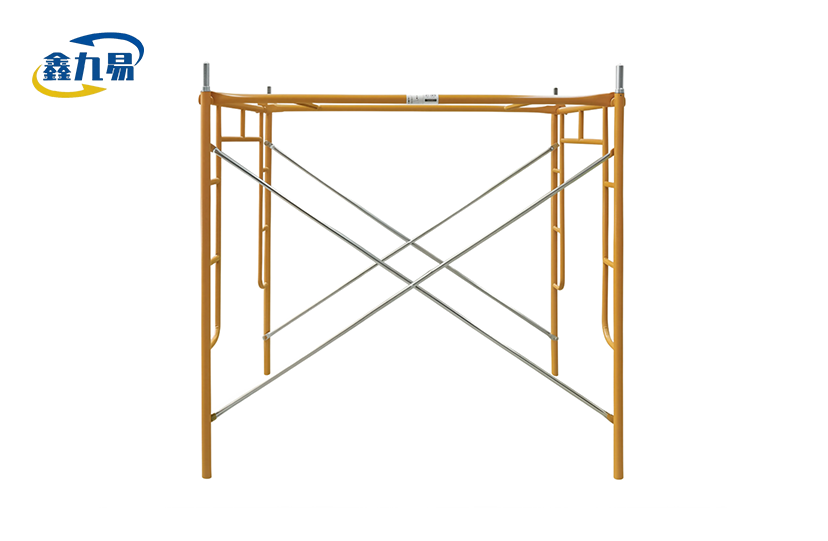
Traditional support systems have been shown to be reliable, but they take a long time to put together. Workers have to connect several parts, put in vertical bracing, and change the height of the platforms by adding frames one at a time. This method works well for long-term projects where the initial setup costs are spread out over a long period of time. Shoring props make it easier to set up for repeating formwork processes. A two-person crew can set up and move a prop in minutes, while it would take hours for the same amount of scaffolding to cover the same area. This benefit is shown by bridge deck construction, where soffit formwork has to be set up and hit many times as work moves along the span. The flexible form makes it easy to move quickly, which keeps the project moving forward through multiple pour cycles.
Load-Bearing Capacity Considerations Across Applications
Light-duty props with a wall thickness of 1.6 mm are strong enough to hold up domestic floor slabs where the concrete levels are kept low and the span lengths are kept to standard residential sizes. These rooms are affordable options for projects that care more about saving money than getting the most out of their space. When industrial building needs come up, heavy-duty specs become necessary. For factory floors to support production equipment, the slabs need to be very thick, which means that temporary support loads need to be higher. Our models with a wall thickness of 4.0 mm have the axial strength these uses need, and load charts show that they can hold their weight at a variety of heights. The choice of material has a direct effect on how well it handles loads. The yield strength of Q235 steel makes sure that props keep their structural integrity under working loads while still leaving a safety margin for situations where they are overloaded. The standard way of making things makes sure that all batches have the same properties, which gets rid of the differences that come with site-cut timber supports.
Cost-Efficiency Analysis for Long-Term Fleet Management
Buying equipment is only one part of the total costs of ownership. Lifetime economics are affected by things like how often maintenance needs to be done, how long the service is expected to last, and how it can be used in more than one project. When concrete and site handling get wet on timber shores, they break down quickly and often can't be used again after the first deployment. If you take care of your adjustable steel props properly, they can be used hundreds of times, spreading out the cost of the buy over many jobs. Surface treatments make things last longer in harsh settings. Hot-dip galvanising protects against rust in seaside areas where salt air speeds up the oxidation process. The 60 to 80 micron zinc layer acts as a sacrifice barrier, keeping the base metal safe from water and alkaline concrete. This protection keeps the structure strong even after decades of use, which is why contractors who manage large fleets of equipment need to specify premium surface treatment.
How to Correctly Use and Maintain Adjustable Steel Props for Optimal Performance
The dependability of equipment depends on both how well it was made and how it was used in the field. When basic engineering rules aren't followed during placement, even high-end props fail.
Step-by-Step Installation Procedures for Maximum Safety
The venue is being prepared before the props arrive. Check that the substrate's bearing capacity fulfills equipment loading requirements. To disperse the load, use steel base plates or wood mudsills if the ground allows. Place props upright and use spirit levels to align them to prevent eccentric loads that buckle. Use the threaded adjustment mechanism to modify the inner tube to the desired height after extending it nearly to the proper height. Partial thread engagement causes stress and decreases load capacity. First hand-tighten the adjustment nuts, then apply a little wrench effort to prevent them from loosening during concrete pouring.
Formwork engineering calculations include concrete weight, placement rate, and panel spread capacity. The distance between lifts must be tighter when using high-slump mixes that put off greater hydraulic pressure or when hasty pour plans prevent the concrete from setting correctly. Always consult load tables before exceeding the manufacturer's suggested extension height. As supports expand, their slenderness ratio increases, lowering buckling resistance and safe operating load capacity. Project engineers must ensure that field additions don't exceed equipment load ratings.
Essential Maintenance Practices Extending Equipment Life
Daily inspections catch flaws before they become safety hazards. Check base plates for deformation that may indicate overload. See whether the tube is straight throughout its length. If the prop bends, it was subjected to greater stresses than anticipated and should be removed. Thread condition affects adjustment system reliability. Remove debris from threaded surfaces after each task and apply mild machine oil to prevent rust. Damaged threads prevent correct engagement, weakening the structure and increasing the risk of falling during formwork striking.
Proper storage prevents equipment breakdown while not in use. Place supports horizontally on high racks to prevent ground moisture absorption. Even with coated surfaces, outdoor storage requires a waterproof cover since long-term exposure breaks down coatings. Systems that transfer stock help you monitor inventory and prevent it from rusting. As hours pass, load testing ensures equipment works at its rated capacity. Professional testing facilities measure deflection and permanent set with calibrated loads. This ensures the structure is sound before using the equipment on actual tasks.
Making the Right Procurement Decision: Selecting Adjustable Steel Props for Your Concrete Formwork
Over-specification waste and under-capacity risk can happen if equipment specs don't match up with what the project needs. Making smart choices about procurement means balancing technical needs with the facts of the budget.
Critical Specification Parameters Matching Project Needs
The key factor is load capacity. Calculate how much concrete each support can carry, taking into consideration the formwork panels' weight and worker and placement equipment loads. For informal employment, utilize safety factors between 1.5 and 2.0 and follow local construction codes. Choose props with a rated capacity at the height you require them to extend this much higher than the predicted needs. Height range determines application flexibility. Props with extended telescoping ranges aid with multi-floor constructions. This simplifies logistics and inventories. When purchasing one object, finding the optimum height alternatives to save material costs for that work may be worth it.
Wall thickness affects volume and lifetime. Heavy pieces keep straight even when handled on the construction site since they don't dent. Controlled environments where cautious handling preserves equipment between tasks suit thinner profiles. The surface treatment depends on how long and vigorously it is exposed to the environment. Pre-galvanized finishes may be utilized on cheap climate-controlled internal concrete. Hot-dip galvanizing standards are worth it for marine exterior work because the greater service life improves lifetime economics.
Evaluating Supplier Capabilities Beyond Product Specifications
Manufacturers differ in quality control, production, and technical support. Xinjiuyi maintains ISO 9001 accreditation, demonstrating its systematic quality management techniques to ensure that its goods, such as adjustable steel prop, perform consistently. ISO 14001 and ISO 45001 certifications demonstrate our environmental management and health and safety commitment throughout manufacturing. These credentials demonstrate the company's maturity beyond manufacturing.
Production capacity influences delivery dependability, particularly for large projects that need a lot of equipment quickly. Our Cangzhou plant's supply chain handles raw material purchases, tube shaping, part welding, and tube exterior finishing. Vertical integration eliminates the requirement for outside suppliers whose delays might damage the project schedule. In addition to hardware, technical support is crucial. Our engineering team reviews formwork designs and offers prop specifications and spacing to save equipment costs and increase safety gaps. This consultation identifies potential issues before planning, when solutions are simpler, rather than after installation, when delays and expenses increase.
Understanding Pricing Structures and Procurement Options
Equipment prices depend on material, construction, and exterior treatment. Heavy-duty props with thicker walls and quality galvanizing cost more than light-duty ones with simple finishing. Procurement staff should consider project costs rather than equipment pricing. Affordable props that break too fast or pose safety risks will cost more than high-quality, multi-project equipment. Contractors with continuous equipment crews or developers with various projects in different locations might save money by purchasing in bulk. Volume pledges help manufactures organize production schedules more effectively, lowering costs and making pricing more competitive while ensuring they have ample inventory for urgent projects.
Customization enables you to satisfy project demands that a catalogue item can't. Work with uneven ceilings with custom surface colors and widths. They also aid in site-safety standards that require load rating clarity. Due of our production independence, we can make these adjustments without waiting for orders or paying more, which would prevent customization. Talk to our staff about your project and obtain customized quotations instead of catalog costs
Case Studies: Real-World Applications Showcasing Improved Formwork Stability
Theoretical benefits are more convincing when they are backed up by real project results. These cases show how choosing the right tools and using them correctly can lead to real benefits.
Residential Development Achieving Accelerated Construction Schedules
A home complex with twelve buildings needed the same floor slabs to be built over and over again. At first, the developer thought about using traditional scaffolding, but they knew that the longer time it would take to set up would shorten the time it took for the concrete to cure between floor rounds. When formwork crews switched to adjustable steel props, they could quickly place vertical supports, keeping aggressive pour schedules without sacrificing safety. The flexible design allowed for small changes in elevation across building areas without the need for modifications that were specific to the site. The crews were able to install the formwork 40% faster than with scaffolding, which kept the project on track even though there were delays due to bad weather during the foundation phases. The equipment could be used in all twelve buildings, which effectively spread out the costs of acquisition, and the small storage space of the props meant that there was less need for on-site laydown space in the crowded urban setting.
Bridge Construction Overcoming Access Limitations
For a project to cross a river, approach spans had to be built in parts, with formwork supported from below because it was hard to get to the ground. Using traditional scaffolding was hard because the tools had to be set up in riparian plants on sloped ground. Adjustable props were a simple solution because their thin shape allowed them to fit through narrow passageways and were able to be raised to working height after being placed under the formwork. The ability to deploy quickly was very important because the environment limited the amount of time that ground disturbance could last. During authorised work windows, crews put up support systems, poured concrete, and then took away the tools before the permits expired. According to the project documentation, there were no formwork stability incidents across 32 span segments. This safety record was due to the props' reliable load distribution and the crews' ability to change the positioning of supports as the construction progressed.
Industrial Facility Renovation: Maintaining Operations During Structural Modifications
A factory that was still making things needed to have the floor slab strengthened without stopping production. As a temporary answer, the engineers supported existing slab parts while contractors added more structural elements. The required vertical load transfer was done by adjustable props that were placed so that they wouldn't get in the way of production equipment or material flow routes. The threaded adjustment system was very useful when builders found that the real conditions of the structure were different from what was shown on the plans. Even though the dimensions weren't exactly the same, field workers slowly changed the prop extensions to get the right load transfer. This saved time and money by not having to make custom-height fixed supports. The project finished improvements to the structure while keeping production at 85% of normal levels. This met the client's request that minimal revenue losses occur during building.
Conclusion
Formwork stability affects the safety of pouring concrete and the quality of the structure in all building settings. Modern projects need systems that can be adjusted to fit the site's flaws. Telescopic support systems, such as the adjustable steel prop, can do this with exact height adjustments while still distributing loads reliably. Material engineering with Q235 steel gives it strength and flexibility, and surface treatments make it last longer in harsh settings. It is important to choose the right equipment for the job and follow strict installation and maintenance procedures to make sure these props work as well as they can. The case studies show that contractors can get measured benefits like shorter schedules, better safety records, and more cost-effective equipment use when they use good tools and follow good engineering practices.
FAQ
1. What maximum load can adjustable steel props safely support?
The load capacity changes based on the addition height and wall thickness. Light-duty props with walls that are 1.6 mm thick can usually hold up loads on residential floor slabs at normal ceiling heights. Industrial uses with deep concrete pours and long formwork spans are handled by heavy-duty models with 4.0 mm wall sections. Load charts from manufacturers show how much weight is safe to use at different extension heights. Always look at these charts instead of guessing the capacity numbers. As the props lengthen, the slenderness ratio goes up. This makes the structure less resistant to buckling and requires less weight than minimum height designs.
2. Can these props be reused across multiple construction projects?
Yes, the fact that the equipment can be used again is a major cost benefit over using disposable wood shoring. When properly cared for with regular cleaning, thread lubrication, and checking procedures, adjustable steel props can be used hundreds of times. Surface treatments keep things from rusting while they are being stored or used in the field, so the structure stays strong for longer. Keep an eye on the history of your equipment to see which units are getting close to being retired. This way, you can take out any props that are showing signs of excessive wear, permanent deformation, or thread damage before the structure's strength is called into question.
3. How do adjustable props compare economically to scaffolding systems?
Props may seem more expensive at first, but when it comes to total ownership economics, flexible systems are better for formwork uses that need to be set up and struck over and over again. Assembling and disassembling scaffolding takes more work, which takes time off the plan and makes the job last longer. Props can be set up quickly with little help from a crew, which speeds up the formwork cycle and increases total building productivity. Reusing equipment on multiple jobs is a good way to spread out the cost of buying it, giving companies who keep stable fleets better lifecycle value.
Partner with Xinjiuyi: Your Trusted Adjustable Steel Prop Supplier
For a project to be successful, the equipment needs to work efficiently in tough site conditions and come from companies that are dedicated to quality and service excellence. Every client that Xinjiuyi works with benefits from their 30 years of experience making building safety equipment. They make adjustable steel props that meet international standards and can be customized to fit the needs of each project. Our Q235 steel props have strong threaded mechanisms, a variety of surface treatment options, and load capacities that range from light-duty home use to heavy-duty industrial use. Contact our engineering team at global@xjy8.com to talk about your formwork support needs. We offer technical consultations that include looking over your project plans, suggesting the best specifications, and sending you detailed quotes that are based on your actual needs instead of generic catalogue prices. Check out xkhjc.aixdb.cn to see all of our products and learn why contractors all over the world trust Xinjiuyi to provide construction safety solutions that keep workers safe, speed up work, and provide long-term value throughout the lifecycle of a project.
References
1. American Concrete Institute (2019). Guide to Formwork for Concrete (ACI 347-14). Farmington Hills, MI: American Concrete Institute.
2. British Standards Institution (2008). False work—Performance requirements and general design (BS 5975:2008+A1:2011). London: BSI Standards Publication.
3. Chen, W.F. and Lui, E.M. (2005). Handbook of Structural Engineering, Second Edition. Boca Raton, FL: CRC Press.
4. Hurd, M.K. (2005). Formwork for Concrete, Seventh Edition. Farmington Hills, MI: American Concrete Institute.
5. Peurifoy, R.L. and Oberlender, G.D. (2011). Formwork for Concrete Structures, Fourth Edition. New York: McGraw-Hill Education.
6. Standards Australia (2012). Formwork for Concrete (AS 3610-1995, Reconfirmed 2012). Sydney: Standards Australia International.