Heavy-Duty Composite Drainage Channel Solutions for Industrial and Municipal Projects
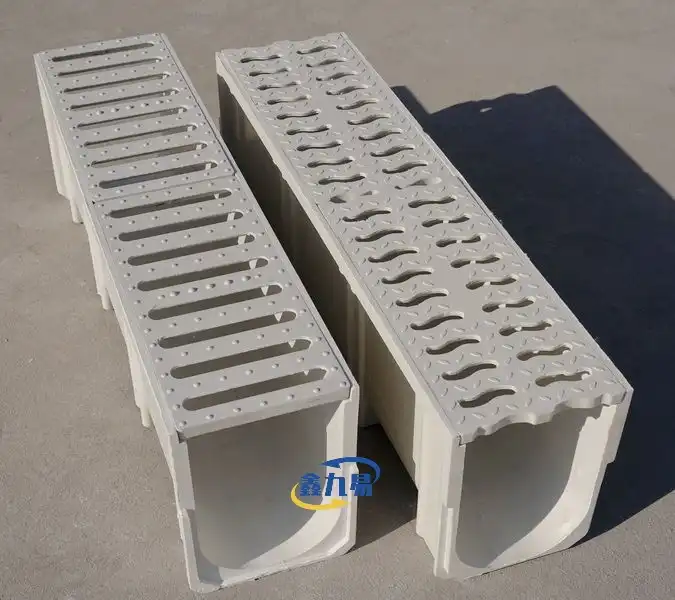
A heavy-duty composite drainage channel gives industrial and municipal projects a lighter, corrosion-resistant alternative to concrete trench drains. Made from composite resin, it collects surface water along roads, loading areas, parks, and plants, then guides it to an outlet. Its smooth inner wall moves water efficiently, and its low water absorption helps it withstand freeze-thaw cycles and road salts. Because each section weighs less than a concrete equivalent, crews can often place it by hand. Performance still depends on correct sizing, load class, grate fit, joint sealing, and installation. This guide shows how to specify and buy the system with confidence.
Why Heavy-Duty Drainage Matters and What a Composite Drainage Channel Is
Water, Traffic, and Freeze-Thaw Stress
At work and in cities, surfaces move both people and water at the same time. People, cars, and cranes all use the road. Weather changes, road salt, oils, and rain can all hurt it. Water pools, pavement wear, and costly fixes can all happen if you don't plan your draining well. Every time it freezes and thaws, there is an extra risk because water can make weak materials grow and crack from the inside. An easy way to check how well concrete can handle freezing and melting quickly is to use the ASTM C666 test. Teams that play in cold places should pick players based on how well their joints seal and how much water they can soak up right away. Hydraulic rules, like the HEC-22 for urban drainage from the Federal Highway Administration, should also be followed for good design.
What a Composite Drainage Channel Includes
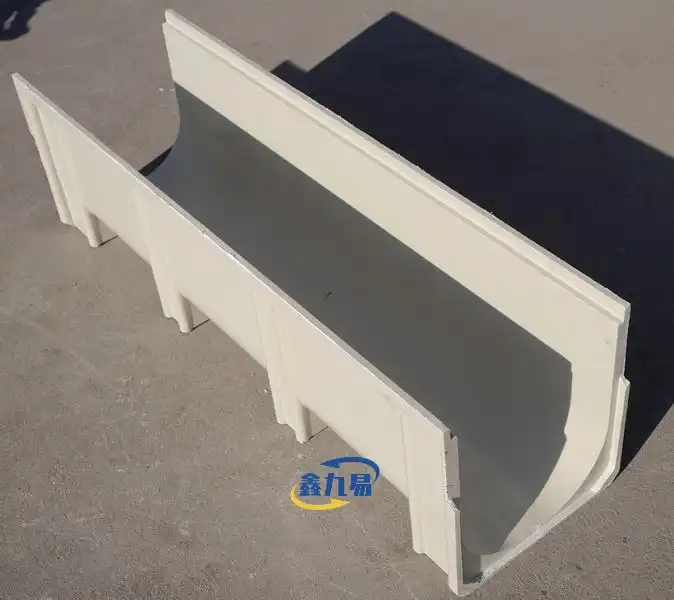
A composite drainage channel is a line that collects water from the ground. It could be made of designed composite, reinforced polymer, polymer concrete, glass-reinforced resin, or a different mix of related materials. Along with the tube body and grate, the frame has end caps, outlets, inspection units, and closing parts. There are also inspection units and end caps. Water can flow through the vent and into a sewer, treatment, or soakaway line if you open it. With linear lines, you can change better than with single point drains. They do this by collecting water all the time along sidewalks, loading docks, road edges, and parking lots. They may be set up with deep-flow, sloped, stepped, or narrow forms, among other options. When you compare goods, you should look at the temperature range, the amount of water they can hold, the materials they are made of, how strong they are, how well they resist chemicals and UV light, and how well the parts fit together.
Benefits for Contractors and Engineers
This is the most important good thing about the job site.
- Lighter handling: It's easier to move this kind of channel than concrete units the same size because it weighs about half as much. Cranes and trucks aren't used very often because two people can move a 1000 mm piece by hand. There isn't much noise or shaking, so you can work near buildings that are already occupied without anyone yelling at you. This is helpful in cities. Not having as many lifts is also safer.
- Smooth, self-cleaning flow: Manning's roughness coefficient for the inside is about 0.010, according to Chow's Open-Channel Hydraulics. In other words, the flow is smooth and cleans itself. This low number makes the flow speed go up for the same slope. It is normal for sediment to fall off during flow, and a pressure wash once a year should get rid of any buildup. This means that after the handover, maintenance will still be easy and safe.
- Durable, sealed material: Material that lasts and is safe: the glue can handle acids (pH 1–10), road salts, and oil products, and it only soaks up 0.1% water. More than 300 times, it has frozen and thawed, but tests have shown that the surface has not cracked or chipped. When put together the right way, specifically shaped interlocking joints make waterproof links that don't need any special sealants. This keeps the road's base dry.
People who work in the field often have to deal with issues like heavy loads, slow setups, and calls to clean up after handover. These perks solve those issues.
Applications, Load Ratings, and Material Comparison
Where Composite Drainage Channels Work
Composite drainage channels can be used in public, private, industry, and business areas. They are often seen at airports, ports, on public streets and sidewalks, at loading docks, in logistics parks, at truck yards, and at factory entrances. Besides that, the Xinjiuyi canals are also used for public parks, hospitals, sponge city support projects, and small areas for fun. Each color helps them blend in with their surroundings. Cleansers, oils, and process water need to be able to move through chemical and food works. The fact that the shielding resin doesn't let electricity flow through it is good for power hubs. Salt needs to be able to go through roads along the coast and in places that need winter care. Think about things like traffic, weather, building pavement, crew access, chemical exposure, and how the spot will be used in the future before you make a decision.
Understanding Load Ratings
The sewage system needs to be checked to make sure it can handle all the people who will be using it. Levels were set by EN 1433 (2002). Levels A15 are for places with a lot of foot traffic, and levels F900 are for places like airports and rail yards that have a lot of big loads. For US projects that use local agency or DOT rules, it's important to know the rule as soon as possible. If they are set up right, Xinjiuyi channels can work with classes A15 to F900. This haunching must be made of reinforced concrete in order to be used with the F900. This class has more than just the vent. The result can be different depending on the grate's width and locking, the frame's support, the quality of the concrete, the strength of the subgrade, the joints' stability, the vehicle's speed, and the turning forces. Check with each seller to see if they have any certificates, test results, datasheets, or installation drawings.
Composite Compared With Concrete, Polymer Concrete, Steel, and Plastic
At first, don't just look at how much something costs or how much it weighs. Look at how well each material works for the whole job to decide which one to use. They can be shaped in a lot of different ways and don't rust. Along with that, they are simpler to work with than solid lines. The polymer concrete can be very stiff, and stainless steel is often used in food or building work. Rubber channels that aren't reinforced can be used for light-duty tasks. In places where the chemicals are harsh, normal concrete channels wear away and break when it freezes and thaws. This means that they need to be fixed and replaced more often. Putting in composite glue costs 20–30% less than putting in concrete, but the price per unit is higher. They can finish faster and need fewer big tools because of this. If you want to buy something, you should read the datasheet first.
Product Data, Selection, and Installation
Xinjiuyi Composite Drainage Channel Specifications
Cangzhou, Hebei is home to Hebei Xinjiuyi Construction Technology Co., Ltd., which makes composite drainage channels. Here are the core specifications.
| Parameter | Value |
|---|---|
| Standard length | 1000 mm |
| Width options | 150–500 mm (customizable) |
| Height options | 150–400 mm (customizable) |
| Compressive strength | Up to 100 MPa |
| Water absorption | < 0.1% |
| Manning's coefficient | ≈ 0.010 |
| Chemical resistance | pH 1–10 |
| Service temperature | -40°C to +80°C |
| Load class compatibility | A15 to F900 (with proper installation) |
| Weight | 50% lighter than equivalent concrete |
Because this material doesn't expand or contract much when it gets hot or cold, it can be used for the sidewalk. In the event that the interface gets holes, this helps keep water out.
How to Select the Right Channel
Set up the project first. Define what kind of surface it is, how much rain falls, how people use it, the temperature, the chemicals that are present, how long you want it to last, and how to get to it for maintenance. After that, use a guide like HEC-22 to figure out the hydraulics and set the slope, output, and cross-section. The frame, grate, and duct should all work together as a single unit. It can be annoying when the body and cover don't match. For instance, a driveway might not need a heavy-duty system. But you need a stronger structure and the right kind of concrete around it for a city road or an industrial yard. If the drawings need sizes that aren't common, send them early. The person making it will have time to make parts that fit.
Installation and Maintenance
Make sure the agreed plans, hydraulic formulas, sites of the exits, size of the excavation, and subgrade are all correct before you start working. Usually, the first step is to dig the ground and get the sub-base ready. The next step is to pour the concrete, line up the channels, connect the sections, put in the outlets, the grate and frame, the concrete surround, the pave the area next to the channel, and check it all again. Make sure the height, alignment, sealed joints, locked grates, and expansion joints are all right when the job is done. Clear the way of trash and early traffic. Because their joints click together, Xinjiuyi systems can be put together 40–60% faster than concrete systems. Follow the maker's instructions and the rules in your area. Check the channels before and after it rains a lot after giving the keys to someone else. Clean the joints and outputs and flush or pressure wash them to get rid of leaves and other junk. Weak grates that won't go away, ponding, or settlement are all signs that something is wrong.
Procurement, Manufacturer Support, and Specification
Cost and Procurement Considerations
The price per meter is based on the size of the channel, the type of material used, the reinforcements, the load class, the design of the frame, the accessories, the modifications, the length of the order, the freight, and the place where the goods are shipped. Instead, you should look at the total cost of installation, which includes digging, filling concrete, work, tools, cleaning, grate repair, downtime, and the length of time the service will last. You can start your search online right away, but before you decide, get a written price that includes technical papers and delivery terms. People who buy in bulk or as distributors should also check the minimum order quantity, production capacity, packaging, Incoterms, lead times, spare parts, and customer service after the sale. Parts made of a composite drainage channel system are lighter, so they are easier to move around. You should still check ahead of time to see how the containers will be loaded, though.
Why Work With a Specialized Manufacturer
It's easier to talk to and keep track of technical details when you work directly with a maker. In the Xian County Development Zone of Cangzhou, Hebei Xinjiuyi does all of its research and development, production, and sales. Among other things, ISO 9001, ISO 45001, and ISO 14001 have given their approval to the company. You can change the colors, sizes, and heights of everything. We also offer professional help and detailed drawings before the sale to help you plan. Our tech team builds things based on the plans and load needs you give them. Find out if the supplier is a factory or a distributor, and see if it can handle big orders. Make sure that you can still get replacement parts after the product has been put in place. Tests, models, and records should also be used to show you the quality.
Project Specification Checklist
Without a full RFQ, it's more possible that prices will be wrong and that the work will take longer. Tell us what it will be used for, how the site is set up, how long and wide the channel is, how much flow was estimated, the load class, the material of the grate, where the exit is located, the type of connection, the chemical and thermal exposure, the standards that apply, how much you need, where you want it shipped, and by what date you need it. There are many channels and accessories to choose from. You should check out the minimum order size, the wait time, the terms of freight, the guarantee, and the payment options. Before you place your order, make sure you agree with the plans and examples, look over the test records, and talk about how to inspect, accept, and file claims. Your order will be properly packed and loaded. The inspectors should also check how tightly the grate shuts, if the material is even (no air pockets or areas with little resin), how much room there is for mistake in the measurements, and the freeze-thaw test results.
Conclusion
It's not important how much heavy-duty sewage systems cost; what matters is how well they fit the spot. A composite drainage channel is not heavy, doesn't soak up water, can handle chemicals, and is smooth on the inside so water flows easily. It also doesn't need much upkeep. The load class is for the whole system. The base, the channel body, the grate, the frame, and the concrete edges are all part of this. Road salts and cycles of freezing and thawing don't hurt composite resin as much as they hurt concrete. Small crews can also put it up faster, which usually lowers the overall cost of the job. The choice was made after looking at papers that have been checked, traffic loads, and predictions of how much water will flow. How well the installation was done is what makes the performance happen. Getting something means taking less risk when there are clear models, thorough specs, and test records.
FAQ
1. Can a composite drainage channel handle truck or airport traffic?
Yes, but only if you set it up correctly and choose the right load class. Signals from A15 to F900 can go through the Xinjiuyi channels, but the F900 service needs more concrete to work.
2. How does it compare with concrete in cost?
There are times when the price per unit is 20% to 30% more than the charge to install. This is because the tools aren't as heavy and it takes less time.
3. Can I order custom sizes?
Yes. The widths and heights run from 150 mm to 400 mm. You can ask for colors that aren't shown. Make plans for the area and the things that need to be moved and send them to our guys.
4. Does it need special maintenance?
Not at all. Most of the time, a pressure wash once a year is enough to get rid of any buildup. The smooth inside keeps sediment out.
5. Is it compatible with asphalt?
Yes. Like asphalt and concrete curb, it doesn't change size much when it gets hot or cold. This helps keep water and holes from getting into the sides.
6. Is it UV resistant?
No, UV stabilizers in the plastic keep the color and shape safe from UV light.
Request a Composite Drainage Channel Solution From Xinjiuyi
Send your drawings, dimensions, estimated quantities, traffic loads, and the address where the goods will be sent. Then, our experts will make a composite drainage channel that works for the job, along with datasheets, fitting drawings, and different sample choices. This is what our Cangzhou company does: we make composite sewage pathways. They can be any size or color, and we offer technical help before the sale. Click on xjy8.com or send an email to global@xjy8.com to find out more.
References
1. EN 1433: Drainage Channels for Vehicular and Pedestrian Areas, European Committee for Standardization, 2002
2. Urban Drainage Design Manual, Hydraulic Engineering Circular No. 22, Federal Highway Administration, 2009
3. Design of Roadside Channels with Flexible Linings, Hydraulic Engineering Circular No. 15, Federal Highway Administration, 2005
4. ASTM C666/C666M: Standard Test Method for Resistance of Concrete to Rapid Freezing and Thawing, ASTM International, 2015
5. Open-Channel Hydraulics, Ven Te Chow, McGraw-Hill, 1959
6. ACI 548.1R: Guide for the Use of Polymers in Concrete, American Concrete Institute, 2009