What should you consider when buying square column formwork?
The option to choose square column formwork influences your project schedule, the quality of the concrete finish, and the long term material costs. The correct decision will depend on tolerance of panel flatness, reuse cycles, material grade and supplier dependability. Now the square column steel formwork made of Q235 cold rolled steel plates with built-in bracing ribs is the preferred alternative for contractors undertaking high-rise residential towers, commercial buildings and infrastructure projects. Before you place that big purchase, you'll have to examine performance requirements, customisation possibilities and supplier credentials carefully.


Understanding Square Column Steel Formwork: Basics and Benefits
The steel column formwork is used to shape the concrete into accurate square or rectangular columns when the concrete is poured. It can take strong horizontal hydrostatic pressure without bending, which avoids the honeycombing and grout leakage concerns that wood panels typically have.
What It Is Made From?
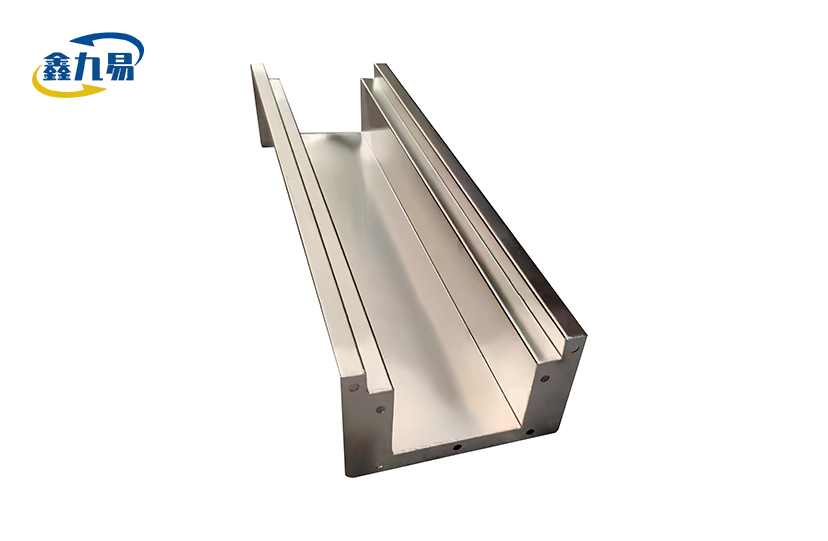
The main body is composed of cold-rolled Q235 steel plates, which are welded by channel steel and angle steel frames. This kind of construction adds a lot of stiffness to the panels. The method of cutting, bending and locking a sheet with complete welds ensures tight joins and smooth surfaces.
Core Performance Numbers
Dimensional tolerance should be within ±1 mm and surface flatness deviation should be within 2 mm across the face of a well-made panel. These limits are needed for fair-faced concrete finishes that don't need additional plastering, according to GB 50204 concrete building engineering quality standards.
Why Reusability Matters for Your Budget?
With proper care, square column steel formwork can be used 300 to 500 times. The cost per pour drops a lot over a multi-building project compared to timber systems, which usually last between 5 and 10 pours. This lifecycle math is the best reason for procurement managers who are in charge of rolling construction programs to switch to steel.

Essential Considerations Before Purchasing Column Formwork
Whether or not a panel set will work well for your project depends on a number of factors. If you skip any of these checks during the buying process, you will have to pay a lot of money to fix the site.
Environmental and Site Conditions
Steel that isn't protected breaks down over time when it comes into contact with alkaline concrete, humidity, and rain. You need pieces that at least have a painted anti-corrosion finish on the outside. If the plant is near the coast or makes chemicals, galvanized coating or powder-coat baking will protect it better. Always make sure you know what the surface is before you order.
Modular vs. Fixed System Design
With modular systems, your crew can change the layout of the panels to fit different column cross-sections on the same job site. Fixed systems are cheaper up front, but they create extra inventory when column sizes change. For projects with columns of different sizes, a flexible set with slotted hole designs that can be changed in 50 mm steps cuts down on waste and makes better use of assets.
Maintenance Requirements and Lifecycle Cost
After high-pressure pours, steel formwork needs to be cleaned, release agent needs to be applied, and weld cracks need to be checked for. Setting up a maintenance plan before the first use of the panels protects your investment and makes them last longer. Before you agree to buy something, ask your seller for advice on how often to do upkeep and what replacement parts are available.
Comparing Column Formwork Materials: Steel vs. Alternatives
Not all projects need steel. When you know what each material does, you can choose the method that best meets your needs.
Each of steel, plywood, plastic, and aluminum has a certain range of performance. In terms of the things that mean most to building procurement teams, these are how they compare:
-
Plywood formwork is cheaper to buy and easier to cut into custom forms but warps with moisture and seldom lasts more than 10 pours. Replacement mount costs fast for multi-tower residential complexes.
-
Plastic formwork is light and corrosion resistant but it is not stiff enough to support high concrete pour pressures without bending. This is good for low-rise or ornamental use, not for structural columns.
-
Aluminum formwork is popular for floor slab systems due to its low weight, but it is more expensive per square meter than steel and is less suitable for applications needing maximum load bearing rigidity in vertical column work.
-
Steel column formwork is heavier than aluminum but has a better resilience to distortion under repeated high pressure pours. Welded rib design minimizes panel bulging and the painted surface provides the smooth concrete face required for high-rise commercial developments.
Because of these pros and cons, steel is still the best choice when precise column shape, high-quality finish, and long-term reuse are the most important factors. When buying managers look at the total cost of ownership for 20 stories or more, steel always does better than other options.
Procurement and Supplier Selection Guide
Picking the right square column steel formwork provider is just as important as picking the right product. A trustworthy company gives you more than just a price list.
Certifications and Quality Standards
Look for suppliers that have been certified to meet the quality management standards of ISO 9001. Make sure that their panels have been tested against GB 50204 or an international standard that is the same. Weld integrity testing, like an eye check, ultrasonic flaw detection, or an X-ray, should be a normal part of their production process, not something that can be added on as an extra.
Customization Capability
Irregular cross-sections of columns are widespread in commercial and construction undertakings. Based on your structural designs, the supplier will be able to produce panels within the widths of 300 mm and 1600 mm and heights of 300 mm and 3000 mm. Ensure their engineering staff can look at your designs and that they work for you before they produce the product.
Lead Times and Logistics Support
Standard modular panels are normally available for immediate shipment. If widths or heights are custom engineered, lead times are 14 to 21 days. For purchases heading to foreign countries, be sure the vendor packs panels for shipment in containers with corner guards, wrapping, and straps to secure them in place. You must have a detailed plan for how the things will be packaged and sent before placing an order.
Making the Final Decision: Criteria and Best Practices
To make a clear buying choice from all the information you've gathered about products, you need to follow an organized process.
Match Specifications to Project Requirements
All column cross section sizes have to be included in your structural drawings and ensure that they are all covered by the supplier's typical width series. This square column steel formwork is designed to accommodate practically every office and residential column grid, and is available in widths of 300, 400, 500, 600, 700, 900, 1200, 1400 and 1600 mm. Be sure the height choices are the same as the heights of your pours from floor to floor.
Evaluate Total Cost of Ownership
Compare the cost of each panel to the number of times it will be used and the cost per pour. A cheaper panel that fails after 50 cycles is cheaper to use than a more costly panel that lasts 300+ cycles across 3 building projects. If you choose fair-faced concrete you will reduce the amount of plastering work and save money on secondary finishing.
Verify Supplier Credibility Through Documentation
Before you choose a supplier, ask for case studies, client references, and sample inspection reports. A maker with written records of quality control, such as verifications of dimensions, results of smoothness tests, and weld inspection logs, shows the production discipline your project needs.
Conclusion
To buy square column steel formwork correctly, you need to look at the grade of the material, the tolerances, the details on the reuse cycle, environmental protection, and the supplier's abilities all at the same time. Steel column formwork made from Q235 cold-rolled plate and welded rib reinforcement gives builders the precise structure and smooth surface they need for modern concrete work. You can make the best buy choice for your project by matching panel sizes to your column schedule, making sure the supplier is certified, and figuring out the total lifecycle cost instead of the unit price.
FAQ
How many times can steel column formwork be reused?
If you clean, apply release agent, and check for weld damage on a regular basis, Q235 steel column formwork can usually be used 300 to 500 times. This number for the lifecycle relies on the pour pressure, how the material is stripped, and how it is stored between jobs.
What tolerance should I require from a column formwork supplier?
According to GB 50204 specifications for the industry, panel length and thickness should be within ±1 mm of each other. The deviation of the surface flatness across the face of the panel should not be more than 2 mm. If the regulations are followed for fair-faced concrete finishes for the standards for structural and design inspections.
Can steel column formwork be customized for non-standard column sizes?
Yes. A good manufacturer can build panels in non-standard heights and widths, if you provide them your structural designs. Custom takes about 14 to 21 days to manufacture anything. Have the supplier’s technical staff review your designs before manufacturing begins so there are no problems with the specs.
What surface treatment is best for coastal construction environments?
For most inland project locations, the painted anti-corrosion coating is fine. Galvanized coating or powder-coat baking is a superior long-term protection in coastal locations or chemical facilities where salt air and other acidic materials expedite the decomposition of steel.
Is rental or purchase better for short-term projects?
Rental reduces the initial capital outlay on projects which are to be utilized once and not again. In multi-building or multi-project initiatives, the cost of purchasing something is amortized across hundreds of reuse cycles, which is beneficial for the bottom line in the long term.
Get Your Square Column Formwork Quote from Xinjiuyi Today
Xinjiuyi makes enterprise-grade square column steel formwork for building teams all over the world. Their products have lengths ranging from 300 mm to 1600 mm, a ±1 mm dimensional accuracy, and can be used more than 300 times. They are also ISO 9001 certified. As a reliable provider of square column steel formwork, we can handle large orders, special requests, and export packaging in containers. You can email our team at global@xjy8.com to get a professional advice and a quote that is tailored to your project.
References
1. China Academy of Building Research. GB 50204: Code for Acceptance of Constructional Quality of Concrete Structures. China Building Industry Press, 2015.
2. Concrete Society. Formwork: A Guide to Good Practice. 3rd ed. The Concrete Society, 2012.
3. American Concrete Institute. ACI 347R-14: Guide to Formwork for Concrete. ACI, 2014.
4. British Standards Institution. BS EN 13670: Execution of Concrete Structures. BSI, 2011.
5. Hurd, M.K. Formwork for Concrete. 8th ed. American Concrete Institute, 2005.
6. Construction Industry Research and Information Association. CIRIA Report C671: Concrete Formwork – Design and Construction Guidance. CIRIA, 2009.