Construction Site Protection Canopy: A Complete Guide for Contractors and Site Managers
A construction site protection canopy is an overhead safety structure designed to shield workers, equipment, and materials from falling objects, adverse weather, and site hazards. Whether you manage a high-rise build in a dense urban center or a large civil infrastructure project, overhead protection directly affects your safety compliance record and project continuity. This guide walks contractors, site managers, and procurement professionals through everything they need — from technical specifications and installation steps to procurement strategy — so you can make confident, well-informed decisions.
What Is a Construction Site Protection Canopy and Why It Matters?
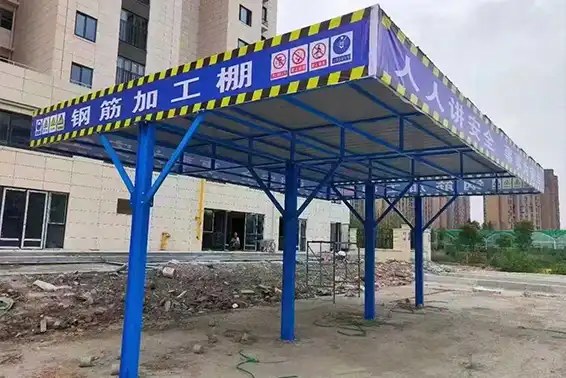
A site security cover is more than just a roof over your workspace. It's a built barrier that can hold a certain amount of weight and protects your crew from damage above them.
Core Safety Function
According to OSHA Standard 1926.502, managers must keep workers safe from falling objects whenever they are near things that could hurt them from above. An overhead cover system with the right rating meets this need right away. Heavy-duty ones can hold 150 to 300 pounds per square foot of live weight, which is plenty for most messy job sites with lots of tools and trash.
Material Types and Structural Options
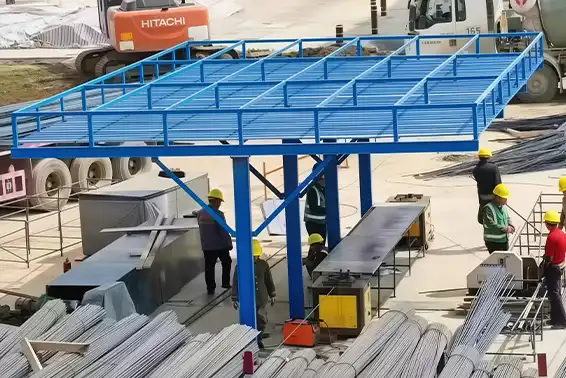
This sentence says that canopy systems are not the same. Frames made of steel and decks made of corrugated steel or plastic can take the most damage. Polyethylene or PVC mesh umbrellas are lighter and work well to keep out dust and bad weather in places where there isn't as much danger. When it comes to long-term placement, fixed platforms work best above areas where materials are processed. On the other hand, portable systems work best for short-term transfer zones that change every week.
Regulatory Standards That Apply
. OSHA 1926 Subpart R and ANSI A10.34 tell building sites in the US how to keep workers safe from things that could fall on them. EN 12811-1 talks about how well temporary structures, like safety platforms above ground, hold up for projects that will be seen in other countries. If you know which standard your project needs to follow, you can avoid costly gaps in compliance when a third party checks.
How to Choose the Right Construction Site Protection Canopy?
If you buy the wrong canopy, it will cost you twice: once when it fails an inspection and again when something goes wrong with safety. Use these things to cut down your choices before you choose a seller.
Here are the most important things to think about before you place your order:
- Structural steel grade: Q235B or Q345B structural steel, treated with hot-dip galvanization per ASTM A123, offers 15 or more years of corrosion resistance. This matters especially for coastal and high-humidity job sites where unprotected steel degrades within two to three seasons.
- Wind load rating: A system rated for wind speeds up to 120 km/h (approximately 75 mph, equivalent to a Category 1 hurricane) provides adequate coverage for most North American construction environments. Projects in hurricane-prone coastal regions should specify higher ratings.
- Modular design and reuse cycles: For large procurement programs, a modular construction site protection canopy that survives eight or more deployment cycles with less than 5% component loss per cycle significantly lowers your total cost per project.
- Span and dimensional flexibility: Standard spans from 6 m to 18 m accommodate most site configurations. Confirm that the supplier can align module dimensions to your site drawings before fabrication begins.
- Surface treatment quality: Dual-layer protection — hot-dip galvanization exceeding 85 microns plus electrostatic powder coating — outperforms single-layer finishes in adhesion and abrasion resistance.
Quality of surface treatment: **Dual-layer protection, which includes hot-dip galvanization over 85 microns and electrostatic powder coating, sticks to surfaces better and lasts longer than single-layer finishes.
Supplier Validation
With these criteria, procurement managers can quickly get rid of options that aren't working out. They can also keep conversations with suppliers focused on specs that can be checked instead of marketing speak.
Step-by-Step Guide on Installing Construction Site Protection Canopies
The way a cover is put on affects how well it works. Things that aren't connected right and move around when they're full of weight are more dangerous than nothing.
Pre-Installation Site Assessment
As you walk through the installation zone, check for underground utilities, structures that might get in the way, and how well the ground can hold weight. There should be a lot of weight on the base area of a column before it sinks. Mark the center points based on the planned drawing, not on what you think they are in the field.
Assembly and Anchoring Procedure
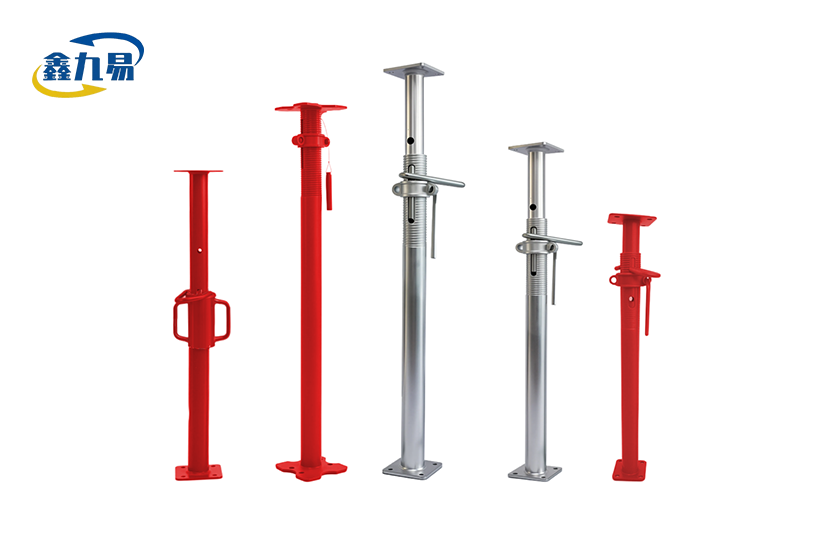
There is a standard way to connect the pieces of the construction site protection canopy modular cover system in Xinjiuyi, so a crew of four people can put it together 20 to 30 linear feet per hour without any special tools. The screw jacks at the base of each column can be moved to handle slopes of up to 15 degrees. This means that the deck stays level without the ground having to do any extra work. Tighten all the connections to the levels of torque shown in the installation guide. Write down the time when it's done before anyone else comes in.
Post-Installation Inspection Protocol
When it is being used every day, a trained safety officer should look it over once a week. Before you start up again after a high-wind event or reported impact, you should do a full structural audit. In the galvanization, weld spots, and coupling links, look for signs of stress or rust. This method makes things last longer and keeps your OSHA-checked safety records clean.
Innovations and Design Ideas in Construction Site Protection Canopies
Space-Efficient Single-Column Architecture
Frames that have more than one pole take up floor room that furniture that moves things needs. One-column designs from Xinjiuyi, which are built on an 18# I-beam center support, take up to 40% less room on the ground than designs with four legs. Forklifts and mobile cranes can easily move under the deck. There is no longer a problem that often happens in central processing zones that are busy.
Dual-Layer Impact-Resistant Decking
When you put together curved color steel panels with a polycarbonate (PC) underlayer, the panels keep trash out but let light in. Because of this, artificial lighting doesn't need to be used as much during the day, which saves power for jobs that take longer.
Custom Branding and Compliance Marking
Many places with civilized building rules need safety signs to be easy to see on a construction site protection canopy. Warning baking paint is used by Xinjiuyi, and safety signs or company names can be added directly to the roof panels while they are being made. You won't have to pay extra people to put up signs, and your site will always be ready for an audit.
Procurement Insights: Where and How to Buy or Rent Construction Site Protection Canopies?
The length of the project and how often it needs to be moved help big procurement teams decide whether to buy or rent something.
Purchase vs. Rental Decision Framework
If you can move the cover to the next project, buying it is the best choice for projects that last longer than six months and have a clear place for processing. Getting extra coverage for a short time is a good idea in transfer zones where the layout changes every week. The rental company should offer load test certification for all deployments, not just the first one.
Wholesale and Volume Procurement
Programs that help building companies buy things in bulk and work on other projects at the same time are paid for by Xinjiuyi. With bulk orders, you can make sure that the measurements are the same for all of your jobs. This makes it easier to plan transportation and cuts down on mistakes that happen when people measure in the field. The company's factory in Cangzhou, Hebei, has enough room to handle large orders while still being able to keep the numbers accurate.
After-Sales Service and Warranty
When a company sells safety canopies for building sites, they should write down their promises that they will have replacement parts on hand, that the sizes they give you will be correct, and that they will fix any problems with the goods as soon as possible. Quality is guarantyd by Xinjiuyi from the time the products are made until they are delivered. This is shown by the ISO9001, ISO45001, and ISO14001 certifications that the company has.
Conclusion
A construction site protection canopy is an important part of any busy construction site. It's important to use the right method to keep your crew safe, follow government rules, and improve the safety of your project. Making the right structure grade choice and checking that seller certifications are valid are both important parts of the buying process. Every day, the main needs of site managers and buying staff are met by the Xinjiuyi building site security canopy product line. It is made of Q235B steel and has a dual-layer surface treatment. It works efficiently with a single column and can be reused in different ways. at xjy8.com, you can see the full tech specs and ask for a project review.
FAQ
What load capacity should a construction site overhead canopy meet?
A heavy-duty site cover should be able to hold 150 to 300 pounds of live weight per square foot. Always check that the static load test certificate your provider gives you matches the site's risks with the stated capacity.
Can the canopy dimensions be adjusted after fabrication?
With flexible systems, you can change the span by adding or taking away bay pieces. Usually, the span range is between 6 m and 18 m. You can change the height of a column with screw jack settings, but engineers have to give their OK for big changes to be made in the field first.
Which safety standards apply in the United States?
A10.34 and OSHA 1926 Subpart R are the main sources. EN 12811-1 is a standard for how well portable buildings work. Projects that use parts from other countries might also need to meet this standard.
How often should the structure be inspected?
After every week when the project is busy, take a look at it. This structure needs to be checked by an experienced safety officer before work can start again under the cover if the wind speed goes over the maximum wind speed or if something hits it.
Does hot-dip galvanization alone provide sufficient corrosion protection?
In most inland places, galvanization above 85 microns meets the standards for long-lasting products in the business. The extra layer of electrostatic powder coating helps areas that are near the coast or have a lot of humidity. It acts as a second barrier against water and makes the coating last a lot longer.
Get Your Site Protection Quote from Xinjiuyi Today
Xinjiuyi makes safety canopies for construction sites that meet OSHA and EN standards. Their designs with only one column work well, and the surfaces last for 15 years. They can also be made just the way you want. We help procurement teams with everything, from technical specs to delivery, because we are a trustworthy company that makes safety canopies for construction sites. You can get product drawings, load test certificates, and a free project consultation that is tailored to your site by emailing our team at global@xjy8.com or visiting xjy8.com.
References
1. Occupational Safety and Health Administration (OSHA). Construction Industry Standards: 29 CFR Part 1926. U.S. Department of Labor, 2021.
2. American National Standards Institute (ANSI). ANSI A10.34: Protection of the Public on or Adjacent to Construction Sites. ANSI, 2017.
3. European Committee for Standardization (CEN). EN 12811-1: Temporary Works Equipment — Part 1: Scaffolds — Performance Requirements and General Design. CEN, 2003.
4. ASTM International. ASTM A123/A123M: Standard Specification for Zinc (Hot-Dip Galvanized) Coatings on Iron and Steel Products. ASTM International, 2017.
5. National Fire Protection Association (NFPA). NFPA 701: Standard Methods of Fire Tests for Flame Propagation of Textiles and Films. NFPA, 2019.
6. Construction Industry Institute (CII). Safety Performance Report: Overhead Protection Systems in Urban High-Rise Construction. University of Texas at Austin, 2020.