Why Is a Construction Site Protection Canopy Important for Worker Safety?
One of the best ways to keep people from getting hurt on a busy job site is to use a construction site protection canopy. When people work under overhead lifting zones, material transfer areas or buildings with more than one floor, there is always a chance that something will fall. As per OSHA, about 1 in 10 building deaths in the US every year are due to being hit by something. Putting up an overhead safety structure will physically separate workers from those risks. This will keep operations safe and in line with state and local safety laws.
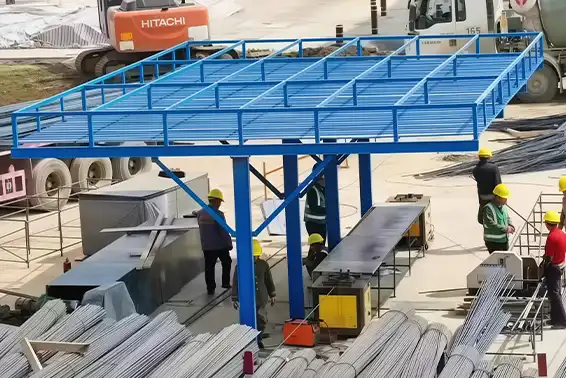
Understanding Construction Site Protection Canopies and Their Role in Worker Safety
Before you pick an overhead security system, you should know what these buildings are for and how they vary from other site barriers.
What Sets a Protection Canopy Apart?
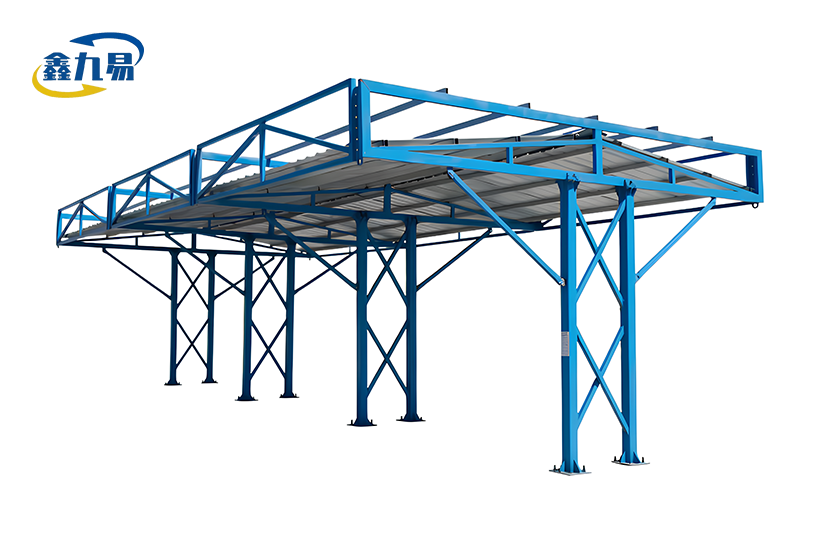
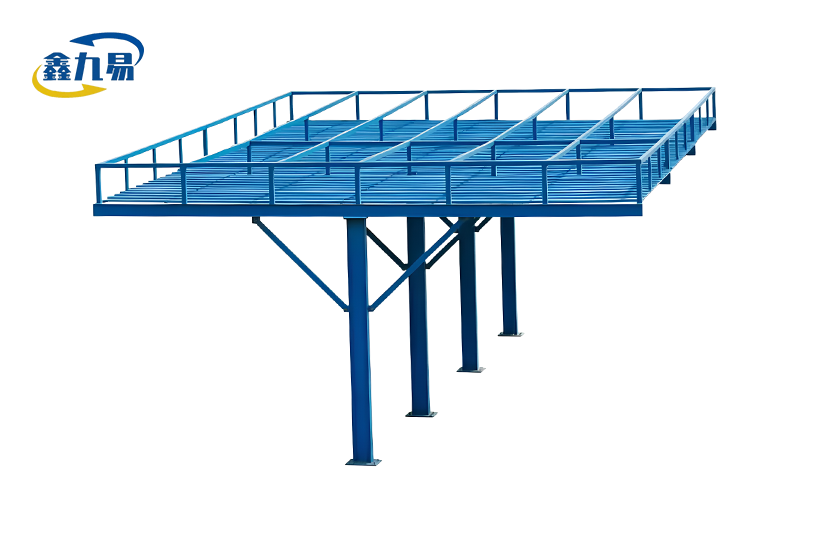
They're not the same. A site canopy is a strong roof that goes over the site. If something is dropped on it, it will absorb and spread out the force of the ball before it hits anyone below. A steel-decked canopy is best for busy tall building because it can handle a lot of blows. On the other hand, scaffolding nets can only catch smaller pieces of trash.
Material Options and Their Trade-Offs
Most heavy-duty umbrellas today have frames made of Q235B or Q345B structural steel and tops made of perforated steel or tough plastic. Steel decks can hold 150 to 300 pounds per square foot, so you can put more weight on them. Polycarbonate panels let light into spaces that are otherwise dark. Pick the one that works best for you and the people who need to see what's going on above them.
Regulatory Benchmarks Worth Knowing
The rules for protecting the roof can be found in Part Q of OSHA 29 CFR 1926. The rules for temporary buildings in European and export markets can be found in EN 12811-2. A procurement team in charge of projects in more than one area can save money by making sure that a cover system fits both standards before the project starts. During the project, expensive changes would have had to be made to make it comply, which would have cost more money.
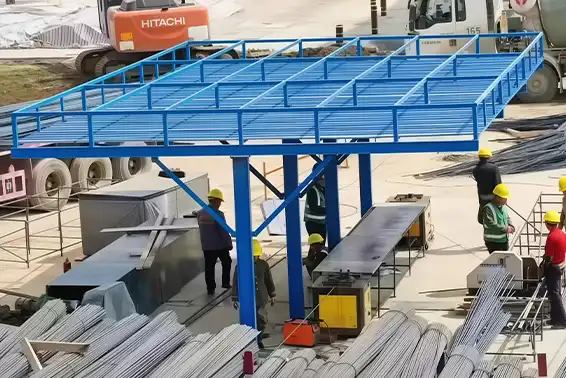
Core Benefits of Using Construction Site Protection Canopies for Safety
Overhead protection with a construction site protection canopy is helpful for more than just avoiding fines. That affects the health of your workers, the safety of your business, and the amount of risk it faces.
Buyers always ask for these four main safety benefits when they ask for overhead protection:
- Falling object defense: A rigid steel deck stops hand tools, rebar sections, and concrete fragments from reaching workers below. Heavy-duty systems absorb impacts exceeding 15,000 Joules, which covers most tool-drop scenarios from mid-rise heights.
- Weather exposure control: Canopies keep rain off wet concrete during curing, reduce sun exposure that contributes to heat exhaustion, and maintain drier walking surfaces that lower slip-and-fall incidents throughout a shift.
- Dust and debris containment: Overhead coverage limits airborne particulate spread across processing zones, helping sites stay within EPA and OSHA permissible exposure limits for silica and general construction dust.
- Equipment protection: Expensive generators, CNC rebar processors, and calibrated measurement tools are vulnerable to incidental drops. A covered staging area reduces damage claims and avoids schedule delays caused by equipment replacement.
Because the deck is made of hard steel, hand tools, rebar sections, and concrete pieces can't fall and hurt the workers below. When dropped from a mid-rise, heavy-duty systems can handle hits of more than 15,000 Joules, which is most of the time.
When it rains, canopies keep the rain off of wet concrete while it hardens. They also block the sun so workers don't get too hot and keep the ground dry so there are fewer slip-and-fall accidents during the shift.
How to Select the Right Construction Site Protection Canopy for Your Project?
Three honest questions are used to start the selection process. How long will the structure stay in place? How much weight does it have to carry? How many times will it be taken apart and put back together during different stages of the project?
Temporary Versus Long-Term Deployment
A light modular frame with polycarbonate decking might work well for a job that lasts less than six months. The total cost of ownership for a construction site protection canopy is lower for heavier steel-frame systems that can be used eight or more times. This is especially true for multi-year contracts or sites where the canopy will be moved to new projects.
Matching Dimensions to Your Site Layout
Most spans are between 6 and 18 meters long. Systems like Xinjiuyi's single-column canopy come in normal lengths of 6,000 mm and 9,000 mm and widths of 4,000 mm to 6,000 mm. All of these sizes can be changed to fit your needs. When compared to multi-column frames, the single-column design takes up up to 40% less space on the floor. This is very important in busy central processing zones where trucks and cranes need clear paths.
Verifying Supplier Credentials
Before you place an order, make sure you have wind load test reports (the Xinjiuyi system is rated for Level 10 wind resistance), weld integrity certifications, galvanisation thickness reports that confirm the 85-micron minimum standard, and a written guarantee for reuse. When suppliers can't provide these papers, they leave procurement teams at state-owned businesses and general contractors open to audits.
Installation Best Practices to Maximize Safety and Durability
You might feel proud if you put a well-thought-out cover on the wrong way. The way they are put together is just as important as the specs.
Site Preparation Before Assembly
Before you put the column bases down, make sure the ground is flat. Most of the time, you don't need to spend a lot of money on expensive ground levelling because flexible screw jacks can handle 15-degree sloped uneven ground. Make a mark on your site plan for the power lines and the crane's swings so that your poles don't get in the way of lifts.
Anchoring and Wind Load Management
You should make sure the column anchor plates are tight enough after the first big wind storm. The Xinjiuyi frame can handle wind speeds of up to 120 km/h at Level 10. This rating is only useful if the anchor bolts work as planned. Check the size of the bolts and the depth of the embedment before you sign off on the installation.
Inspection and Maintenance Schedule
A trained safety officer should do a public check once a week. After any damage or bad weather, the building should also be checked out. The 50 × 50 mm main beam joints and the 30 × 50 mm purlin connections are the key places to look for deformation. If you powder coat hot-dip copper surfaces, they won't rust for more than 15 years. It should stay put for six months, but you should touch it up every six months if you live near the coast where it's hot.
Case Studies and Industry Insights on Protection Canopy Effectiveness
Procurement managers often want more proof than just spec sheets, and there is a lot of evidence about how well construction site protection canopy modular steel canopies work in the field.
Urban High-Rise Sidewalk Protection
Steel-decked canopies have made it possible for people to walk right under vertical construction for 50 meters or more on busy urban job sites where paths are still used during construction. This method meets the needs of both the city's access rules and OSHA's struck-by protection rules without stopping traffic.
Central Processing Zone Performance
When sites use single-column overhead protection in their rebar fabrication areas, fewer incidents of equipment damage happen when tower cranes are used. A single-column frame has an open work area below it that lets workers set up rebar benders and cutting tables without having to go around any middle columns.
Industry Validation
According to feedback from procurement managers at large general contracting firms, the ability to reuse modules is always what makes them choose one supplier over another. A system that can handle eight or more full disassembly-and-reinstallation cycles with less than 5% component loss per cycle lowers the cost per project, which is important when buying canopies is a recurring cost across a portfolio of projects that are all going on at the same time.
Conclusion
A good construction site protection canopy system does more than just mark things off a list. It keeps workers and tools safe and takes one thing off of site managers' plates when they have a lot to do. That peace of mind can only come from steel-frame canopies whose load ratings have been checked, whose surface treatments have been approved, and whose usage history has been kept. You should think about both the price and the scientific proof when you shop around. This is because a broken system always costs more in the long run than it saves in the short term.
FAQ
How long does a steel canopy system typically last?
A hot-dip galvanized steel frame with powder coating has a stated service life of 15 years or more under normal construction site conditions. Actual lifespan depends on maintenance frequency, environmental exposure, and how carefully the structure is handled during each disassembly cycle.
Can one canopy system handle both weather and falling object protection?
Yes. A rigid steel deck addresses both simultaneously. It blocks rain and UV exposure at the same time it absorbs impact loads from dropped materials. This dual function is why rigid overhead canopies are preferred over fabric or mesh alternatives in high-activity central processing zones.
Should I rent or purchase a modular canopy system?
For projects lasting more than 18 months or companies managing multiple concurrent projects, ownership typically delivers a lower total cost than rental. A system rated for eight or more reuse cycles amortizes its upfront cost across multiple projects, making ownership the more economical choice for procurement teams with consistent site safety requirements.
What wind resistance rating should I specify?
For most U.S. and international construction sites, a Level 10 wind resistance rating, equivalent to sustained gusts around 120 km/h, covers the majority of regional weather conditions. Sites in coastal or typhoon-prone regions should verify local wind zone maps and specify accordingly.
Partner With Xinjiuyi for Certified Overhead Protection Solutions
The people who work in Xinjiuyi who make building site security canopies are ready to help you with your next buy. You can change the span, height, and surface markings in any way you want. Our systems are certified by ISO 9001, ISO 45001, and ISO 14001, and they are all different. You can go to xjy8.com or email us at global@xjy8.com to get scientific data, wind load test results, and terms for big sales.
References
1. Occupational Safety and Health Administration (OSHA). Construction Industry Standards: 29 CFR 1926 Subpart Q – Overhead Protection. U.S. Department of Labor, 2021.
2. European Committee for Standardization. EN 12811-1: Temporary Works Equipment – Scaffolds: Performance Requirements and General Design. CEN, 2003.
3. National Institute for Occupational Safety and Health (NIOSH). Fatality Assessment and Control Evaluation (FACE) Program: Struck-By Hazard Reports in Construction. CDC, 2022.
4. American Institute of Steel Construction (AISC). Steel Construction Manual, 16th Edition. AISC, 2023.
5. International Organization for Standardization. ISO 45001: Occupational Health and Safety Management Systems – Requirements with Guidance for Use. ISO, 2018.
6. U.S. Environmental Protection Agency (EPA). OSHA/EPA Silica Dust Exposure Standards for Construction Activities. EPA Office of Air Quality Planning and Standards, 2020.